Is your landing page bringing in the right buyers, or quietly sending them to a competitor?
Are you wondering why well-targeted traffic refuses to convert, no matter how polished the page looks?
This article is for business owners and marketers spending money on ads or SEO without seeing the leads they expected. I've spent years helping founder-led B2B businesses replace fragile, agency-dependent marketing with systems they can run and measure themselves, and landing page trust is one of the most common gaps I find.
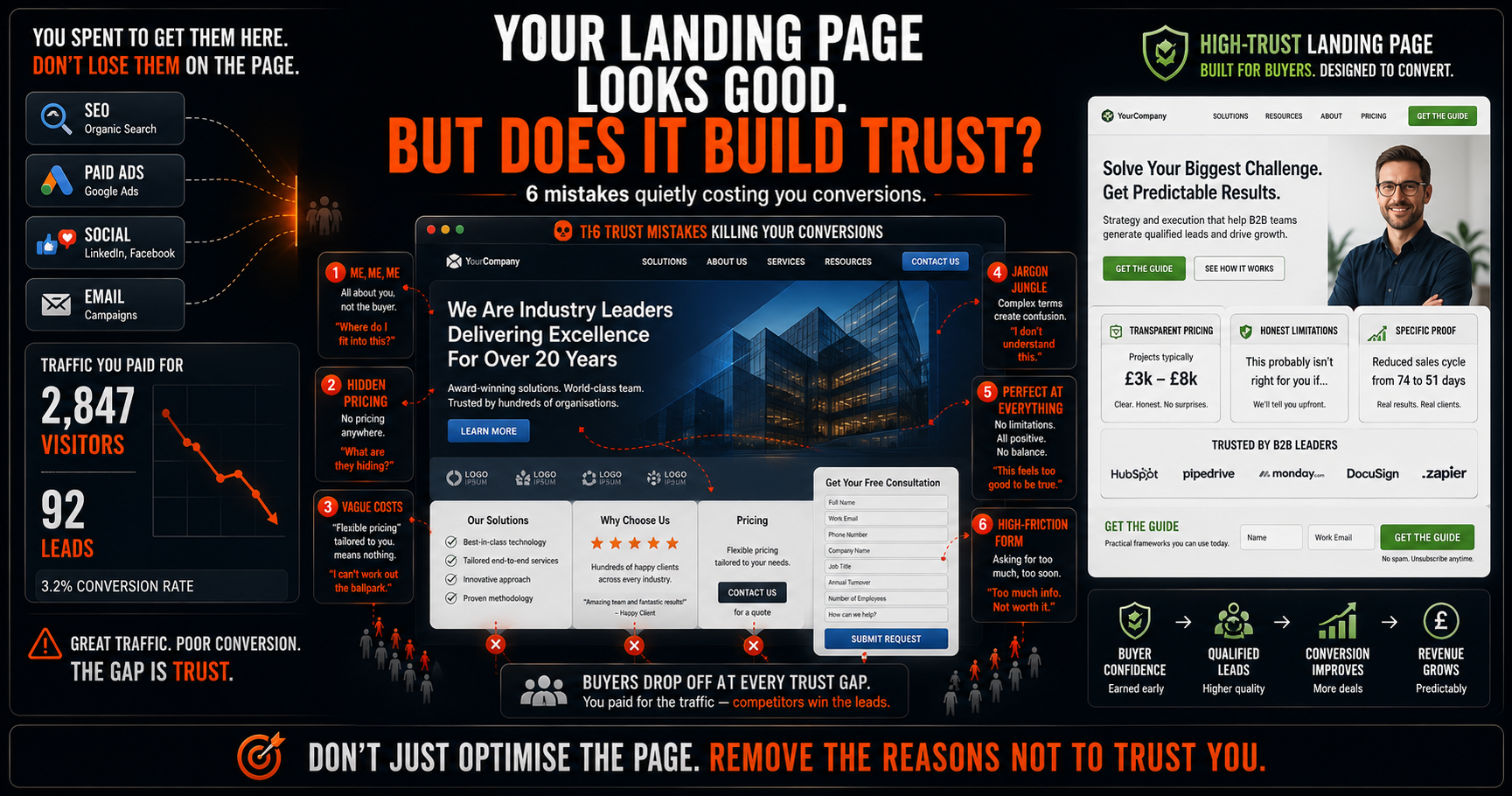
This article will help you pinpoint the specific trust signals your landing page is missing and show you what to do about it. You will see the 6 most common trust mistakes, a direct comparison between low-trust and high-trust pages, and a 5-step fix framework you can apply straight away.
Key takeaways
- Trust on a landing page is not about design quality; it is the confident belief a buyer forms that you will act in their best interests.
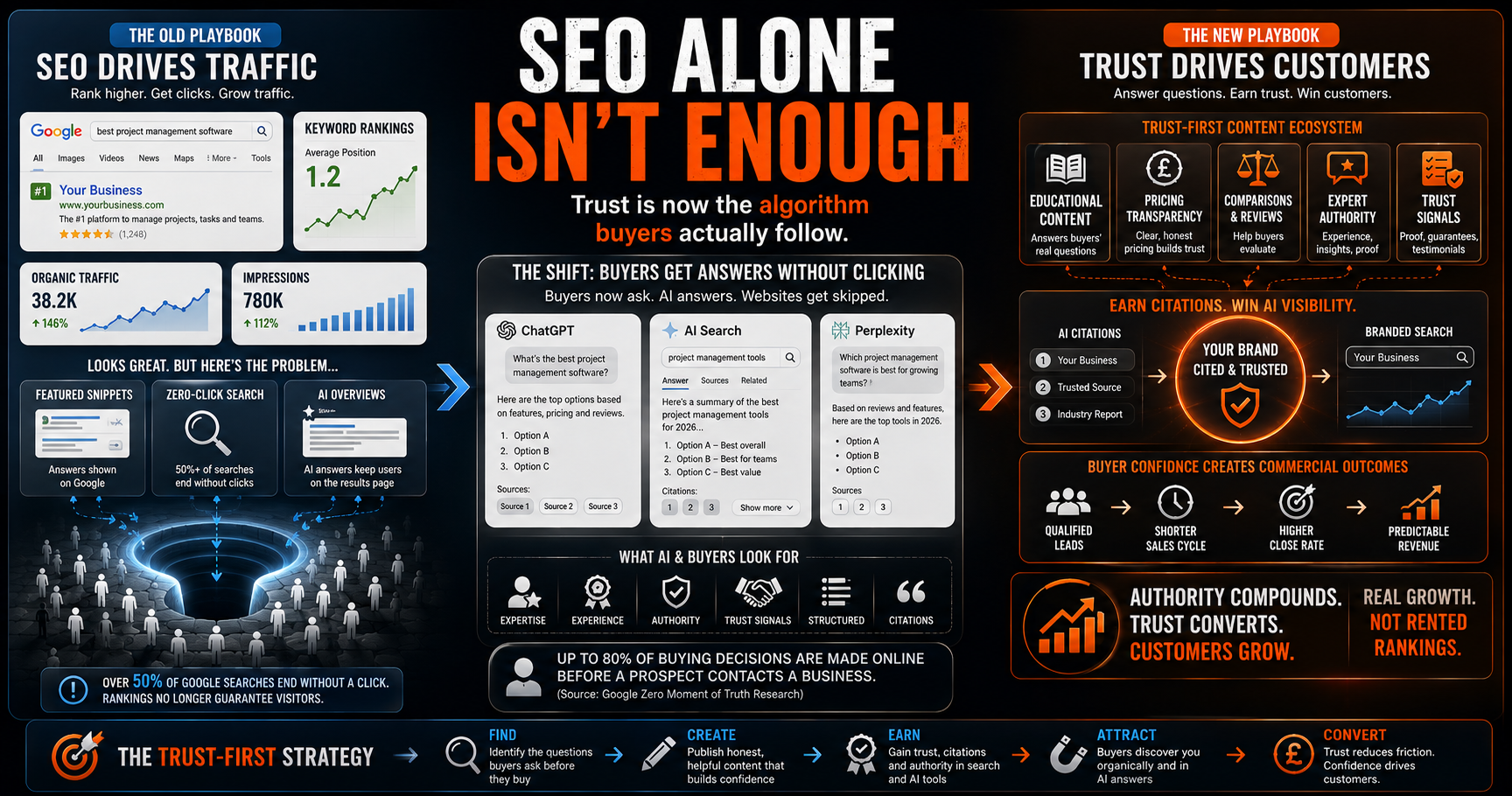
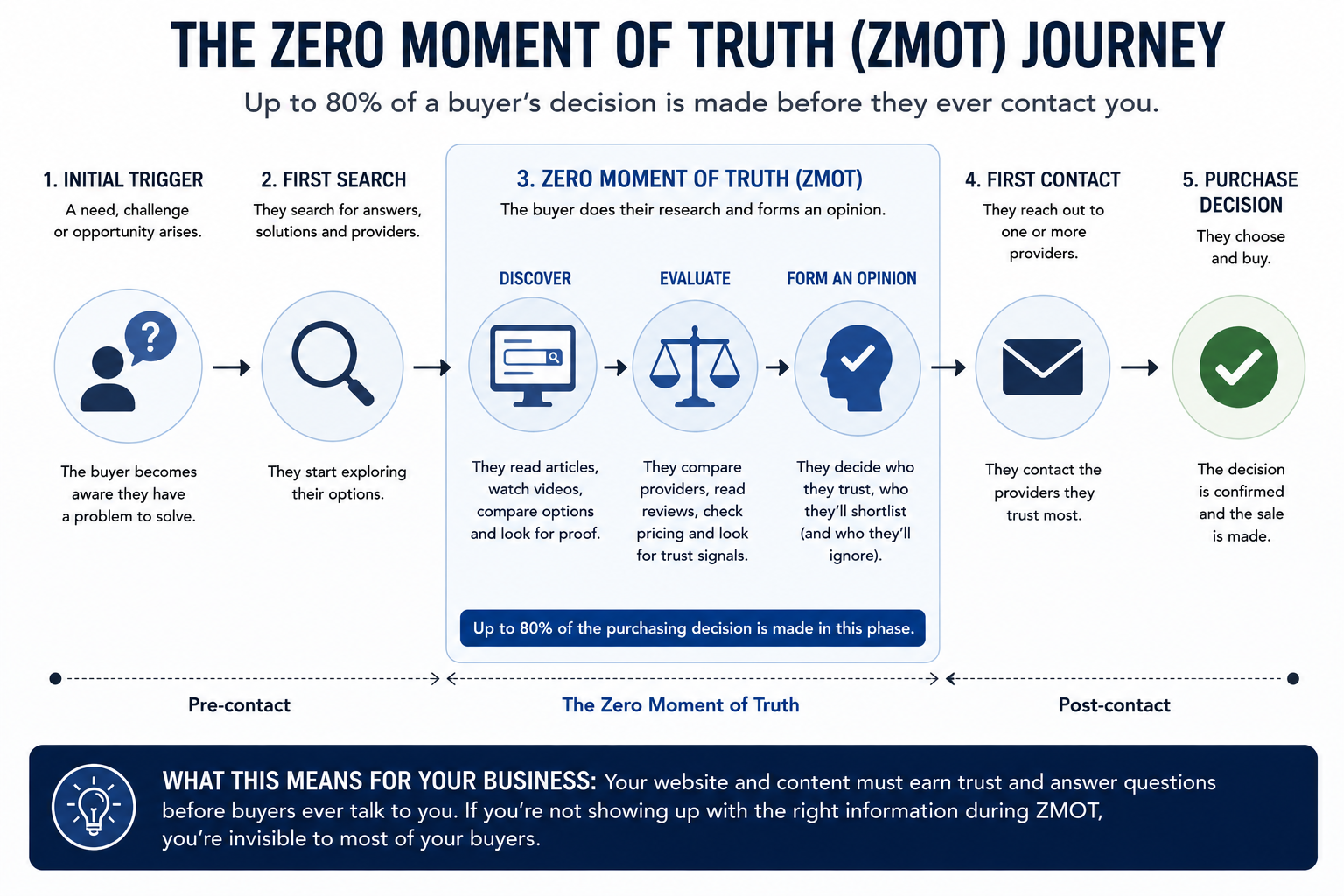
- Up to 80% of a buyer's purchasing decision is made online before they contact a business, meaning your landing page is often the only window to earn or lose that trust.
- The 6 most common landing page trust mistakes are: brand-centric copy, hidden pricing, vague cost language, unexplained jargon, a façade of perfection, and high-friction lead capture.
- Fewer than 10% of businesses publish transparent pricing on their websites, a measurable, preventable drain on conversion rates.
- High-trust landing pages share 5 core elements: transparent pricing signals, customer-first messaging, honest acknowledgement of limitations, specific outcome-based social proof, and a low-friction next step.
What does 'trust' actually mean on a landing page?
Trust on a landing page is not about how polished your design looks; it is the confident belief a buyer forms that you will act in their best interests, even before they contact you.
Google coined the term "Zero Moment of Truth" to describe the research phase buyers go through before they ever reach out to a business. This is where up to 80% of a buyer's purchasing decision is already made during that research phase.
That means your landing page is not just a first impression. For most buyers, it is the only impression that matters.
A buyer who cannot find what they need within 10 seconds will leave, and the trust gap your page leaves behind is what sends them to a competitor who answered their questions honestly instead.
What's the biggest misconception about landing page trust?
The most common mistake landing pages make is confusing aesthetic credibility, clean design, confident headlines, a logo grid of client brands, with genuine trust.
According to Edelman research, 81% of consumers need to trust a brand before they will buy from it. Yet most landing pages respond to this challenge by projecting perfection rather than honesty.
Perfection is the enemy of trust. A buyer who has been let down by a slick-looking competitor is not reassured by another glossy page. They are looking for honesty, someone willing to answer the awkward questions before being asked. When they cannot find that, they leave.
What are the most common landing page trust mistakes?
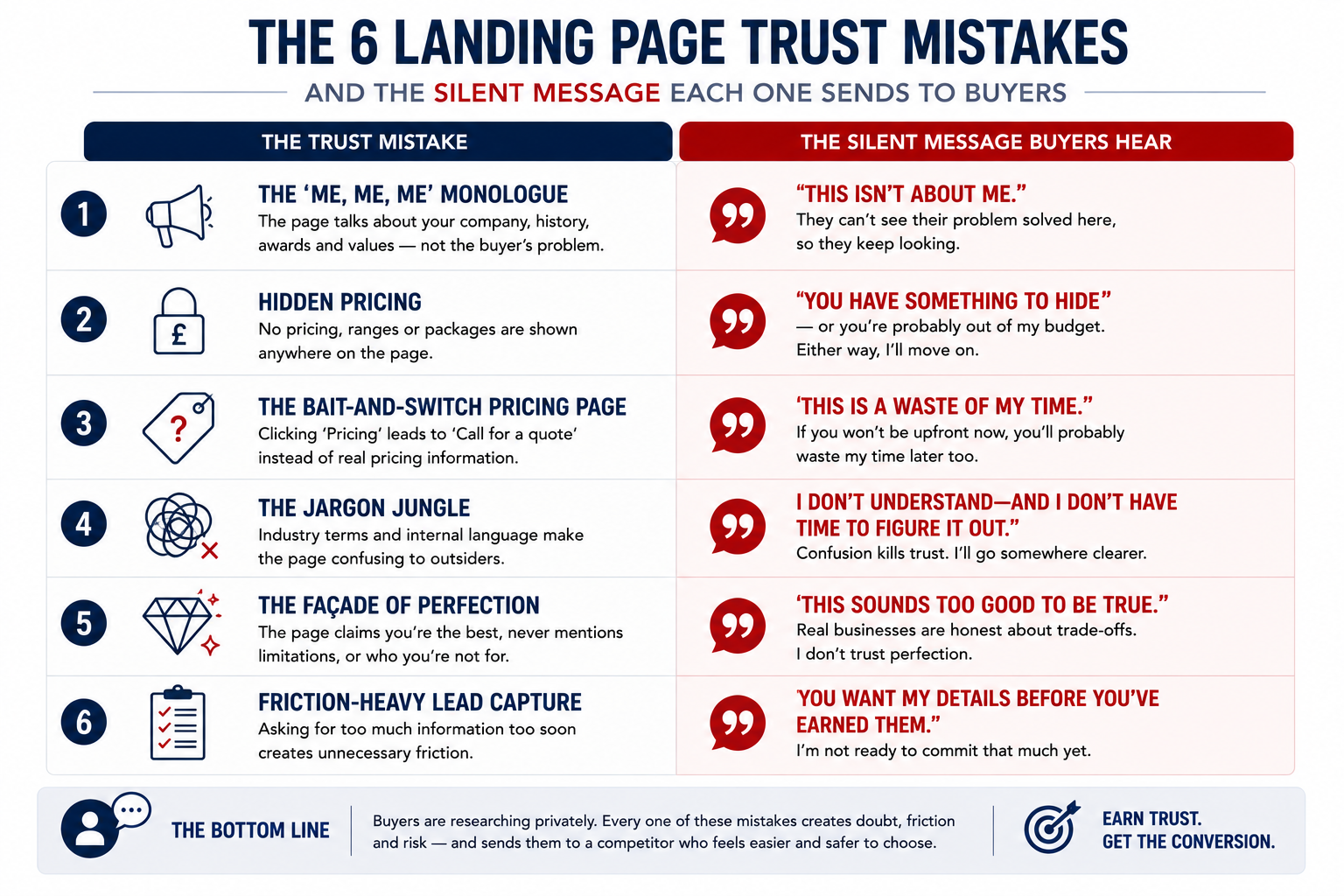
Most landing pages fail to build trust because they repeat the same 6 predictable mistakes, and each one sends buyers the same silent message: "We don't trust you with the full picture."
-
The 'me, me, me' monologue: The page talks about company history, awards, and values. The buyer cannot find their own problem anywhere on it. 80% of your pricing and service content should focus on the marketplace and the buyer, only 20% should be about you.
-
Hidden pricing: Fewer than 10% of businesses publish transparent pricing online. When buyers cannot find cost information quickly, they assume either you have something to hide or you are out of their budget.
-
The bait-and-switch pricing page: A "Pricing" link that leads to "Call for a quote" is not a pricing page. Buyers need ranges, starting points, or tiers, something concrete enough to self-qualify.
-
The jargon jungle: Industry terms that feel basic to you can alienate buyers entirely. When people do not understand something, they leave rather than ask.
-
The façade of perfection: A page that never mentions a limitation or who the service is not for reads as dishonest. Buyers know nothing is flawless.
-
Friction-heavy lead capture: Asking for turnover, job title, phone number, and a message before anyone has agreed you might be a fit loses warm leads before they convert.
What does a landing page trust failure actually cost?
A landing page that fails to build trust does not just lose a single visitor; it wastes every pound spent driving traffic to that page and hands that buyer to a competitor willing to be more honest.
The cost adds up across 4 areas:
- Wasted ad or SEO spend: Every click that lands and bounces returned nothing.
- Lost leads: Buyers who were ready to act went elsewhere.
- Commoditised pricing: Buyers who reach you with no prior trust will anchor the conversation on cost, because it is the only differentiator they have left.
- Longer sales cycles: A buyer who arrives with no trust takes significantly more time and resource to convert.
The businesses that publish honest pricing, acknowledge their limitations, and answer the hard questions upfront routinely report shorter sales cycles, better-qualified leads, and lower reliance on price as a deciding factor.
Low-trust vs. high-trust landing page: what's the difference?
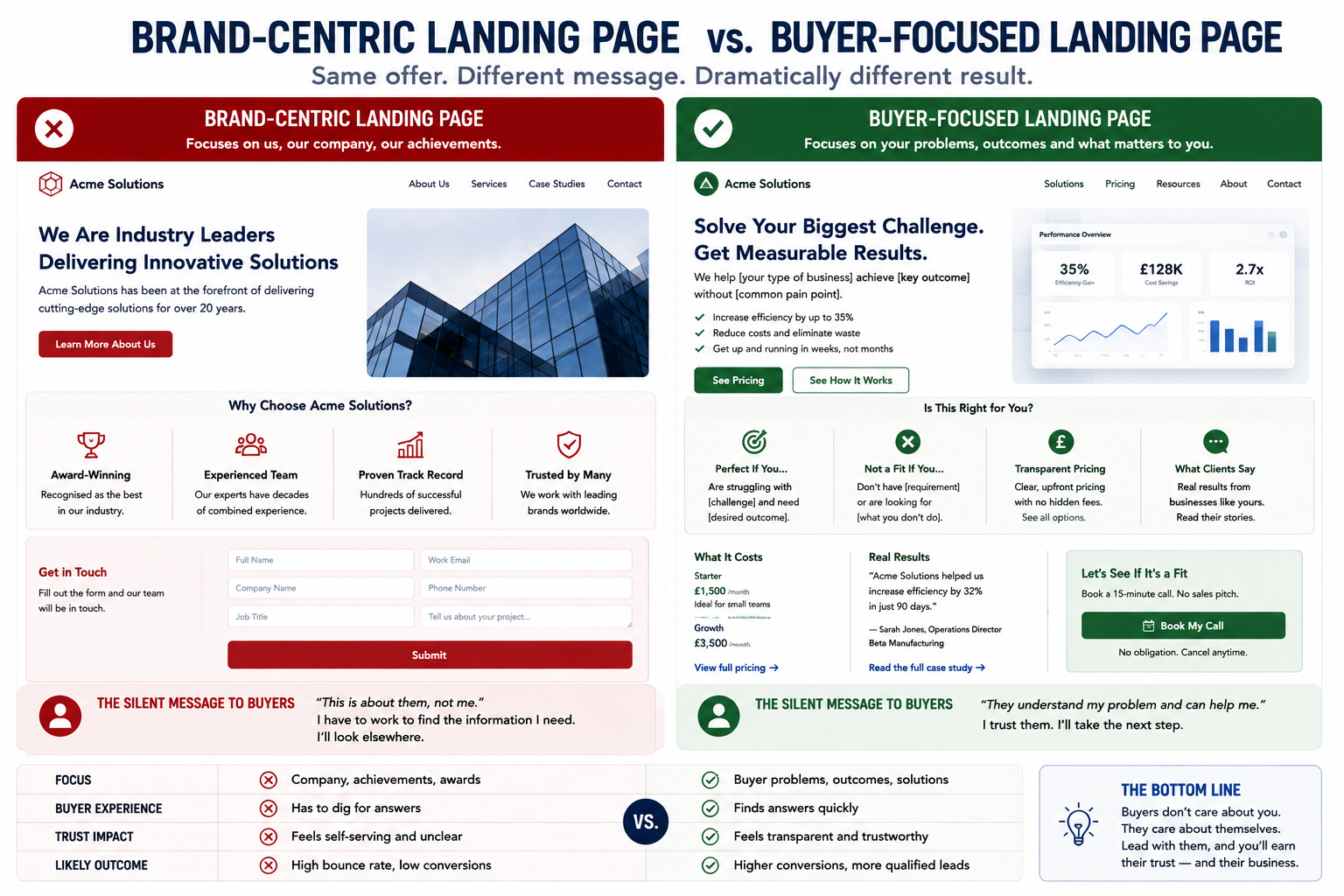
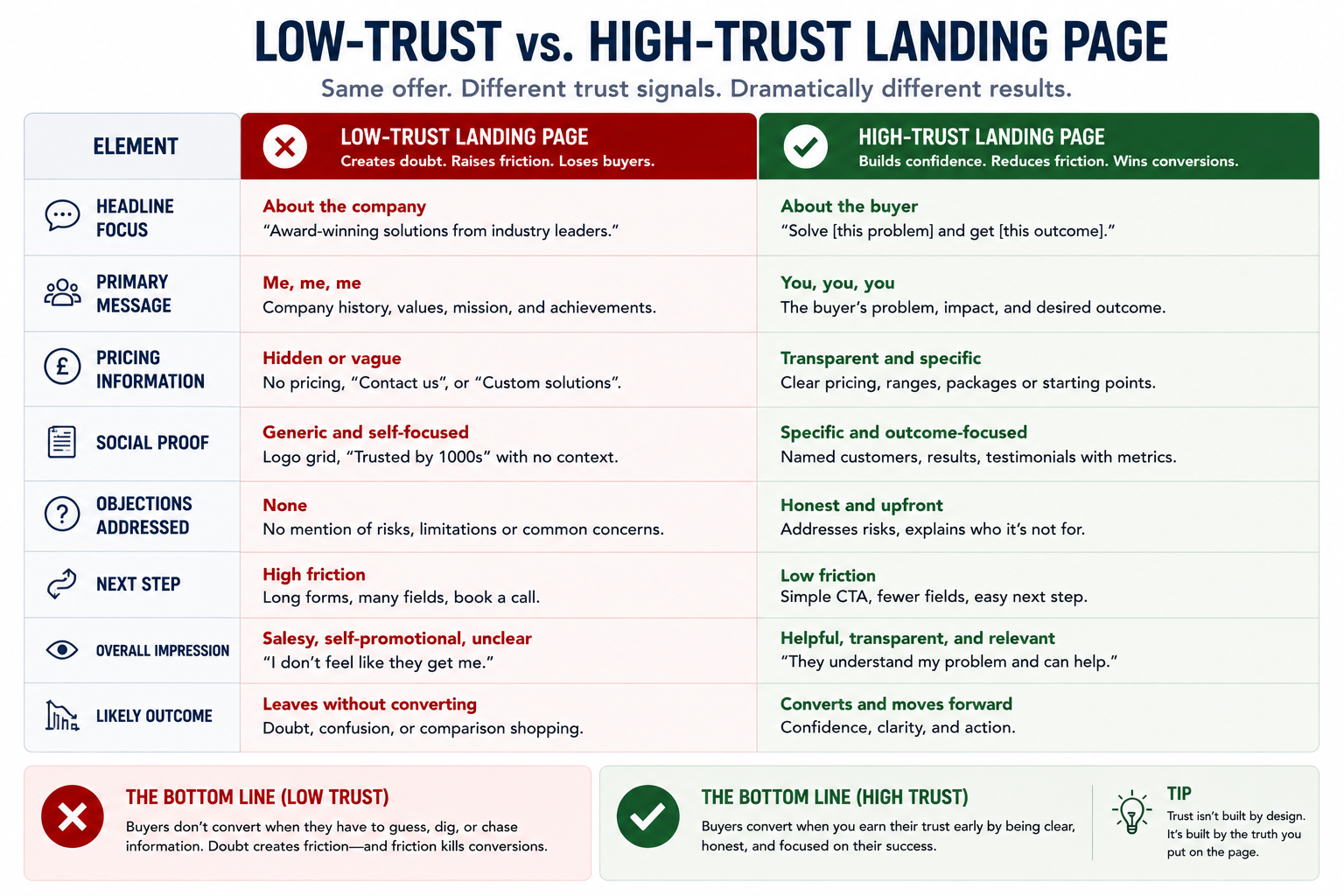
A low-trust landing page talks about the brand; a high-trust landing page talks about the buyer's problem, their realistic options, and what they can honestly expect.
The difference is not cosmetic. It is a fundamental shift in whose story is being told, and buyers notice it within seconds.
What does a high-trust landing page actually include?
The highest-trust landing pages share 5 core elements that directly answer the questions buyers are already asking during their Zero Moment of Truth research.
-
Transparent pricing signals: You do not need exact prices. Ranges, starting points, or a pricing explainer page all signal honesty and give buyers enough to self-qualify. See: The 5 Questions Every Customer Asks Before Buying, and How to Answer Them First
-
Customer-as-hero messaging: Using the StoryBrand framework, position the buyer as the hero and your business as the guide. Your expertise is not diminished by stepping out of the spotlight; it becomes more credible.
-
Honest acknowledgement of limitations: Stating clearly who your product or service is not for is one of the most powerful trust signals available. It tells buyers you respect their intelligence and have nothing to hide. See: Why Admitting Weaknesses Builds More Trust Than Bragging
-
Specific, outcome-focused social proof: A testimonial naming the problem, the process, and the measurable result is worth 10 generic logo grids. "Five-star service" without context tells a buyer nothing.
-
A proportionate next step: Ask only for what is genuinely needed at that stage. A name and email to access a guide is proportionate. A full intake form before a first call is not.
How do you fix landing page trust mistakes?
Fixing landing page trust mistakes follows a clear sequence: audit what your page currently says about your brand, then rebuild it around what your buyer genuinely needs to know before they feel confident enough to act.
-
Audit the me-to-you ratio: Count how many sentences are about your business versus the buyer's problem. If more than 20% are about you, start rewriting there.
-
Add honest pricing context: Publish a range, a starting price, or a dedicated cost explainer. Silence on pricing is the single biggest trust killer on most pages.
-
Rewrite your headline to name the buyer's problem: Not "Award-winning consultancy", but something that reflects what the buyer typed into Google before landing on your page.
-
Replace generic testimonials with specific proof: Include the outcome, the timeframe, and ideally the buyer's context. That is what builds confidence in a new buyer.
-
Simplify your lead capture: Remove every field that is not strictly needed for the immediate next step. Lower friction means higher conversion.
The Trust BLUEPRINT™, the 9-step framework at the heart of Build a Trusted Brand, gives businesses a structured way to create content that answers buyer questions honestly, builds trust before first contact, and converts better-qualified leads at every stage.
Frequently asked questions
Why don't most landing pages build trust?
Most landing pages fail to build trust because they are designed to impress rather than to inform. They prioritise how the brand looks over what the buyer needs to know, and buyers spot the gap immediately.
Should I put pricing on my landing page?
Yes, or at minimum, a clear link to honest cost context. Fewer than 10% of businesses do this. Publishing even a range puts you ahead of most competitors and pre-qualifies leads before they contact you.
Does talking about your product's limitations really help conversions?
Talking honestly about what your product or service is not suited to is one of the most effective trust-building moves available, because it signals that you respect the buyer's intelligence and are not hiding anything. Edelman research shows 81% of consumers need to trust a brand before buying, and honesty is the fastest route to earning that trust.
Conclusion
Your landing page was never just a design project. It is the moment a buyer decides whether you are worth trusting, and most pages get that moment wrong by talking about themselves instead of the person reading.
You now have a clear picture of the 6 mistakes that destroy buyer confidence, the 5 elements that build it, and a 5-step framework to start fixing the gap.
How to take action now
- Audit your landing page, and count how many sentences are about your business versus your buyer's problem.
- Check whether pricing or honest cost context is visible without needing to contact you.
- Swap generic testimonials for outcome-specific proof.
- Simplify your lead capture form to the minimum viable ask.
- Work through the Trust BLUEPRINT™ framework to build trust at every stage of the buyer journey, not just the landing page.
If you want a structured way to fix these issues across your entire content and marketing strategy, I work with founder-led B2B businesses to do exactly that.

About the author
Tom Wardman is a fractional marketing director and the author of Build a Trusted Brand. He works with founder-led B2B businesses to replace marketing dependency with self-sufficient growth systems that deliver predictable revenue. His Trust BLUEPRINT™ framework helps businesses across professional services, technology, and manufacturing build buyer trust before first contact, and convert better-qualified leads as a result.
Topics: