
Key Takeaways
- AI-optimised content is structured specifically to be easily retrieved, cited, and summarised by large language models like ChatGPT, Claude, Perplexity, and Gemini.
- AI systems prioritise content that demonstrates clear expertise, provides direct answers, and structures information in easily parseable formats.
- The three most common mistakes are burying answers deep in content, using vague or hedging language instead of direct statements, and failing to structure information in scannable formats.
- Creating AI-friendly content requires 4-8 hours for research and expert interviews, 3-5 hours for writing and structuring, and 2-3 hours for optimisation per article.
- Traditional SEO content focuses on ranking for keywords and driving website traffic, while AI-optimised content prioritises being the single answer that search tools feature or ChatGPT quotes directly.
Are you watching your website traffic numbers drop whilst your competitors somehow appear in every ChatGPT response?
Do you publish content regularly but never get quoted by AI search engines?
This article is for business owners and marketing leaders who need to adapt their content strategy for the AI era. You'll learn exactly how to write content that AI systems trust, cite, and share, turning zero-click searches from a threat into an opportunity. Specifically, you'll discover:
- The seven elements that make content quotable by AI systems
- The step-by-step process for structuring AI-friendly articles
- How to balance giving away value with driving conversions
- Real results from companies like HubSpot and River Pools who dominate AI citations
- Time and cost breakdowns for creating AI-optimised content
What is AI-optimised content?
AI-optimised content is structured specifically to be easily retrieved, cited, and summarised by large language models like ChatGPT, Claude, Perplexity, and Gemini. Unlike traditional SEO content that aims primarily for rankings and clicks, Answer Engine Optimisation (AEO) focuses on providing direct, self-contained answers that AI systems can confidently quote.
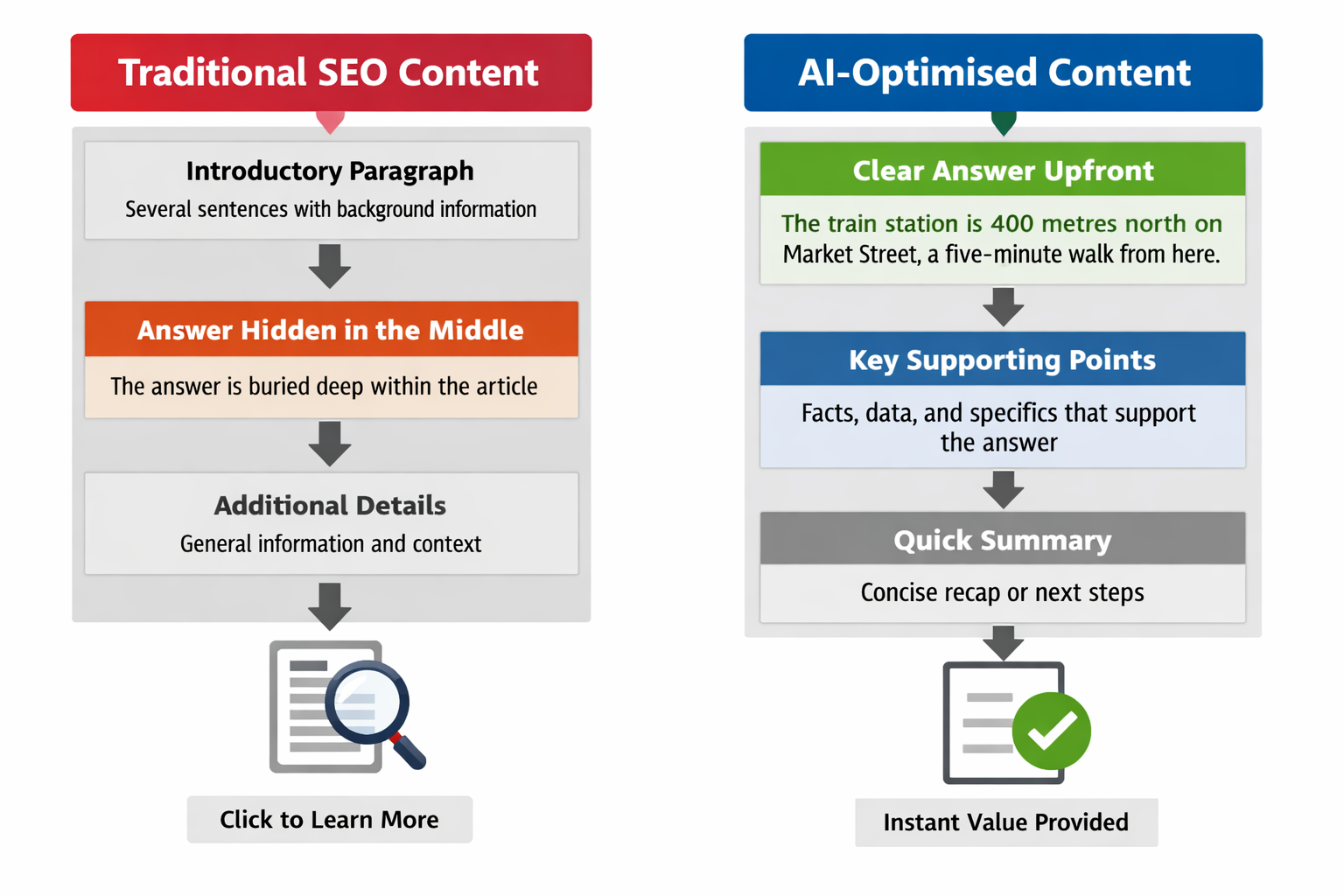
The difference comes down to intent. Traditional SEO content wants you to click through to read more. AI-optimised content answers the question completely in the first sentence, then provides supporting detail. Each statement works on its own, even when pulled out of context.
Think of it like giving directions. Traditional content says "Click here to learn how to get to the station." AI-optimised content says "The train station is 400 metres north on Market Street, a five-minute walk from here."
Why do AI search engines prioritise certain content over others?
AI systems prioritise content that demonstrates clear expertise, provides direct answers, and structures information in easily parseable formats. They're evaluating dozens of trust signals simultaneously: source authority, information freshness, structural clarity, supporting evidence, and how well statements work when extracted from context.
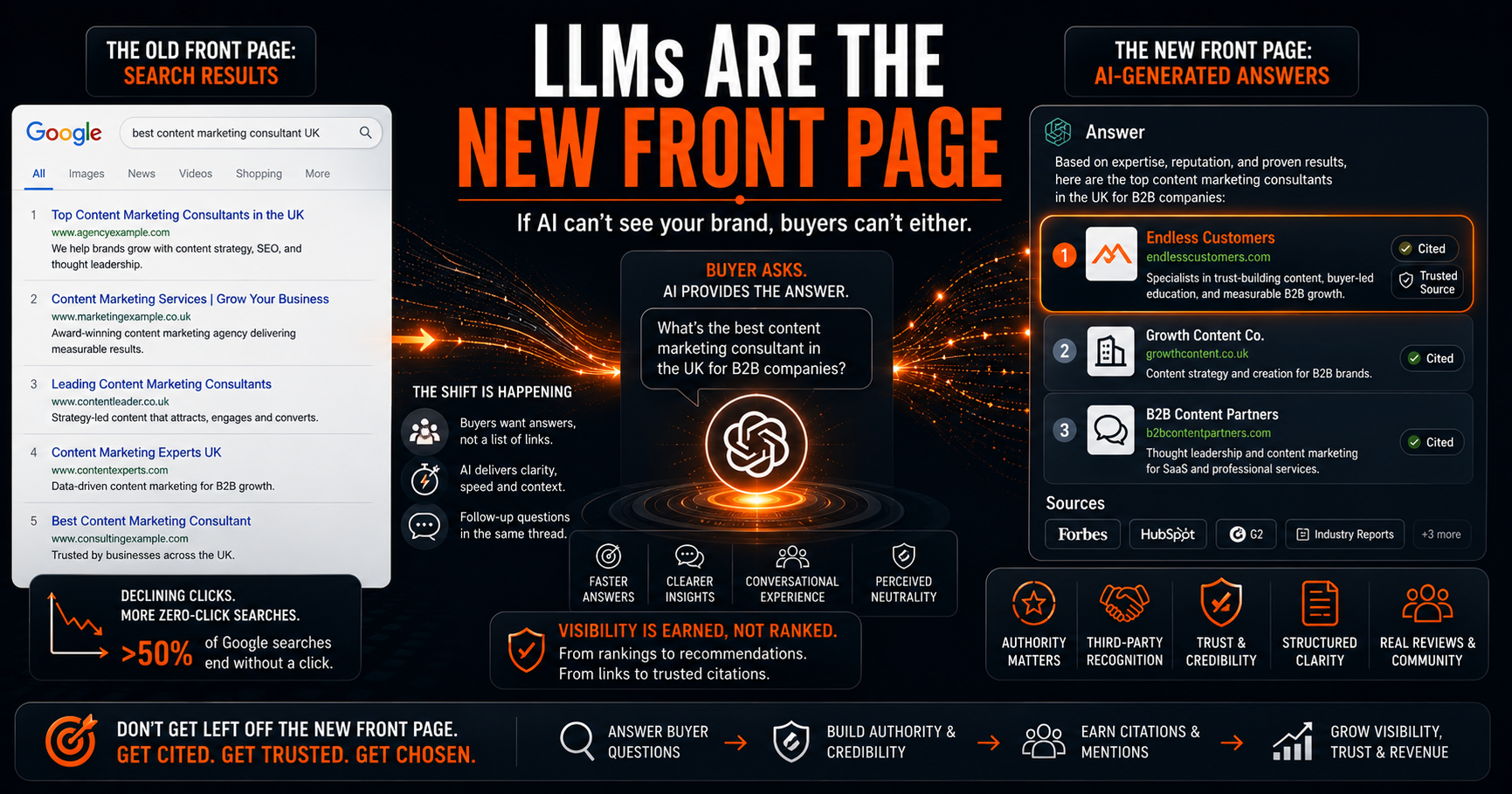
Over half of all Google searches now end without a click as users find answers directly in search results and AI-generated responses. This makes visibility in zero-click environments more valuable than traditional traffic metrics.
Trust signals AI systems evaluate
Language models look for specific markers of reliability. They prioritise content with clear attribution of expertise, specific data and timeframes, structured formatting, conversational language that matches voice queries, and depth over surface-level information.
The shift from clicks to citations
Being one of ten blue links on a search page carries less authority than being the single answer Google or ChatGPT features at the top. Your goal isn't traffic anymore—it's trust.
How Much Does It Cost to Create AI-Optimised Content?
Creating AI-optimised content requires investment in research time, writing expertise, and structured formatting, but doesn't necessarily cost more than traditional content marketing. The difference lies in how you allocate time, not how much you spend.
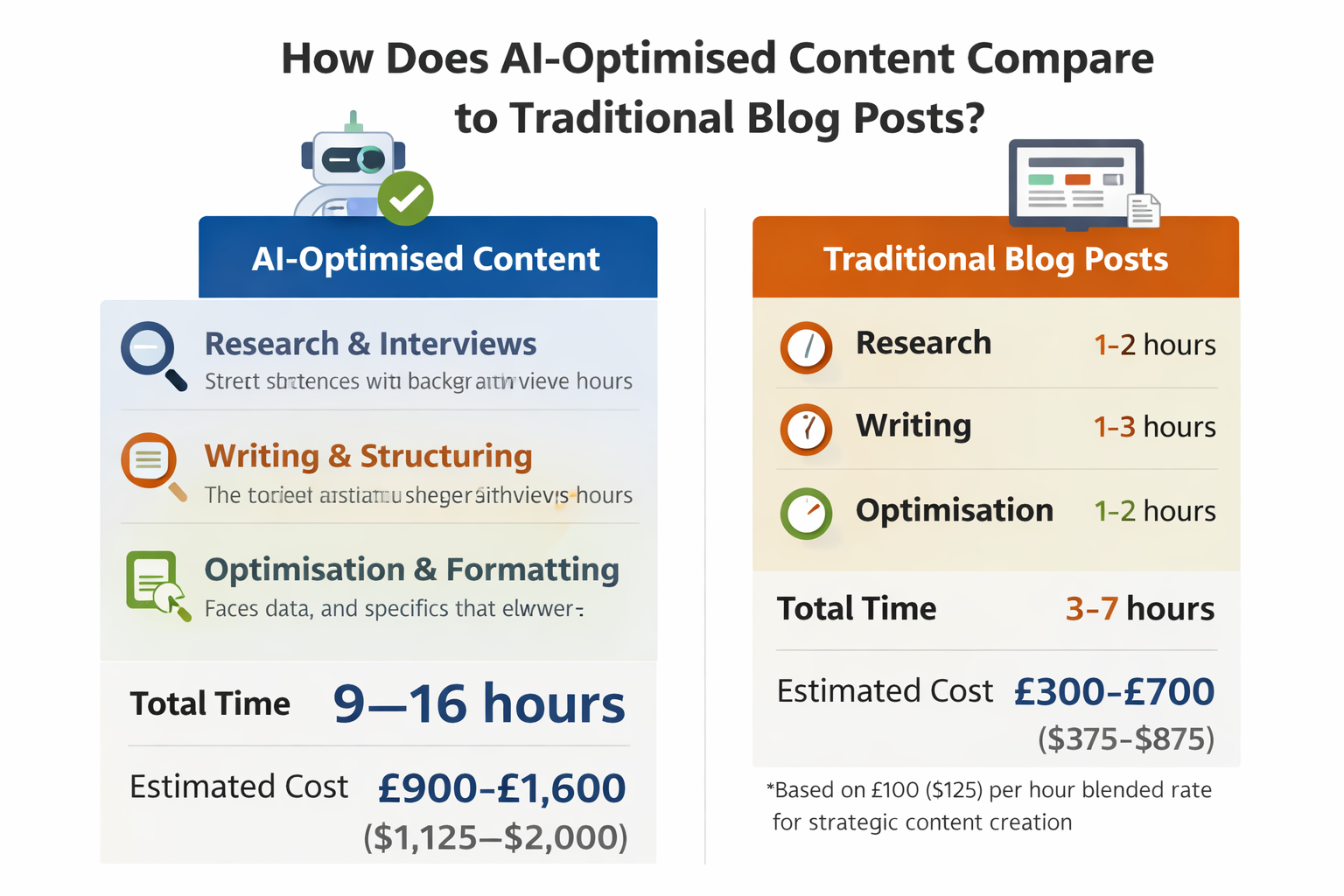
The typical investment includes 4-8 hours for research and expert interviews, 3-5 hours for writing and structuring, and 2-3 hours for optimisation and formatting per article. This assumes you're working with subject matter experts and focusing on depth rather than churning out volume.
| Content Type | Research & Interviews | Writing & Structuring | Optimisation | Total Time | Estimated Cost* |
|---|---|---|---|---|---|
| Short-form blog (800-1,200 words) | 2-4 hours | 2-3 hours | 1-2 hours | 5-9 hours | £400-£900 ($500-$1,125) |
| Long-form guide (2,000-3,000 words) | 6-10 hours | 5-8 hours | 3-4 hours | 14-22 hours | £1,100-£2,200 ($1,375-$2,750) |
| Data-driven article | 8-12 hours | 4-6 hours | 2-3 hours | 14-21 hours | £1,100-£2,100 ($1,375-$2,625) |
*Based on £100 ($125) per hour blended rate for strategic content creation
Here's how that time investment typically breaks down by content type:
Time investment breakdown
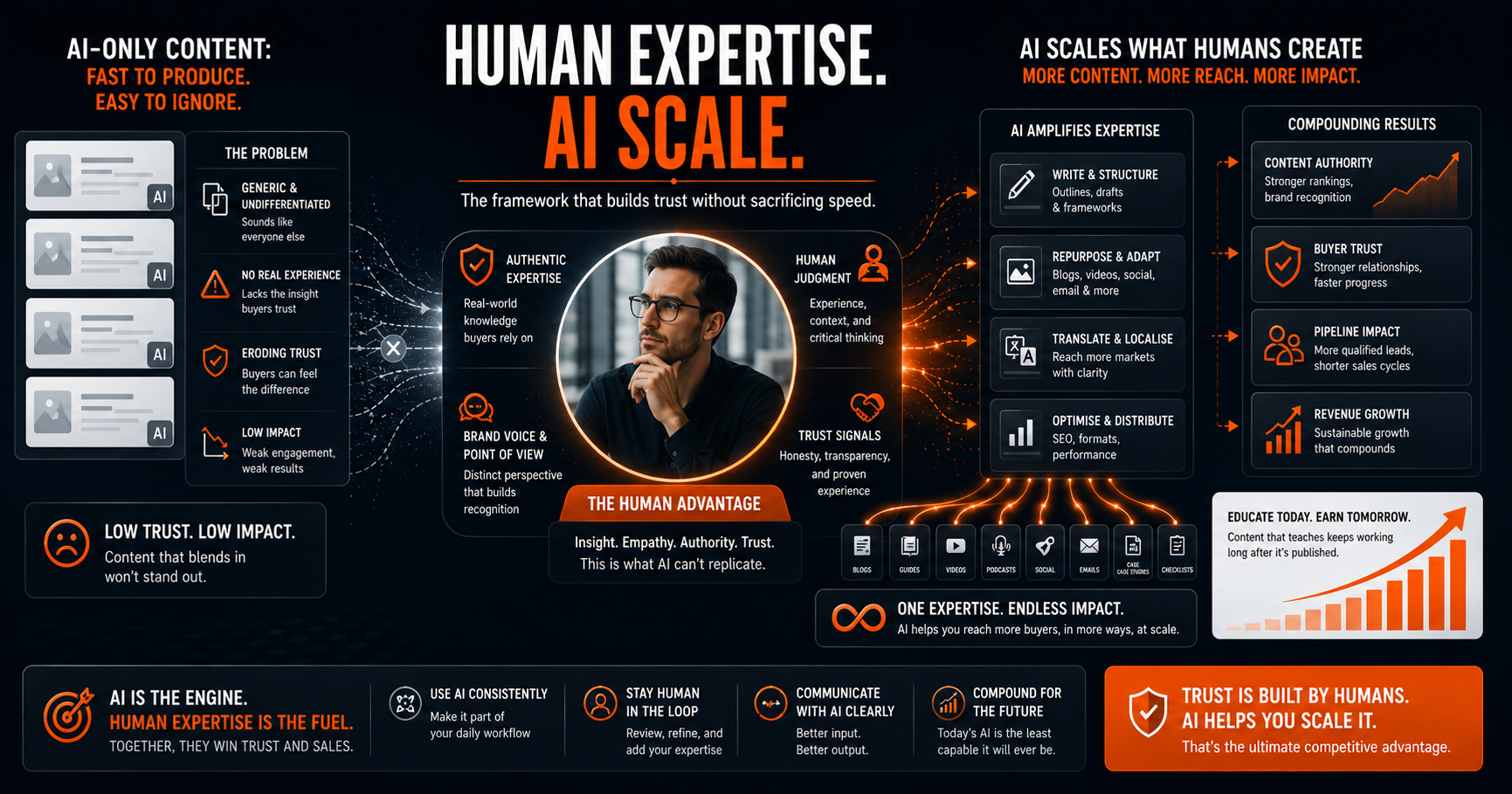
Research demands the largest chunk of time because you need original insights, not repackaged information. AI systems reward genuine expertise over recycled content, so interviews with your team's subject matter experts become invaluable.
Tools and resources needed
You don't need expensive software. The core requirements are access to experts, a clear editorial process, and someone who understands both your industry and content structure. Many businesses already have these resources—they just haven't organised them properly.
What are the biggest mistakes that prevent content from being quoted by AI?
The three most common mistakes are burying answers deep in content, using vague or hedging language instead of direct statements, and failing to structure information in scannable formats. These errors signal to AI systems that your content lacks confidence or clarity.
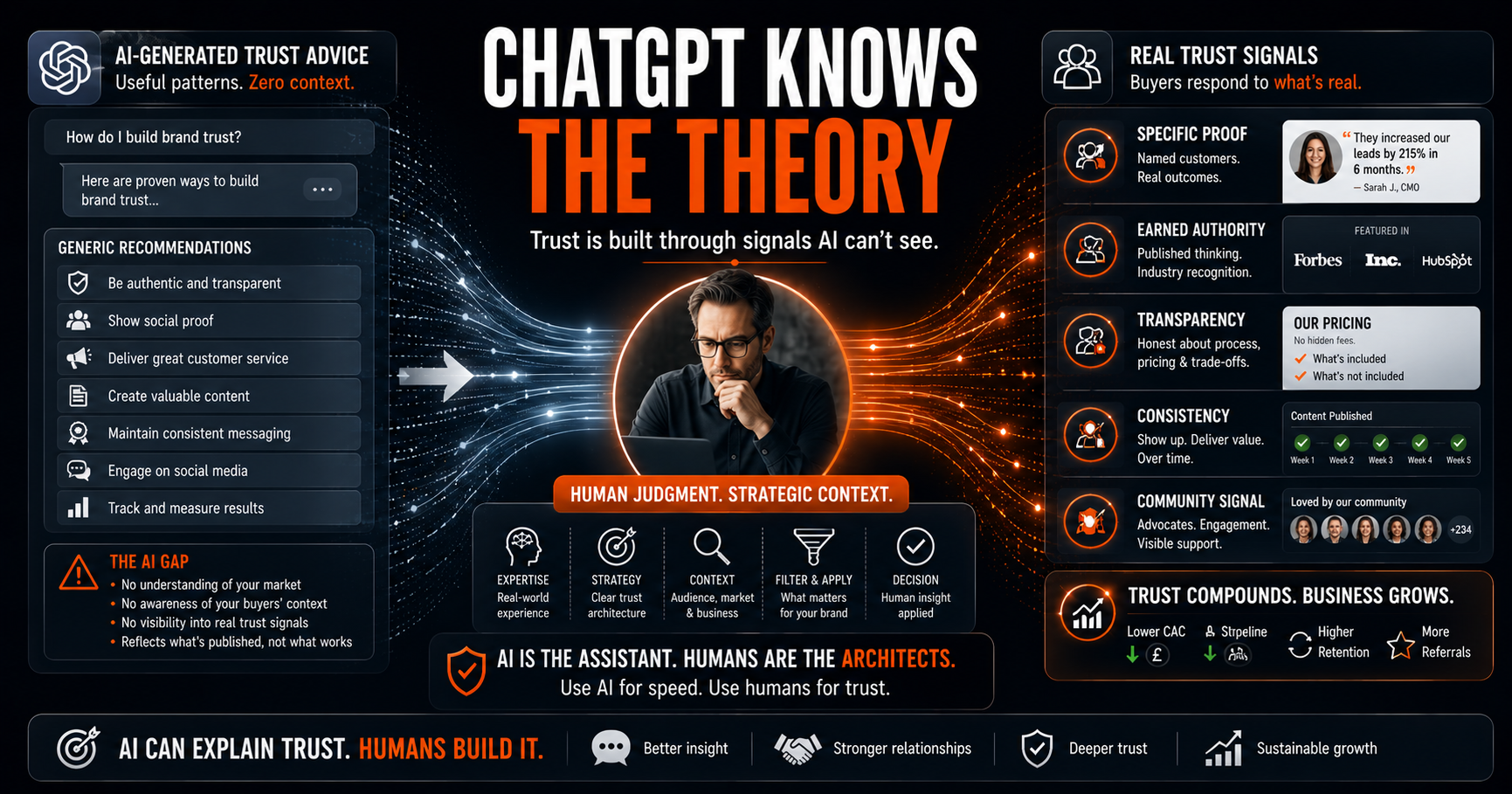
Lazy GPT-generated copy with no edits or humanity added creates a flood of low-quality content that AI systems learn to avoid citing. When AI spots generic patterns it recognises from other AI-generated text, it discounts the source.
The three content traps to avoid
Starting with story instead of answer. Readers searching "What does X cost?" don't need three paragraphs of context before you share a range. Give the answer first, then provide background.
Using corporate hedging language. Phrases like "typically," "generally," "it depends," and "results may vary" without specific parameters tell AI your information isn't reliable enough to quote.
Creating walls of text. Without headings, bullet points, or bold statements, AI can't identify your key points quickly enough to use them.
Common formatting errors
Seven specific mistakes kill AI retrievability:
- No clear headings framed as questions
- Opening paragraphs that don't directly answer the heading
- Missing bullet points where lists would clarify
- No bold text emphasising quotable statements
- Vague data without sources or timeframes
- Industry jargon without plain-language definitions
- Conclusions that don't summarise key points
How AI-Optimised Content Outperforms Traditional SEO in 6 Key Ways
Traditional SEO content focuses on ranking for keywords and driving website traffic, while AI-optimised content prioritises being the single answer that search tools feature at the top or that ChatGPT quotes directly. The measurement of success shifts from clicks to citations.
The key difference is that SEO content aims to get clicks, whereas AEO content aims to provide immediate value and build authority even without clicks. This doesn't mean abandoning SEO, it means evolving your approach to work for both humans and AI.
| Dimension | Traditional SEO | AI-Optimised Content (AEO) |
|---|---|---|
| Primary goal | Drive traffic to website | Provide quotable answers |
| Content structure | Answers buried mid-article | Direct answer in first sentence |
| Success metric | Page views and rankings | Citations and featured snippets |
| Language style | Keyword-focused | Conversational, question-based |
| Content depth | Surface coverage of many topics | Deep expertise on specific questions |
| Value delivery | Requires click to access | Immediate value in search results |

What Are the 7 Key Elements That Make Content AI-Quotable?
AI-quotable content must include seven critical elements: direct answers in the first sentence, self-contained statements that work out of context, clear section headings as natural questions, supporting evidence and data, structured formatting with lists and tables, conversational language that matches voice search, and genuine expertise rather than surface-level information. Each element serves a specific purpose in helping AI systems identify your content as trustworthy and citation-worthy.
- Quote-ready opening sentences: Every section begins with a complete, citable answer. If ChatGPT pulled only that first sentence, would it accurately summarise your point?
- Self-contained statements: Each paragraph should make sense even when extracted. Avoid pronouns without clear antecedents and don't rely on previous context.
- Question-based headings: Frame your H2 and H3 headings as natural questions people actually ask. "How much does X cost?" works better than "Pricing considerations."
- Specific data with sources: Replace "many businesses" with "68% of B2B buyers" and include the source. AI trusts numbers more than generalisations.
- Scannable structure: Use bullet points for lists, tables for comparisons, and bold text for key statements. Someone should understand your article reading only the bold sentences.
- Conversational tone: Write how people speak. "You'll need three things to get started" beats "There are three requirements for commencement."
- Demonstrated expertise: Include original research, expert interviews, or unique insights from your experience. Generic advice gets ignored.
How Do You Structure Content for Maximum AI Retrievability?
Start by writing your first sentence under each heading as a complete, quotable answer that AI can extract verbatim without any additional context. This single habit transforms average content into citation-worthy material.
The process follows five key stages: research and question identification, creating quote-ready opening sentences, structuring information in scannable chunks, adding supporting evidence, and optimising for conversational queries.
Stage 1: Research buyer questions
Begin by collecting actual questions your customers ask. Check your sales team's call notes, review support tickets, analyse search queries bringing traffic to your site, and listen to how prospects phrase questions in discovery calls.
Don't guess at what people want to know; document what they actually ask. This research phase typically takes 2-4 hours but determines whether your content gets quoted.
Stage 2: Write quote-ready openers
For each question, write a one-sentence answer that works standalone. Test it by reading only that sentence; would someone understand the core point? Could ChatGPT quote it accurately without additional context?
Stage 3: Structure for scannability
Break content into short paragraphs (2-3 sentences maximum). Use bullet points for any list of three or more items. Create tables for comparisons. Add bold text to 3-4 key statements per section beyond your opening sentence.
Add calculation frameworks where relevant. For example:
Simple ROI estimation: (Time saved per month × hourly rate × 12 months) - (annual cost of solution) = annual return
This helps AI answer "How do I calculate..." questions using your content.
How to balance giving away value with driving conversions
The key is providing complete answers to immediate questions while creating natural curiosity about deeper solutions and implementation support. You're not holding back information, you're showing there are levels of complexity beyond the basic answer.
Success with zero-click content requires finding the right balance between immediate value and deeper engagement—like a good conversation at a party where you share something interesting enough to make people want to know more.
Answer the surface question completely. When someone asks "How much does X cost?", give them ranges, factors that affect pricing, and context. But in doing so, you naturally reveal that choosing the right option, implementing it properly, and maximising ROI requires deeper consideration.
You establish authority through demonstration, not gatekeeping. Every complete answer positions you as the expert willing to help, making readers more likely to trust you with the complex stuff.
Real results: Companies winning AI citations
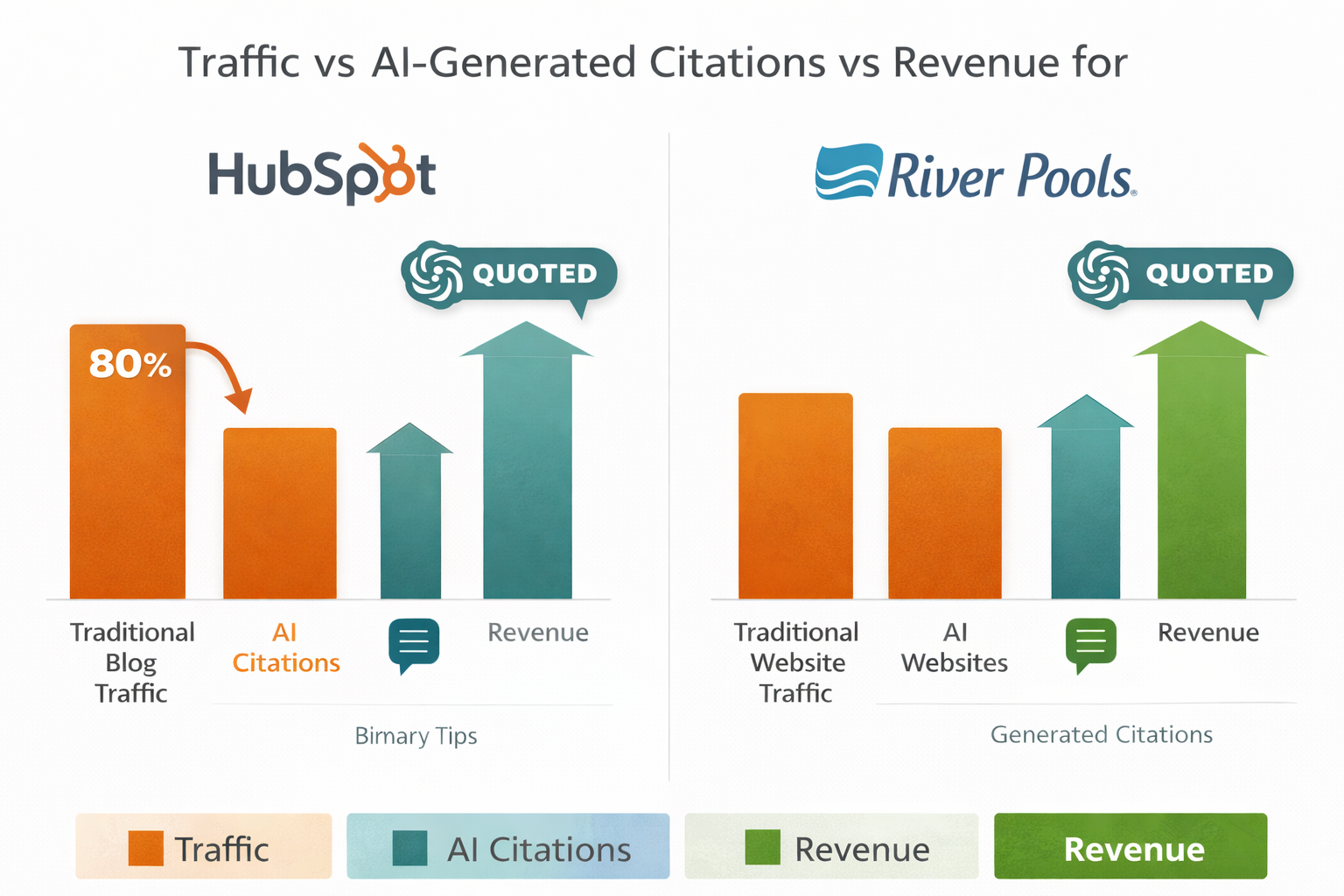
HubSpot transformed their content strategy to focus on depth over breadth and expertise over volume, resulting in better visibility in AI-generated responses from tools like ChatGPT despite reduced overall traffic. Early reports in Q1 2025 suggested HubSpot lost 80% of blog traffic, but the reality proved more nuanced.
Starting around 2020, HubSpot strategically shifted from chasing traffic volume with broad informational content to building influence through depth. They invested heavily in YouTube, podcasts, HubSpot Academy, and acquired The Hustle for founder-centric content. The result was strong performance for transactional keywords, better visibility in AI responses, and more qualified leads from their most relevant content.
River Pools and Spas generated over £1.5 million ($1.875 million) in revenue from a single article addressing fiberglass pool problems, which now appears consistently in AI search results. By honestly addressing "Top 5 Fiberglass Pool Problems and Solutions," they didn't hide from concerns; they answered them directly, earning both human trust and AI citations.
The lesson? AI systems reward businesses willing to address uncomfortable questions with honest, detailed answers. Marcus Sheridan's approach of answering every customer question transparently has proven as effective for AI visibility as it was for traditional SEO.
FAQ: Getting quoted by ChatGPT and AI search engines
How long does it take to see results?
Most businesses see their content appearing in AI responses within 6-12 weeks of publishing optimised articles, with full authority building taking 6-9 months. The timeline depends on your existing domain authority and content volume.
Do I need to rewrite all my existing content?
No. Start by optimising your top 10 most-visited pages and any content targeting high-priority buyer questions. Add quote-ready opening sentences, improve structure, and ensure statements work standalone. Then apply these principles to new content going forward.
Will this hurt my traditional SEO rankings?
AI-optimised content typically improves traditional SEO performance because the same factors that help AI—clear structure, direct answers, supporting evidence—also improve user experience signals Google measures. You're making content better for everyone.
What metrics should I track for AEO success?
Monitor featured snippet appearances, brand mentions in AI responses, branded search volume growth, and direct traffic increases. Track "zero-click impact" through brand searches rather than just page views. Ask new leads how they found you—many will say "ChatGPT recommended you."
Can small businesses compete with larger brands for AI citations?
Yes. AI systems prioritise expertise and directness over brand size. A small business with deep knowledge answering specific questions often wins citations over large brands publishing generic content. Your advantage is subject matter expertise, not marketing budget.
Conclusion
You've seen how content must shift from driving clicks to earning citations. AI search engines aren't replacing traditional search—they're changing what "visibility" means. The businesses winning this new game aren't the ones with the most content, but those with the most quotable expertise.
Most marketers are still playing the old SEO game and losing visibility. They're chasing traffic metrics whilst their competitors build authority through direct answers and genuine expertise. The gap between those who adapt and those who don't grows wider every month.
Audit your top 10 articles and rewrite your opening sentences as quote-ready answers. Create a list of 20 questions your customers actually ask, then answer each one directly. Add scannable formatting—bullet points, tables, bold text—to your highest-traffic pages. Interview your subject matter experts and document their unique insights. Track featured snippet appearances and AI citations as your new success metrics.
Ready to transform your content into a customer generation engine?

About the Author
I'm Tom Wardman, and I've spent the past decade helping businesses transform their marketing from guesswork into growth engines. As one of the UK's first certified coaches in trust-based marketing, I've trained directly under Marcus Sheridan and worked with companies across sectors including FinTech, SaaS, construction, and professional services. I don't just teach these principles—I've used them to help businesses turn content into their most reliable source of quality leads. My approach focuses on building lasting capabilities rather than quick fixes, ensuring your team can create marketing that consistently earns trust and drives sales.
Pricing disclaimer: All GBP–USD price conversions are rounded estimates and correct at the time of publishing. Exchange rates fluctuate and figures should be treated as indicative only.
Topics: