
Key takeaways
- Traditional SEO is failing because over 50% of Google searches now end without a single website click, meaning traffic-based metrics no longer predict revenue.
- Trust-based SEO optimises for visibility, authority, and AI citations rather than just rankings and traffic, addressing both zero-click searches and AI-powered answer engines.
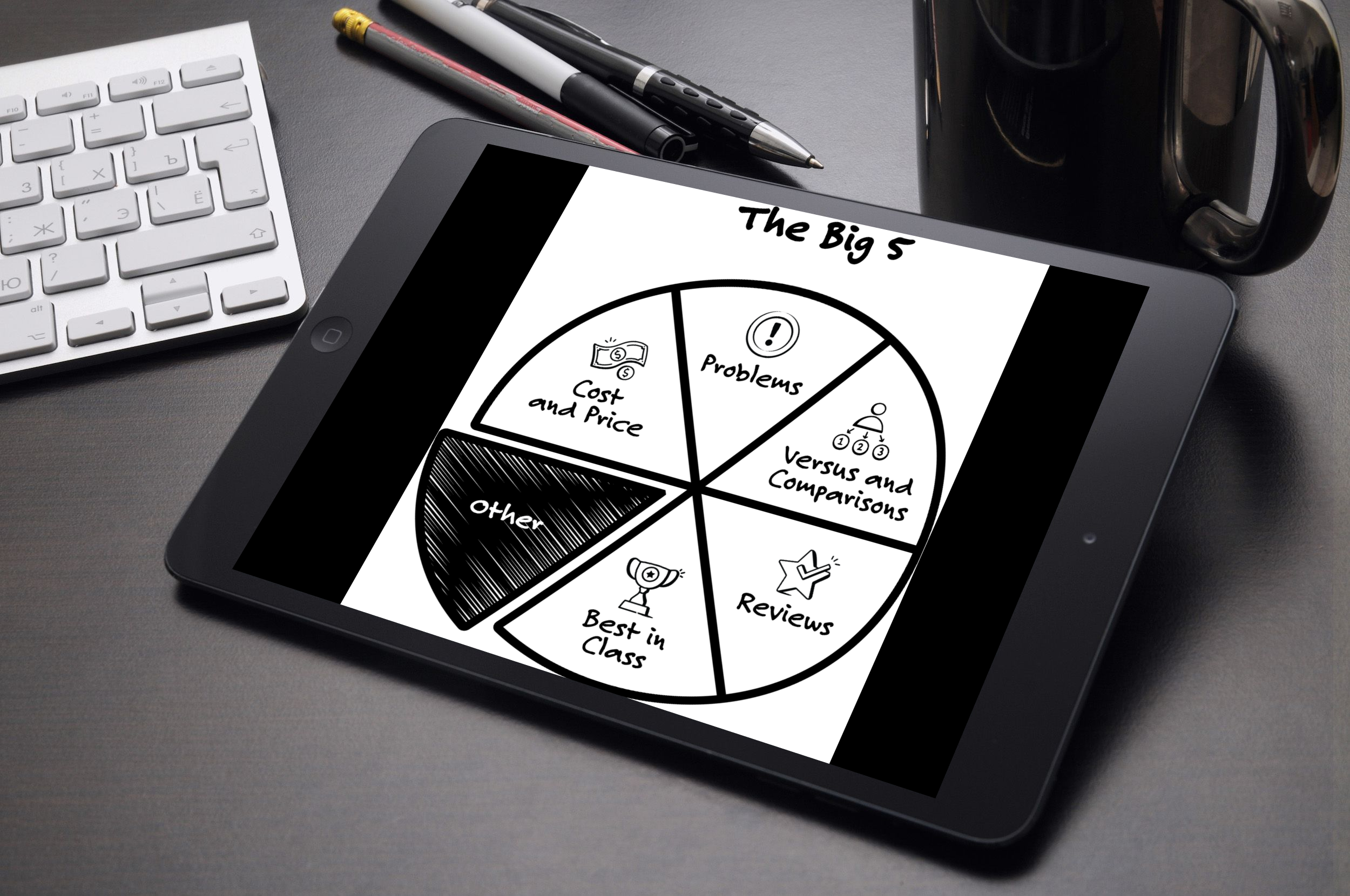
- The Big 5 buyer questions (cost, problems, comparisons, reviews, and best options) drive 80% of purchase decisions, making radical transparency more profitable than promotional content.
- Building trust signals costs less in ad spend but requires 15-25 hours weekly for strategic content creation, with typical investments of £200-£1,500 ($250-$1,875) monthly for tools.
- Success metrics shift from traffic volume to brand authority indicators: featured snippet wins, AI citations, branded search growth, and qualified lead quality over quantity.
Why are your website visits up, but your sales pipeline flat?
Could your SEO strategy be generating visibility without trust, and costing you revenue?
In this article, I'll show you how to pivot from traditional, traffic-focused SEO to trust-based SEO that builds authority, earns AI citations, and ultimately drives qualified leads.
Here's what we'll cover:
- Why traffic doesn't translate to sales anymore
- What metrics actually predict revenue
- A 5-step strategy to build trust, win visibility, and earn AI citations
- Which platforms matter most for building trust in 2026
- How to measure success through signals that predict revenue rather than vanity metrics
What is trust-based SEO?
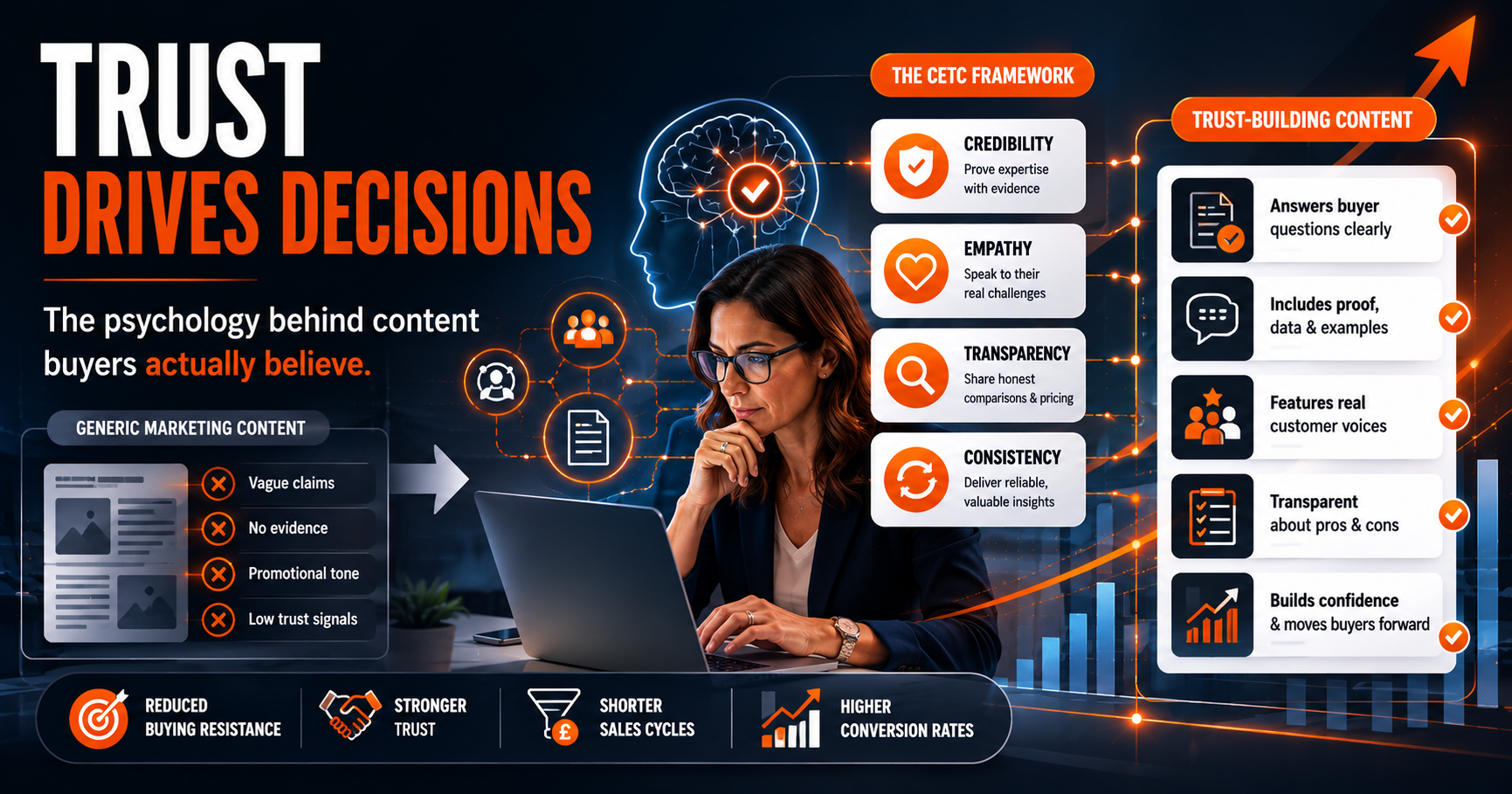
Trust-based SEO is a fundamental shift from optimising solely for search engine rankings to optimising for both human trust and AI-driven answer engines that now determine brand visibility.
Unlike traditional SEO that measures success through traffic and rankings, trust-based SEO prioritises visibility, authority signals, and brand recognition across multiple platforms where buyers conduct research, including ChatGPT, Perplexity, Google's AI Overviews, and featured snippets.
This approach recognises that modern buyers make up to 80% of their purchasing decision online before contacting any company. They're researching on YouTube, reading comparison articles, checking reviews, and asking AI chatbots for recommendations. If your brand isn't visible in these trust-building moments, you've already lost the sale before the buyer even knows you exist.
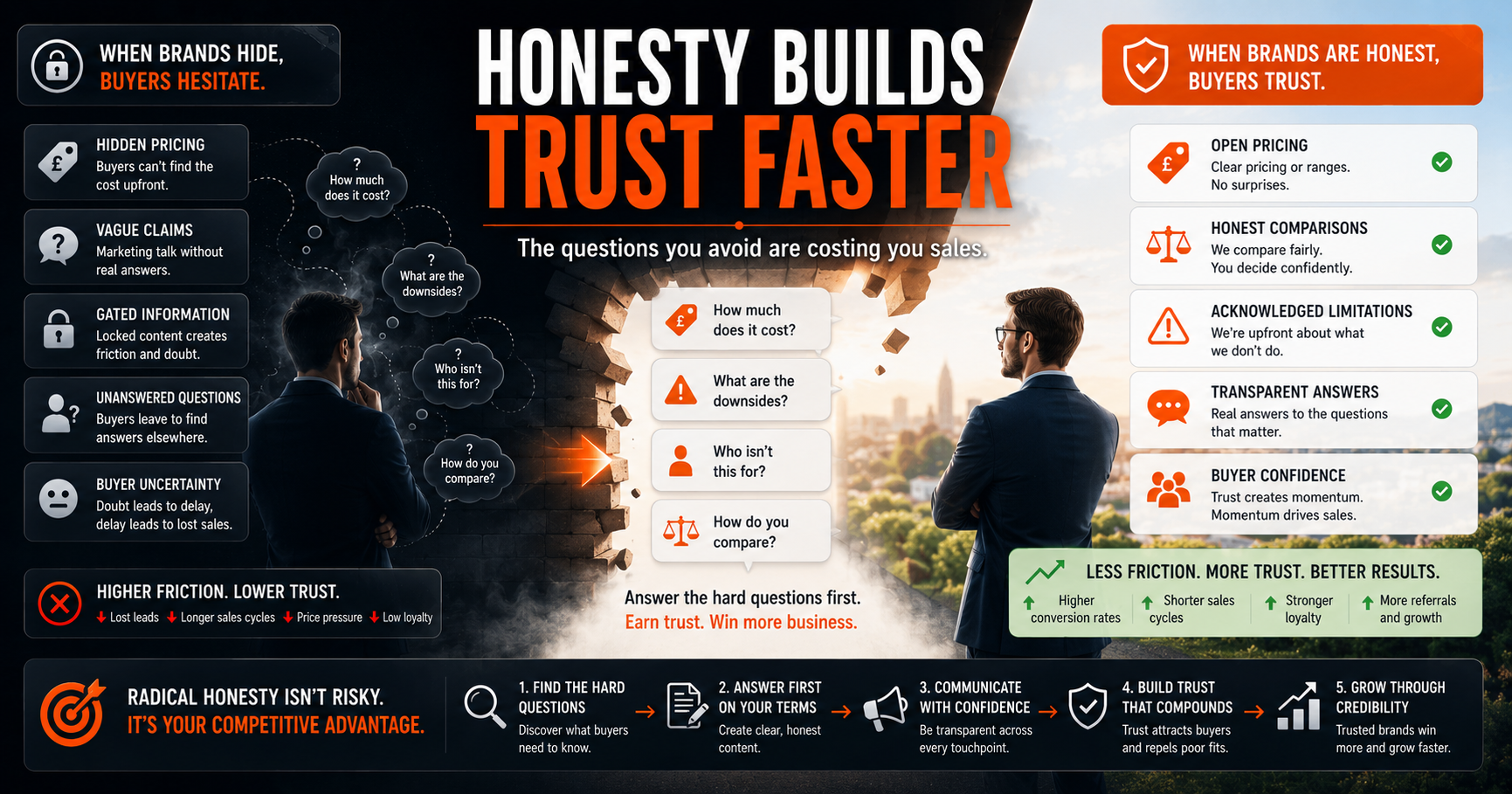
The shift requires answering the questions buyers are actually searching for with radical transparency, rather than creating promotional content designed to manipulate rankings.
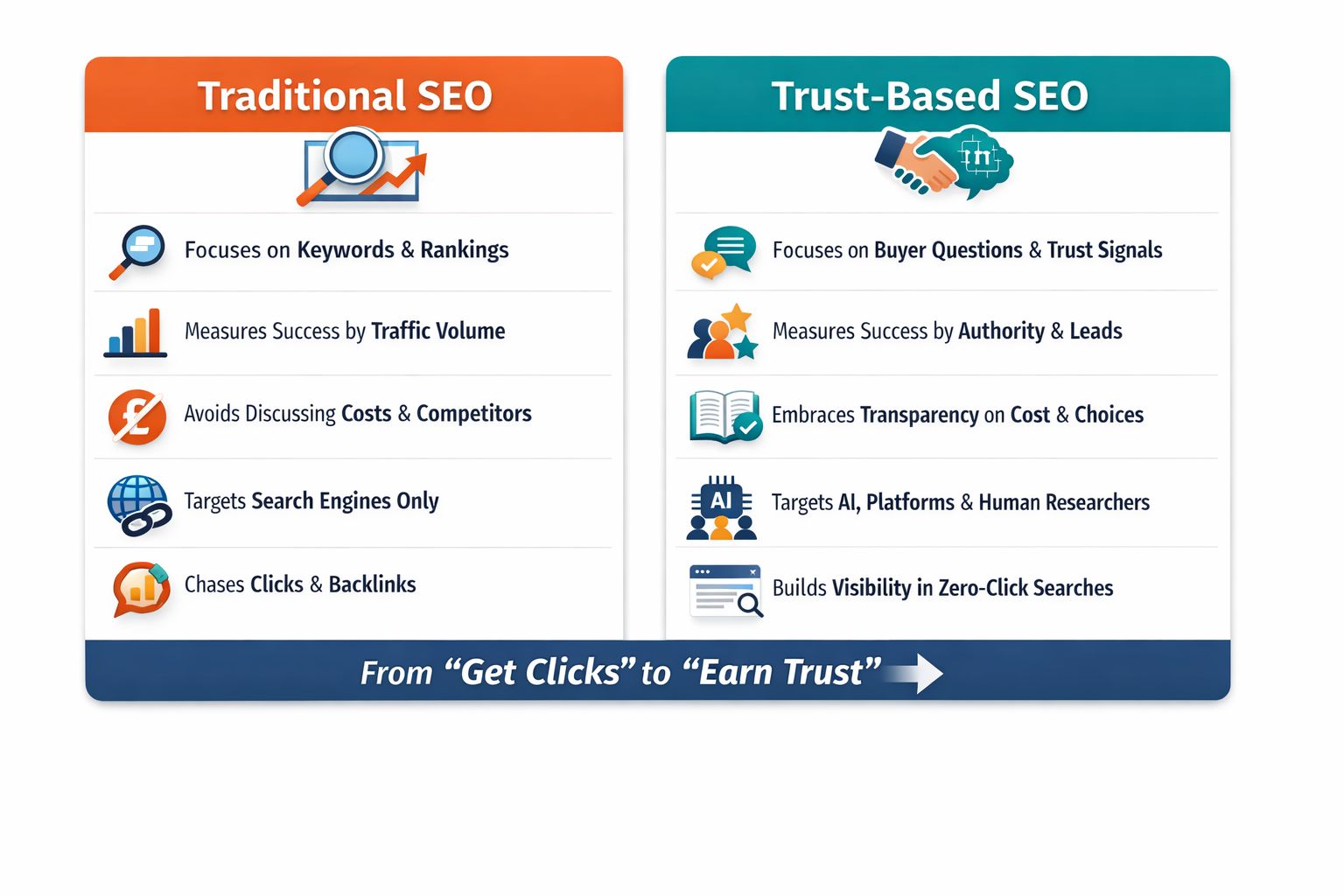
| Traditional SEO | Trust-Based SEO |
|---|---|
| Optimises for keywords and rankings | Optimises for buyer questions and trust signals |
| Measures success by traffic volume | Measures success by brand authority and lead quality |
| Focuses on getting clicks | Focuses on building visibility (even without clicks) |
| Avoids discussing price, problems, competitors | Embraces transparency about cost, limitations, comparisons |
| Targets search engines only | Targets search engines, AI tools, and human decision-makers |
Why traditional SEO strategies are failing in 2026
Over half of all Google searches now end without a single website click, as users find answers directly in search results, AI chatbots, and featured snippets (Semrush, 2024).
This "zero-click" reality means that ranking #1 for a keyword no longer guarantees traffic, and traffic no longer guarantees revenue. Your perfectly optimised blog post might rank beautifully whilst an AI tool summarises your competitor's answer instead, and you'll never know the opportunity you lost.
HubSpot's viral crisis perfectly illustrates what's broken. Reports claimed they lost 80% of their blog traffic seemingly overnight, sparking panic across marketing communities about "the death of SEO." But Kieran Flanagan, one of HubSpot's former SEO architects, revealed the truth: this wasn't a failure but a strategic pivot.
Starting around 2020, HubSpot noticed Google increasingly rewarding influence rather than information. They intentionally shifted from chasing traffic volume to building authority through YouTube, HubSpot Academy, and founder-led content. Their traffic dropped, but their qualified leads and transactional keyword performance actually grew substantially. Most importantly, they gained better visibility in AI-generated responses.
The lesson isn't that SEO is dead; it's that traffic-focused SEO is dead. The businesses winning today optimise for trust and authority, not clicks.
Trust-based SEO vs traditional SEO: Key differences
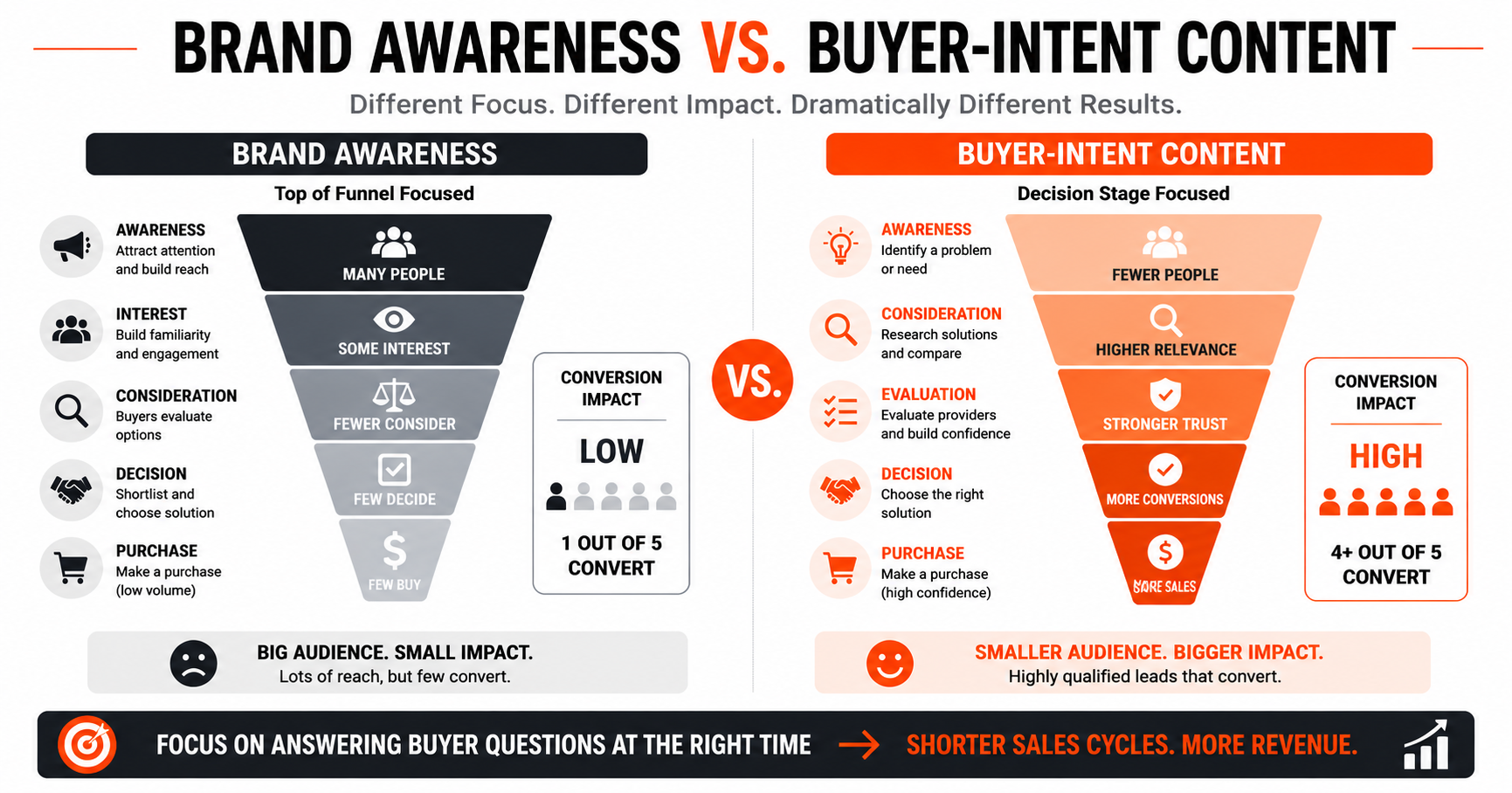
Traditional SEO optimises for clicks and rankings, whilst trust-based SEO optimises for visibility, authority, and being cited by AI systems, even when users never visit your website.
What traditional SEO prioritises
Traditional approaches chase keyword rankings, backlinks from any source, content volume over quality, and traffic metrics. Success looks like "we ranked #3 for this keyword" or "traffic increased 40%." These tactics worked brilliantly when search engines showed 10 blue links and users clicked through to websites.
What trust-based SEO prioritises
The fundamental difference lies in success metrics: traditional SEO tracks traffic and conversions, whilst trust-based SEO tracks brand authority signals, featured snippet wins, AI citations, and qualified lead quality over quantity.
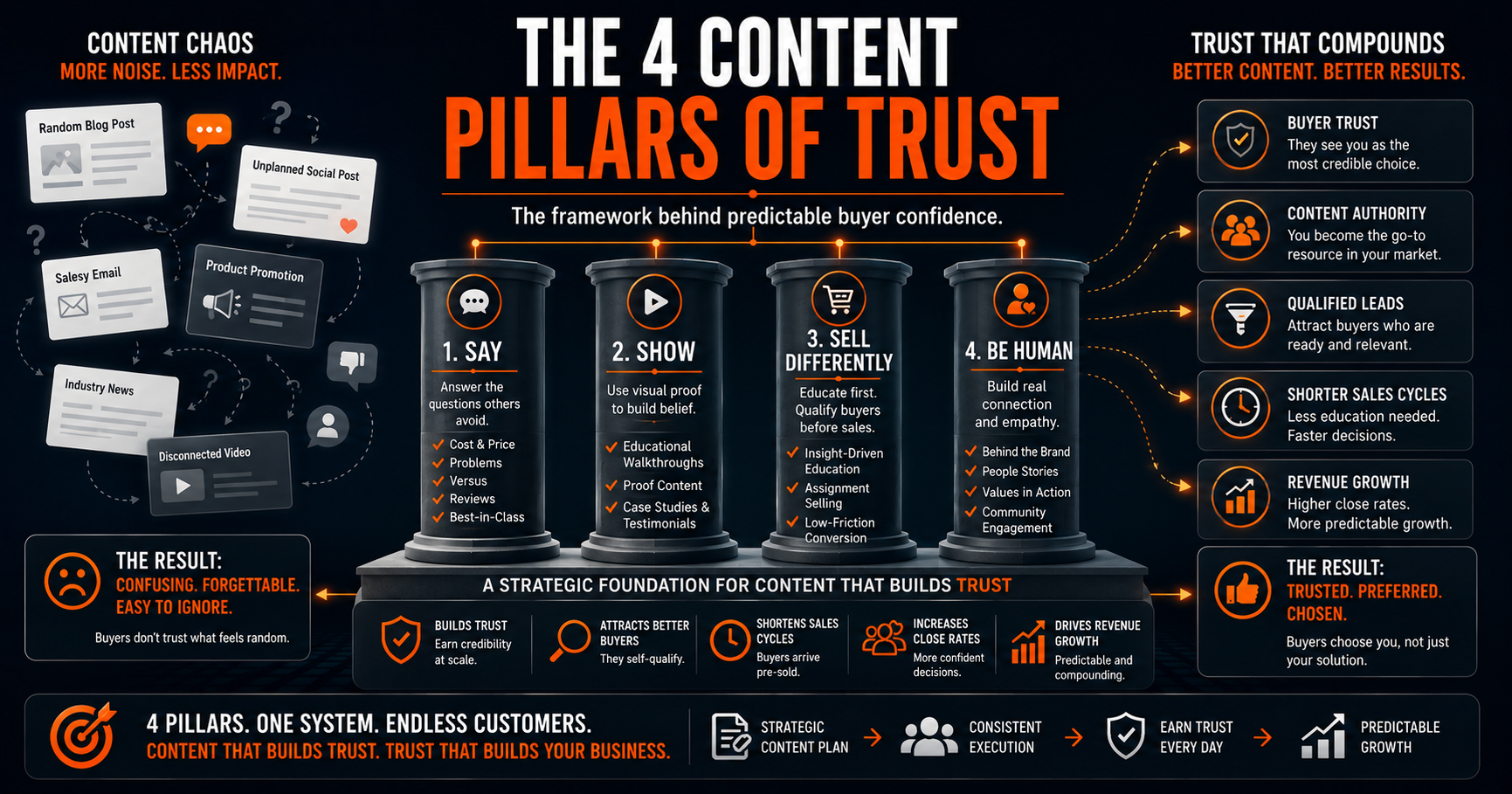
Trust-based SEO answers the five questions that drive 80% of buyer decisions: cost and pricing, problems and limitations, versus and comparisons, reviews and social proof, and best-in-class recommendations. Being honest about who you're not right for builds more trust than claiming you're perfect for everyone.
When Marcus Sheridan wrote "Top 5 Fiberglass Pool Problems and Solutions" for River Pools, admitting his product's limitations, that single article generated over $2 million in attributed revenue. They trusted him because he told the truth.
Trust-based SEO costs less than you think, but demands time
Trust-based SEO requires less financial investment in link building and ads but demands significantly more investment in quality content creation, with most businesses needing to allocate 15-25 hours weekly for strategic content development.
The cost shift moves from external spend (paid ads, link buying, agency retainers) to internal capability building, with typical investments including:
- Content creation tools: £200-£1,500 ($250-$1,875) monthly for platforms like grammar checkers, SEO analysis tools, and design software
- In-house content expertise: £35,000-£55,000 ($43,750-$68,750) annually for a content manager or strategist
- Time allocation: 15-25 hours weekly from subject matter experts to provide insights and review content
- Training investment: £2,000-£8,000 ($2,500-$10,000) for team education on trust-based content creation
Compare this to traditional SEO agency retainers of £3,000-£10,000 ($3,750-$12,500) monthly with questionable ROI, plus paid advertising budgets that deliver diminishing returns. Kraft Heinz pivoted completely from paid ads to content marketing and achieved 4x better returns.
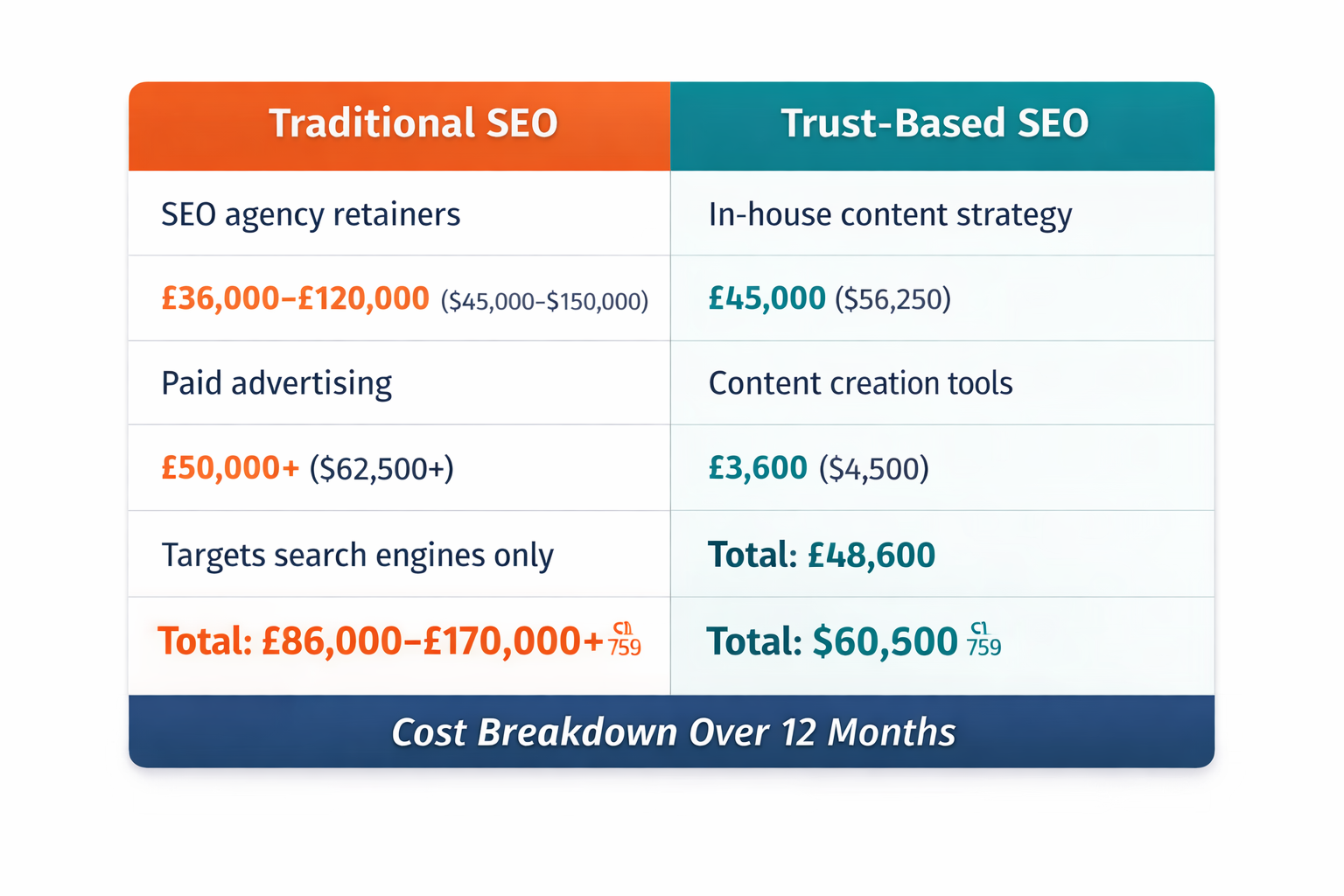
Simple cost comparison over 12 months:
- Traditional SEO approach: £36,000-£120,000 ($45,000-$150,000) in agency fees + £50,000+ ($62,500+) in paid ads = £86,000-£170,000+ ($107,500-$212,500+)
- Trust-based approach: £45,000 ($56,250) for in-house capability + £3,600 ($4,500) in tools = £48,600 ($60,750)
The investment is lower financially but higher in commitment and strategic thinking.
What problems does trust-based SEO solve?
The trust deficit problem
Trust-based SEO directly addresses the growing trust deficit, with 81% of consumers requiring trust before purchase, yet only one-third trusting most brands they buy from (Edelman Trust Barometer).
Traditional marketing creates this gap by focusing on promotion rather than education. Buyers can smell sales pitches from miles away. They want honest answers to difficult questions: "What are the problems with this solution?" "Who is this not right for?" "How much does this actually cost?"
When you avoid these questions, buyers assume you're hiding something. When you answer them transparently, you build trust that competitors can't match.
The zero-click visibility crisis
Beyond the trust gap, this approach solves the zero-click problem where traditional websites lose visibility, the commoditisation trap where price becomes the only differentiator, and the declining effectiveness of paid advertising.
When Sheffield Metals published "7 Common Problems of a Metal Roof" on YouTube, they captured visibility for searchers who never clicked through to their website. The video generated over 200,000 views and became the first result for "problems with metal roofs", positioning them as the trusted authority even for buyers still in research mode.
You're not giving away too much by answering questions thoroughly. You're building trust at the exact moment buyers need it most.
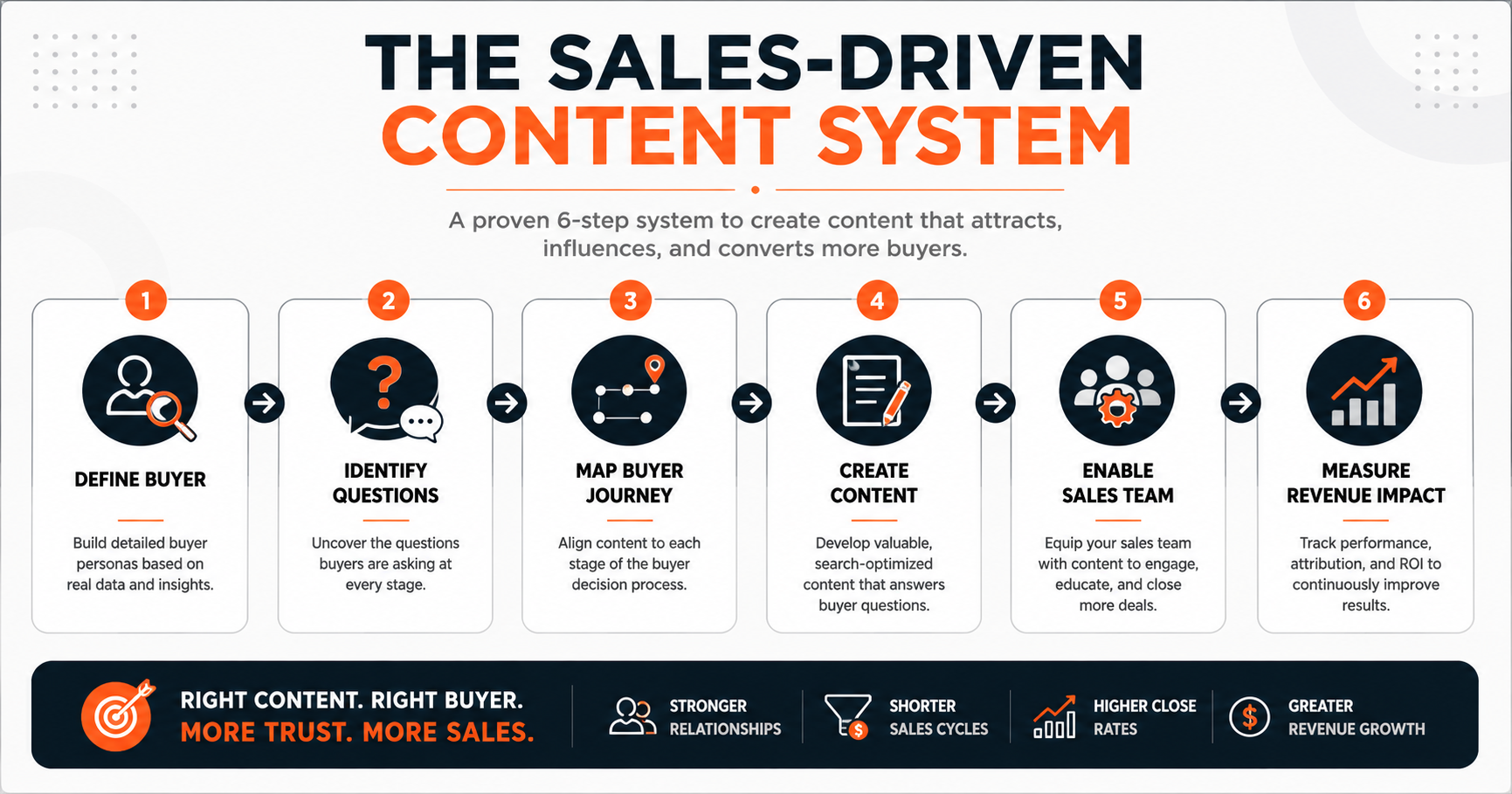
5-step trust-based SEO strategy that builds buyer authority and AI visibility
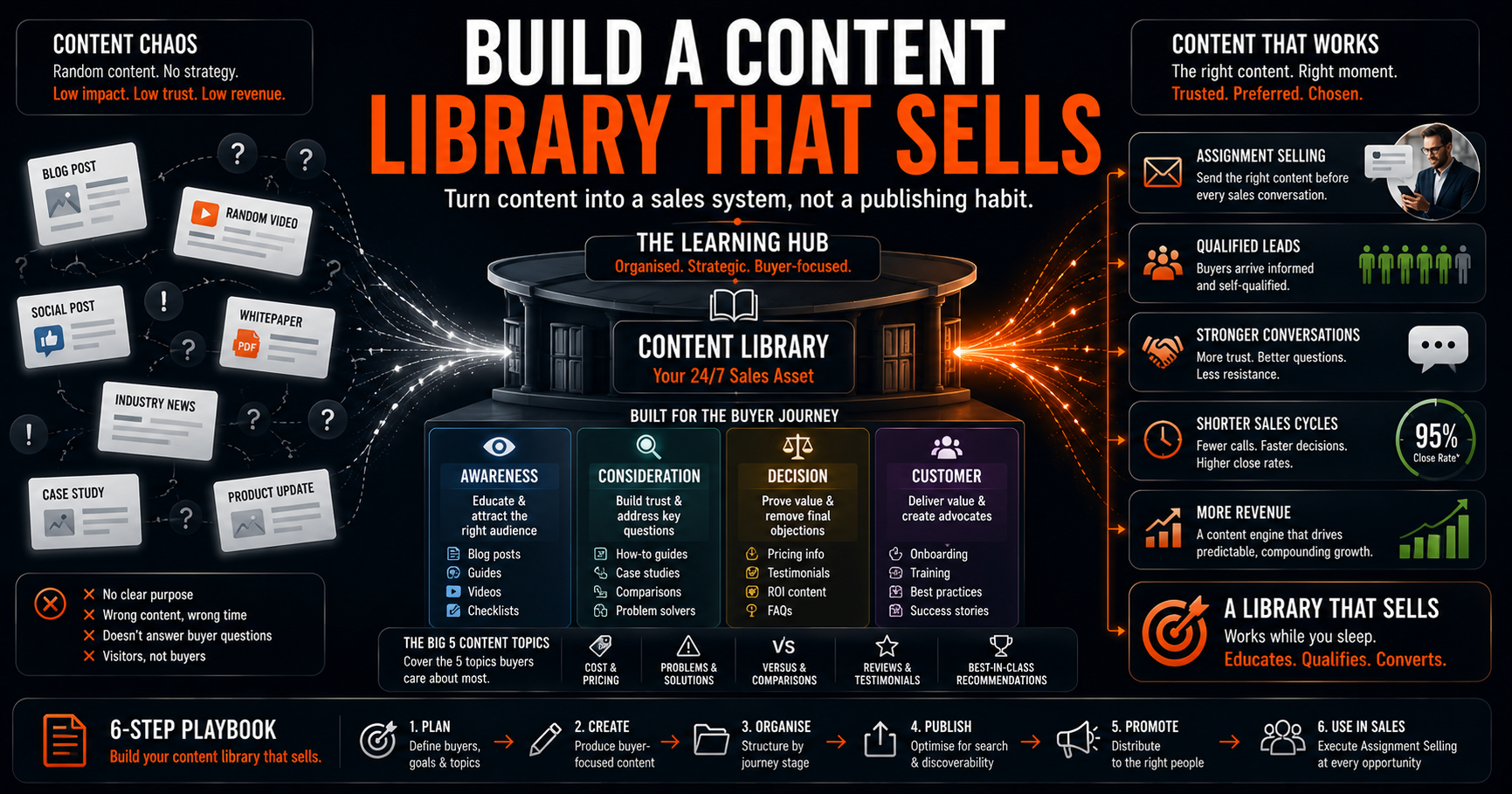
Implementing trust-based SEO starts with answering the questions your buyers are actually searching for, particularly the five topics that drive 80% of purchase decisions: cost, problems, comparisons, reviews, and best options.
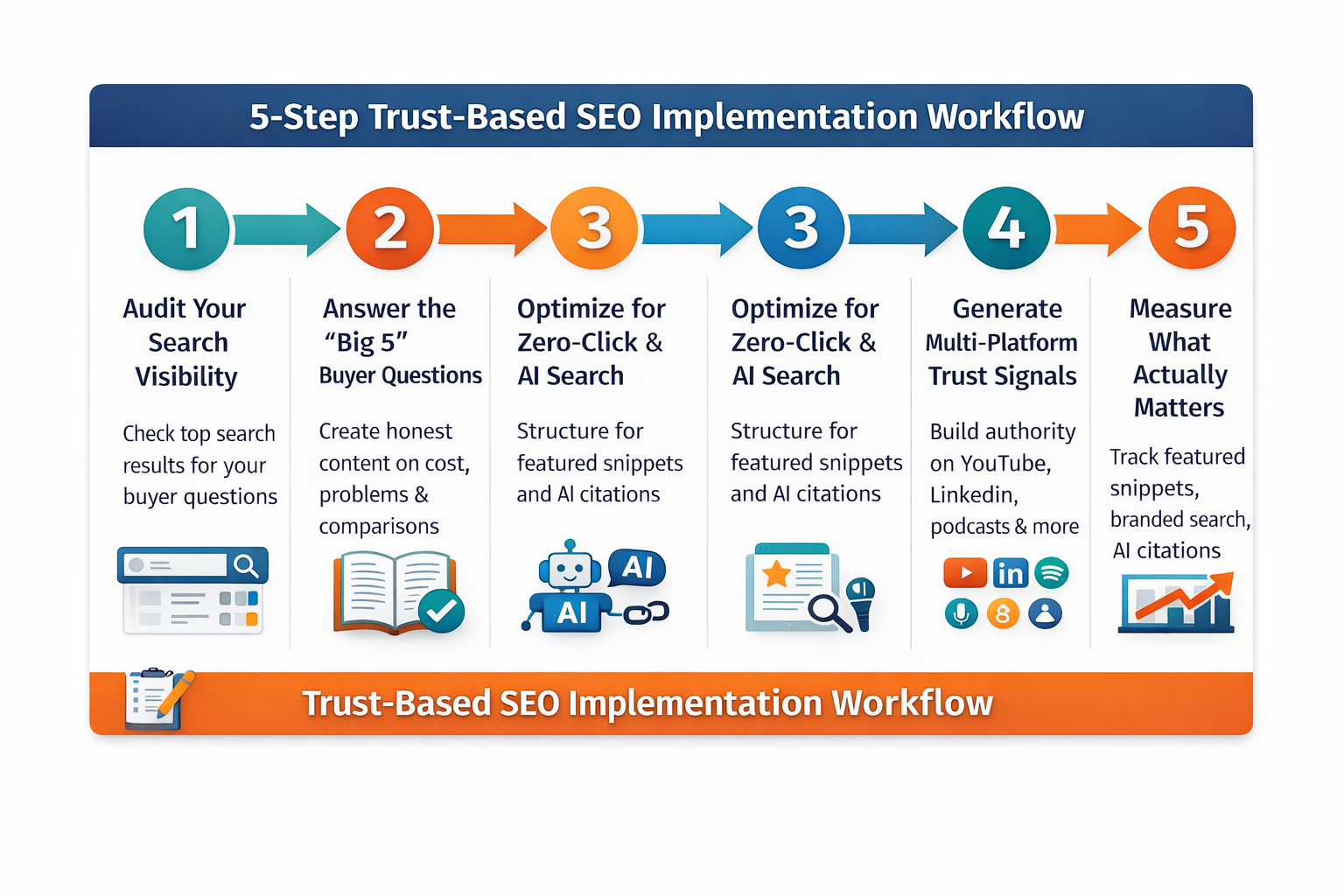
Step 1: Audit your search visibility
Check what appears in search results for your key buyer questions. What featured snippets exist? Which competitors own them? Use tools like Semrush or Ahrefs to identify the specific questions buyers ask at each stage of their journey.
Look beyond your website, search for your brand plus terms like "reviews," "problems," "vs [competitor]," and "cost." If you're not providing answers, someone else is controlling your narrative.
Step 2: Answer the 'Big 5' buyer questions
Create comprehensive content that addresses cost and pricing (specific ranges, what influences price, ROI expectations), problems and limitations (honest discussion of who you're not right for), versus and comparisons (unbiased analysis of you vs competitors), reviews and social proof (customer stories with specific results), and best-in-class guidance (helping buyers choose the right solution, even if it's not you).
The KR Group's article "6 Problems with Cisco Umbrella (and Their Solutions)" became their second most-viewed page because it answered the exact question prospects were researching.
Step 3: Optimise for zero-click and AI search
Structure content for featured snippets with clear headings, concise definitions, numbered lists, and direct answers in the first 40-60 words. Create content that provides immediate value even if readers never click through to your website.
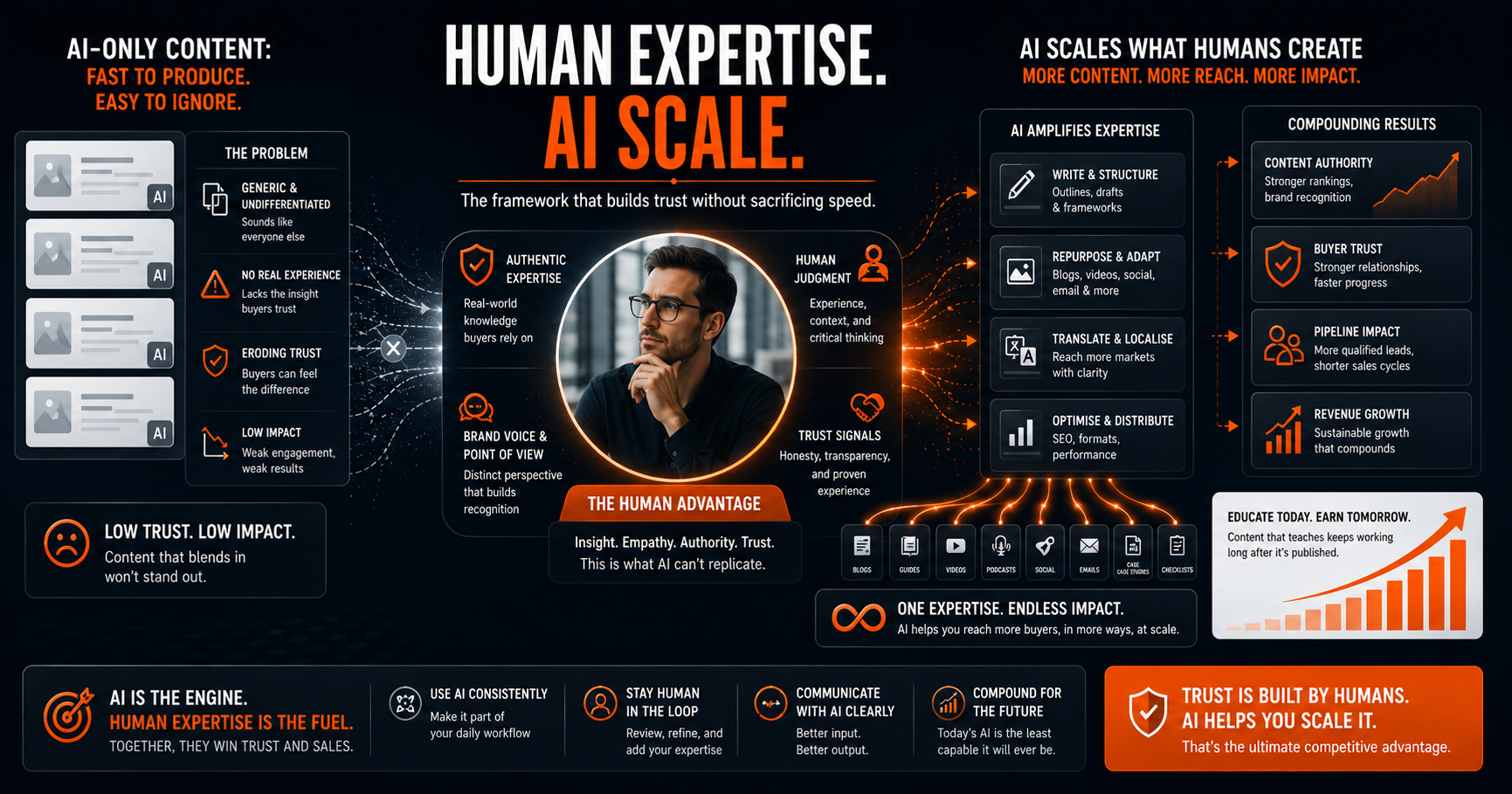
AI search engines like ChatGPT and Perplexity prioritise content that clearly answers questions with supporting evidence. Include specific numbers, timeframes, and examples that AI can easily extract and cite.
Step 4: Generate multi-platform trust signals
Success requires building authority across platforms where buyers research: YouTube for educational content, LinkedIn for B2B credibility, industry review sites, podcasts for thought leadership, and anywhere AI training models source information.
Your YouTube channel may become more valuable than your website for building trust. 68% of shoppers use YouTube for purchase research before buying.
Step 5: Measure what actually matters
Track featured snippet wins, knowledge panel presence, branded search volume growth (people searching specifically for your company name), direct traffic increases (bypassing search entirely), AI citations in ChatGPT and Perplexity, time on page and scroll depth, and qualified lead quality (deal size, sales cycle length, close rate).
Companies that consistently measure content marketing ROI are 12 times more likely to see year-over-year increases (Content Marketing Institute).
7 trust signals that AI search engines actually track
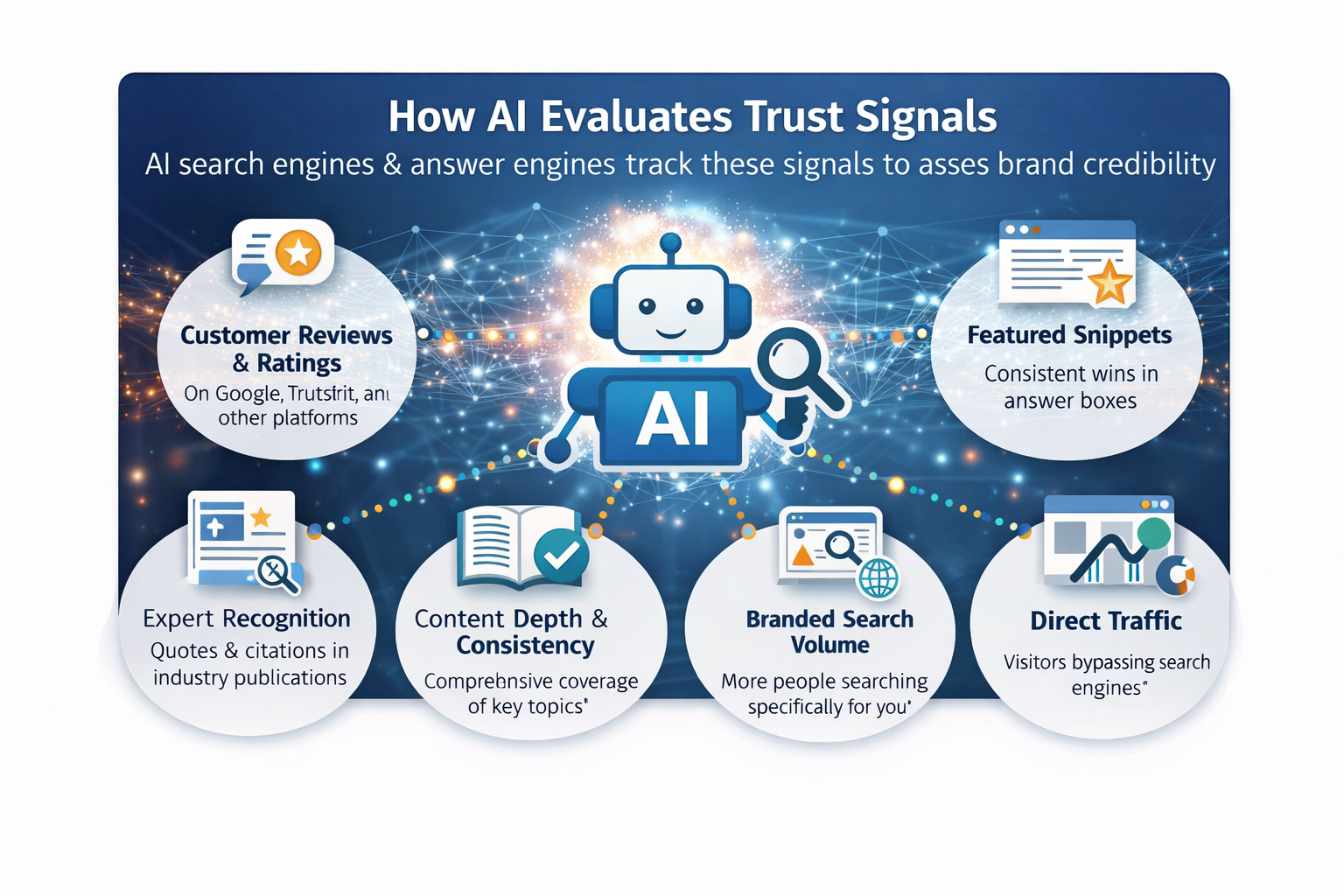
AI search engines and answer engines don't just count backlinks, they evaluate trust signals including expert recognition, industry citations, customer reviews, branded search volume, social proof, content consistency, and platform-native authority.
- Customer reviews and ratings: Verified feedback on Google, Trustpilot, and industry-specific review platforms showing satisfaction patterns
- Expert recognition: Being quoted, cited, or featured by industry publications and thought leaders
- Featured snippets and knowledge panels: Consistent wins in Google's answer boxes and knowledge graph presence
- Podcast and media mentions: Third-party validation through interviews and features on respected platforms
- Branded search growth: Increasing numbers of people searching specifically for your company name
- Direct traffic increases: Users bypassing search engines to visit you directly, signalling brand recall
- Content depth and consistency: Comprehensive coverage of your industry's key topics, regularly updated with fresh insights
Every trust signal tells AI that your brand is credible. AI models synthesise these signals to determine whether to recommend your brand when users ask for advice.
Best platforms for building SEO-driven trust in 2026
YouTube has evolved beyond video hosting into the 'University of Everything,' with 68% of shoppers using it for purchase research (Think with Google) and potentially making your YouTube channel more valuable than your website.
Video content allows buyers to assess not just what you know, but how you explain it, your authenticity, and whether they'd want to work with you. The visual medium builds trust faster than text alone.
The most effective trust-building platforms now span:
- Google's Knowledge Graph: Ensure accurate business information, win featured snippets, and maintain your knowledge panel
- YouTube: Create educational how-to content, answer the Big 5 questions on video, and build thought leadership through consistent publishing
- LinkedIn (for B2B): Share insights, engage genuinely with your industry, and demonstrate expertise through articles and comments
- Industry review sites: Actively manage profiles on Trustpilot, G2, Capterra, or industry-specific platforms
- Podcast platforms: Guest appearances on relevant shows, or host your own to demonstrate depth of expertise
- AI training sources: Create content formatted for easy extraction by AI models, clear structure, factual statements, cited sources
Remember that 57% of consumers spend more with brands they feel connected to on social media (Sprout Social). Connection requires genuine engagement, not broadcast-style promotion.
How to measure trust-based SEO success
Companies that consistently measure content marketing ROI are 12 times more likely to see year-over-year increases, but trust-based SEO requires tracking four new metric categories: visibility metrics, authority metrics, engagement metrics, and conversion quality.
Success measurement shifts from 'how much traffic did we get' to 'how much trust did we build,' tracking indicators like:
Visibility metrics:
- Featured snippet ownership for key buyer questions
- Knowledge panel presence and accuracy
- AI citation frequency in ChatGPT, Perplexity, and other tools (while AI tools don't yet offer public citation dashboards, you can monitor visibility by manually testing branded queries and tracking when your content appears in AI-generated answers)
- Share of voice for your topic area
Authority metrics:
- Branded search volume growth (month-over-month)
- Direct traffic increases (users bypassing search)
- Expert recognition (media mentions, podcast invitations)
- Industry citations and backlinks from authoritative sources
Engagement metrics:
- Time on page for key content pieces (target: 3+ minutes for comprehensive guides)
- Scroll depth (how far readers engage with your content)
- Return visitor rate
- Content-assisted conversions in your CRM
Conversion quality metrics:
- Average deal size from content-educated leads vs cold outreach
- Sales cycle length (trust-built leads typically close 30-50% faster)
- Close rate for leads who consumed trust-building content
- Customer satisfaction and retention rates
Track attribution to trust-building content in closed deals. My clients consistently find that prospects who've consumed educational content before contact have 40-60% higher close rates and 25-35% shorter sales cycles than cold leads.
FAQ: Trust-based SEO for the modern buyer
Does traditional SEO still matter at all?
Yes, but technical SEO and user experience now support trust-building rather than drive it. Site speed, mobile optimisation, and proper indexing remain foundational, but keyword density and backlink volume matter far less than comprehensive, honest content that answers buyer questions.
How long does trust-based SEO take to show results?
Most businesses see initial featured snippet wins within 2-3 months, but meaningful trust signals and revenue impact typically emerge at 6-12 months. This is slower than paid ads but creates compounding returns. Your best-performing content continues generating qualified leads for years.
Can small businesses compete with trust-based SEO?
Absolutely, trust-based SEO favours depth over budget. A small business owner answering questions based on 20 years of experience will outperform a large competitor publishing generic content. Authenticity and expertise beat content volume.
What if my competitors aren't doing this?
That's your advantage. Being first to answer key buyer questions with total honesty positions you as the trusted authority by default. The businesses that wait will spend years catching up to your established credibility.
How does this work with AI search tools like ChatGPT?
AI tools prioritise clear, factual, well-structured content from authoritative sources. When you consistently answer buyer questions thoroughly with cited data and honest assessments, AI models recognise your expertise and cite your content when users ask related questions. This creates visibility even without traditional search rankings.
Conclusion
Rankings don't build revenue; trust does.
You started reading because your SEO efforts weren't translating to revenue despite decent traffic numbers. The wasted budget on chasing rankings, the frustration of watching traffic climb whilst sales stay flat, that's the symptom of a strategy built for a search landscape that no longer exists.
The shift from traditional to trust-based SEO isn't just tactical; it's philosophical. It requires committing to radical transparency, answering the questions buyers actually ask, and measuring success through trust signals rather than traffic volume.
Your first step is clear: audit where you appear for your Big 5 buyer questions and identify where competitors currently control your narrative. That gap represents both your biggest vulnerability and your greatest opportunity.
Of course, I teach this method for a living, but I've seen it outperform traditional SEO countless times in real-world businesses. The companies that commit to radical transparency don't just rank better, they close faster and retain longer.
How to take action now
- Audit your Big 5 coverage: Search for "[your industry] cost", "[your product] problems", "[you] vs [competitor]" and see what content exists
- Identify your first featured snippet opportunity: Use a tool like Semrush to find questions where you rank 4-10 that you could optimise to position #1
- Create one radically honest article: Pick the question your sales team gets asked most and answer it with complete transparency
- Set up proper measurement: Configure your analytics to track branded search growth, direct traffic trends, and content-assisted conversions
- Commit to consistency: Block 2-3 hours weekly for strategic content creation addressing real buyer questions
Work with me
I help businesses transform their marketing from promotional noise into trust-building systems that generate steady, qualified leads. My In-House Marketing Mastery programme teaches your team to implement trust-based SEO through quarterly strategy sessions, weekly coaching, and practical training on the Endless Customers System™.
If you're ready to stop chasing traffic and start building revenue through trust, let's talk about where you are now and where you want to be.

About the author
I'm Tom Wardman, and I've spent over a decade helping businesses build trusted brands through strategic content marketing. After seeing countless companies waste budgets on traditional SEO tactics that deliver traffic without revenue, I developed frameworks that prioritise trust-building over rankings. My work is powered by the Endless Customers System™, a proven methodology that turns honest content into steady lead generation. I provide done-for-you marketing support, done-with-you strategic guidance, and done-by-you team training to businesses ready to stop guessing and start growing.
Pricing disclaimer: All GBP–USD price conversions are rounded estimates and correct at the time of publishing. Exchange rates fluctuate and figures should be treated as indicative only.
Topics: