

Key Takeaways
-
LLM-optimised content is specifically structured to be easily retrieved, cited, and summarised by AI search engines like ChatGPT, Claude, and Perplexity, transforming your brand into a quoted authority.
-
Only 18% of searches now happen on Google, with over half ending without website clicks as AI-powered results deliver answers directly—making trust signals more valuable than page views.
-
Most businesses can begin optimising for AI search without additional software costs, requiring mainly time investment for content restructuring and strategic planning.
-
The smartest content teams integrate AI into daily workflows with four principles: use it consistently, stay in the loop as the human editor, communicate clearly, and remember today's AI is the worst it will ever be.
-
Success is measured by featured snippet appearances, knowledge panel presence, brand mentions, and expert citations rather than traditional traffic metrics.
Is your content invisible to AI search engines?
Are you losing authority to competitors who understand how ChatGPT, Perplexity, and other AI tools choose which brands to cite?
This article is for marketing decision-makers and business owners who recognise that search behaviour has fundamentally changed.
You'll learn exactly how to restructure your content strategy so AI tools consistently reference your brand as a trusted authority, without abandoning what you already know about traditional SEO. I'll show you the practical steps to adapt your content for this new reality, based on work with over 50 businesses worldwide that have successfully restructured their content for AI retrieval.
What is LLM-optimised content?
LLM-optimised content is content specifically structured to be easily retrieved, cited, and summarised by large language models like ChatGPT, Claude, Perplexity, and Gemini. Unlike traditional SEO that focuses on ranking in search results, LLM optimisation ensures your content becomes the source that AI tools quote when answering user queries.
These AI systems scan the internet constantly, collecting and analysing trust signals across every digital touchpoint. They assess your content not just for keywords, but for clarity, structure, and evidence of authority.
When someone asks ChatGPT about your industry, you want your brand name in the response. That's what LLM optimisation delivers—visibility within AI-generated answers rather than just visibility in search results.
Why AI search is transforming content marketing now
On 30 November 2022, ChatGPT launched and triggered a fundamental shift in how people find information online. Within months, millions abandoned traditional search engines for conversational AI tools that deliver direct answers.
The zero-click revolution
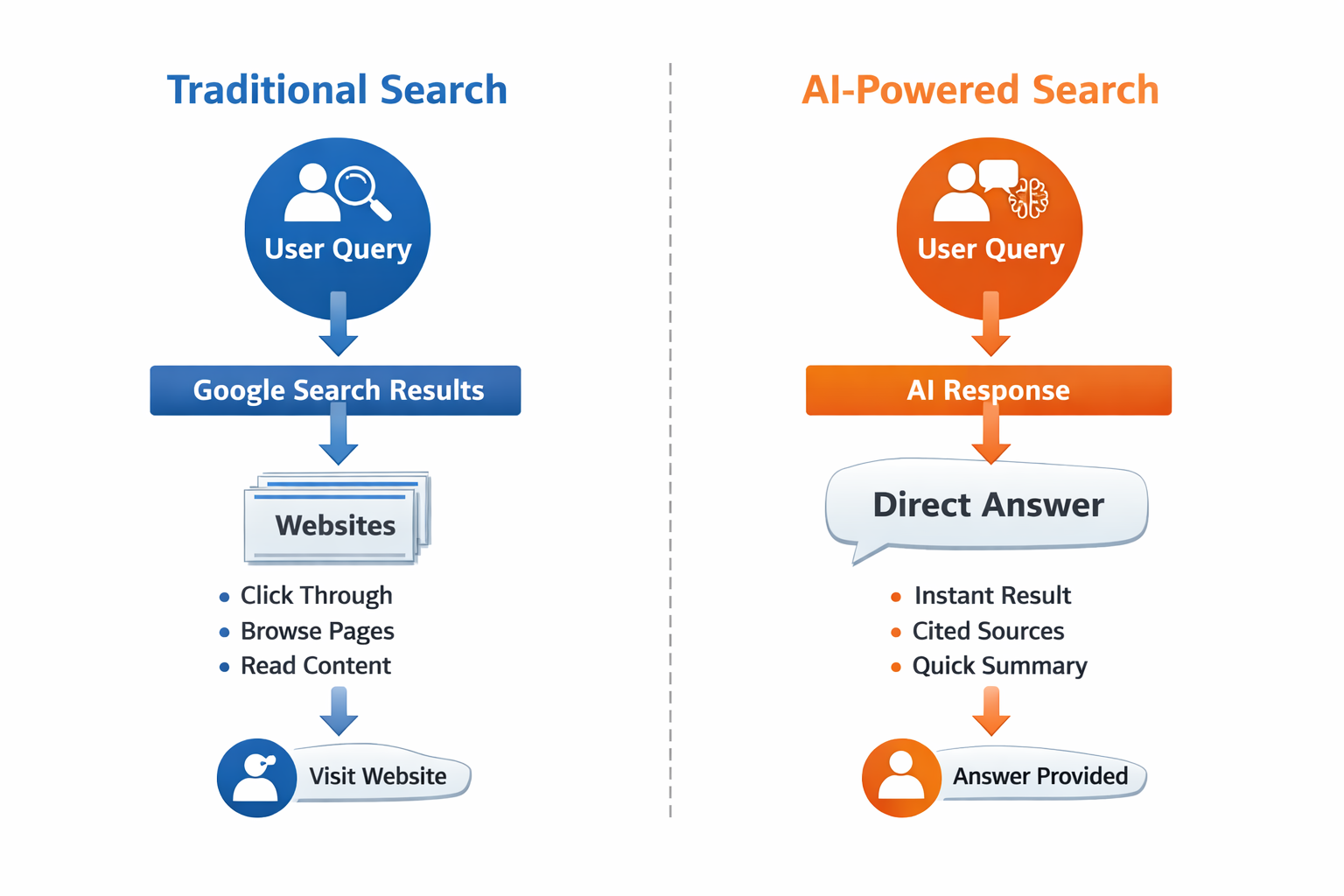
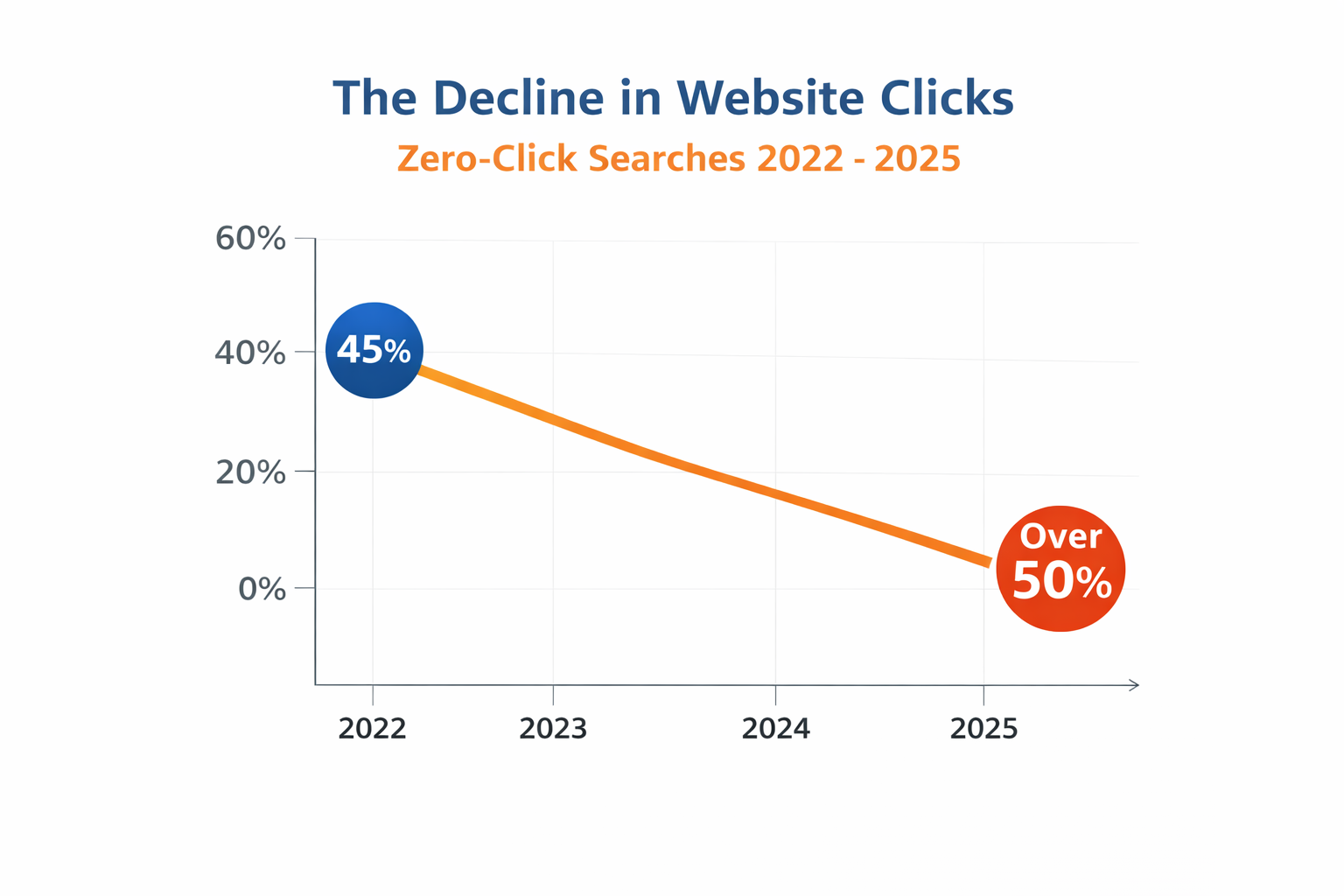
Only 18% of searches now happen on Google, with over half of all searches ending without website clicks as users find answers directly in AI-powered results. People aren't visiting your website to learn; they're learning wherever the information appears.
From page views to trust signals
This shift means your content's success is no longer measured by traffic volume but by how often AI tools reference your brand as a trusted authority. Every customer review, podcast mention, expert citation, and featured snippet becomes a trust signal that AI systems analyse when deciding which brands to recommend.
The brands winning this battle aren't producing more content; they're producing content that AI can easily understand, extract, and cite.
The cost of adapting to LLM-optimised content
The financial investment in LLM-optimised content is surprisingly modest compared to traditional content marketing, requiring minimal new tools but significant strategic restructuring. Most businesses can begin optimising existing content for AI retrieval without additional software costs.
Your primary investment is time: auditing your current content, restructuring for AI retrieval, training your team, and implementing new success metrics. For most small to medium businesses, this means 20-40 hours of initial audit and planning work, then 2-4 hours weekly to restructure existing content.
| Investment Area | Time Required | Typical Cost (UK) |
|---|---|---|
| Content audit | 8-12 hours | £800-£1,800 ($1,000-$2,250) |
| Team training | 4-6 hours | £400-£900 ($500-$1,125) |
| Content restructuring (per article) | 1-2 hours | £100-£300 ($125-$375) |
| Monthly tracking & optimisation | 4-8 hours | £400-£1,200 ($500-$1,500) |
The real cost isn't money; it's the organisational commitment to change how you create content. This means shifting from "produce more" to "structure better."
Problems with LLM content optimisation (and how to avoid them)
The biggest mistake brands make with AI-optimised content is treating it as a side project rather than integrating it into their daily workflow. When you bolt AI optimisation onto existing processes, it gets deprioritised the moment workloads increase.
The lazy AI content trap
Using AI merely as a content production tool to create lazy, unedited GPT-generated copy will cause your brand to fall behind in the flood of low-quality AI content. The internet is drowning in mediocre AI-generated articles that lack human judgment, nuance, and real expertise.
AI tools should enhance your efficiency and strategic thinking, not replace your expertise. Your role is to be the human in the loop; the machine gives you options, but you provide judgment.
Measuring success with outdated metrics
Many businesses continue tracking only page views and clicks whilst competitors gain authority through featured snippets, brand mentions, and expert citations. If you're not monitoring how often AI tools reference your brand, you're measuring the wrong things.
Success in AI search requires new metrics: featured snippet appearances, knowledge panel presence, branded search growth, and citation frequency across AI platforms.
LLM optimisation vs traditional SEO: what's different?
Traditional SEO optimises for ranking in search results pages, whilst LLM optimisation structures content to become the quoted source within AI-generated answers. The goal has shifted from earning clicks to earning citations.
| Factor | Traditional SEO | LLM Optimisation |
|---|---|---|
| Primary goal | Rank in top 10 results | Become the cited source |
| Key metrics | Traffic, click-through rate | Citations, featured snippets, brand mentions |
| Content structure | Keyword-optimised long-form | Clear, quotable, self-contained answers |
| Success indicator | Page views | Authority & trust signals |
| Typical timeframe | 3-6 months | 2-4 months for initial visibility |
The shift from clicks to citations means your content's success is no longer measured by traffic volume but by how often AI tools reference your brand as a trusted authority. Both approaches remain important, but LLM optimisation increasingly determines which brands customers trust before they ever visit a website.
7 best practices for AI-retrievable content
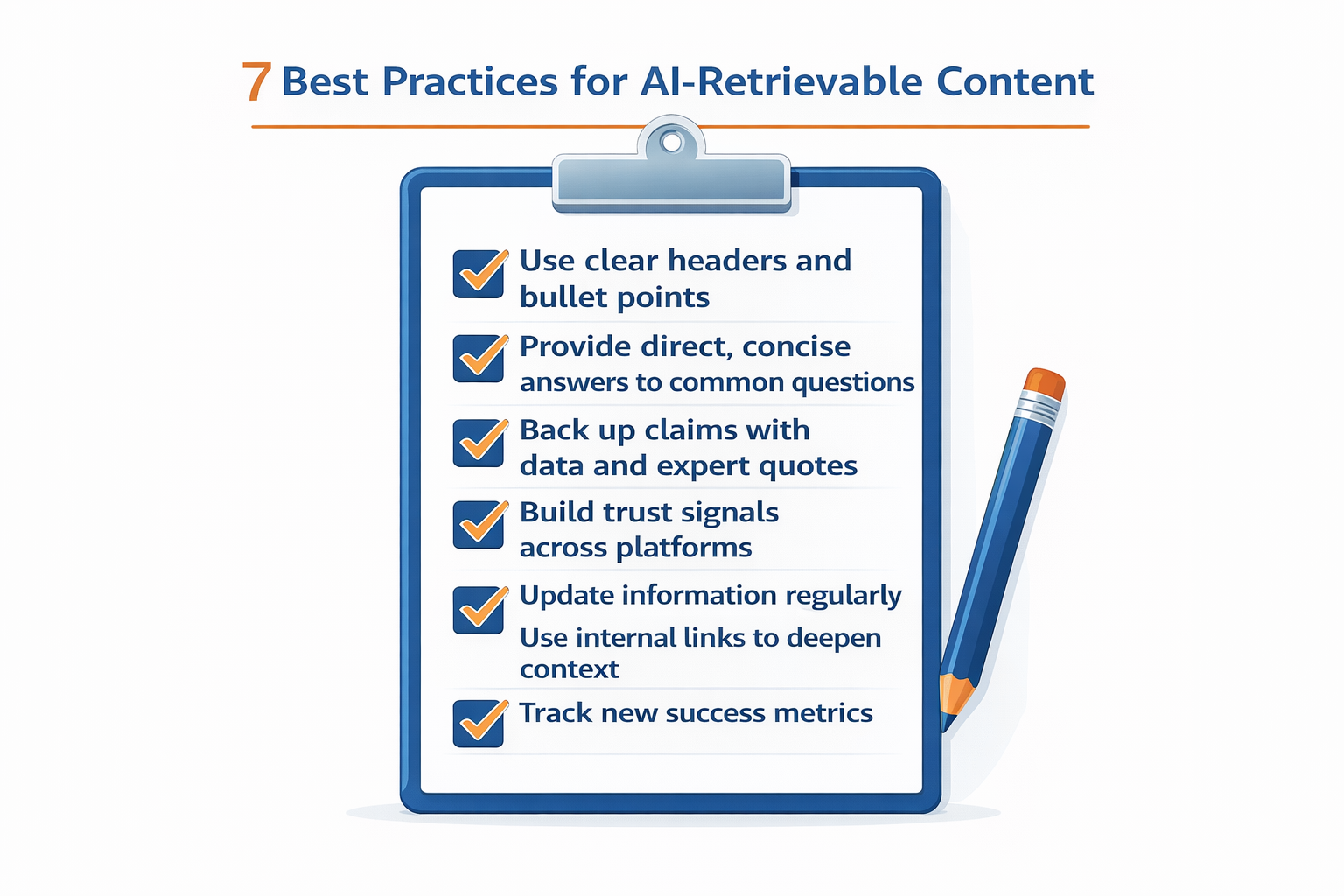
The most AI-friendly content follows seven core principles that make it easy for language models to extract, understand, and cite. These practices transform your existing content library into a source that AI tools consistently reference.
- Structure around natural questions. Use headers that match how people actually ask questions. "How much does X cost?" works better than "X Pricing Information."
- Create self-contained answers. Each section should answer its question completely without requiring readers to jump around your article.
- Use conversational language. Write how people speak. AI models trained on human conversation respond better to natural phrasing than corporate jargon.
- Build structured data. Use tables, bullet lists, and numbered steps that AI can easily parse and extract.
- Provide concise direct responses. Start each section with a bolded one-sentence answer before expanding with details.
- Include supporting evidence. Cite sources, include specific numbers and timeframes, and reference credible research that AI systems can verify.
- Generate multiple trust signals. Customer reviews, expert mentions, podcast appearances, and industry citations all tell AI systems your brand is trustworthy.
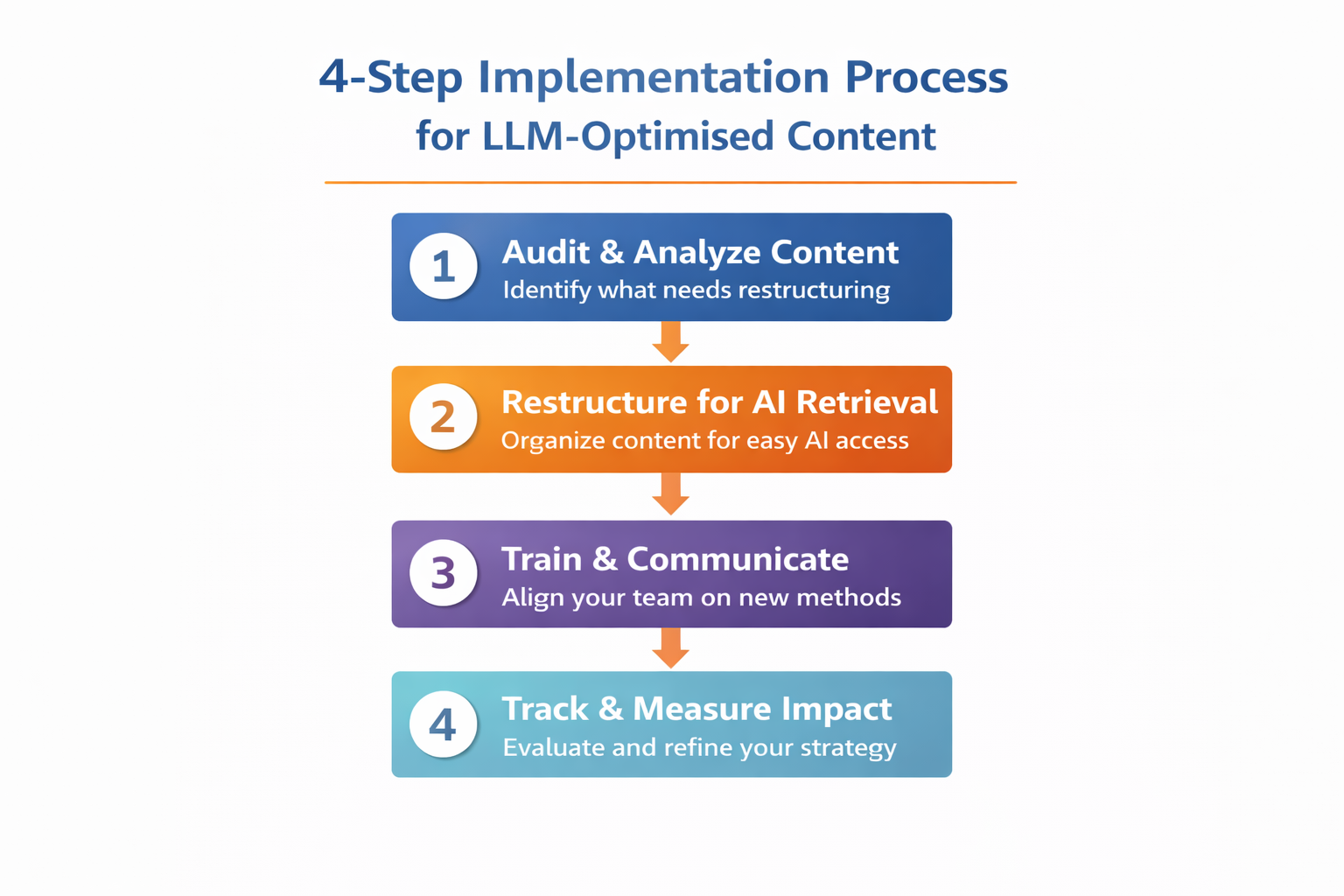
How to implement LLM optimisation: a 4-step framework
Adapting to LLM-optimised content doesn't require rebuilding your entire strategy; it requires small, consistent changes that compound over time. Start with these four foundational steps.
Step 1: Audit your current search visibility
Investigate what appears in search results for your main topics. Check which featured snippets your competitors have won and what AI chatbots say when asked about your industry. This reveals immediate opportunities.
Ask ChatGPT, Claude, and Perplexity questions your customers ask. Note which brands they cite and why.
Step 2: Restructure high-priority content
Begin with your most popular content. Add clear question-based headers, create bolded direct answers, and break complex explanations into bullet points and tables. Often this means simply reorganising what you already have rather than writing from scratch.
Focus on one piece per week rather than attempting to overhaul everything at once.
Step 3: Build trust signals across touchpoints
Encourage customer reviews, seek podcast interview opportunities, contribute expert quotes to industry publications, and ensure your team profiles highlight credentials. Each signal tells AI systems your brand deserves authority.
What this looks like by industry: In SaaS, this might mean comparison tables on G2 and detailed integration documentation. In financial services, it's expert commentary in whitepapers or regulator citations. In professional services, it's case studies with specific outcomes and industry publication bylines.
Remember that trust signals extend far beyond your website; they include every place your brand appears online.
Step 4: Track new success metrics
Monitor featured snippet wins, track branded search volume growth, and document when AI tools cite your content. Set up Google Search Console to track these appearances and check AI platforms monthly to see how often they reference your brand.
Benchmarks to aim for: A good starting target is winning 2-3 featured snippets within your first quarter, seeing 10-15% branded search growth within six months, and achieving at least one AI citation per month for your core topics. These benchmarks vary by industry competitiveness, but they give you a concrete goal to measure against.
Create a simple spreadsheet tracking: featured snippets won, knowledge panel updates, brand mentions in AI responses, and citation frequency across platforms.
Real results: brands winning with AI-optimised content
Mayo Clinic demonstrates the power of LLM optimisation by appearing in Google's Knowledge Graph for nearly every medical condition, prioritising authority over website clicks. Search for any health query and you'll likely see their content featured directly in results.
Their approach shows that authority isn't measured in clicks; it's measured in trust, with AI systems consistently citing them as the go-to source for medical knowledge. They've structured their content to answer specific health questions clearly and concisely, exactly what AI tools need to generate helpful responses.
The result? When someone asks an AI chatbot about symptoms, treatments, or health concerns, Mayo Clinic appears in the response more often than any competitor. They generate trust signals through expert-authored content, medical credentials, and consistent accuracy; all factors AI systems analyse when determining which sources to cite.
This strategy works across industries. Financial services brands win citations by providing clear, specific guidance. Software companies earn authority through detailed comparison tables and step-by-step tutorials. The common thread is content structured for AI retrieval, not just human readers.
The 4 principles of AI integration for content teams
The smartest content teams integrate AI into their everyday workflow based on four key principles rather than treating it as a separate project. These principles ensure you're using AI to enhance efficiency whilst maintaining the human judgment that creates truly valuable content.
- Use AI daily in everything. Make AI tools part of your standard workflow—generating article outlines, rephrasing ideas for clarity, analysing competitor content, and brainstorming fresh angles when you're stuck.
- Be the human in the loop. The machine gives you options, but you provide judgment. Never publish unedited AI output. Your expertise determines which suggestions are valuable and which miss the mark.
- Communicate clearly with AI. Specify your needs as you would to a human colleague. Vague prompts produce vague results. Clear, detailed instructions yield useful output.
- Remember today's AI is the worst it will ever be. Whatever limitations you see today will likely be overcome next month. Plan your strategy for continuous improvement rather than current capabilities.
These principles transform AI from a side tool into a core part of how your team works, freeing up mental energy for strategic thinking whilst AI handles repetitive tasks.
Common questions about LLM content optimisation
Will AI-optimised content hurt my website traffic?
Initially, you might see traffic shift as more people find answers in AI results rather than clicking through to your site. However, the trust and authority you build leads to higher-quality visitors who already know your brand when they arrive. The long-term benefit of being cited by AI tools outweighs short-term traffic fluctuations.
How long does it take to see results from LLM optimisation?
Most businesses see their first featured snippets and AI citations within 2-4 months of restructuring content, with compound effects building over 6-12 months. Unlike traditional SEO that can take six months to show results, AI tools pick up well-structured content faster because they're constantly scanning for quotable sources.
Do I need special tools to optimise for AI search?
No expensive tools are required. Most businesses can optimise using free resources like Google Search Console, ChatGPT, and basic content management systems. Your investment is primarily time spent restructuring content and building trust signals, not software subscriptions.
Can small businesses compete with large brands in AI search?
Yes, because AI prioritises clarity and structure over domain size. A small business with well-structured, quotable content often wins citations over large competitors with poorly organised information. Authority comes from demonstrating expertise, not from having the biggest budget.
What's the biggest mistake to avoid with AI content?
Flooding the internet with unedited AI-generated content is the fastest way to damage your brand. AI should enhance your expertise, not replace it. The brands winning in AI search use AI for efficiency whilst maintaining rigorous human oversight and editorial standards.
Conclusion
You've seen how the search landscape has transformed since ChatGPT launched in late 2022. What started as traditional SEO focused on clicks has evolved into a battle for citations and trust signals across AI platforms.
Right now, you're at a decision point. Your competitors are learning these principles. Some are already restructuring their content for AI retrieval. The longer you wait, the harder it becomes to catch up as they accumulate trust signals and citations.
But here's the good news: you don't need to rebuild everything at once. Start with your highest-performing content. Restructure it using the principles in this article. Track what happens when AI tools scan your improved content. Build from those small wins.
How to take action now:
- Ask ChatGPT and Perplexity three questions your customers ask, noting which brands they cite
- Audit your top 10 content pieces for AI-friendly structure (clear headers, bolded answers, tables)
- Choose one article to restructure this week using the 7 best practices outlined above
- Set up tracking for featured snippets and brand mentions in AI responses
- Schedule 30 minutes weekly to optimise one more piece of content
If you're ready to become the brand that AI tools cite, not skip, let's talk. I help businesses restructure their content approach to win citations and build authority across AI platforms. My Done-for-You Marketing service handles the entire optimisation process, whilst my Done-With-You Strategy provides expert guidance for your team.

About the Author
I'm Tom Wardman, and over the past decade, I've helped businesses across Accountancy, Construction, FinTech, SaaS, and Climate Consultancy transform their marketing capabilities. I focus on creating lasting change rather than quick fixes, teaching practical systems that work across industries. My approach combines strategic insight with hands-on experience from leading marketing teams and agency operations. I stay current with emerging trends whilst focusing on proven principles that actually drive growth.
Pricing Disclaimer: All GBP–USD price conversions are rounded estimates and correct at the time of publishing. Exchange rates fluctuate and figures should be treated as indicative only.
Topics: