

Key Takeaways
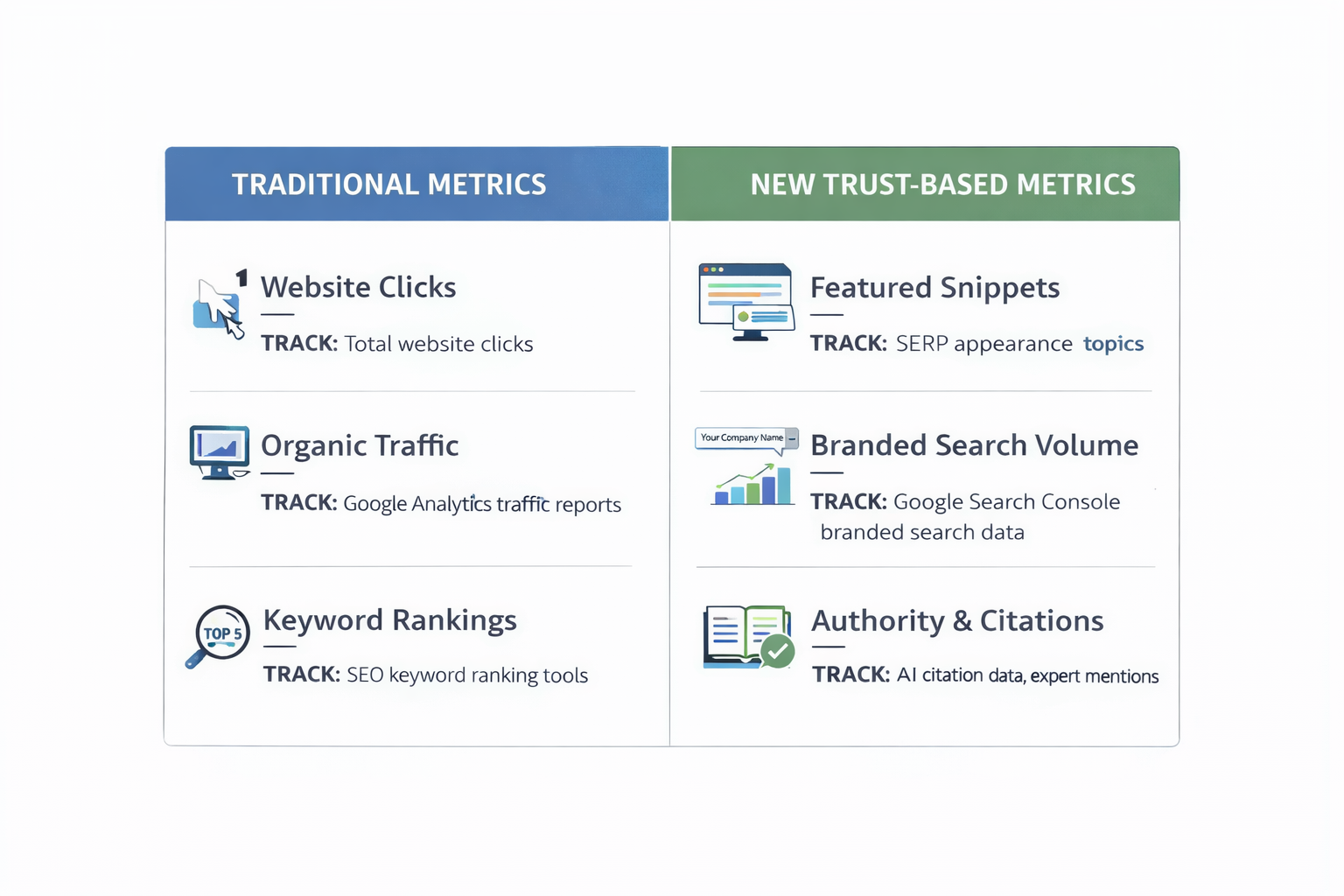
- Buyer behaviour KPIs reveal which content actually influences revenue and pipeline — not just surface-level engagement like clicks.
- Companies measuring content ROI consistently are 12 times more likely to see year-over-year returns growth.
- A four-tier framework balances traffic, engagement, conversion, and revenue metrics to show how content drives results.
- Multi-touch attribution gives partial credit to each content piece based on its conversion path role.
- Implementation costs range up to £500–2,000 ($670–$2,680) monthly for advanced attribution tools.
Your CEO asks how content marketing contributes to revenue, and the only numbers you have are page views.
If that moment feels familiar, you're not alone. Marketing budgets get cut. Leadership loses confidence. Sales teams reject leads as unqualified. And the hardest part? Your team is working hard, but measuring the wrong things.
You're measuring what's easy to count rather than what matters to your business. Most marketing teams analyse page views and session durations whilst leadership asks the one question these metrics can't answer: is our content bringing in revenue?
After helping marketing teams implement revenue-focused measurement frameworks across industries including SaaS, construction, and finance, I've seen the same problem repeatedly: teams optimise for traffic rather than revenue.
In this article you'll learn:
- Which KPIs actually predict revenue
- The four-tier framework for measuring content performance
- How to implement buyer-behaviour tracking in five steps
What are buyer behaviour KPIs?
Buyer behaviour KPIs measure how content influences purchasing decisions throughout the customer journey, rather than tracking surface-level engagement like clicks or page views.
Unlike traditional vanity metrics, buyer behaviour KPIs connect content performance directly to business outcomes such as pipeline influence, closed deals, and customer acquisition costs. They answer whether your content moves people closer to buying, not just whether people are viewing it.
What does this look like in practice? Instead of measuring page views, you might track how many prospects who read a case study later book a demo. That single connection tells you far more about content value than any traffic report.
A blog post might generate 10,000 page views but zero sales conversations. Another attracts only 500 visitors but generates 15 qualified leads who convert at 40%. Traditional metrics celebrate the first piece. Buyer behaviour KPIs identify the second as your most valuable content.
| Vanity Metrics | Buyer Behaviour KPIs |
|---|---|
| Page views | Content-assisted conversions |
| Time on site | Lead-to-customer rate by content touchpoint |
| Bounce rate | Pipeline influence value |
| Social shares | Sales cycle length by content engagement |
Why tracking only clicks and traffic is hurting your content ROI
Focusing exclusively on clicks and traffic creates a measurement blind spot that disconnects marketing activity from actual business results.
When your team optimises for traffic, they produce content designed to attract eyeballs rather than buyers. You end up with high-traffic articles that generate zero pipeline, budgets allocated to tactics that don't convert, and goals that don't align with revenue.
According to Content Marketing Institute research on B2B marketing performance, companies that consistently measure content marketing ROI are 12 times more likely to see year-over-year increases in returns. Yet most businesses remain stuck tracking metrics that leadership can't connect to growth targets.
Misaligned KPIs mean your team celebrates the wrong wins, doubles down on content that doesn't convert, and misses opportunities to scale what drives sales. Traffic rises whilst pipeline falls. Leadership starts questioning the marketing budget. And the cycle continues.
The four-tier metric framework for buyer-aligned KPIs
A comprehensive measurement framework balances four interconnected metric categories: traffic, engagement, conversion, and revenue, each revealing a different aspect of content effectiveness.
Four tiers matter because each layer depends on the one above it: revenue requires conversions, conversions require engagement, and engagement requires the right traffic. Collapsing them into fewer tiers obscures where your funnel is breaking down.
| Tier | Key Metrics | What It Reveals |
|---|---|---|
| Traffic | Organic sessions, qualified visitor rate, returning visitors | Whether you're attracting the right audience |
| Engagement | Average engagement time, scroll depth, content downloads | Whether content resonates with buyer needs |
| Conversion | Form submissions, demo requests, sales conversations initiated | Whether content moves people to act |
| Revenue | Pipeline influenced, customer acquisition cost, closed revenue from content | Whether content generates business outcomes |
Start with revenue metrics and work backwards to identify which behaviours predict sales outcomes. Define which revenue outcomes matter, then identify which conversions drive those outcomes, which engagement signals predict conversions, and which traffic sources bring engaged visitors.
How much does implementing buyer behaviour KPIs cost?
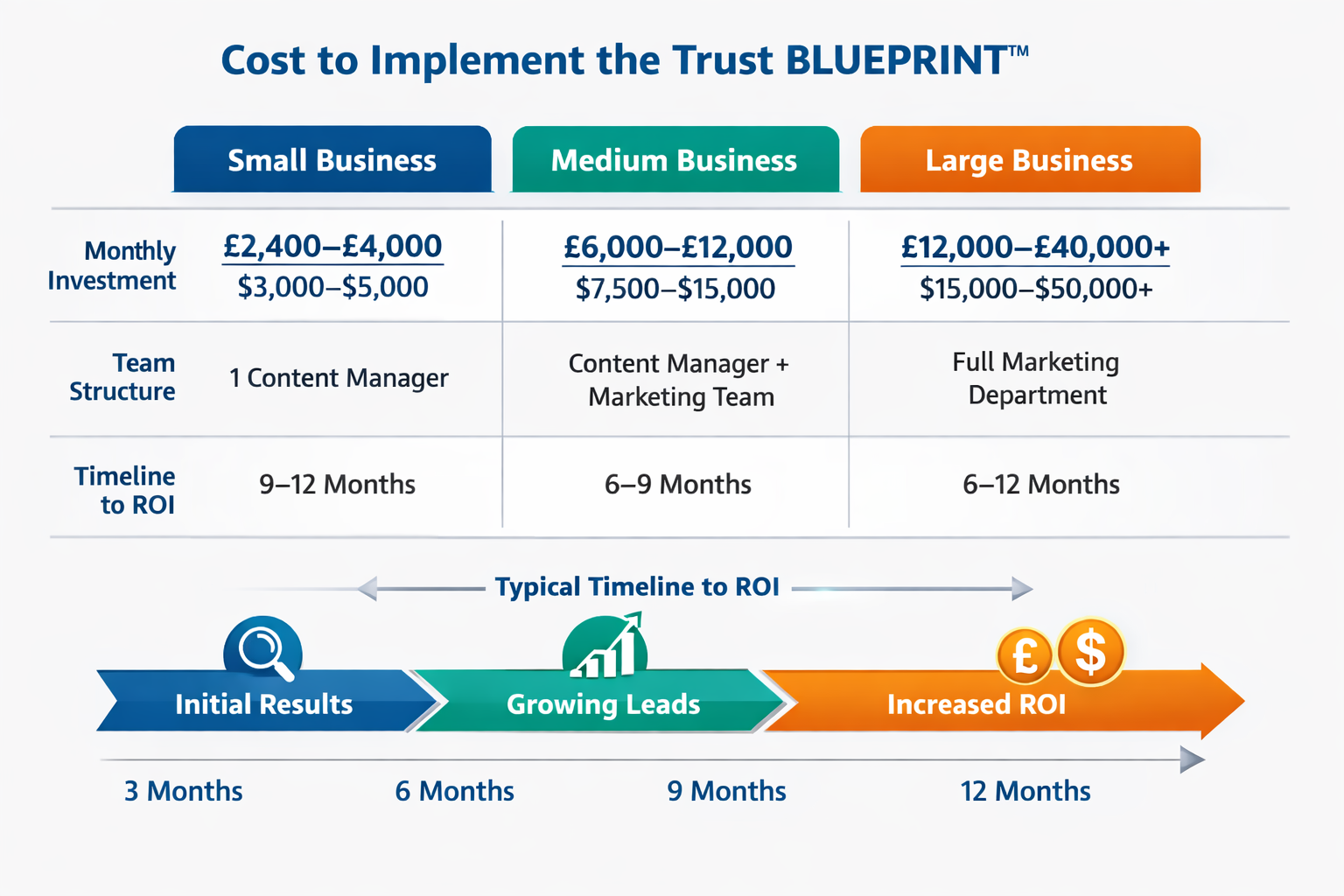
The investment in buyer behaviour tracking ranges from free, using existing analytics platforms with proper configuration, to £500–2,000 ($670–$2,680) monthly for advanced attribution software.
Most businesses already own the necessary tracking infrastructure through platforms like HubSpot, Google Analytics 4, or their CRM. The real cost is the time investment to configure attribution models and build reporting dashboards,m typically 15–30 hours initially, then 3–5 hours monthly.
To make this concrete: an SMB using HubSpot Free CRM and Google Analytics 4 can build a functional buyer behaviour measurement system using GA4 conversion tracking and CRM attribution reporting at zero additional cost, typically within a two-week setup sprint. A SaaS business with longer sales cycles and multiple content touchpoints might invest in Ruler Analytics at around £150–300 ($200–$400) per month to track multi-channel attribution accurately.
- Free tier: Google Analytics 4 with custom event tracking, HubSpot Free CRM with basic attribution, native CRM analytics
- Mid-range (£150–500 / $200–$670 monthly): HubSpot Marketing Hub Professional, Ruler Analytics for multi-touch attribution
- Enterprise (£1,000–2,000+ / $1,340–$2,680+ monthly): Bizible/Marketo Measure, custom data warehouse integration
What problems occur when KPIs aren't aligned with buyer behaviour?
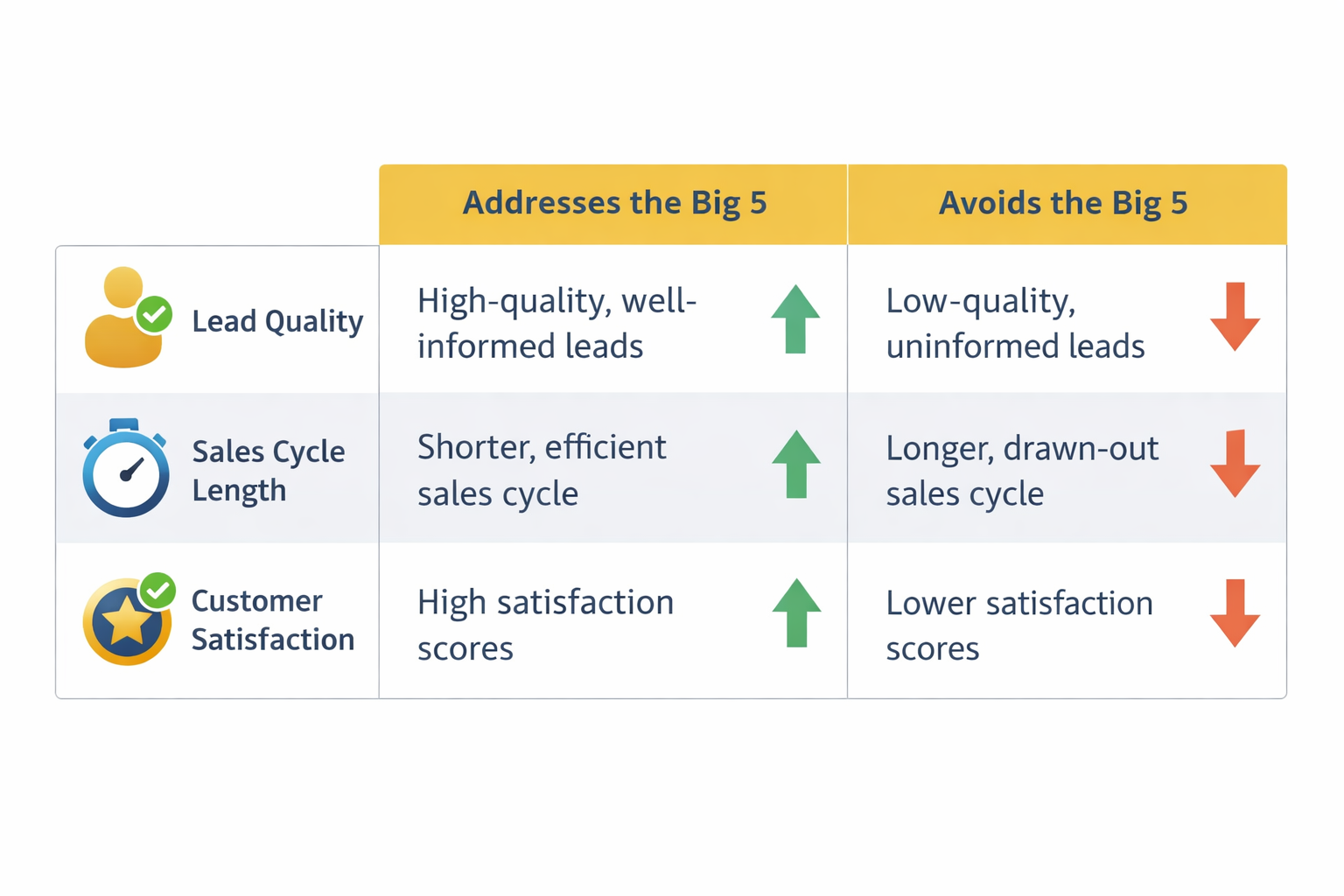
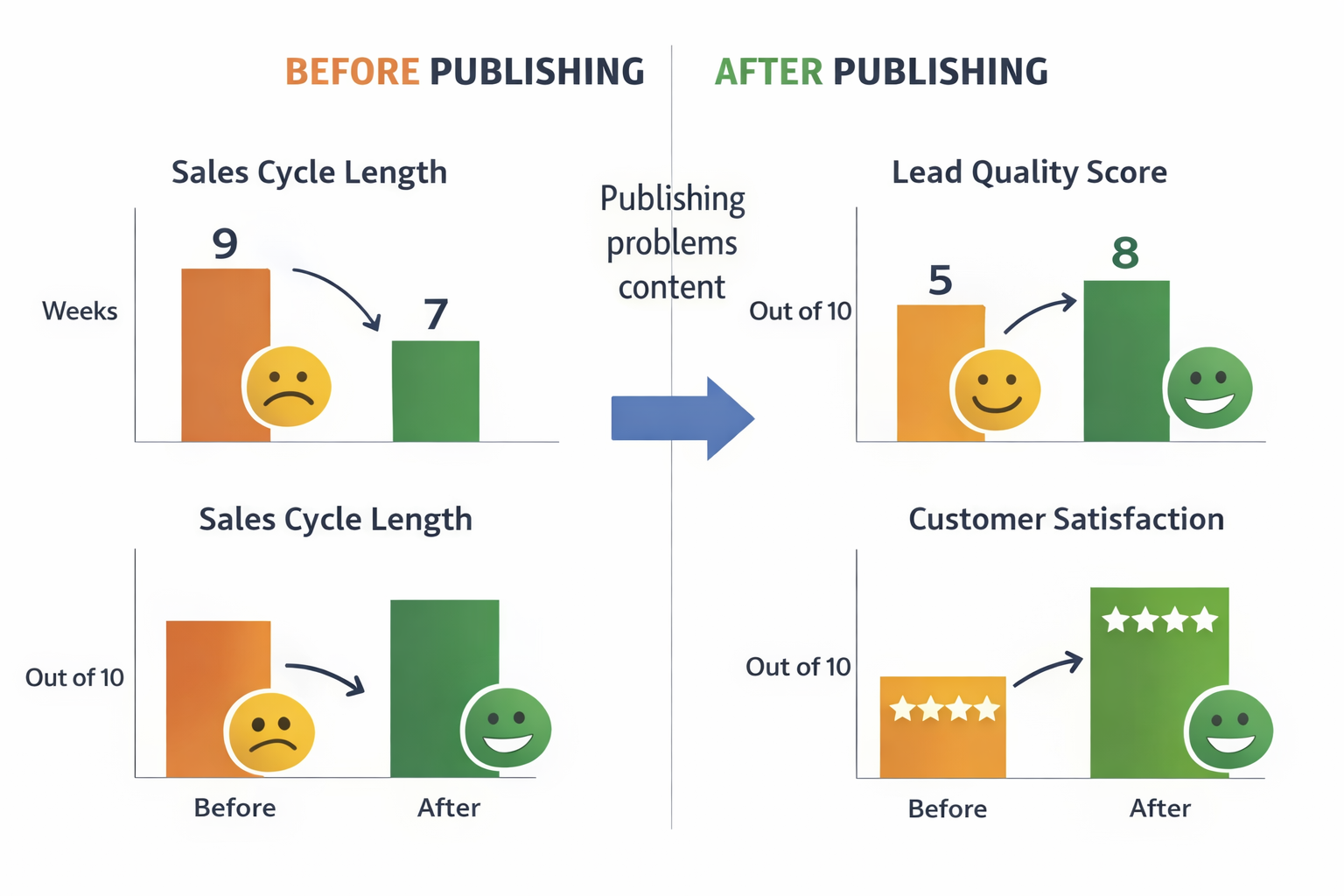
Misaligned KPIs lead marketing teams to optimise for the wrong outcomes, creating high-traffic content that generates zero pipeline and budgets allocated to tactics that don't convert.
The three most common traps are:
- Quantity Trap: producing content for volume rather than revenue impact, resulting in high output with no pipeline influence
- Timing Trap: publishing the right content at the wrong buyer stage, so prospects can't use it when they need it most
- Relevance Trap: creating generic content instead of addressing the specific questions buyers are actually asking
Real consequences include:
- Marketing producing high-traffic content that generates zero pipeline
- Sales teams ignoring unqualified marketing leads
- Leadership cutting marketing budgets because they can't see ROI
- High-value content getting deprioritised because it doesn't generate high traffic
Adobe identified content outperforming benchmarks by 3x through proper measurement and reallocated resources accordingly, achieving 50% higher conversion rates.
Attribution models vs. single-touch tracking: which is better?
Multi-touch attribution provides a more accurate picture of content ROI by giving partial credit to each piece based on its role in the conversion path, rather than crediting only the first or last touchpoint.
Single-touch models ignore all the content that moved buyers through their journey. Start with last-touch if you're new to attribution, it's simple and shows what closes deals. Move to multi-touch as your tracking matures and you need to justify content investment at every funnel stage.
| Attribution Model | Best For | What It Reveals |
|---|---|---|
| First-touch | Evaluating awareness content | Which content starts relationships |
| Last-touch | Understanding close triggers | What finally converts buyers |
| Linear | Balanced view across journey | Every touchpoint's equal contribution |
| Time-decay | B2B with long sales cycles | Recent touchpoints weighted more heavily |
| U-shaped | Lead generation focus | First and last touch get most credit |
How to implement buyer behaviour KPIs: 5 steps
Building a measurement framework that connects content to revenue requires five foundational steps.
1. Define success metrics tied to business goals: Identify 3–5 business outcomes your content must influence. Work backwards to determine which metrics predict these outcomes.
2. Audit and implement tracking systems: Ensure your CRM, analytics platform, and marketing automation are properly connected. Set up UTM parameters, form tracking, and conversion events.
3. Choose and configure your attribution model: Select an approach that matches your sales cycle complexity and configure your platforms consistently.
4. Build reporting dashboards: Create dashboards that connect content performance to revenue outcomes, including both leading indicators (engagement, downloads) and lagging indicators (pipeline, closed deals).
5. Establish monthly review cycles: Schedule regular reporting to analyse patterns, identify top-performing content, and reallocate resources based on what actually drives results.
What are the best KPIs for different stages of the buyer journey?
The most effective KPIs vary by funnel stage: awareness prioritises organic reach, consideration tracks engagement depth, decision measures demo requests, and post-purchase monitors customer success.
Businesses that align content to the buyer's journey see 73% higher conversion rates than those using one-size-fits-all metrics (Demand Metric). Match your content strategy to these stages; if you're creating decision-stage content but measuring awareness KPIs, you'll miss its real value.
| Buyer Journey Stage | Priority KPIs | What Good Looks Like |
|---|---|---|
| Awareness | Organic search impressions, new visitor rate | 60%+ new visitors, 40%+ from organic |
| Consideration | Pages per session, content downloads | 3+ pages per session, 25%+ download rate |
| Decision | Demo requests, sales conversations | 5–10% convert to opportunities |
| Post-Purchase | Customer content engagement, referral rate | 40%+ customers engaging with content |
Frequently asked questions
How long does it take to see results from buyer behaviour KPIs?
You'll need 30–60 days of data to identify patterns and 90 days to make confident decisions. Longer sales cycles require 6–12 months for full attribution analysis.
Can small businesses implement this without expensive tools?
Yes. Start with free Google Analytics 4 conversion tracking and your CRM's native reporting. The framework matters more than the tools.
What's the minimum data needed to start tracking attribution?
At least 50 conversions tracked through your system. Below that, focus on setting up tracking correctly rather than analysing incomplete data.
How do I get leadership buy-in for changing our KPIs?
Connect proposed KPIs directly to revenue targets leadership already cares about. Show how current metrics fail to predict business outcomes, then demonstrate how buyer behaviour KPIs link content investment to pipeline growth.
Conclusion
You've been tracking vanity metrics, what's easy to measure, not what drives revenue. Now you understand buyer behaviour KPIs, the four-tier framework that connects content to revenue, and the practical steps to prove ROI.
The framework works because it connects marketing activity directly to business outcomes. Stop celebrating traffic spikes whilst your sales team struggles with unqualified leads.
How to take action now:
- Audit your current KPIs against the four-tier framework
- Choose one attribution model based on your sales cycle complexity
- Map your buyer journey stages to specific KPIs
- Connect your analytics platform to your CRM if they're not already integrated
- Set up one dashboard this week connecting content to pipeline
If your marketing team still struggles to prove ROI to leadership, my services help businesses build measurement frameworks that connect marketing activity to revenue growth. I work with marketing teams to implement The Endless Customers System™, a practical approach that turns trust-building content into reliable pipeline.

About the author
Tom Wardman helps businesses build marketing systems that create trust and drive sustainable growth. As one of the UK's first five certified coaches in this field, he's worked across industries including Accountancy, Construction, FinTech, and SaaS to transform marketing capabilities. Tom provides fractional marketing director services, strategic guidance, and team training focused on measurement frameworks that connect content to revenue.
Pricing disclaimer: All GBP–USD price conversions are rounded estimates and correct at the time of publishing. Exchange rates fluctuate and figures should be treated as indicative only.
Topics: