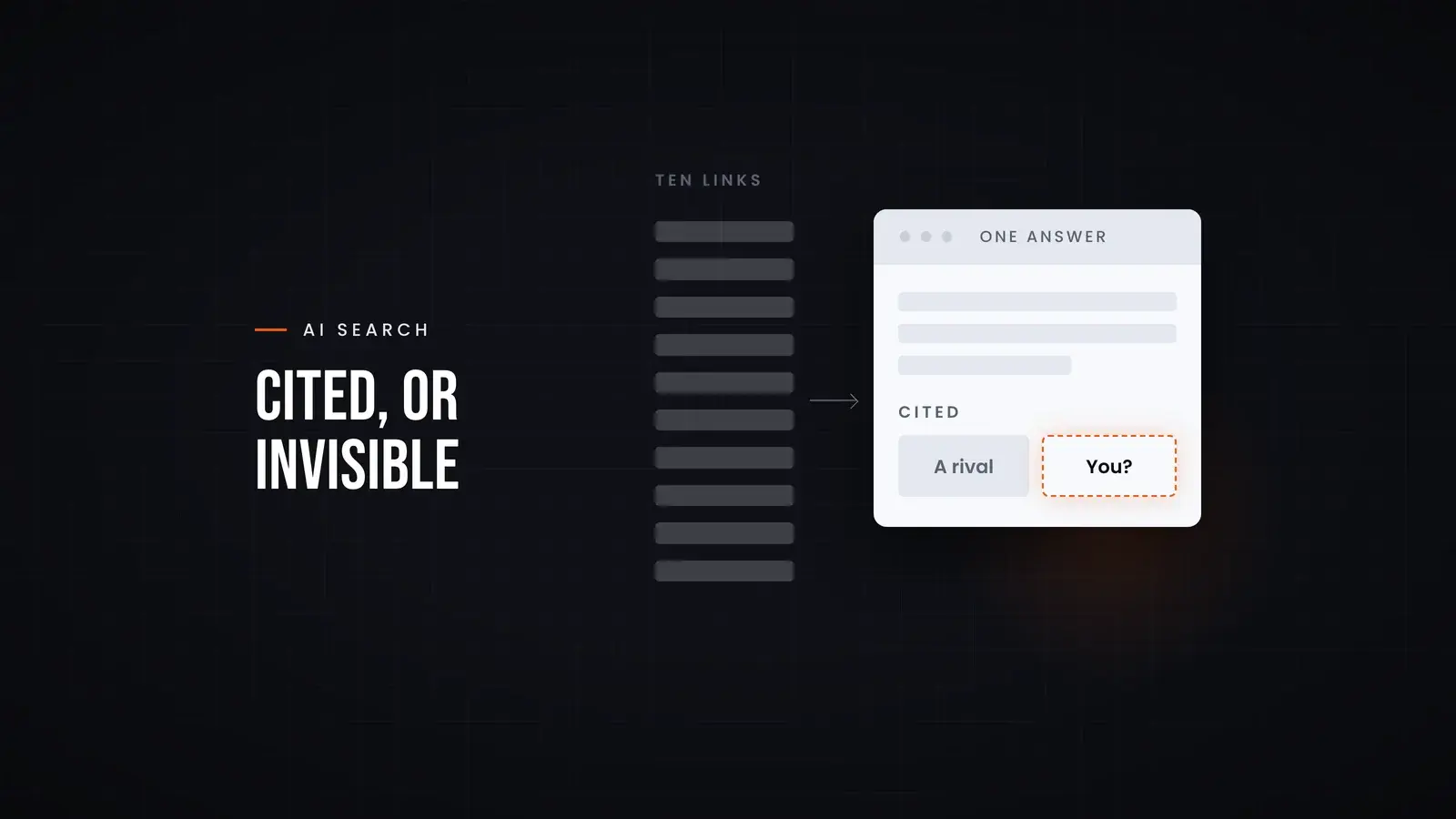
Are buyers asking ChatGPT who to hire in your category, and finding your competitors instead of you? Are you investing in SEO that Google rewards, while a growing share of buyers never open a search results page at all?
I'm a certified Endless Customers™ coach, trained directly under Marcus Sheridan, and I've spent the past several years helping founder-led B2B businesses build the trust signals AI tools now use to decide who gets recommended.
This article is for B2B founders and marketing leaders who want their business named by AI tools at the exact moment a buyer asks for a recommendation. You will get a clear picture of why AI visibility is structurally different from SEO, and a 7-step playbook you can act on straight away.
Key Takeaways
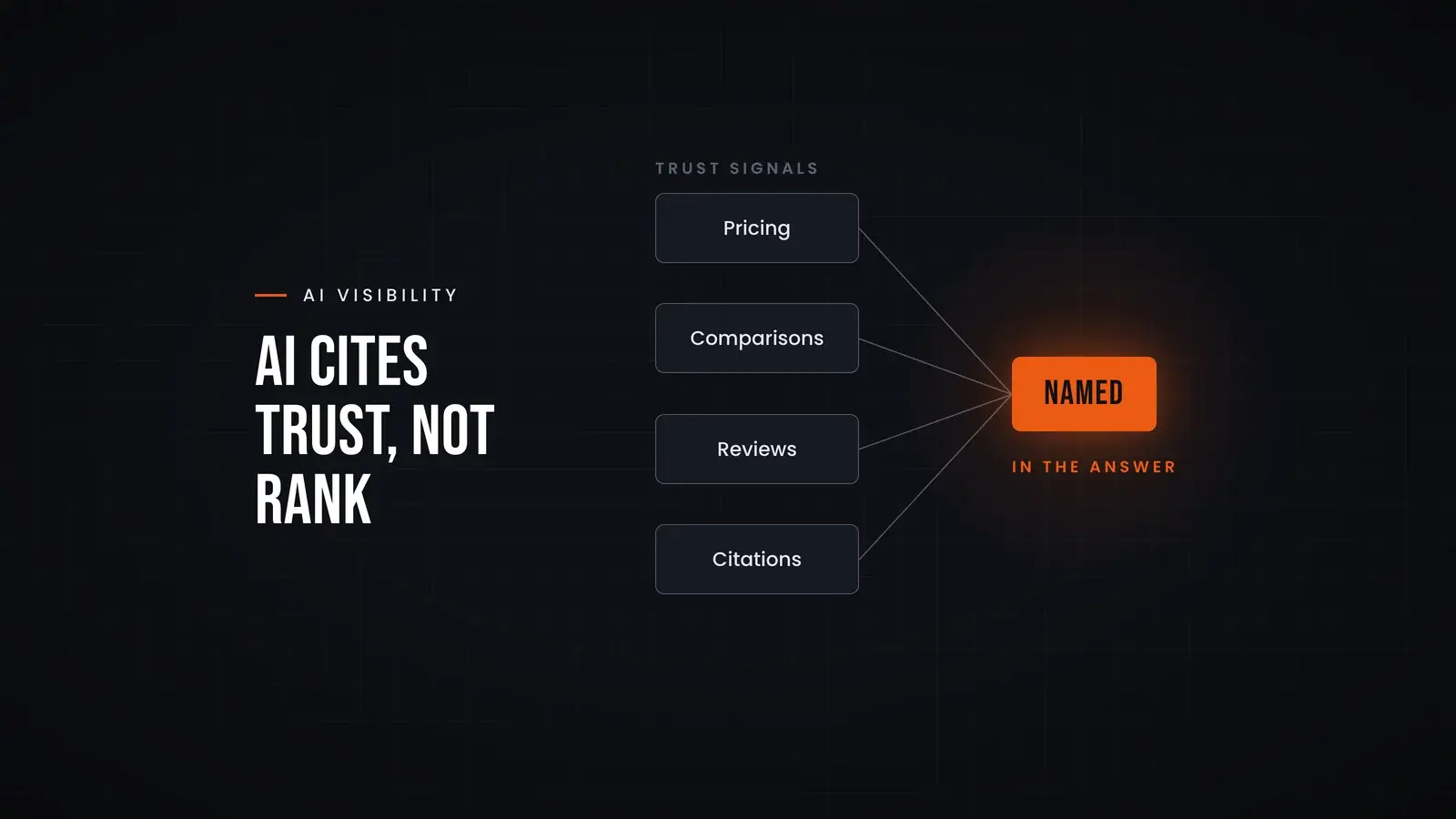
- AI tools like ChatGPT recommend businesses based on trust signals, not rankings; traditional SEO alone will not get you cited in AI-generated answers.
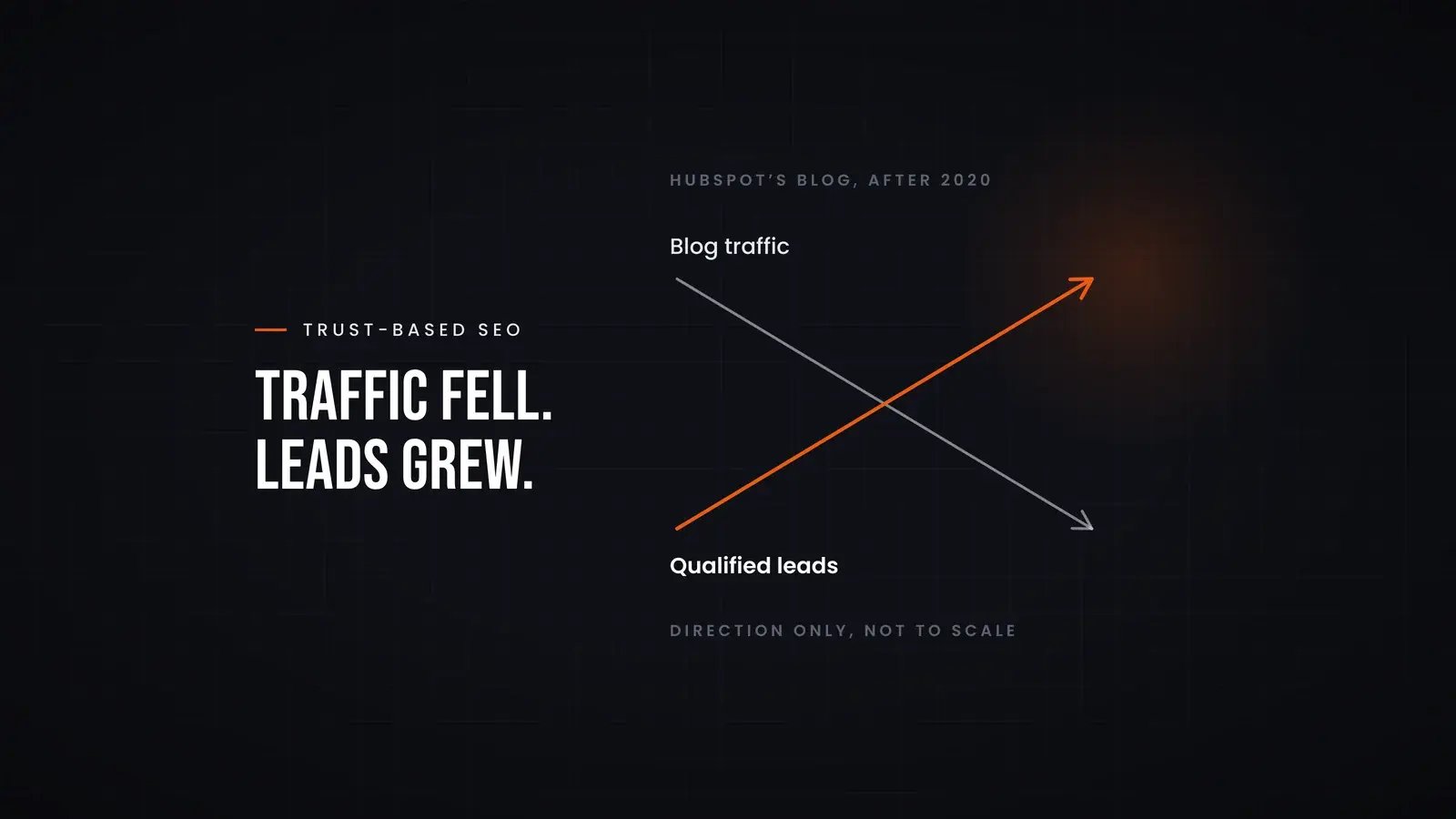
- Only 18% of all searches now happen on Google; the rest occur on platforms traditional SEO was never designed to reach.
- Shasta Pools published one criteria-based article and quickly found themselves recommended by ChatGPT for "best pool builders in Arizona."
- The fastest route to AI recommendation is publishing honest, structured, question-answering content that AI systems can extract and cite.
- AI recommendation visibility and traditional SEO are not in conflict; content built for AI citation also performs well in standard search.
What does it mean for an AI tool to 'recommend' your business?
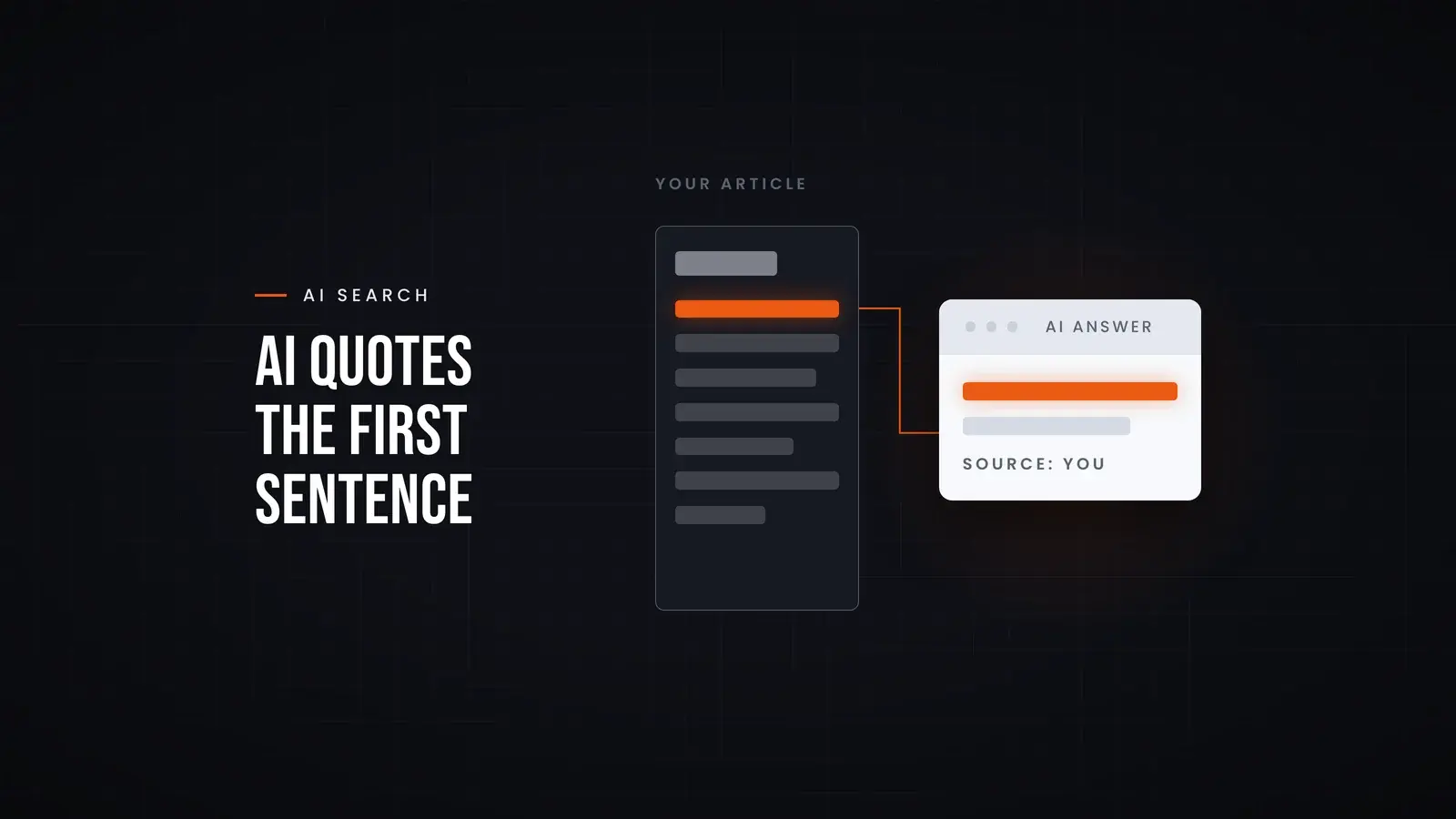
When an AI tool like ChatGPT or Perplexity recommends your business, it names your brand directly in a conversational answer, not as a link to click, but as a cited response.
This is structurally different from traditional search. AI tools do not rank pages. They read and synthesise content from across the web, then form a response based on which sources they judge to be most credible, consistent, and clearly structured.
Your content does not need to be number one on Google. It needs to be the most trustworthy, well-formatted answer to the question being asked. If AI systems can find your brand referenced consistently across your website, review platforms, and third-party sources, you become a credible answer to surface.
What's the misconception costing businesses leads they don't know about?
The most dangerous assumption a business can make in 2025 is that ranking well on Google means AI tools will also recommend them, these are two separate systems with entirely different criteria.
My book notes that only 18% of all searches now happen on Google. That means more than four in five searches now happen on platforms traditional SEO was never built to reach.
Signs your business may be invisible to AI tools:
- AI tools do not name you when you test your own category questions
- Your content answers promotional questions, not buyer questions
- You have no publicly visible pricing, comparisons, or honest reviews
- Your site lacks structured formatting that AI can extract and cite
- You have few or no mentions outside your own domain
Publishing more content without changing its structure and intent will not fix AI invisibility.
Related reading: Why Your Blog Isn't Getting Leads (And How to Fix It)
What does AI invisibility actually cost?
The cost is not a line item; it is every buyer who asked an AI tool for a recommendation in your category and received a competitor's name instead.
A simple way to estimate the commercial impact:
Monthly cost of AI invisibility = (Monthly buyer searches in your category) × (% now using AI tools to research) × (Your average deal value) × (Your typical conversion rate)
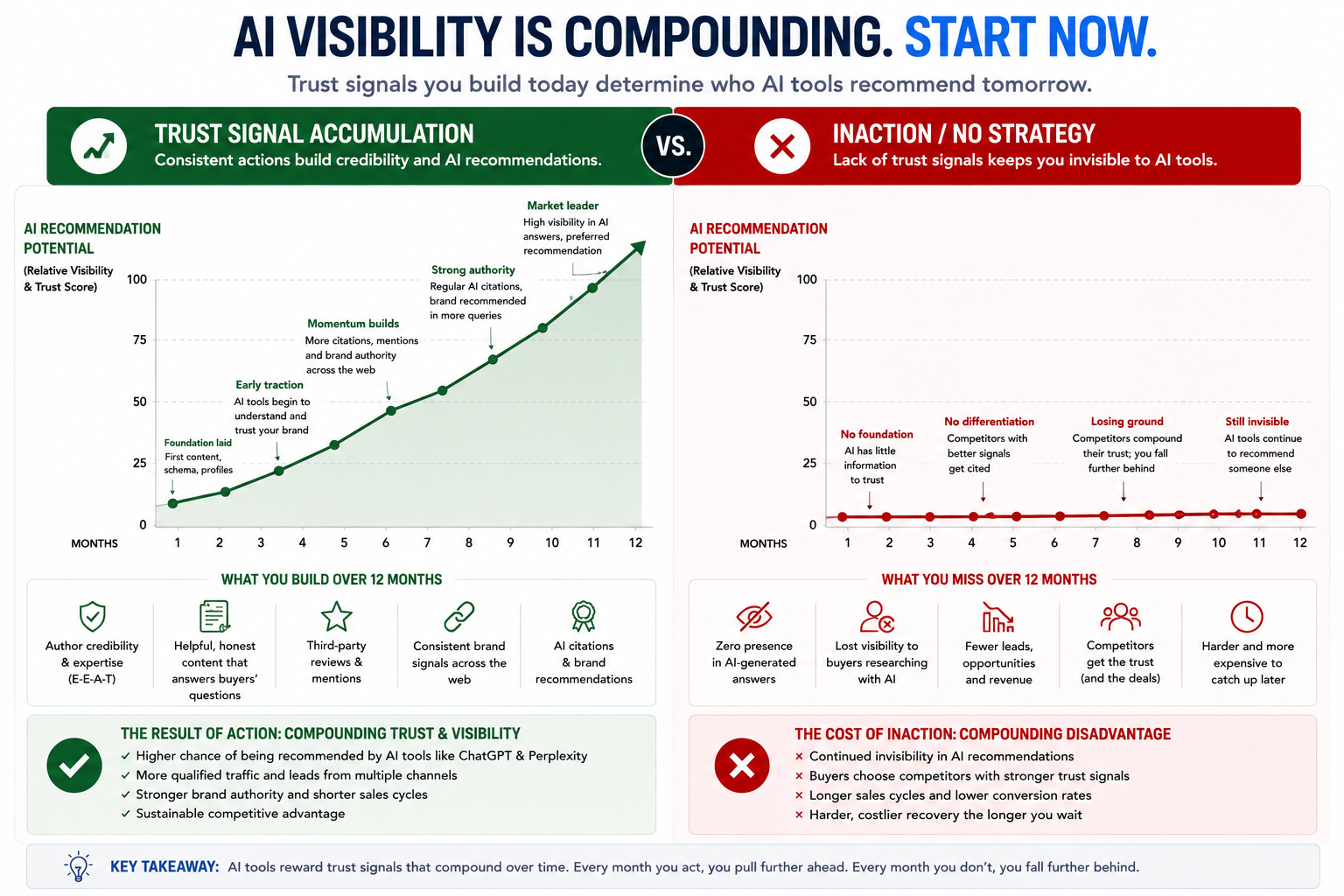
This figure is structural and compounding: the longer it goes unfixed, the further ahead competitors' trust signals accumulate.
River Pools and Spas answered every buyer question transparently: costs, problems, comparisons, and reviews. Their site grew from 2,000 to over 600,000 monthly visitors. That same content now drives AI recommendation visibility because it was built on exactly the signals AI systems reward.
AI recommendation vs. traditional SEO: what's actually different?
Traditional SEO optimises content to rank on a results page; AI recommendation optimises content to be synthesised and named in a conversational answer, and the two require meaningfully different approaches.
Where Google rewards keyword density and backlink volume, AI tools reward clarity, consistency, and the breadth of trust signals a brand generates across the web.
The two are not in conflict. Content built for AI citation — buyer-focused, structured, and transparent — also performs well in standard search.
Related reading: Trust-Based SEO: Why Rankings Alone Don't Build Revenue In 2026
What trust signals do AI tools actually look for?
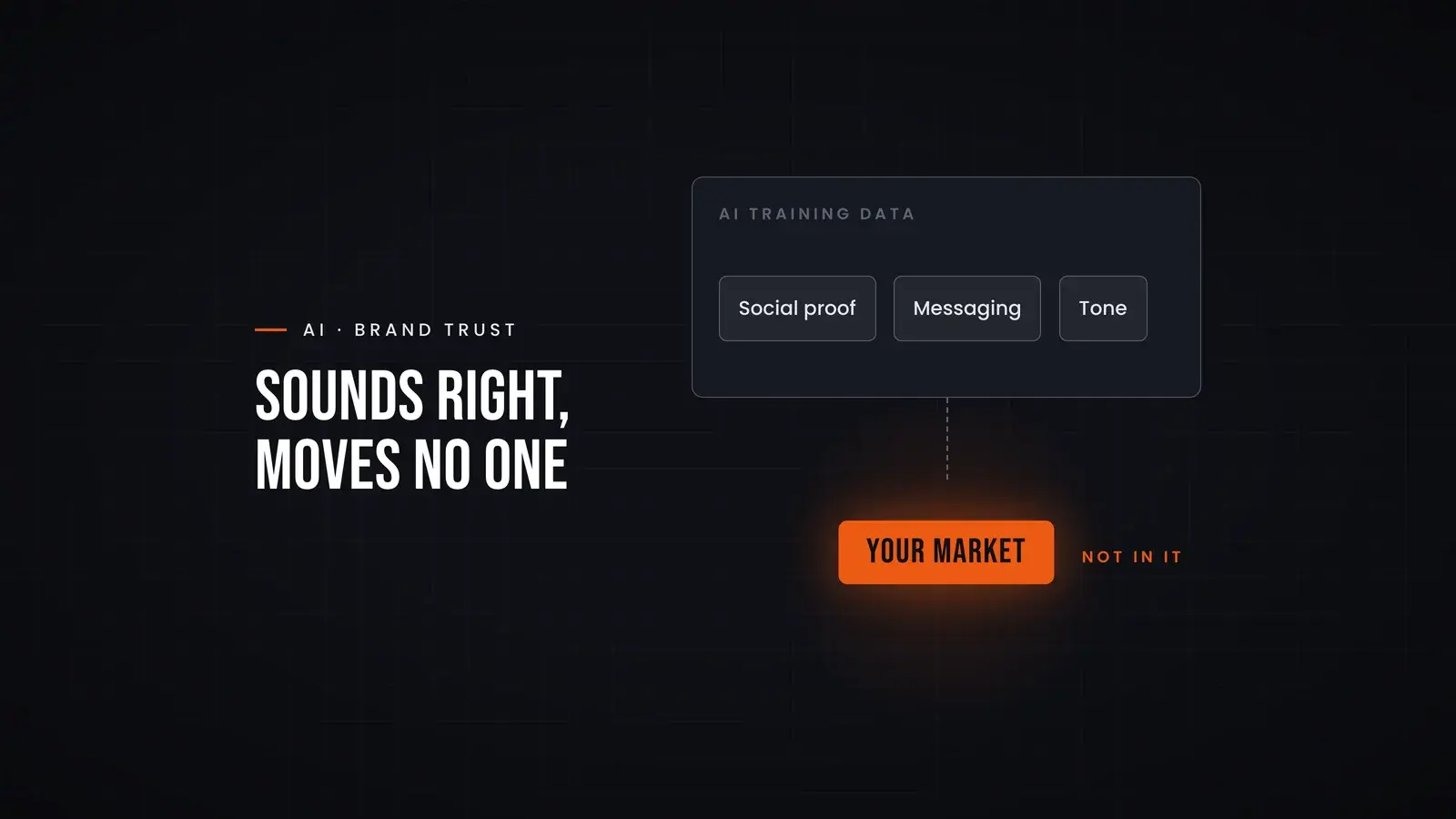
AI tools do not recommend businesses at random; they evaluate trust signals that indicate credibility, consistency, and authority in a given field.
Content-based trust signals:
- Structured, question-answering articles covering cost, problems, comparisons, reviews, and best-in-class options
- Transparent pricing published directly on your website
- Criteria-based best-in-class content that includes competitors honestly
- Author credibility pages with demonstrable expertise (E-E-A-T)
- FAQ-structured content AI can extract cleanly
Off-site trust signals:
- Reviews on reputable platforms (Google, G2, Capterra)
- Third-party citations, earned media, and guest contributions
- Verified, consistent business information across all platforms
- Industry recognition, awards, and certifications
My AI Visibility Optimisation service audits your brand across 19 of these signals, identifies what is suppressing your visibility, and fixes the highest-impact gaps.
A 7-step playbook for getting AI tools to recommend your business
Getting an AI tool to recommend your business is not a technical trick; it is the result of consistently publishing honest, structured, question-answering content that AI systems can find, evaluate, and trust.
- Answer the Big 5 buyer questions on your website: cost and pricing, problems, comparisons, reviews, and best-in-class. These are what buyers ask most and what most businesses avoid. Read: The Big 5 Questions Every Buyer Wants Answered
- Publish your pricing. Transparent pricing is one of the strongest trust signals AI tools can extract and cite.
- Create a criteria-based best-in-class article that includes competitors. Teach buyers what to look for, then show how you and others compare against those criteria.
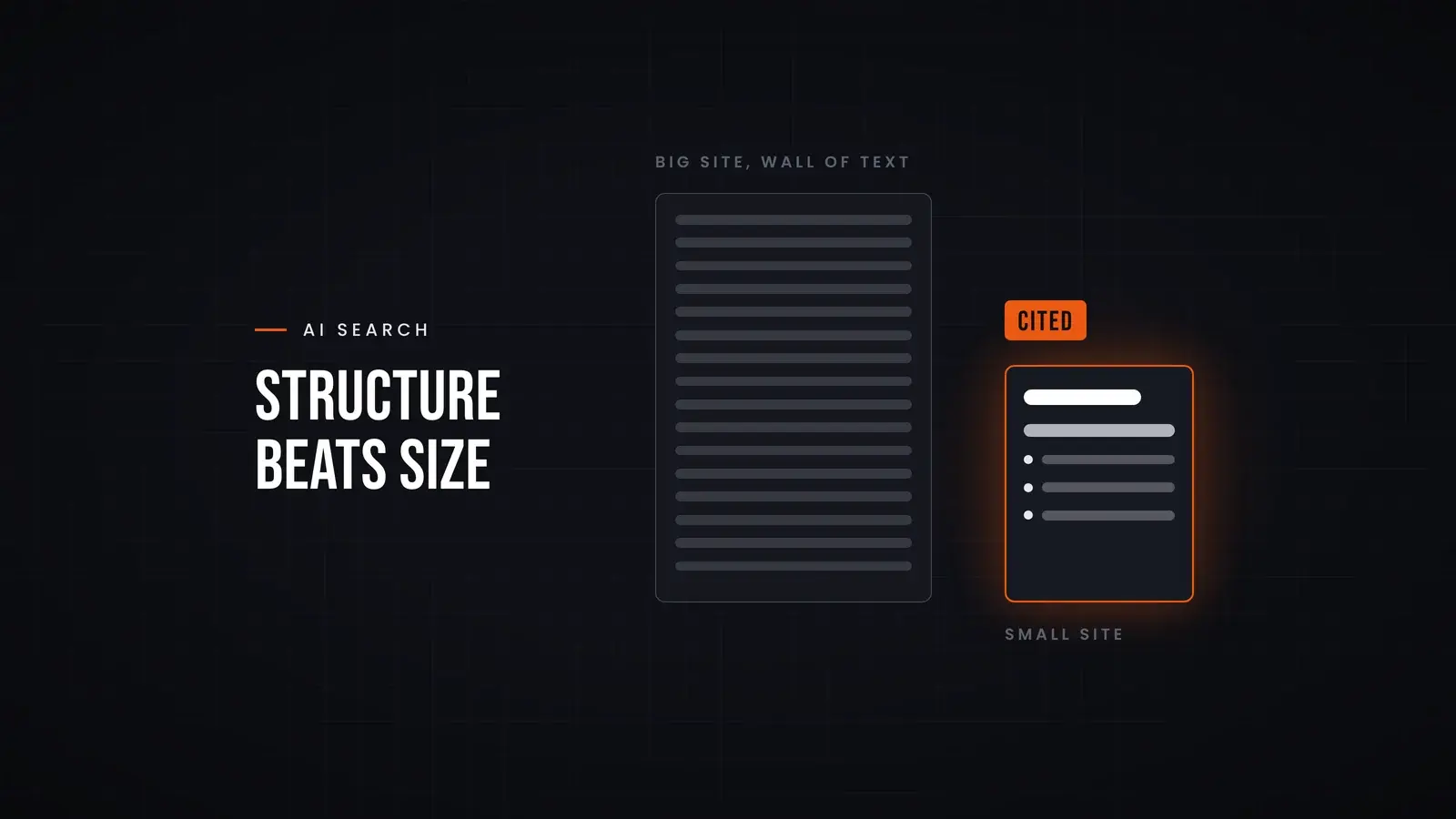
- Structure content for extraction. Short paragraphs, clear headings, bolded summary sentences. AI needs a clean answer it can pull quickly.
- Build author credibility pages with credentials, expertise, and a clear point of view.
- Accumulate off-site trust signals. Get reviewed, cited, and mentioned across reputable platforms, not only your own site.
- Test with real buyer queries. Ask AI tools the questions your buyers ask. If a competitor appears instead of you, trace back which trust signal is missing.
Shasta Pools published "The Top 6 Pool Builders in Arizona in 2025," including competitors with honest comparisons. Very quickly, ChatGPT began recommending them by name. One article. Built on education, not promotion.
Frequently asked questions
These are the questions business owners ask most when they start thinking seriously about AI recommendation visibility.
How long does it take to appear in AI recommendations?
There is no fixed timeline. Businesses that publish structured, question-answering content consistently typically begin seeing AI citations within 3–6 months, depending on the trust signals already in place. (This is an estimate based on observed content performance, not a guaranteed outcome.)
Do I need to pay for AI advertising to get recommended?
No. AI recommendations from ChatGPT and Perplexity are not paid placements; they are based on the trust signals your brand generates organically. Earned recommendation cannot be bought.
Will writing about competitors hurt my chances?
The opposite is true. Criteria-based content that includes competitors signals editorial confidence, a quality AI systems treat as a marker of authority. Shasta Pools proved this directly.
What is the single most important content type for AI recommendation?
A well-structured criteria-based best-in-class article that answers a specific buyer question, includes honest comparisons, and educates rather than promotes.
Conclusion
You came here because you suspected that Google rankings and AI recommendations are not the same thing. They are not.
Most businesses are invisible in AI-generated answers, not because their offer is weak, but because their content lacks the trust signals AI systems need to cite them with confidence.
The structure is clear. Answer buyer questions honestly. Publish pricing. Include competitors transparently. Build trust signals on and off your site. Format everything so AI can extract a clean answer.
How to take action now
- Ask ChatGPT or Perplexity who they would recommend in your category; see who appears
- Identify which of the Big 5 buyer questions your site currently avoids answering
- Publish one criteria-based best-in-class article using the 7-step playbook above
- Audit your off-site trust signals: reviews, citations, and third-party mentions
- Book an AI Visibility Optimisation audit to identify exactly where your trust signals are leaking

About the author
Tom Wardman is a fractional marketing consultant, author of Build a Trusted Brand, and one of the UK's first five certified coaches in the Endless Customers System™, trained directly under Marcus Sheridan. He works with founder-led B2B businesses to install growth systems they own and operate independently. His AI Visibility Optimisation service audits brands across 19 trust signals and fixes the gaps suppressing their visibility in AI-generated search. He built this service, so he has a commercial interest in mentioning it here.
Topics: