
Does your blog get decent traffic but no one's filling out your contact form? Are you publishing regularly but wondering why those visitors never turn into customers?
Here's the truth: traditional blogs attract traffic, but they don't capture leads. You're giving away your expertise with nothing to show for it, no email addresses or follow-up opportunities, no way to nurture relationships until buyers are ready to purchase.
A learning hub changes everything.
Through strategic downloadable resources, you'll transform casual browsers into qualified prospects without spending another penny on advertising.
In this article, you'll discover the exact framework for creating content that not only educates but also captures contact information, builds qualified email lists, and converts visitors into customers.
Why most business blogs fail to capture leads
Traditional business blogs face two critical shortcomings: they only scratch the surface in addressing buyer pain points, and they fail to provide tangible methods for capturing leads.
While blogs can generate initial interest and attract visitors to your website, they often leave businesses with nothing more than temporary traffic spikes and no actionable way to convert those visitors into customers.
Here's the reality: a blog post might answer a surface-level question and get someone interested in your brand. But then what? They read, they leave, and you've got nothing—no email address, no way to follow up, no relationship to build on.
You're essentially giving away all your expertise for free with no return. And when that reader is ready to buy three months later, they've forgotten about you entirely.
What is a learning hub and how does it differ from a blog?
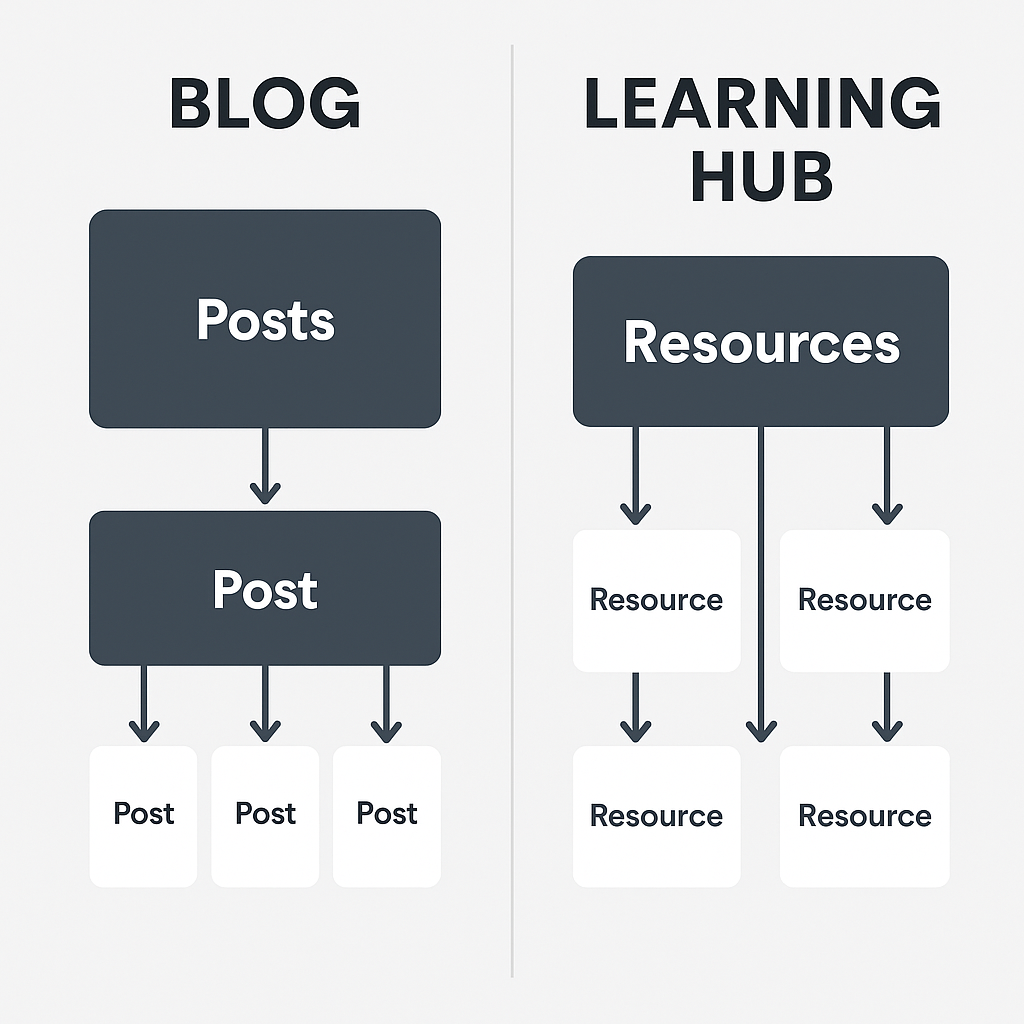
A learning hub is a centralised repository of valuable, in-depth resources that goes beyond basic blogging by providing downloadable content organised around customer needs rather than chronological posts.
Think of it this way: A blog is like a newspaper; new content appears at the top, pushing older articles down until they disappear into your archives. Readers consume your content and move on.
A learning hub, on the other hand, works more like a well-organised library or bookshop. Instead of time-based feeds, you structure content as an educational knowledge base. Visitors browse by topic, download guides that address their specific concerns, and willingly exchange their contact information for deeper insights.
The key difference is that learning hubs are designed to capture leads whilst blogs are designed to attract traffic. One builds a database of potential customers; the other just hopes people remember you.
How downloadable content generates qualified leads
Gated downloadable content allows you to build a qualified email list by exchanging valuable resources for contact information, turning anonymous browsers into identifiable prospects you can nurture through the sales funnel.
When you create an in-depth guide, eBook, or whitepaper and place it behind a simple form, you're proposing a fair trade: "Give me your email address, and I'll give you something genuinely valuable in return."
This strategy delivers three powerful benefits:
- You build a qualified email list of people who've demonstrated genuine interest in your solutions
- You create a database that lets you segment prospects based on what they download
- You position yourself as a thought leader who provides real value before asking for a sale
Here's what makes this work: by the time prospects are ready to purchase, they're far more likely to choose a company that's consistently provided valuable content. You've already built trust.
The information you gather also tells you exactly what prospects care about most. Did they download your pricing guide? They're close to making a decision. Did they grab your "problems and solutions" eBook? They're still in research mode.
This insight lets you tailor your follow-up, making your nurturing process far more effective than generic email blasts.
The five content types every learning hub needs
A robust learning hub diversifies beyond blog posts to include eBooks, whitepapers, infographics, case studies, and webinars—each serving different stages of the buyer's journey.
Here's how each content type serves your audience:
| Content Type | Best For | Typical Length | Lead Quality |
|---|---|---|---|
| eBooks | In-depth education on complex topics | 10-20 pages | High - shows serious interest |
| Whitepapers | Data-driven analysis and industry insights | 5-10 pages | Very high - often decision-makers |
| Infographics | Visual comparisons and quick reference | 1 page | Medium - good for awareness stage |
| Case Studies | Proof of results with real examples | 2-4 pages | Very high - close to purchasing |
| Webinars | Interactive learning and Q&A | 30-60 minutes | High - significant time investment |
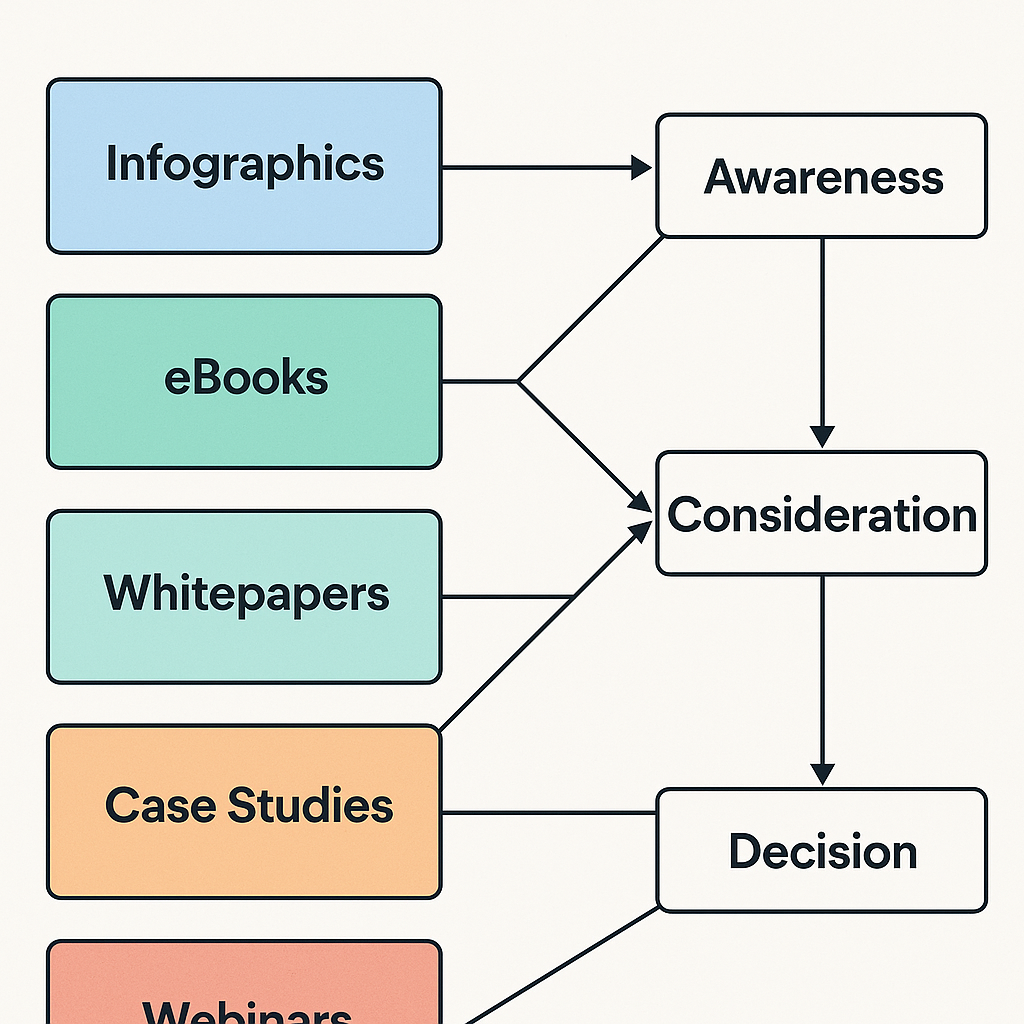
By offering multiple content formats, you accommodate different learning preferences whilst providing entry points for prospects at various stages of their decision-making process. Some people want to read; others prefer visual content or interactive sessions. Give them options.
The smartest approach? Start with your existing blog content and expand it. That 800-word blog post about common problems? Turn it into a comprehensive 15-page eBook with real examples, worksheets, and templates.
How to align your learning hub with the Big 5 topics
The Big 5 topics that drive buying decisions (cost and price, problems, versus and comparisons, reviews, and best-in-class) should form the foundation of your learning hub content strategy.
These five topics represent what prospects are actually searching for when they're making purchasing decisions. You can find these principles detailed in the Endless Customers methodology, and they work across every industry.
Here's how to create downloadable resources around each:
- Cost and Price: Create comprehensive pricing guides that break down what buyers can expect to invest. Include total cost of ownership, hidden fees, and budget planning worksheets.
- Problems: Develop eBooks that honestly address common issues with your product or service, including solutions and scenarios where your offering might not be the best fit.
- Versus and Comparisons: Build detailed comparison guides that stack your solution against alternatives, being transparent about strengths and weaknesses of each option.
- Reviews: Compile honest reviews and testimonials into case study collections that show real results from real customers.
- Best-in-Class: Create criteria-based guides that educate buyers on what to look for, even if that means mentioning competitors alongside your own offering.
Creating in-depth downloadable resources around these five topics positions you as a trusted adviser who addresses the exact questions prospects are researching before they ever contact your sales team.
Building a buyer-centric learning centre: Five steps
An effective learning centre starts by complementing your existing blog content with deeper resources, then organising everything around customer outcomes rather than your product features.
Here's your practical roadmap:
Step 1: Complement Your Blog Posts
Start by reviewing your existing content. Which blog posts get the most traffic? Which topics generate the most questions from prospects? These are your candidates for expansion into downloadable resources.
Take that popular 1,000-word blog post and transform it into a 3,000-word comprehensive guide with templates, checklists, and real examples.
Step 2: Diversify Your Content Types
Don't just create eBooks. Mix in whitepapers for data-driven prospects, infographics for visual learners, and case studies for those who need social proof.
Different people prefer different formats, and you want multiple entry points into your learning hub.
Step 3: Focus on Customer Outcomes
Organise your learning centre around what customers want to achieve, not what you sell. Instead of "Our Software Features," use "How to Cut Processing Time by 50%."
This shift in perspective makes your content immediately more relevant and valuable.
Step 4: Enhance User Experience
Implement clear categorisation that matches how buyers think. Add search functionality so visitors can quickly find what they need. Suggest related content to keep them engaged.
Step 5: Leverage Customer Insights
Talk to your existing customers. What questions did they have before buying? What would have helped them make decisions faster? Use these insights to create content that addresses real concerns.
The five steps include complementing blog posts with downloadable resources, diversifying content types, focusing on customer outcomes, enhancing user experience with clear categorisation and search functionality, and leveraging customer insights through interviews and surveys.
Need help building a lead-generating learning hub? My content training programme teaches your team how to identify valuable content opportunities and transform them into resources that capture leads and drive revenue.
Why learning hubs deliver better ROI than traditional blogging
Learning hubs generate measurable ROI by converting anonymous traffic into qualified leads with contact information, dramatically improving lead quality whilst positioning your brand as a thought leader.
Let's get specific about ROI. Say your blog gets 5,000 visitors per month, but you have no way to contact them again. You've invested time and money creating content that generates... nothing tangible.
Now imagine 500 of those visitors download your comprehensive pricing guide, giving you their email addresses. You've just built a qualified email list of people who've shown genuine interest in what you sell.
Unlike blog posts that simply attract visitors, gated learning hub content creates a database of prospects who've demonstrated genuine interest by exchanging their information for your expertise, making them significantly more likely to convert.
The numbers tell the story. River Pools and Spas created in-depth downloadable content around their Big 5 topics and grew from 2,000 to over 600,000 monthly visitors, becoming the most trafficked pool website globally.
But more than traffic, they built a qualified email list that their sales team could nurture into customers. One blog post about "fiberglass pool problems" generated at least £2 million ($2.5 million USD) in revenue because it captured leads rather than just informing them.
That's the difference between content that attracts and content that converts.
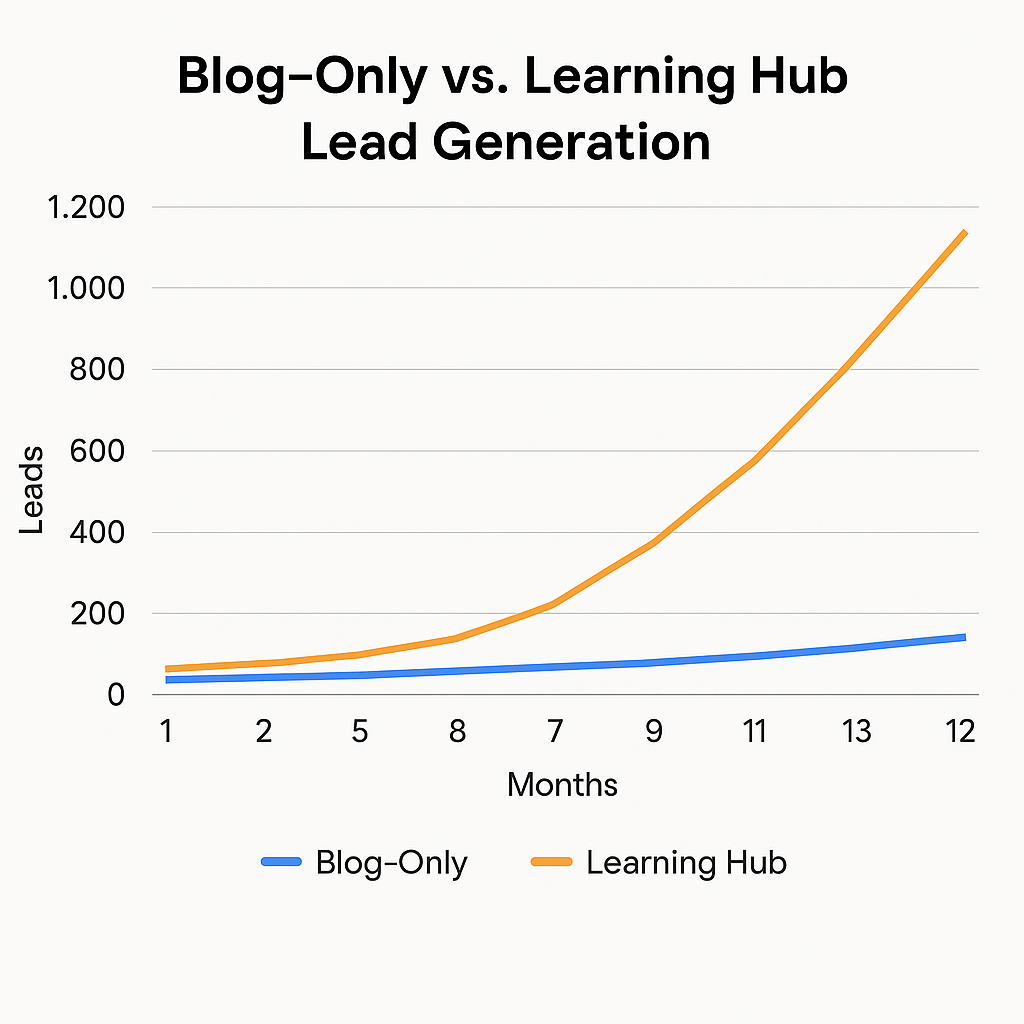
Why learning hubs become high-value lead generators over time
Creating a learning hub is a long-term strategy that delivers compounding results, much like planting seeds in a garden that eventually creates a thriving ecosystem attracting your ideal customers.
Here's what most businesses miss: content marketing isn't a sprint. You won't publish one eBook and suddenly have hundreds of qualified leads.
But here's what does happen: each piece of downloadable content you create becomes a permanent asset. That pricing guide you published six months ago? Still capturing leads. That comparison eBook from last year? Still converting visitors.
While you won't see overnight results, the consistent accumulation of high-quality resources builds momentum over time, with each piece of content serving as a permanent entry point that continues generating and capturing leads for years.
Think about it this way: publish one quality piece of gated content per month. After a year, you've got twelve lead-capture tools working simultaneously. After two years, twenty-four. Each one pulling in qualified prospects around the clock, without any additional effort from you.
The traffic compounds. The authority compounds. Most importantly, your email list compounds, giving you an ever-growing database of prospects to nurture into customers.
This is why businesses that commit to learning hubs consistently outperform those that stick with traditional blogging. They're building assets, not just publishing articles.
How to get started building your learning hub today
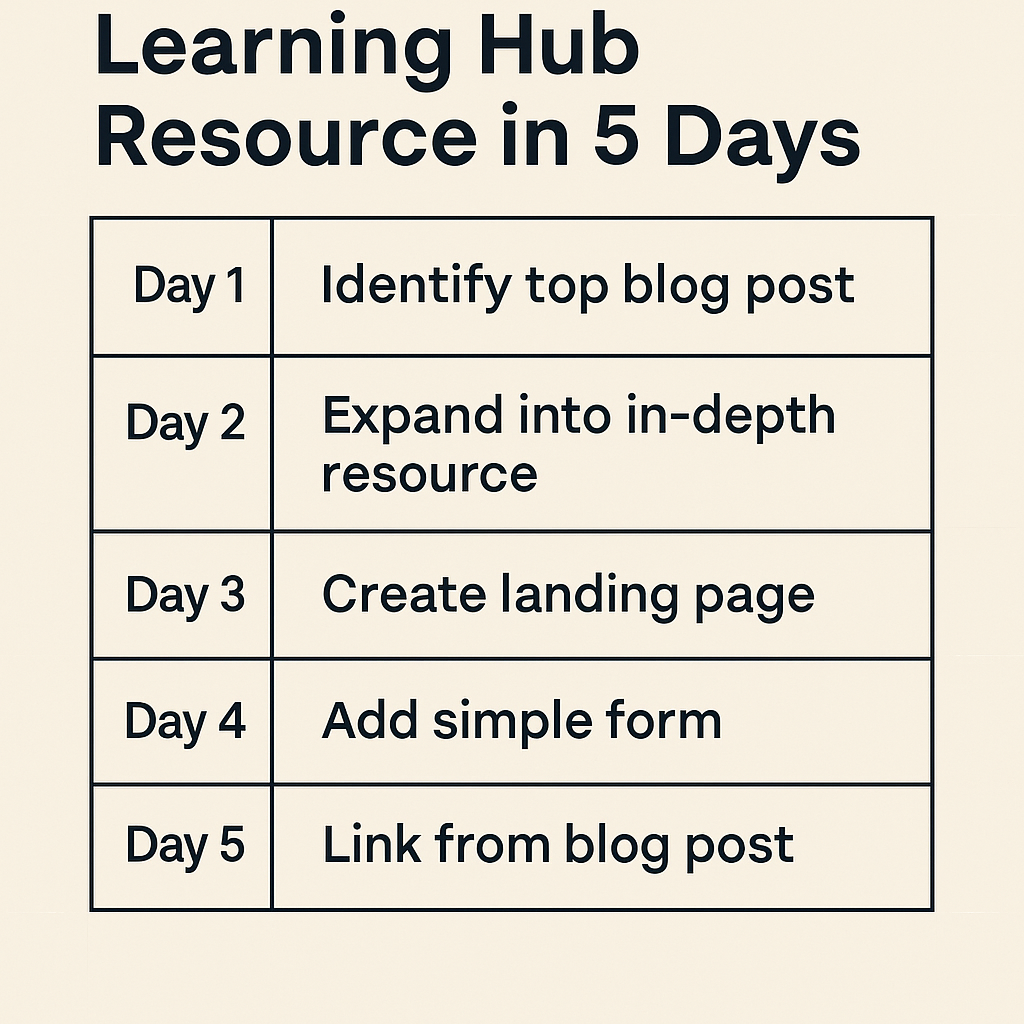
Start by identifying your top-performing blog content and transforming it into comprehensive downloadable resources that provide deeper value than your existing articles.
Don't overcomplicate this. You don't need a massive website overhaul or a team of designers. Start simple:
- Action 1: Review your analytics. Which three blog posts get the most traffic? These are your starting point.
- Action 2: Take your most popular post and expand it into an in-depth guide. Add templates, checklists, real examples, and worksheets that make it genuinely valuable.
- Action 3: Create a simple landing page with a form. Ask for just an email address and first name, nothing more.
- Action 4: Link to this landing page from your original blog post and related content.
Focus first on creating one exceptional piece of gated content around each of the Big 5 topics, ensuring you have a strong foundation before expanding your learning hub with additional resources.
The beauty of this approach? You can test it with minimal investment. Create one solid eBook, see how it performs, and adjust based on what you learn.
Conclusion
You now know how to turn a passive blog into a lead-generating machine. By creating downloadable resources organised around the Big 5 topics, you transform anonymous browsers into qualified prospects with contact information you can nurture through your sales funnel.
You started with traffic but no tangible leads, visitors who came, read, and left without a trace. That changes completely with a learning hub approach that captures attention and contact details simultaneously.
Your next step? Identify your most-visited blog post and turn it into a downloadable guide that answers a Big 5 question. Test it. Measure it. Then repeat.
The businesses winning in today's market aren't the ones with the biggest advertising budgets. They're the ones building trust through valuable content that prospects willingly exchange their information to access. Each piece of gated content becomes a permanent asset, working around the clock to capture leads long after you've published it.
At my fractional consultancy, I help teams do exactly that through my In-House Marketing Mastery programme. I teach your team how to create content that captures leads and drives measurable revenue, turning your marketing from a cost centre into a lead-generation engine.

Topics: