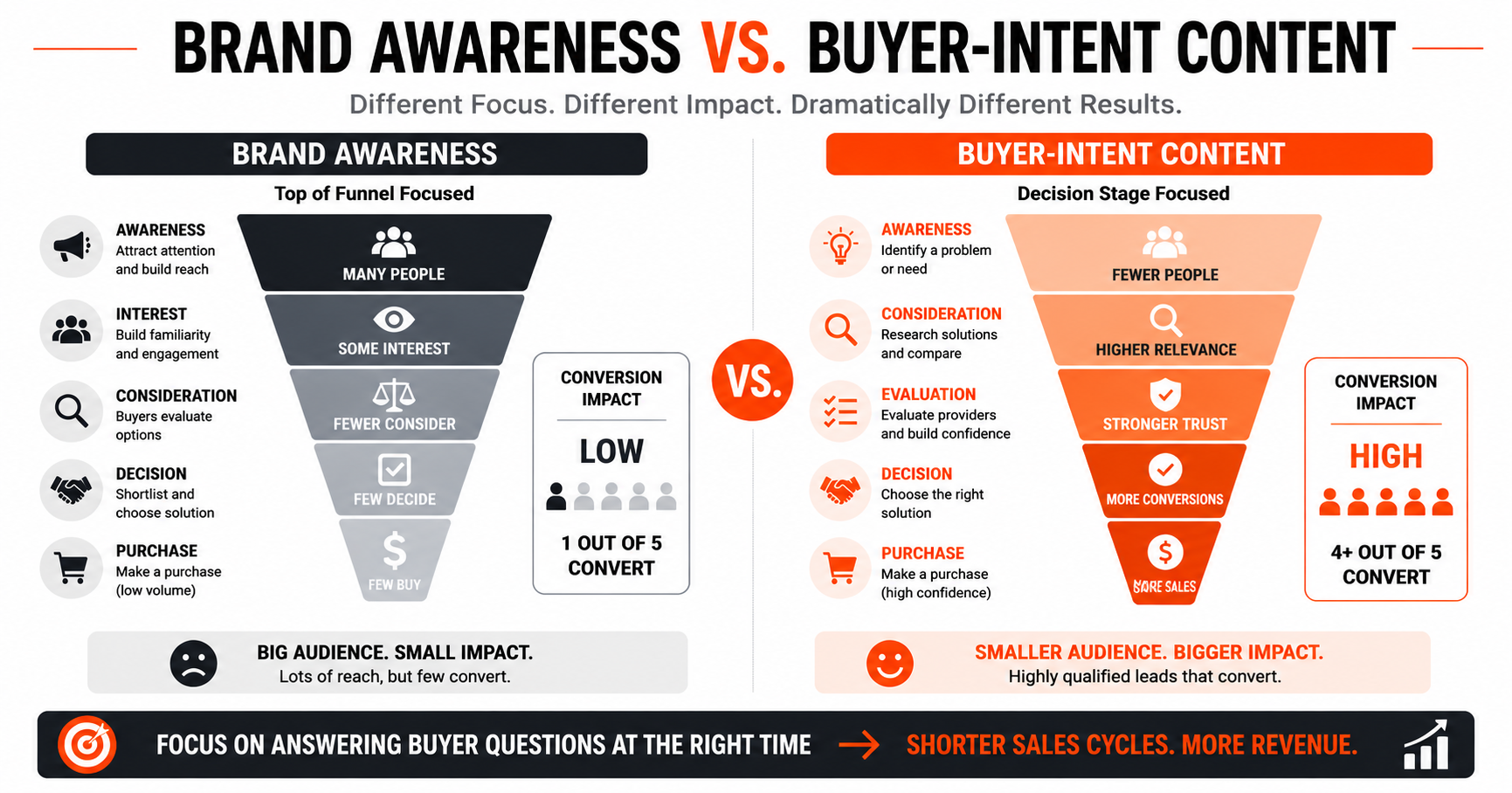

Struggling to generate quality leads from your marketing?
Still wondering why your content isn't converting prospects into customers?
The issue usually isn't your effort or creativity. It's that most content is created without a true understanding of the buyer. The result? Marketing that feels like shouting into the void.
In this article, you'll learn why your content strategy must start with your buyer, not your products. We'll walk through the four core questions every prospect asks, explain how to align your content with their journey, and give you a roadmap to transform your results.
Why Buyer-First Strategy Beats Volume-Based Content Creation
Most businesses create content without understanding who they're talking to, focusing on volume over value and ignoring what their audience actually needs.
This costly mistake leads to ineffective marketing campaigns that fail to build trust or generate qualified leads, no matter how much effort you invest.
I've seen this pattern repeatedly throughout my career. Businesses produce three blog posts a week, post daily on social media, and send regular newsletters. They're certainly busy, but completely ineffective.
Why? They're creating content without a clear picture of their ideal customer.
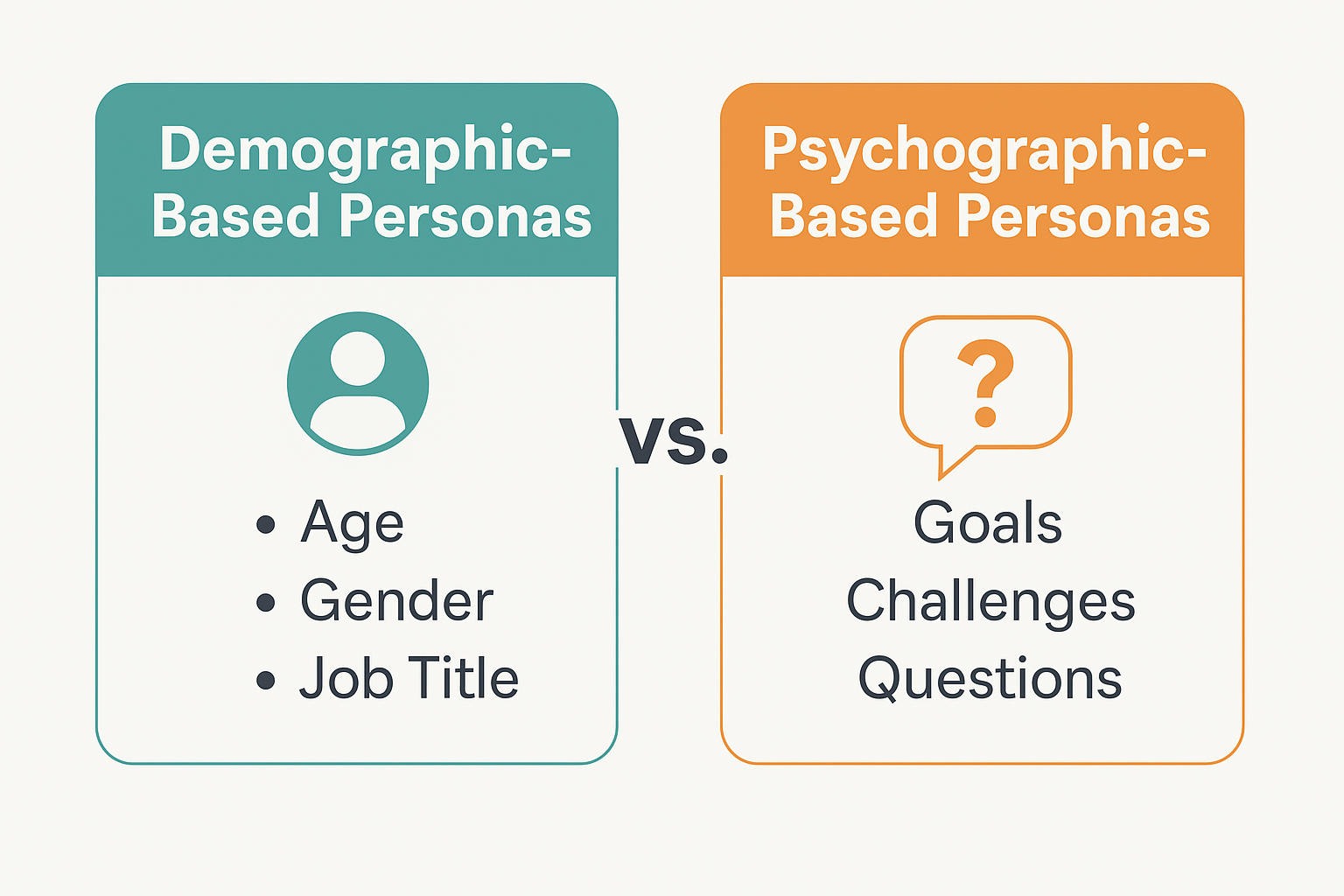
They know their customer's age and job title but not their dreams, fears, or late-night Google searches. This superficial understanding produces generic content that speaks to everyone and connects with no one.
The problem isn't effort or creativity: it's clarity. Without truly understanding who you're trying to reach, every marketing decision becomes guesswork. You create content that might attract visitors, but rarely converts them into customers.
3 Costly Content Mistakes from Ignoring Your Buyer
Businesses that don't align their content to the buyer's journey see 73% lower conversion rates compared to those that do.
Without understanding your buyer, you fall into three dangerous content traps: the quantity trap, the timing trap, and the relevance trap.
The quantity trap is simple. You create content just to have content. You publish three times a week because that's what the marketing blogs tell you to do. But volume without value drains your resources and damages your credibility.
The timing trap happens when you have the right content but deliver it at the wrong moment. You're talking about pricing when prospects still don't understand their problem. You're pushing for demos when they're still exploring options.
The relevance trap is perhaps the most damaging. You apply a one-size-fits-all approach instead of tailoring content to distinct buyer needs. Your content speaks to everyone in general and no one specifically.
These traps actively push potential customers away. When buyers can't find answers to their specific questions, they find someone else who provides them.
| Content Trap | What It Looks Like | The Real Cost |
|---|---|---|
| Quantity Trap | Publishing content just to meet a schedule | Wasted resources on content nobody reads |
| Timing Trap | Right message, wrong moment | Lost opportunities at key decision points |
| Relevance Trap | Generic advice for specific problems | Prospects choosing competitors who "get them" |
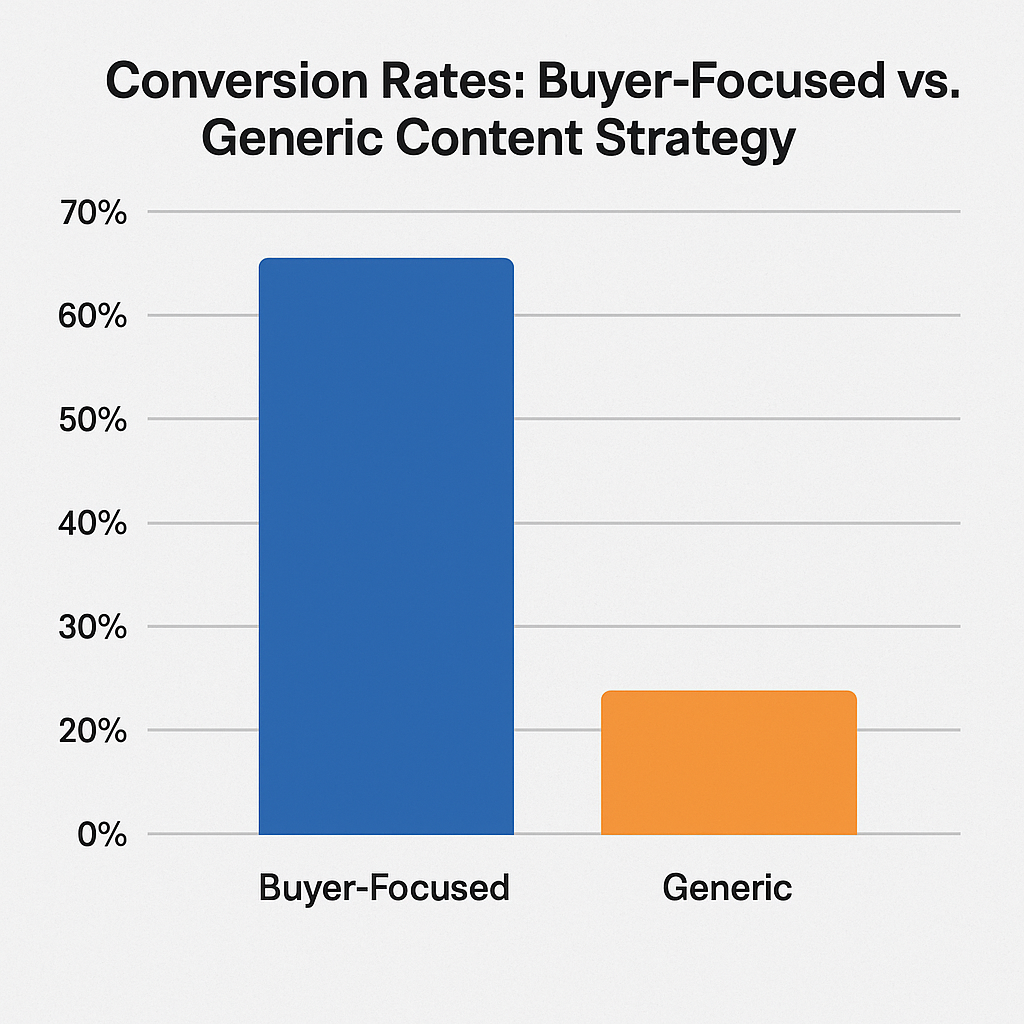
How Buyer Personas Transform Your Entire Marketing Approach
A buyer persona is a semi-fictional representation of your ideal customer based on market research and real data, not demographics like age and job title.
When you truly understand who you're trying to reach (their dreams, fears, and late-night Google searches) every marketing decision becomes clearer.
Let me be clear about what I mean by buyer personas. I'm not talking about cardboard cutouts with names like "Marketing Mary" or stock photos labelled "Small Business Steve." That approach does more harm than good by introducing bias and creating caricatures rather than characters.
Real buyer personas dig deeper. They capture psychographics: what keeps your buyers awake at 3am, what questions they're typing into Google, what objections they'll raise before buying.
The impact is measurable. Using buyer personas can make your website between two and five times more effective. Why? Because every element, from your messaging to your design, is crafted with your ideal buyer in mind.
External resource: How to create detailed buyer personas for your business [+ free persona template]
Your blog posts address the specific questions and concerns of your buyer personas. Your product pages highlight the benefits that matter most to them. Your emails speak directly to their needs and interests.
Research shows that persona-focused emails see click-through rates increase by 14% and conversion rates jump by 10%. When your marketing speaks directly to your readers' needs, they're far more likely to take action.
The Four Questions Every Buyer Asks at Each Stage of Their Journey
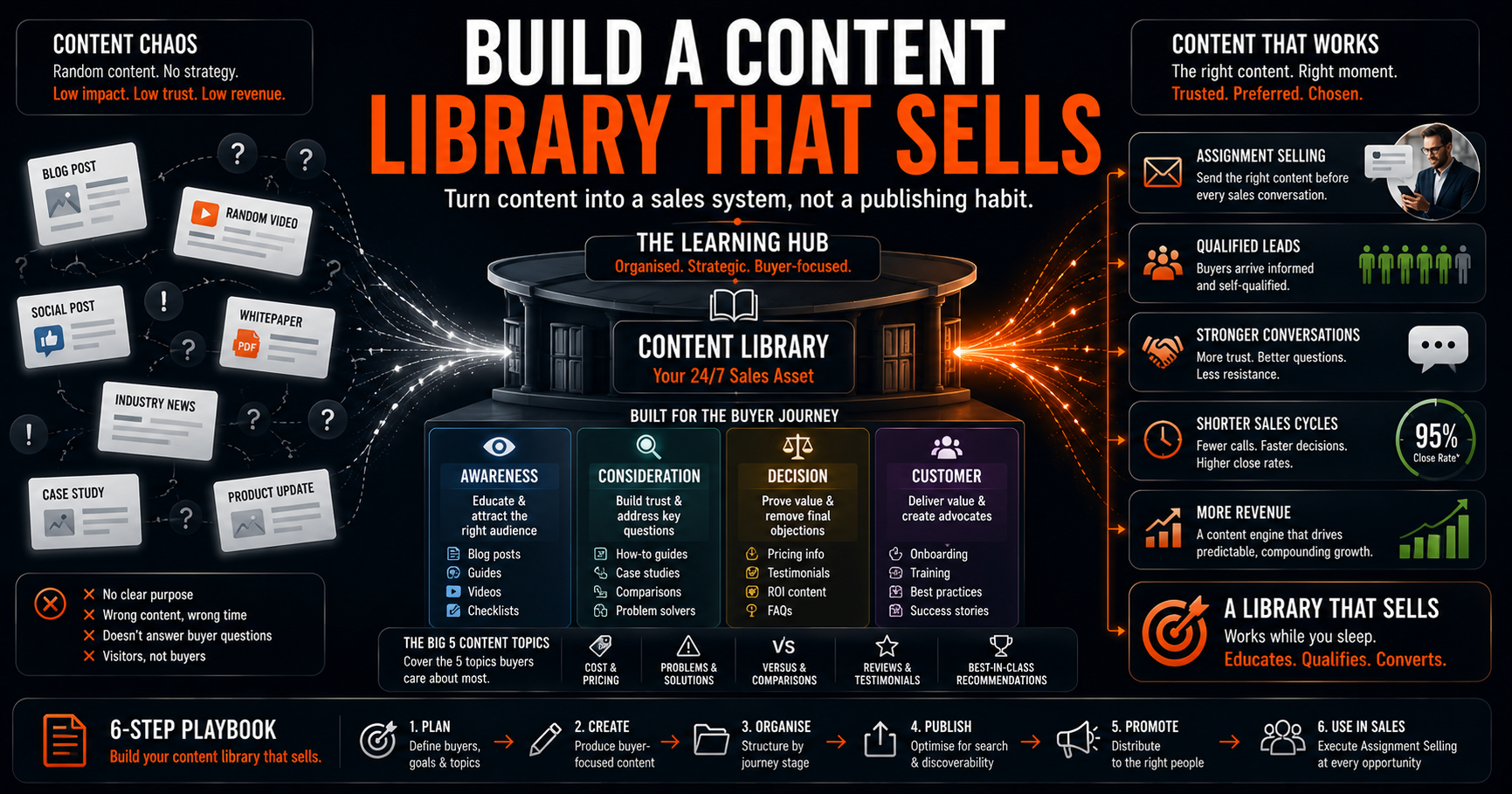
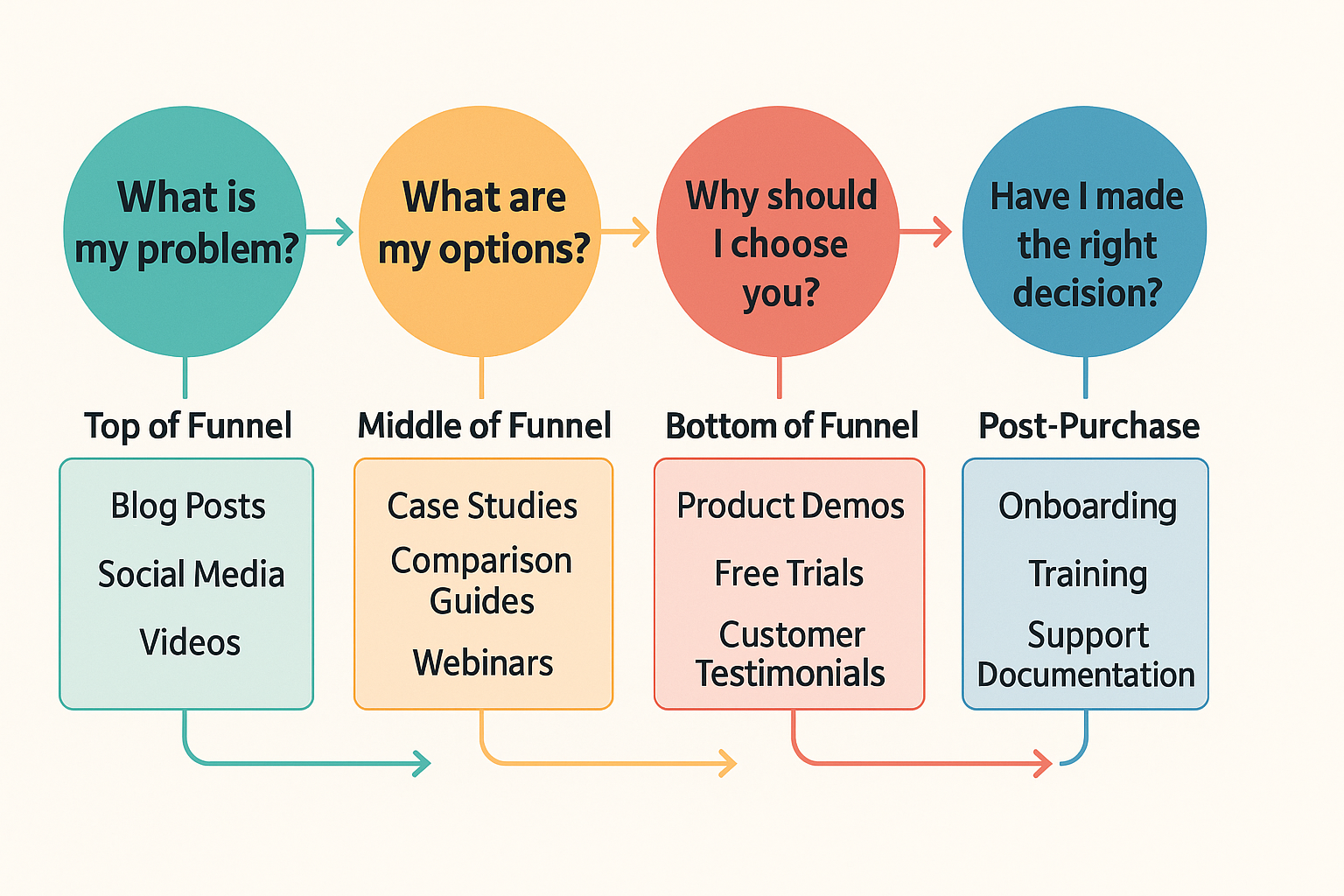
At the top of the funnel, buyers ask "What is my problem?"; in the middle, "What are my options?"; at the bottom, "Why should I choose you?"; and after purchase, "Have I made the right decision?"
Creating content that directly answers these questions at the right time guides prospects naturally towards choosing you without feeling pushy.
These four questions form the backbone of my entire approach to content strategy. When you align your content to answer these questions at the right moment, conversion becomes natural rather than forced.
Let's break down each stage:
TOFU: Help Buyers Identify Their Real Problem
At this stage, prospects are seeking information and need context. They might not even fully understand their problem yet. Your content should help them understand their challenges through educational blog posts, social media content, and videos addressing broad industry challenges.
MOFU: Teach Buyers How to Evaluate Their Options
Now they're exploring solutions and weighing options. They need content that helps them evaluate choices effectively. Case studies, comparison guides, and webinars build trust and showcase your expertise without pushing for a sale.
BOFU: Give Buyers Confidence to Choose You
They're seeking validation and need confidence. Proof-based content validates their buying decision. Product demos, free trials, and customer testimonials overcome final objections and build the confidence to commit.
Post-Purchase: Turn Customers Into Advocates
This stage matters more than most businesses realise. Focus on customer success rather than satisfaction. Onboarding materials, training resources, and support documentation turn customers into loyal advocates who bring new prospects into your funnel.
Companies with aligned sales and marketing teams achieve 38% higher win rates. That alignment comes from creating the right content for each funnel stage based on what buyers actually need to hear.
Why Understanding Your Buyer Is About More Than Just Marketing
True buyer understanding transforms your entire business, not just your marketing department.
When everyone in your organisation, from sales to customer service to product development, contributes insights about buyer needs, you create content that's impossible for competitors to replicate.
I've worked with businesses where marketing creates content in isolation. The sales team complains it's not helpful. Leadership gets caught in the middle trying to make sense of it all. This disconnect costs you deals.
The solution? Make buyer understanding a company-wide discipline.
Your sales team hears objections and questions every day. Your customer service team knows exactly where buyers get stuck. Your product team understands which features matter most. When you combine these insights, your buyer personas become rich, accurate, and actionable.
This alignment creates a competitive advantage. Your content addresses real concerns because it's grounded in actual buyer conversations. Your messaging resonates because it reflects how buyers actually speak about their problems.
My Company Alignment Workshop is built around this principle. When your whole team shares the same understanding of buyer needs, your marketing becomes exponentially more effective because everyone is working from the same playbook.
How to Create Content That Makes Your Audience Feel Smarter and More Capable
Your content should focus on creating genuine value by helping your audience feel better equipped to handle their challenges, not pushing for sales.
Start by listing the top 10 questions your buyers ask before they know they need you, then create content that answers these questions without a sales pitch.
This approach requires a fundamental mindset shift. Stop thinking about what you want to say and start thinking about what your buyer needs to hear.
Research shows that 81% of consumers need to trust a brand before they'll buy from them. Act as an educator, not a salesperson. When you help buyers feel smarter and more capable, they naturally want to work with you.
Here's your practical starting point:
- Interview your recent customers about their buying journey
- Document every question they asked before becoming customers
- Note the concerns they had and the information they couldn't find
- Create content that addresses these questions openly and honestly
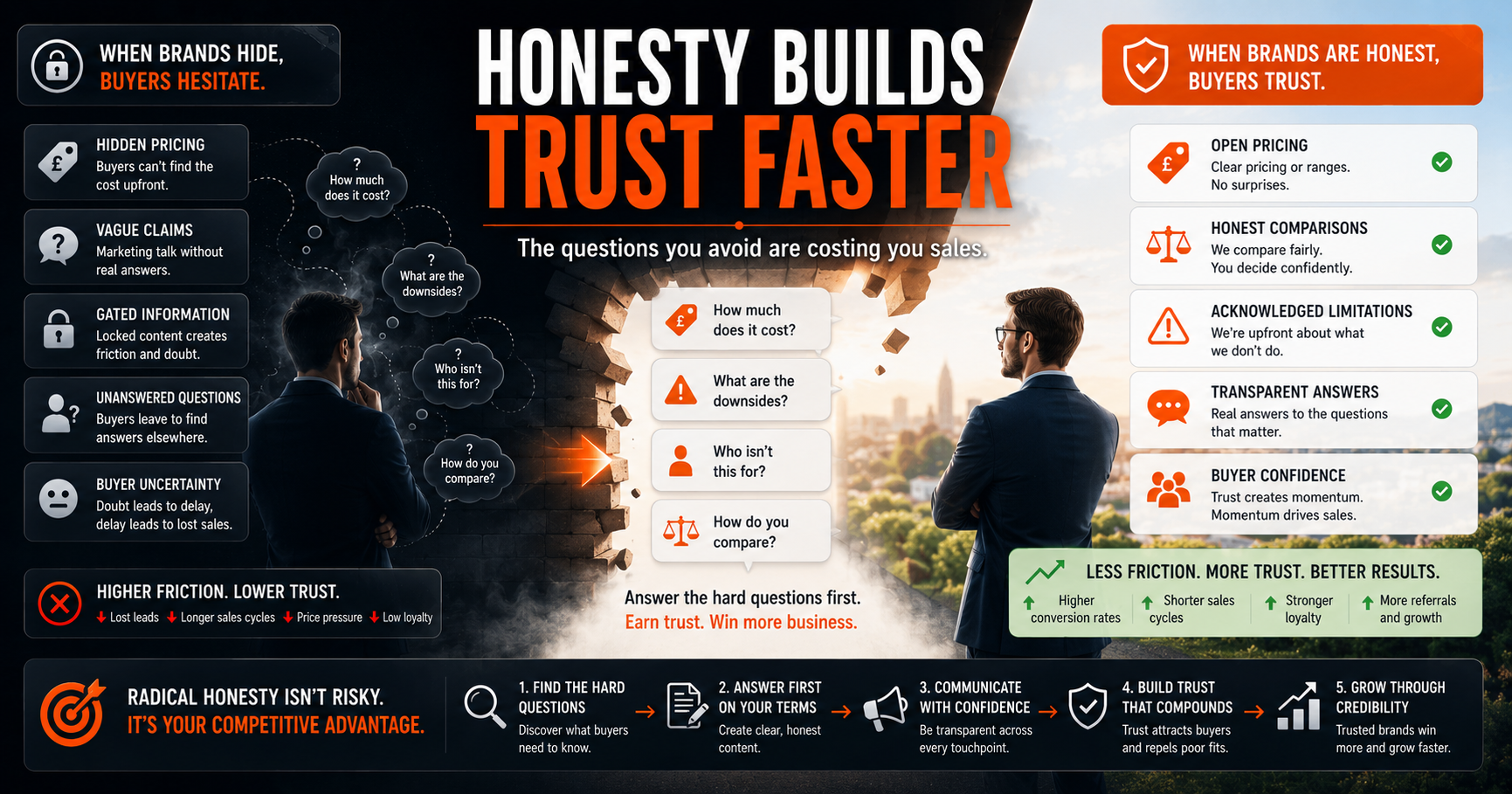
The key is radical honesty. Be willing to say what others in your industry avoid. Show what others won't reveal. Address problems and limitations openly.
Transparency builds trust better than perfect-looking marketing ever can. When you're honest about when you're not the right fit, the prospects who are a good fit trust you more.
The Connection Between Buyer Clarity and Building a Trusted Brand
Trust develops when buyers believe you'll act in their best interests, which only happens when you demonstrate that you truly understand their needs and challenges.
Buyers today make up to 80% of their purchasing decisions online before contacting companies, which means your content must earn their trust long before a sales conversation begins.
This statistic should change how you think about content. Your content is doing the heavy lifting of building trust while you sleep. Every article, video, and guide is either building or eroding trust with potential customers.
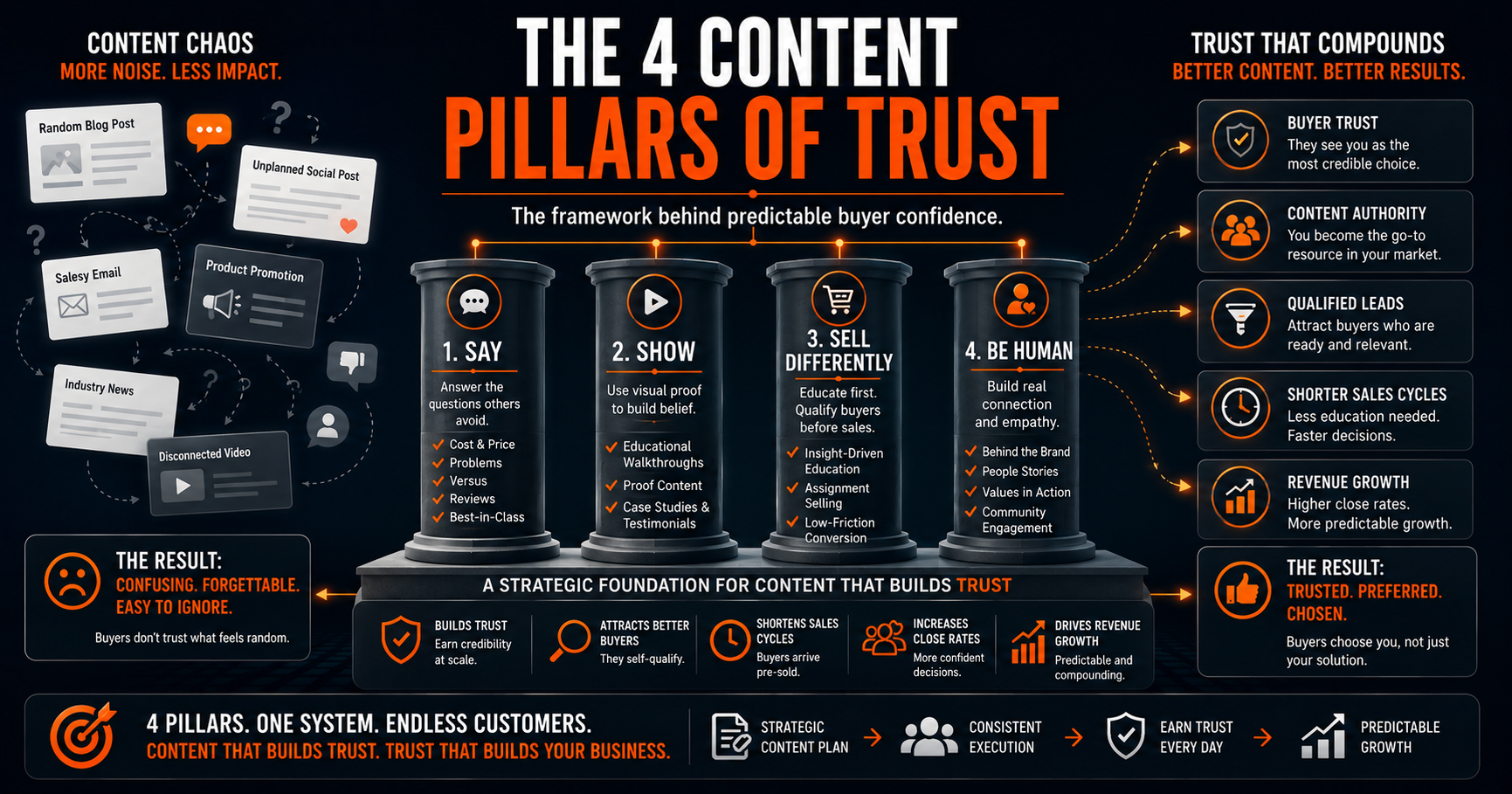
The most effective approach comes from the Endless Customers System™, a philosophy built on four pillars:
- Be willing to say what others in your industry avoid
- Show what others in your space won't reveal
- Sell in ways your competitors won't dare to try
- Be more human in a way that others won't in your space
These foundations position you as the honest broker in your space. They transform your content from generic industry advice into trust-building conversations.
When you consistently provide genuine value without asking for anything in return, buyers remember. When they're ready to purchase, you're already the trusted adviser they want to work with.
I've built my entire business around this principle of radical honesty and buyer clarity. Through done-for-you marketing, strategic guidance, and team training, I help businesses develop content strategies grounded in genuine understanding of their buyers, the kind of understanding that builds trust and generates steady, qualified leads.
Where to Start: Your Buyer-Focused Content Strategy Roadmap
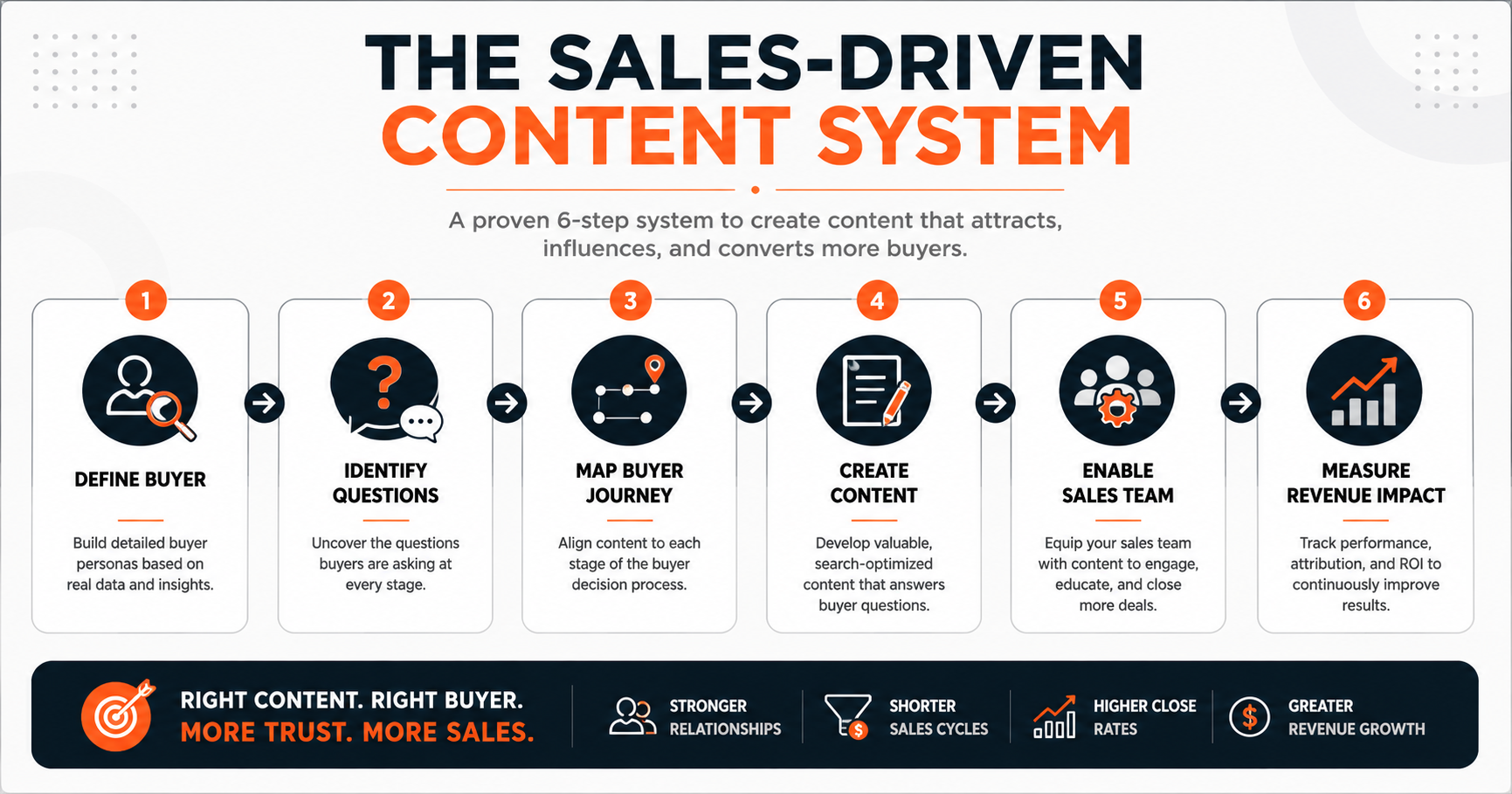
Begin by conducting a content inventory to map existing content to funnel stages, then perform an audience analysis to identify gaps in how you're serving different buyer personas.
Finally, create a journey map that plots typical buying paths and plans content sequences that deliver the right message at the right moment.
Here's your three-step roadmap:
Step 1: Content Inventory
- List everything you've created in the past year
- Map each piece to a funnel stage (top, middle, bottom, post-purchase)
- Identify gaps where you have no content
- Note overlaps where you have too much similar content
Step 2: Audience Analysis
- Define your primary buyer personas (2-3 maximum to start)
- Map existing content to these personas
- Identify which personas you're not serving
- Note engagement patterns for different persona types
Step 3: Journey Mapping
- Plot the typical buying path your customers take
- Mark the decision points where buyers move between stages
- List the questions buyers ask at each decision point
- Plan your content sequence to answer those questions
This process reveals exactly where your content strategy is strong and where gaps are costing you conversions. Most businesses discover they're creating tons of top-of-funnel content but almost nothing for the middle and bottom stages.
The businesses that excel at content marketing don't create more content. They create the right content for the right moment. They understand that a well-timed article answering a specific buyer question is worth more than a dozen generic blog posts.
Conclusion
You've been creating content without a clear picture of your buyer, and it's costing you leads and trust.
That's why understanding your buyer is the foundation of every effective marketing strategy.
Now that you've seen how to align your content to their questions, it's time to put that knowledge to work.
I help companies like yours build marketing strategies rooted in radical honesty and buyer clarity. Book your free strategy call today to start turning your content into a steady source of qualified leads.

Topics: