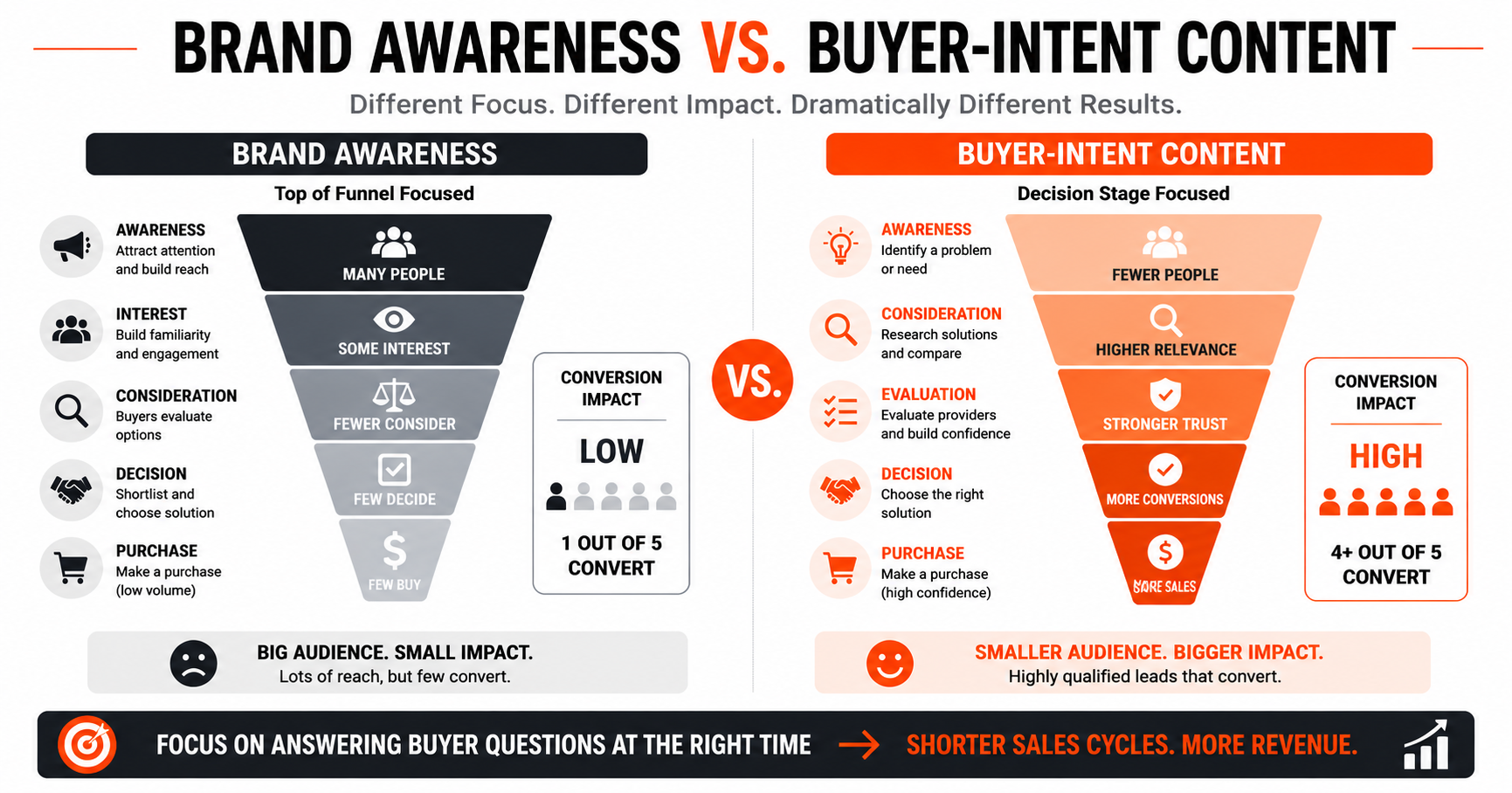

Are your potential customers researching you online right now, but finding nothing useful?
Do you worry that being too transparent about pricing or problems will scare them away?
Here's the reality: your customers will find answers to their questions somewhere. The only question is whether they'll trust you enough to buy from you when they do.
I've worked with businesses across industries, from accountancy to construction to technology, helping them implement the Endless Customers System to build trust through radical transparency. Time and again, I've seen companies transform noisy, self-promotional marketing into educational resources that drive qualified leads.
In this article, you'll discover the proven framework for answering every customer question honestly, including the uncomfortable ones.
You'll learn the Big 5 question categories that drive every purchase decision, see specific examples of how transparency builds trust, and get an actionable plan to start implementing unreasonably helpful marketing in your business this week.
Why Traditional Marketing Undermines Trust With Today's Buyers
Modern consumers make 80% of their buying decisions online before ever contacting a business, yet most companies still approach marketing as if they're interrupting potential customers rather than helping them. This transactional approach creates a disconnect between what businesses want to say and what customers actually need to know.
You're competing for attention in a marketplace where trust matters more than ever. Research shows that 81% of consumers need confidence in a brand before buying from them.
Yet most businesses hide behind vague promises and glossy marketing speak. They avoid the real questions customers are asking. They protect information they think gives them a competitive advantage.
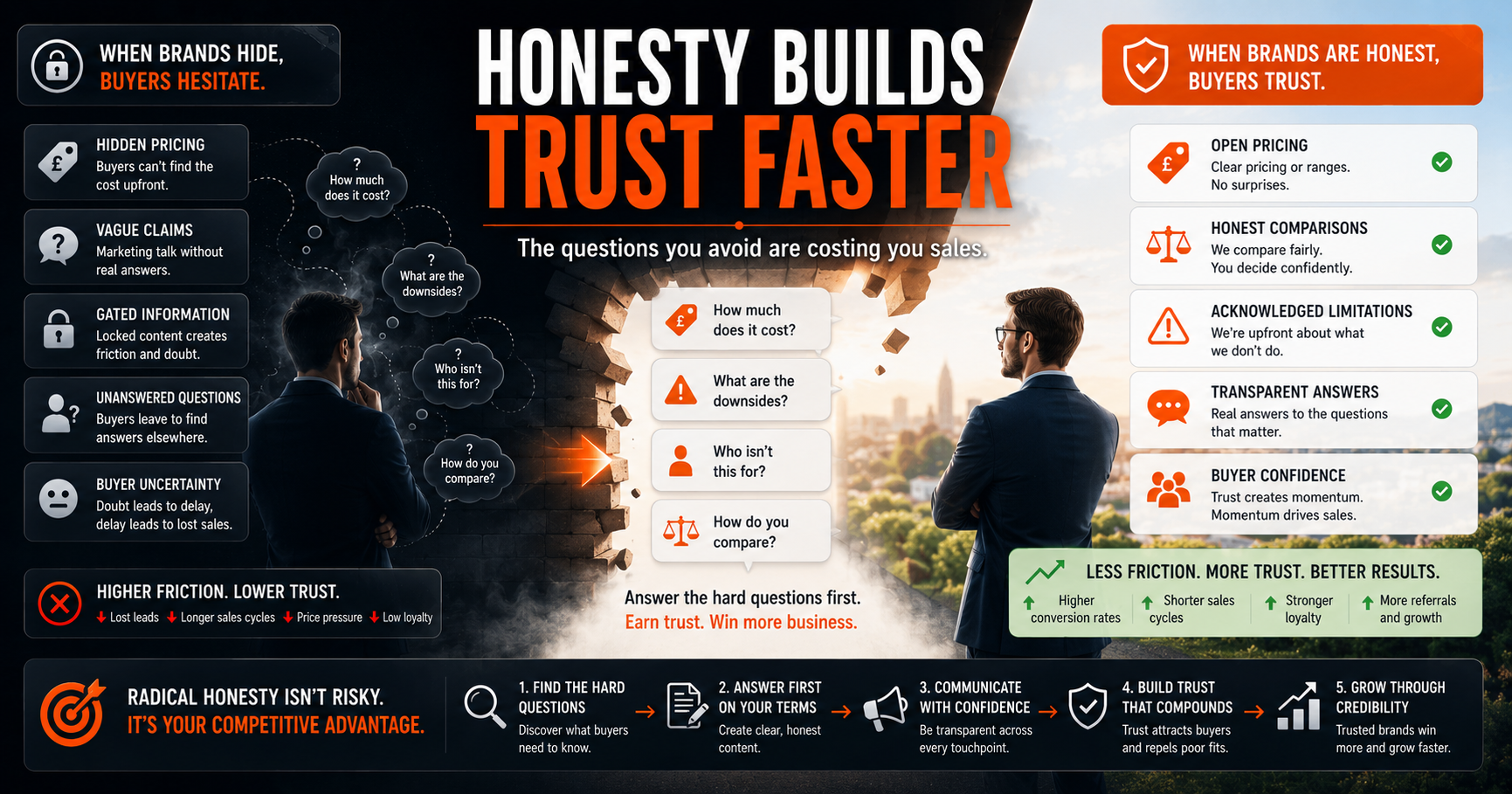
This silence costs you more than transparency ever would.
What Radical Transparency in Marketing Really Looks Like
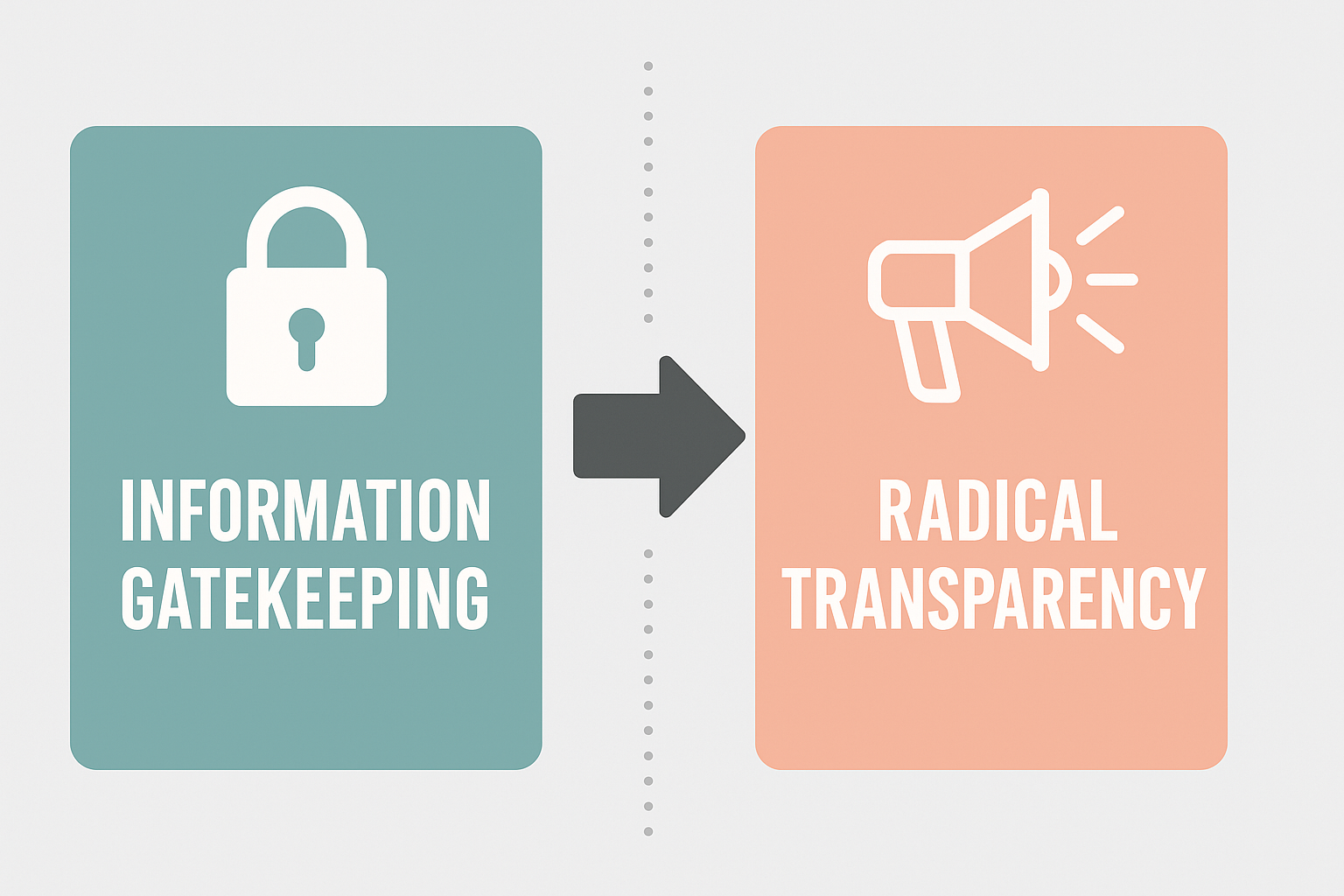
Being unreasonably helpful means answering every question your customers ask—honestly and completely, even when it feels uncomfortable, risky, or like you're giving away too much. It's about choosing to be the most transparent, educational resource in your industry rather than protecting information behind sales calls and contact forms.
This approach feels counterintuitive. You might think: "Won't this scare people away?" or "Won't competitors steal our secrets?"
The truth is simpler. Consumer ignorance is no longer a workable business strategy. People are researching your products and services right now. They'll find answers, if not from you, then from someone else.
When you educate your audience thoroughly, they arrive at sales conversations already trusting you.
Case Study: How River Pools Used Transparent Content to Earn $45M
River Pools and Spas transformed from near-bankruptcy to industry dominance by publishing a straightforward article about fibreglass pool costs that their competitors were too afraid to write. In 2009, during a recession, Marcus Sheridan sat at his kitchen table and wrote "A Guide to Fibreglass Pool Costs."
The article explained what factors influence pool prices; nothing fancy, just honest answers to real customer questions.
Within 48 hours, River Pools ranked number one on Google for 10 different search terms. Over three years, that single piece of content generated 708 customers and $45 million in revenue.
But the financial results only tell part of the story. The average River Pools customer read 105 pages of website content before making a purchase. Their closing rates improved dramatically. Instead of needing 250 sales appointments to sell 75 pools, they needed only 120 appointments to sell 95 pools.
Why? Because by the time customers met with them, they already trusted the company. Their questions had been answered honestly.
The Big 5 Questions Every Customer Wants Answered Before They Buy
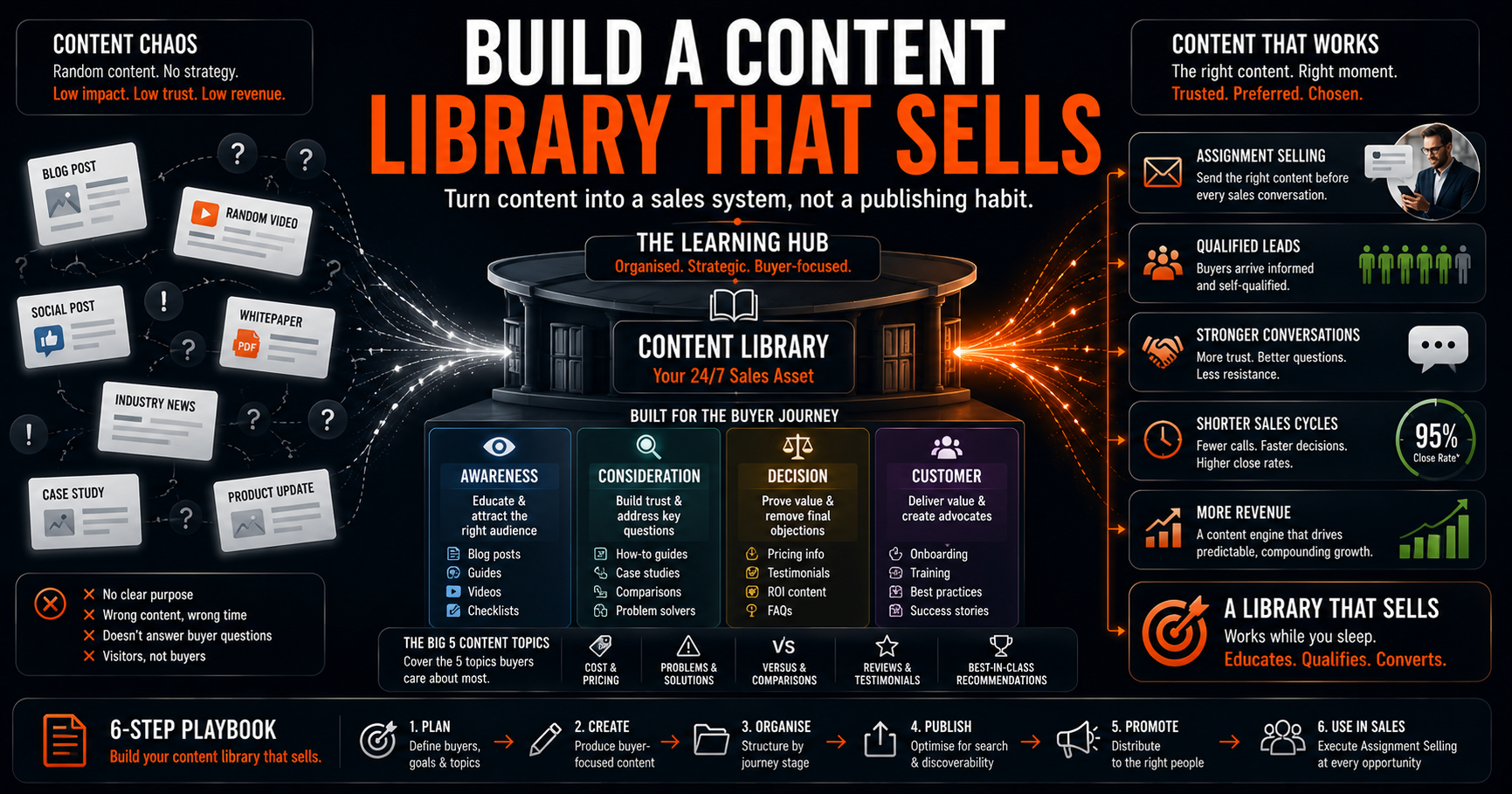
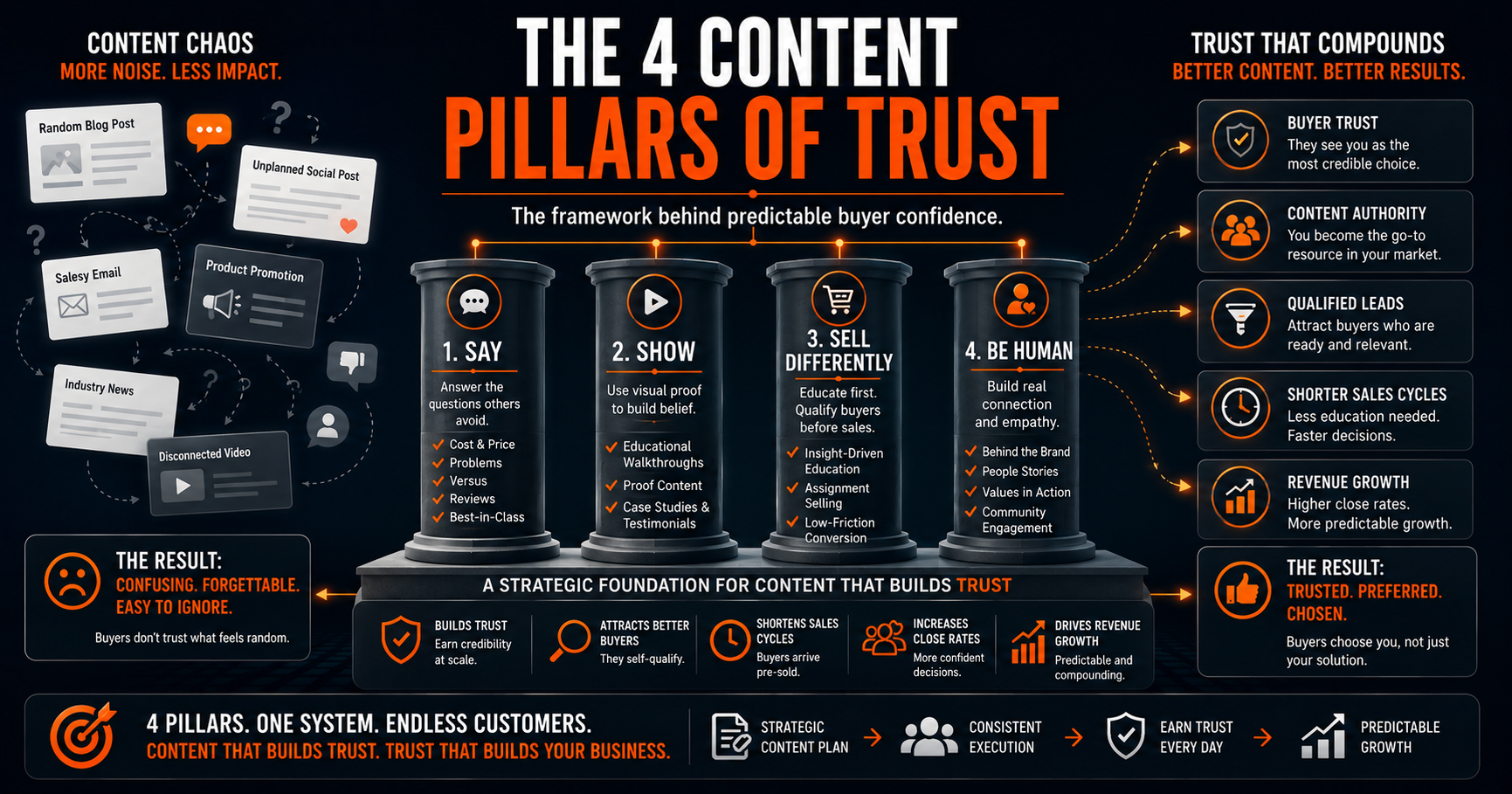
Every purchasing decision revolves around five topics: cost and pricing, problems and limitations, comparisons to alternatives, honest reviews, and best-in-class rankings. These are the questions your customers are asking right now, on Google, in online forums, and to your competitors.
Before someone buys, they search for five key types of information. Let's break them down:
Here's what the Big 5 looks like in practice:
| Question Type | What Customers Want to Know | What Most Businesses Do |
|---|---|---|
| Cost & Pricing | How much will this actually cost me? What affects the price? | Hide pricing or say "contact us for a quote" |
| Problems | What could go wrong? What are the limitations? | Pretend their solution is perfect for everyone |
| Comparisons | How does this compare to alternatives? | Ignore competitors or only mention themselves |
| Reviews | What do real customers say about this? | Cherry-pick only glowing testimonials |
| Best-in-Class | Who are the leaders in this space? | Only promote themselves as "the best" |
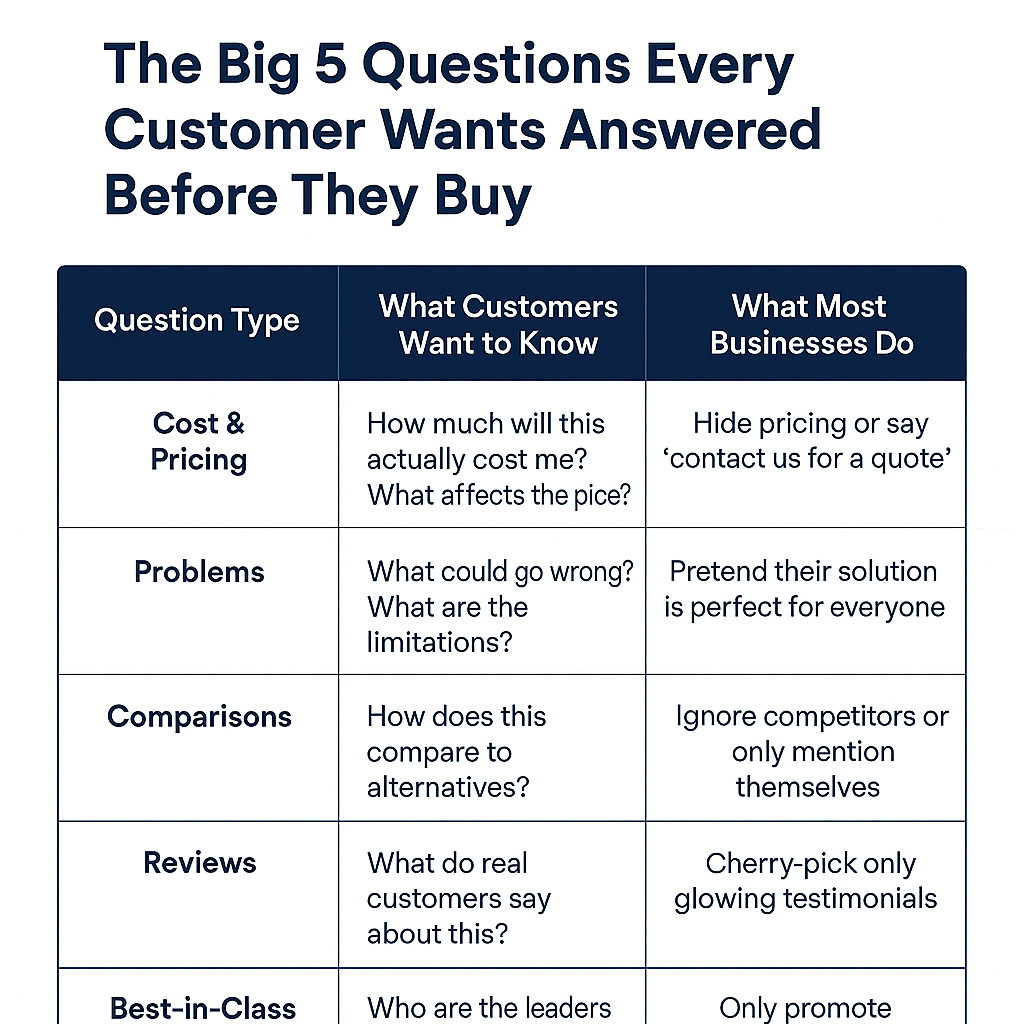
By answering these honestly, you don't just inform; you pre-qualify.
Most companies avoid these subjects because they're scared. Scared of giving away "trade secrets." Scared of competitors seeing their prices. Scared of discussing problems that might scare customers away.
But addressing these topics openly positions you as the trusted educator in your space. It dramatically improves lead quality because people arrive already informed and ready to buy.
Best-in-class content works particularly well when you're genuinely excellent at something specific. For example, if you manufacture software for the healthcare industry, you might write "The 7 Best Healthcare CRM Platforms in 2025 (And When to Choose Each One)" and honestly position yourself alongside competitors. This approach demonstrates confidence and industry expertise; readers trust you more because you're willing to acknowledge other quality options whilst explaining where you truly excel.
Why Talking About Pricing Openly Attracts Better Customers
Pricing transparency doesn't scare away customers—it qualifies them, attracting serious buyers who value your work whilst filtering out tyre-kickers. When you hide pricing information, you're prioritising your competitors' concerns over your potential customers' needs.
Think about your own buying behaviour. When a company refuses to discuss pricing, what do you think? You probably assume they're too expensive, too complicated, or hiding something.
Here's what happens when you're transparent about pricing:
- Better qualified leads: People who contact you already know roughly what you charge and are prepared to invest
- Shorter sales cycles: You've already answered their pricing questions before they pick up the phone
- Higher close rates: Trust is established before the first meeting
- Fewer awkward conversations: No surprises, no sticker shock, no wasted time
If you're more expensive than average, own it. Explain why. Show the value. Trust your customers to make informed decisions.
Your competitors already have a rough idea what you charge anyway. So why are you more worried about competitors (who don't pay your bills) than potential customers (who do)?
Want to see transparent pricing in action? Here's how I break it down on my own service page.
Should You Discuss Your Product's Limitations and Problems?
Openly addressing your product or service's limitations actually builds more credibility than pretending perfection. 81% of consumers need to trust a brand before buying from them, yet most businesses maintain a façade of flawlessness.
Sheffield Metals International published a video called "7 Common Problems of a Metal Roof." Search "problems with metal roofs" and they appear first. That video generated over 200,000 views and countless customers.
River Pools wrote "Top 5 Fibreglass Pool Problems and Solutions." That single blog post has been attributed to at least $2 million in revenue.
Why does this work? Because addressing problems disarms objections before they become roadblocks. When you acknowledge limitations honestly, you:
- Demonstrate understanding of your customers' concerns
- Show confidence in your solution (you're not hiding anything)
- Position yourself as a trusted advisor, not just a salesperson
- Filter out poor-fit customers before wasting anyone's time
The fears that stop businesses from discussing problems are almost always unfounded. You worry competitors will weaponise your honesty. You worry transparency will hurt sales. You worry it shows weakness.
In reality, it's your silence that costs you more. Your potential customers are going to find out about problems eventually. Would you rather they learn from you in context, or stumble across horror stories from your competitors?
How to Create Content That Educates Instead of Sells
Educational content focuses on making your audience feel smarter and more capable of handling their challenges, without pushing for an immediate sale. The shift from salesperson to teacher transforms how customers perceive you.
Here's how to start creating genuinely helpful content:
- Answer the top 10 questions your customers ask: Sit down with your sales team and list every question prospects ask before buying. Then create detailed, honest answers to each one.
- Focus on making them smarter, not on selling: Your content should help people make better decisions, even if that decision is to go with someone else. Paradoxically, this approach attracts more qualified buyers.
- Use the 80/20 rule for context: 80% of your content should provide marketplace context and industry information. Only 20% should be about your specific company or product.
- Show, don't just tell: Use examples, case studies, and real scenarios. Vague promises don't build trust. Specific, practical guidance does.
The beauty of educational content is that it works whilst you sleep. Every piece you create becomes a trust-building asset that continues attracting and qualifying leads month after month.
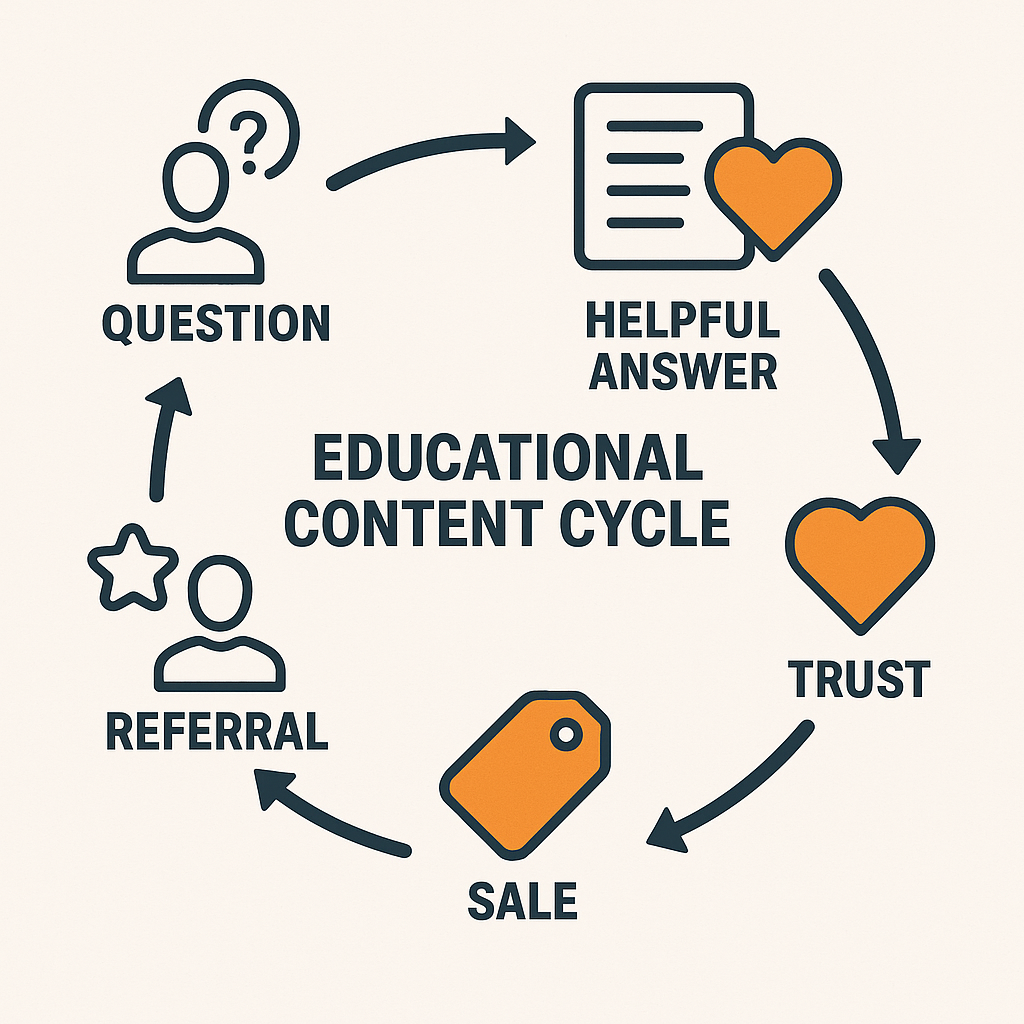
Why Being Helpful Takes Patience (And Why That's Your Advantage)
Trust-building marketing requires consistent effort over 12-24 months to yield remarkable results, which is exactly why most competitors give up too soon. This patience is your competitive advantage.
I hear "We've tried marketing. It doesn't work for us" all the time. But here's the reality: if you've only given marketing a few months, you haven't really tried it. You've dipped your toe in the water and decided the entire ocean is too cold.
Think of trust-building like planting a garden. You can't rush seeds to grow. You plant, water consistently, and wait. The businesses seeing the best results aren't looking for quick wins. They're committing to steady, valuable content over two years or more.
This long-term approach delivers benefits that go far beyond lead generation:
- Brand authority: You become the go-to resource in your industry
- Customer loyalty: Trust-based relationships lead to repeat business and referrals
- Reduced marketing costs: As your reach grows organically, your cost per lead decreases
- Competitive advantage: Whilst others chase trends, you build something sustainable
Consistency matters more than perfection. One high-quality, helpful piece of content per month delivered reliably will outperform sporadic bursts of promotional material.
Your sporadic marketing efforts send a message: if you can't commit to your own marketing, how can customers trust you to commit to solving their problems?
What to Do Right Now: Your First Steps Towards Unreasonably Helpful Marketing
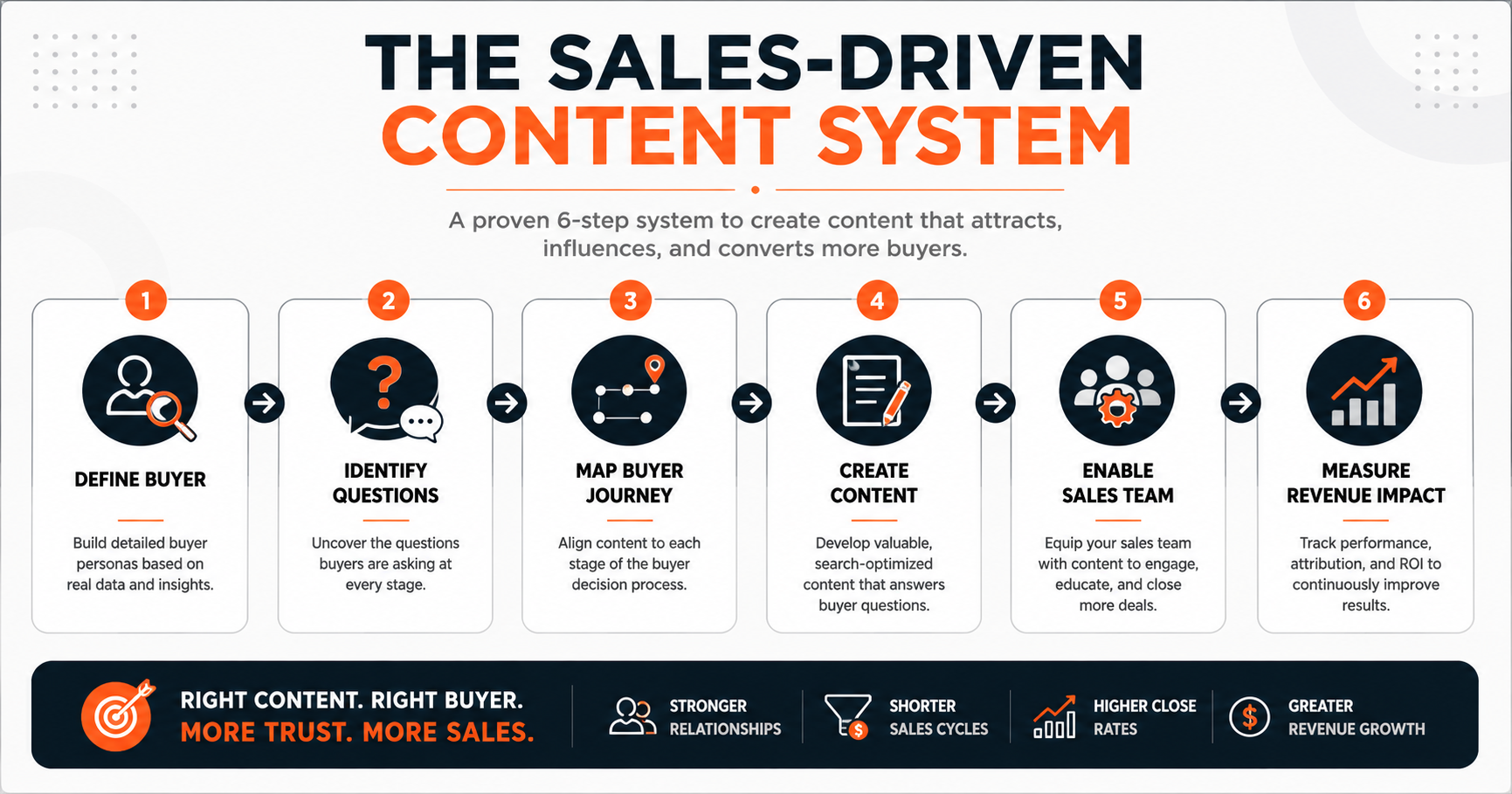
Start by listing the top 10 questions your customers ask before purchasing, then commit to answering them honestly through blog posts, videos, or downloadable guides. Don't overthink this. Your sales team already knows these questions by heart.
Here's your action plan:
This week:
- Schedule 30 minutes with your sales team
- List every question prospects ask before buying
- Identify which of the Big 5 categories each question falls into
This month:
- Choose your three most frequently asked questions
- Write detailed, honest answers to each one
- Publish them on your website with clear, searchable titles
This quarter:
- Create a content calendar covering all 10 questions
- Commit to one piece of helpful content per month
- Share each piece with your sales team and ask for feedback
Remember: your first attempts won't be perfect, and that's fine. Content creation is like baking a cake; your first attempt might be terrible, but if you keep practising, you'll eventually bake something delicious. The delicious version has an ancestor that's an inedible brick.
Focus on being helpful, honest, and consistent. The rest will follow.
GETTING STARTED
You've seen how River Pools transformed near-bankruptcy into $45 million in revenue through radical transparency. Now you understand the Big 5 questions that drive every purchase decision and how to apply unreasonably helpful marketing in your own business.
Your next step is to identify the questions your buyers are already asking, and start answering them honestly. The businesses winning today aren't the biggest or best-funded. They're the ones willing to teach, to answer questions honestly, and to put their customers' needs first.
Start with those 10 questions. Answer them thoroughly and honestly. Stay consistent for the next 12 months.
You'll be amazed at what unreasonably helpful marketing can build.
Need help implementing trust-building content? I work with businesses to implement these exact principles through The Endless Customers System™. Whether you need hands-on support, strategic guidance, or team training, let's talk about where you are now and where you want to be.
Topics: