
Are you publishing content regularly but still struggling to convert readers into buyers? Does your content sound credible on the surface, yet somehow fail to land?
By the end of this article, you'll understand the four psychological principles behind trust-building content, and exactly how to apply them to every piece you publish.
I'll walk you through the CETC framework (Credibility, Empathy, Transparency, Consistency), the most common mistakes that destroy trust before it forms, and a practical step-by-step process for writing content your buyers actually believe.
Key Takeaways
- Trust-building content activates four psychological triggers, which are credibility, empathy, transparency, and consistency, that reduce buying resistance.
- A common misconception in content marketing is that publishing more frequently builds more trust; volume without honesty actively erodes it.
- Trust-based content leads with the buyer's questions; traditional marketing content leads with the brand's message.
- The most effective trust signals include specific evidence, real customer voices, transparent pricing, and honest comparisons.
- Small and unknown brands can compete on trust through content, but only by committing to consistency and intellectual honesty over time.
What is the psychology of trust in content writing?
The psychology of trust in content writing is the application of cognitive and emotional principles that make readers feel safe, understood, and confident in the brand speaking to them.
Trust, psychologically speaking, is a prediction. When your audience reads your content, they're asking: "Can I rely on this source to tell me the truth?" Every claim, every format choice, every word either reinforces or undermines that prediction.
Content that earns trust doesn't just inform; it signals that the brand behind it understands the reader's situation and is willing to be honest, even when honesty is commercially inconvenient.
This is why genuinely trust-building content tends to include uncomfortable truths, transparent comparisons, and real limitations, not just highlights.

Why most content fails to build trust
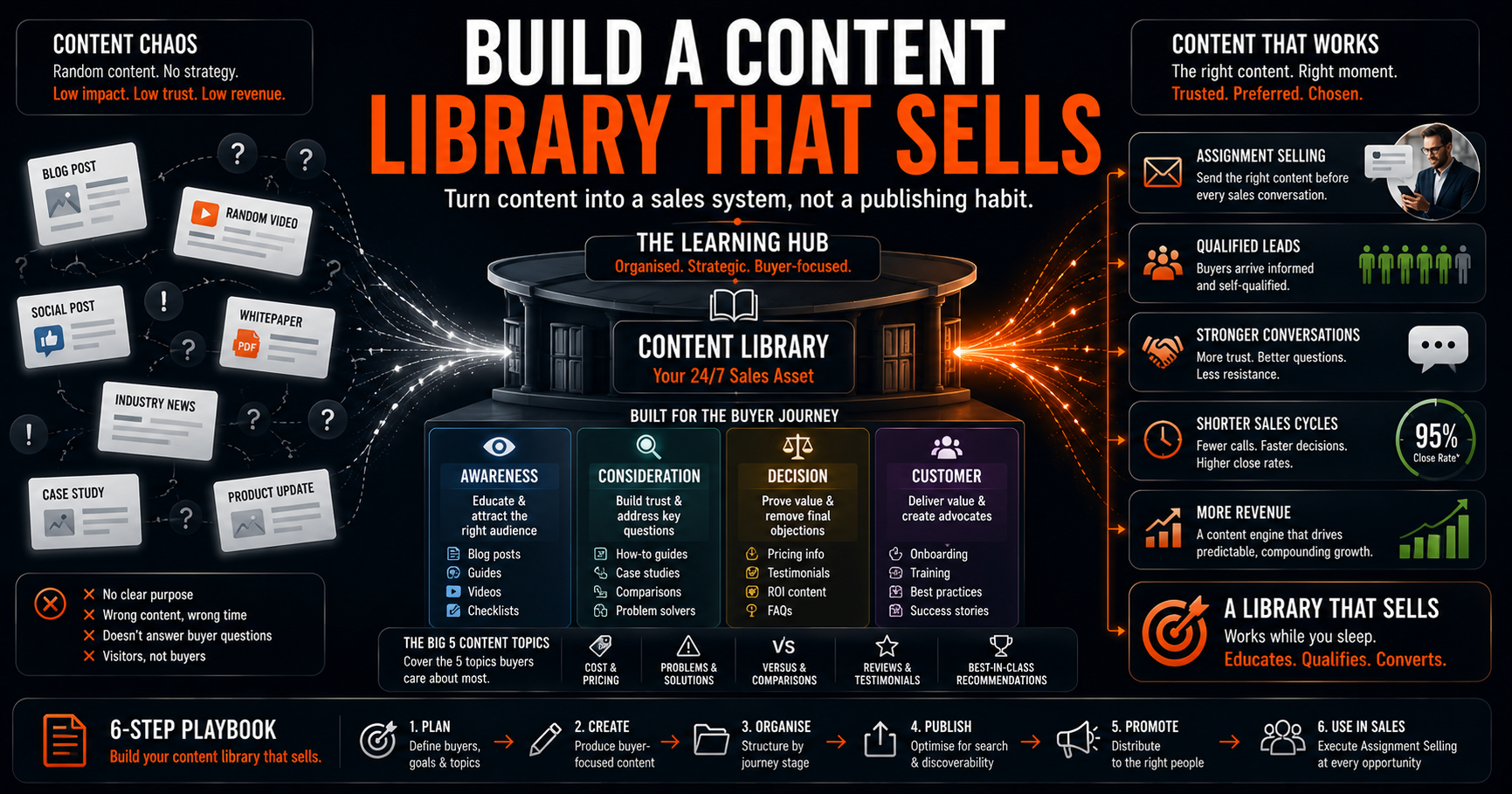
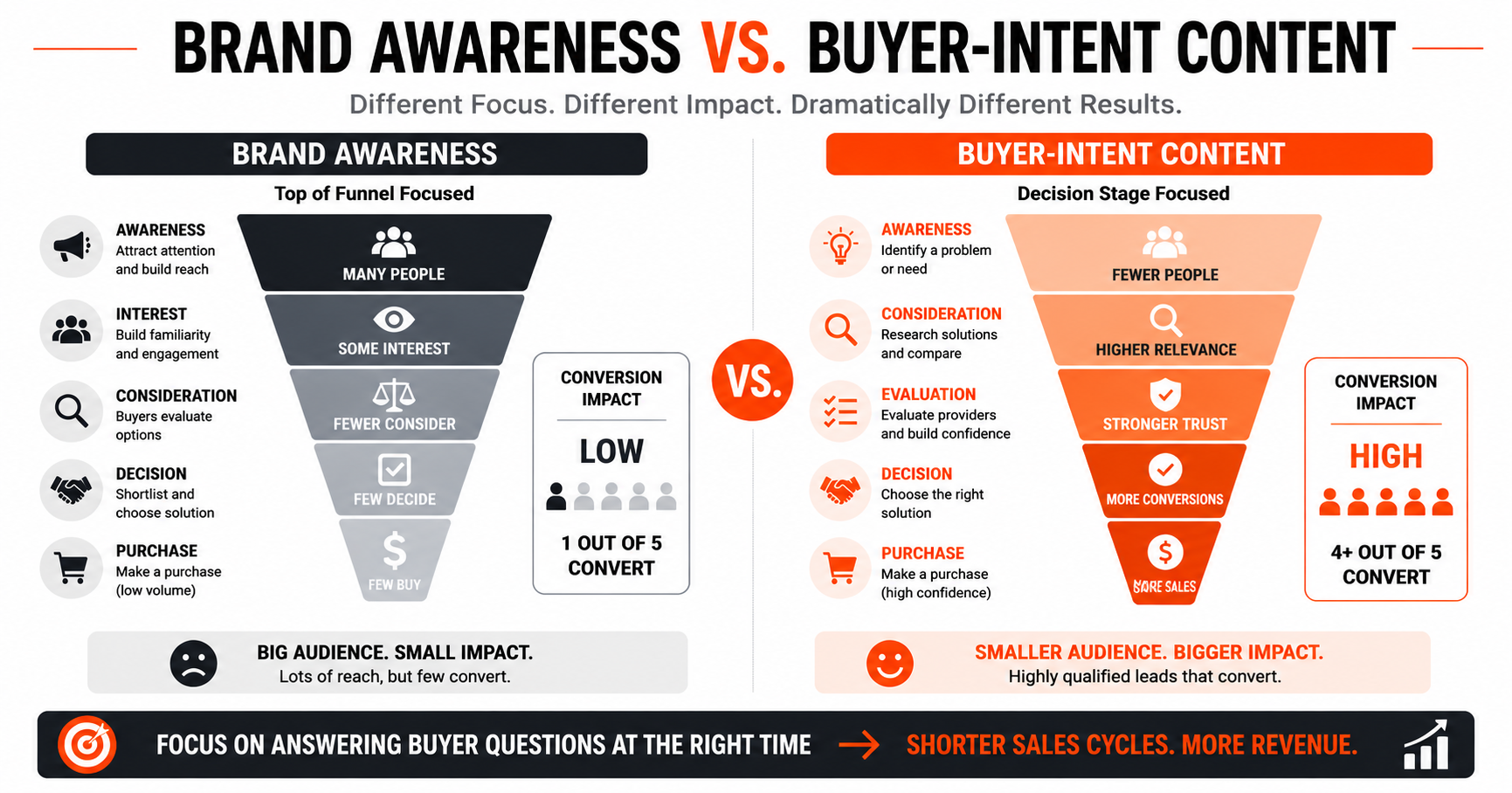
Most content fails to build trust because it prioritises what the brand wants to say over what the audience needs to hear.
One of the most persistent misconceptions in content marketing is that publishing more frequently builds more credibility. It doesn't. Volume without depth, honesty, or genuine usefulness actively erodes trust.
The consequences are commercial. Buyers who encounter content that feels promotional or evasive don't disengage politely; they quietly disqualify the brand. Sales conversations become harder. Objections multiply. Close rates drop. The pipeline fills with sceptics rather than pre-educated buyers.
The most common trust-killing mistakes in content:
- Writing for search rankings first, buyers second
- Making claims without specific evidence to support them
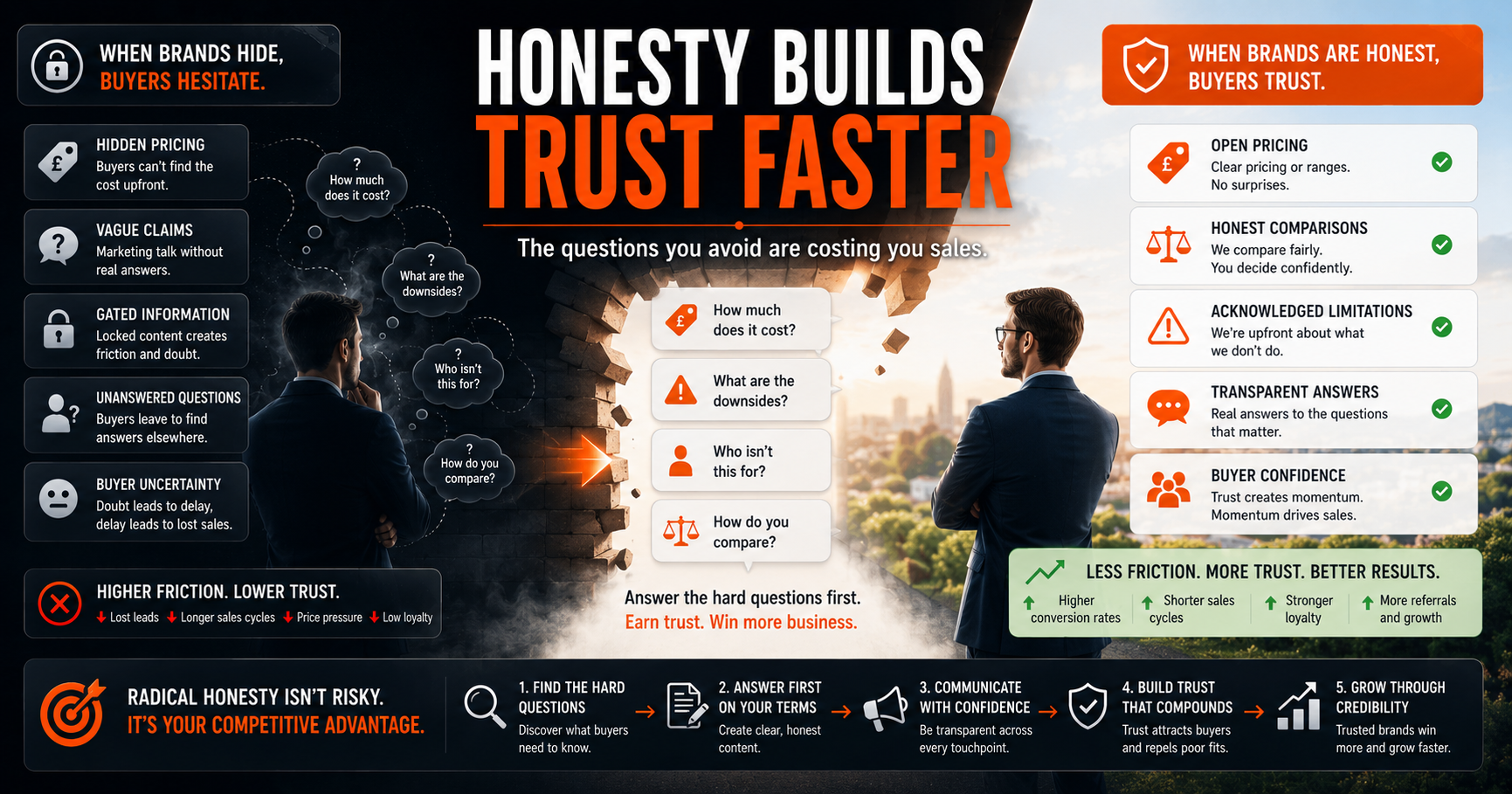
- Avoiding questions about price, problems, or competitors
- Using brand voice that sounds polished but feels impersonal
- Sharing only success stories and omitting limitations or failures
- Treating every piece of content as a sales pitch in disguise

Trust-based content vs. traditional marketing content
Trust-based content leads with the buyer's questions and answers them honestly, while traditional marketing content leads with the brand's message and promotional intent.
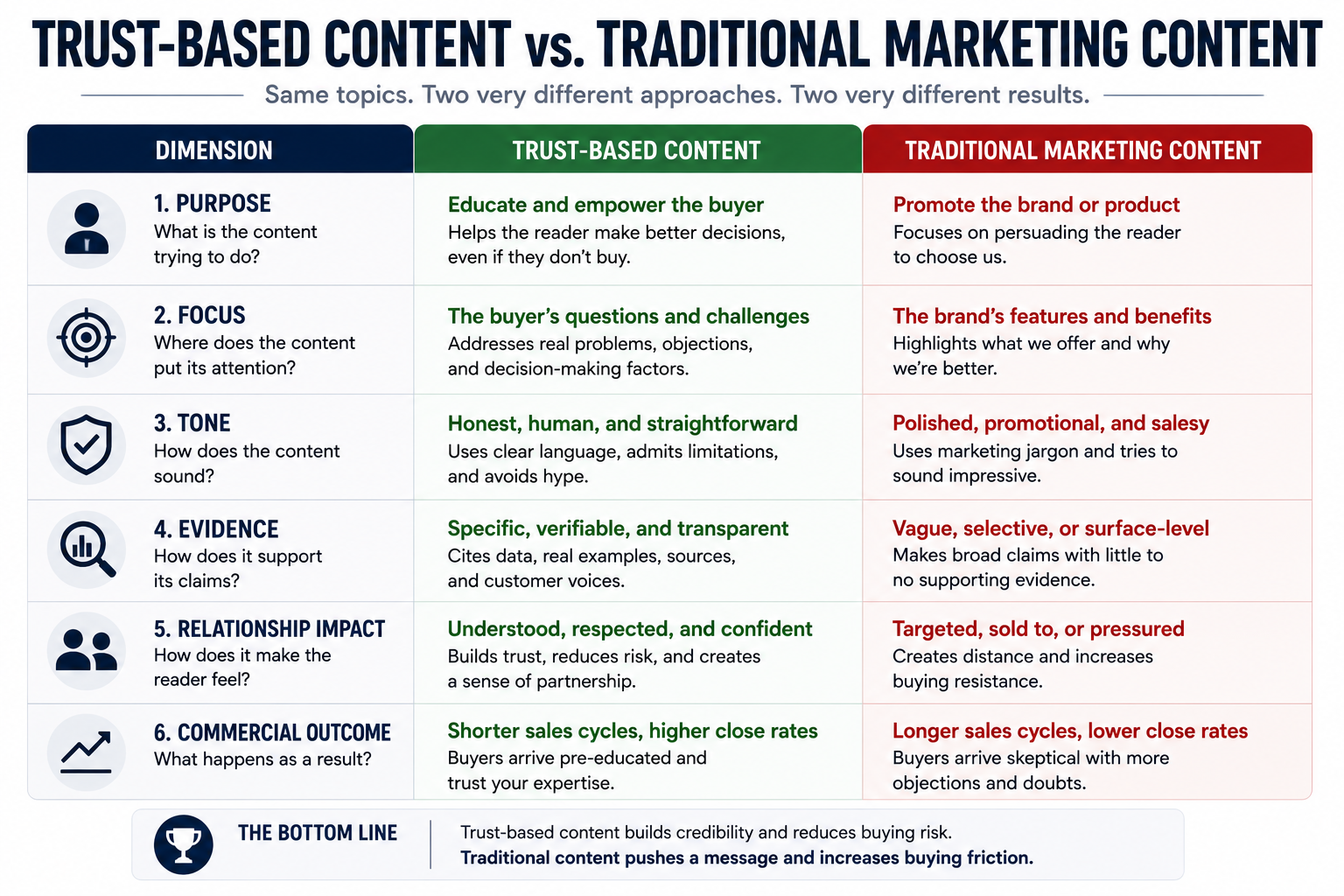
The practical difference shows up in commercial outcomes. In practice, businesses that publish transparent, buyer-led content experience shorter sales cycles and higher close rates, because buyers arrive to conversations already confident in the brand's credibility. The mechanism is straightforward: pre-educated buyers carry fewer objections.
The psychological principles that make content resonate
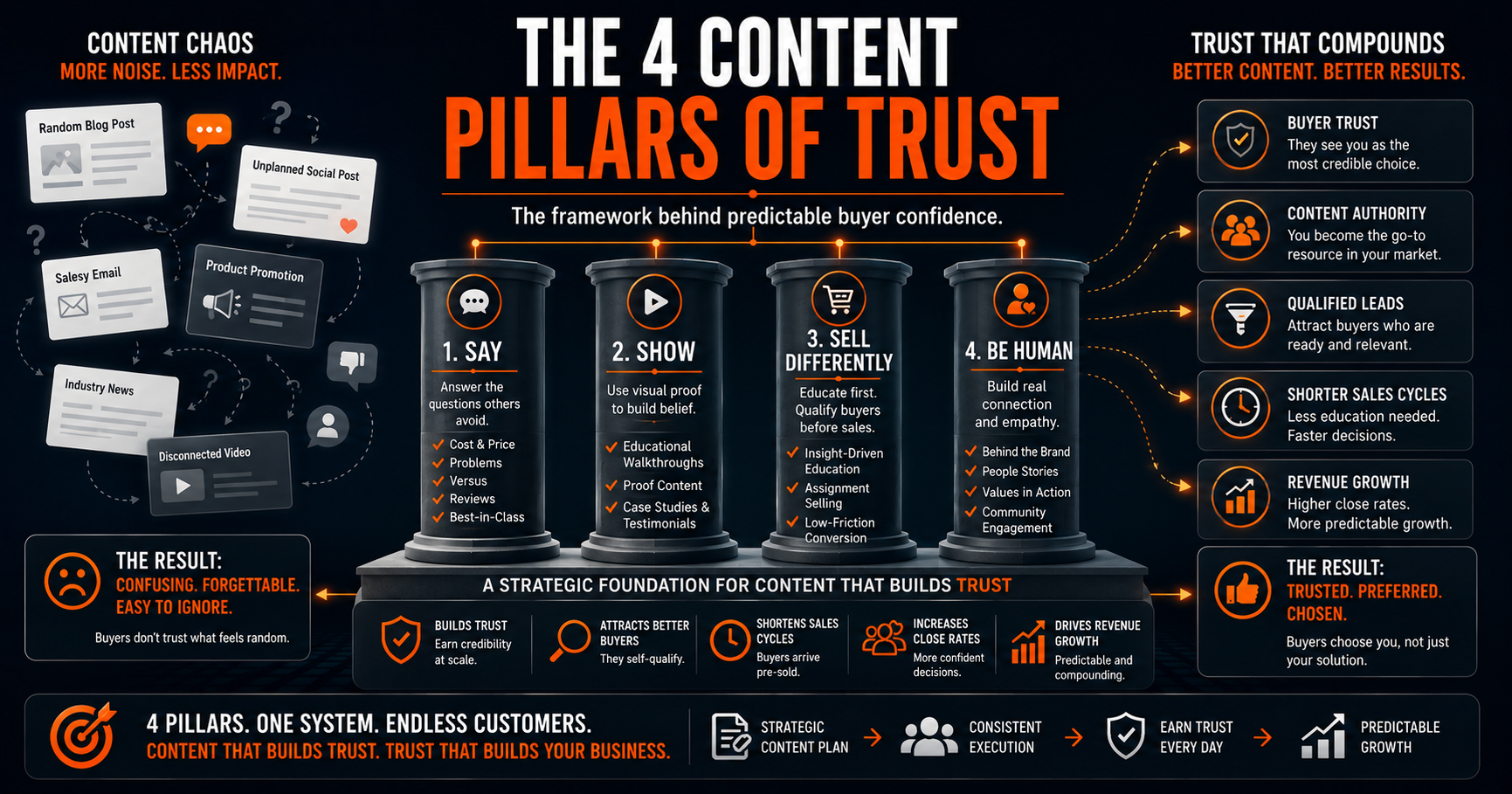
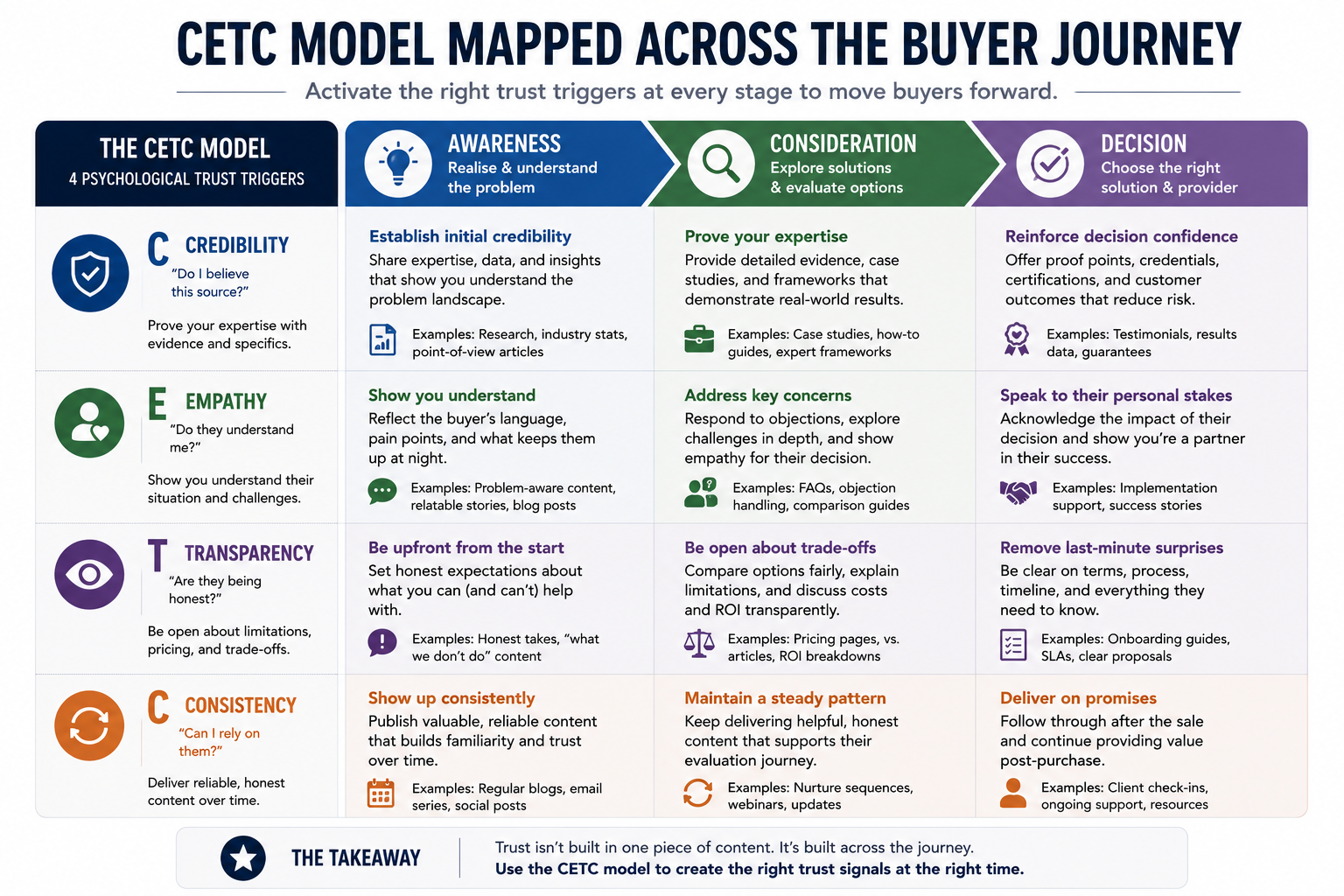
Content resonates when it consistently activates four psychological trust triggers: credibility, empathy, transparency, and consistency.
These four principles form a practical framework; I call it the CETC model, developed from working with B2B businesses on content strategies that needed to convert, not just rank. It draws on established psychological principles around social proof, cognitive ease, and the role of honesty in reducing perceived risk. It gives you a consistent audit tool for every piece of content your brand produces.
-
Credibility: "Do I believe this source?" - Show credentials, cite evidence, and use specific numbers. Vague claims signal unreliability immediately.
-
Empathy: "Do they understand me?" - Mirror the buyer's real language and frustrations. Content that speaks to the reader's exact situation feels written for them, not at them.
-
Transparency: "Are they being honest?" - Address limitations, costs, and uncomfortable comparisons openly. See: Why Admitting Weaknesses Builds More Trust Than Bragging
-
Consistency: "Can I rely on them?" - A single great article doesn't build trust, a pattern of reliable, honest publishing does.
Which principle matters most at each buyer stage:
- Awareness: Empathy - show you understand the problem
- Consideration: Transparency- show you'll answer hard questions
- Decision: Credibility and Consistency - show you're the safe, reliable choice
How to write trust-building content: a step-by-step process
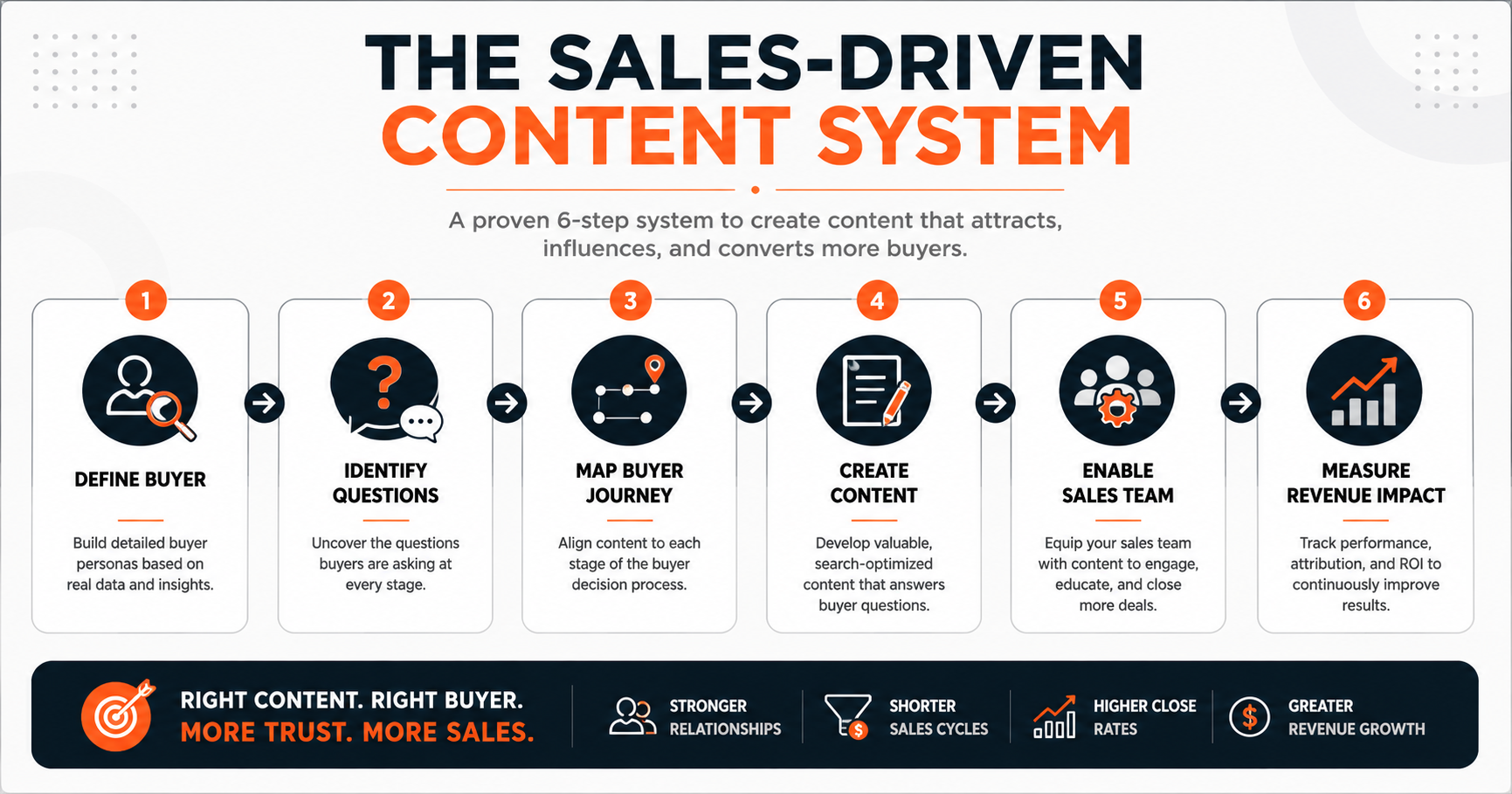
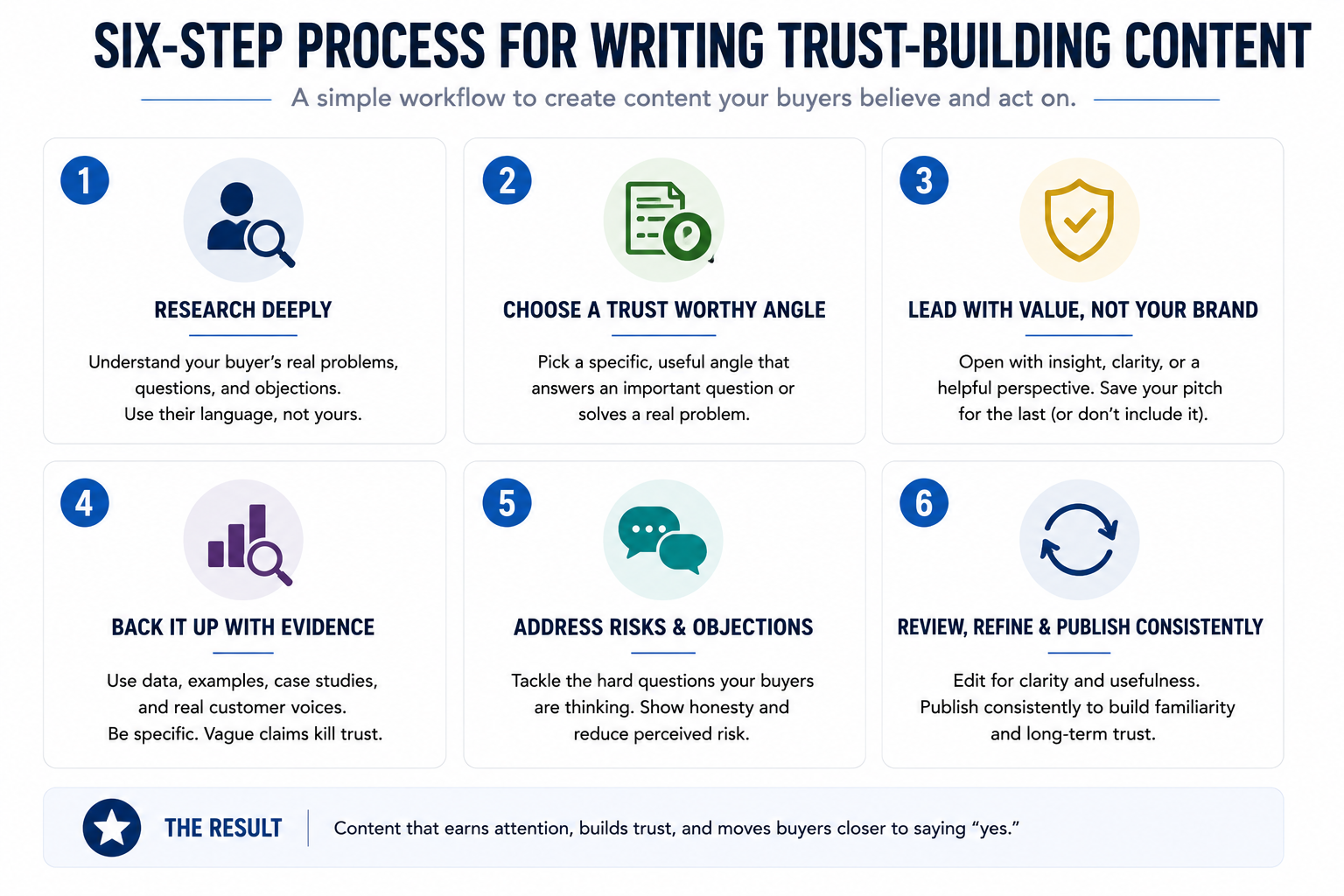
Writing content that builds trust follows a repeatable process: start with the buyer's real questions, answer them with unflinching honesty, support every claim with evidence, and publish consistently enough that your audience begins to rely on you.
Step 1: Identify the real question
Use sales conversations, support tickets, and search data, not assumptions, to find what buyers are actually asking.
Step 2: Choose honesty over optimism
If the answer includes a limitation or a "it depends," say so directly. Hedging destroys trust faster than a direct answer ever will.
Step 3: Lead with the answer, not the build-up
State your position in the first paragraph. Readers who have to scroll for your point rarely stay.
Step 4: Support every claim with evidence
Specific data, named examples, or direct experience all work. Unsourced generalisations don't.
Step 5: Apply the CETC audit before publishing
Before you publish, ask:
- Does this demonstrate credibility? (specific evidence, named sources)
- Does this demonstrate empathy? (mirrors the buyer's real situation)
- Does this demonstrate transparency? (answers uncomfortable questions honestly)
- Does this demonstrate consistency? (aligns with everything else your brand publishes)
If a piece fails on any of these, revise before publishing.
Step 6: Publish on a schedule your audience can predict
Trust is built through repeated, reliable behaviour, not one exceptional piece.
The best trust signals to include in your content
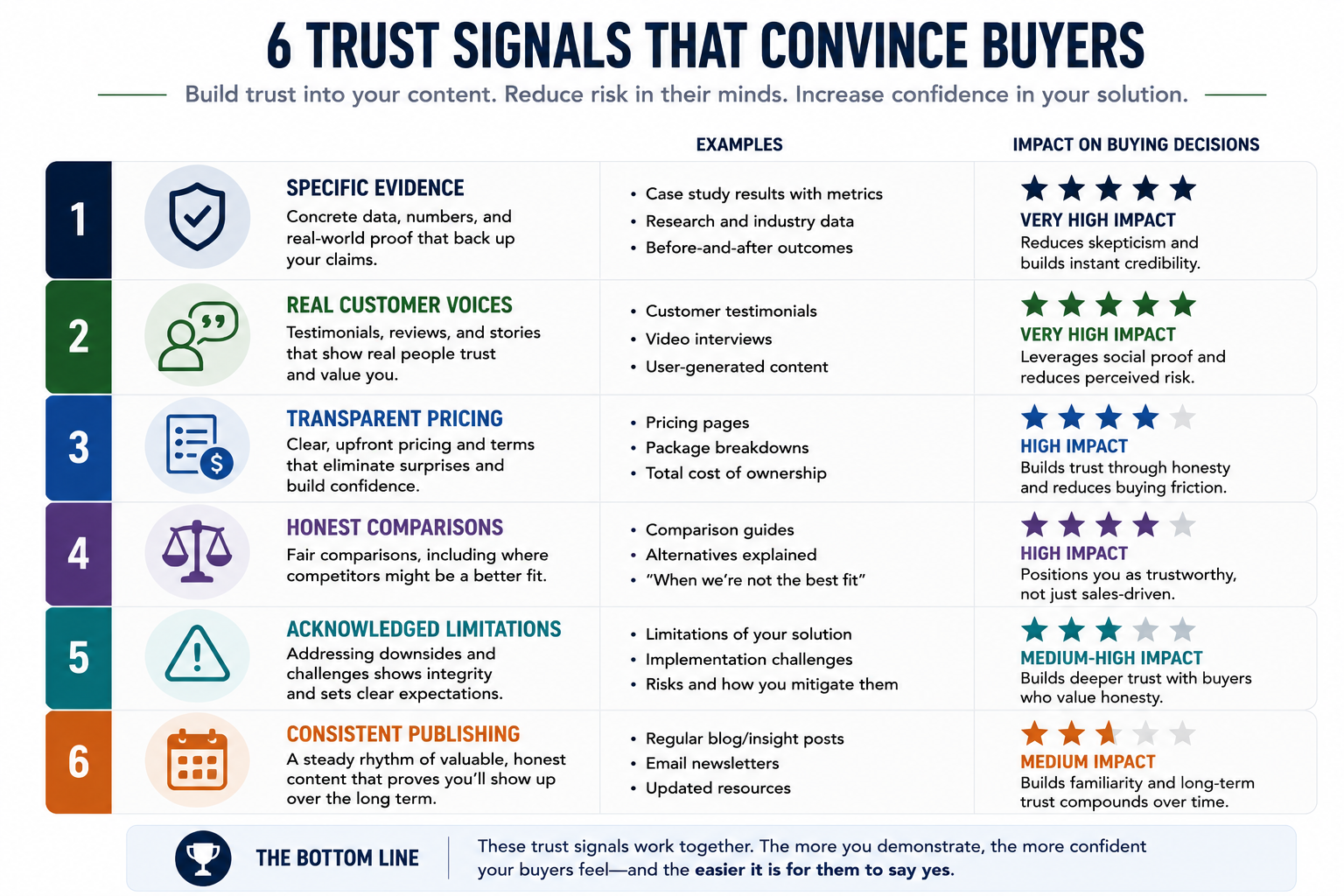
The most effective trust signals in content are specificity over vagueness, real customer voices, transparent pricing, honest comparisons, and consistent publishing cadence.
-
Specific evidence (high impact): Data, case study results, and named sources signal credibility to readers and AI search tools alike.
-
Real customer voices (high impact): Direct quotes and testimonials carry more weight than brand claims because they originate outside the brand.
-
Transparent pricing (high impact): Publishing price ranges reduces friction and pre-qualifies buyers before the first conversation. See: The Big 5 Questions Every Buyer Wants Answered
-
Honest comparisons (high impact): Fairly comparing yourself to alternatives, including naming when a competitor might suit a buyer better, signals confidence and integrity.
-
Named author credibility (medium impact): Content attributed to visible, named experts carries greater perceived reliability, particularly in AI-indexed results.
-
Consistent brand voice (medium impact) Inconsistency across content signals that no one is stewarding the brand, which undermines trust even when individual pieces are strong.
Frequently asked questions
How long does it take for trust-building content to show results?
Most brands begin to see measurable shifts in lead quality and engagement within three to six months of publishing consistently trust-based content. Sales cycle shortening often becomes visible earlier, as pre-educated buyers arrive to sales conversations better prepared and with fewer objections.
Does trust-building content actually convert, or does it just build awareness?
Trust-based content converts, but it works differently from promotional content. Rather than driving impulse decisions, it reduces the number of objections a buyer carries into a sales conversation. In practice, businesses that commit to transparent, buyer-led content experience shorter sales cycles and higher close rates, because buyers arrive already confident in the brand's credibility.
Conclusion
You came here because your content wasn't landing the way it should. Now you have a clear framework for understanding why, and what to do about it.
Trust isn't a feeling you manufacture with clever writing. It's built through credibility, empathy, transparency, and consistency, applied repeatedly in every piece of content your brand publishes.
The brands winning on trust aren't necessarily the biggest or best-resourced; they're the ones willing to answer hard questions honestly and show up reliably over time.
The single most important action you can take right now: audit your last five pieces of content against the CETC model. For each one, ask whether it demonstrates credibility, empathy, transparency, and consistency. The gaps will tell you exactly where to focus next.
Read next: The Big 5 Questions Every Buyer Wants Answered
If you want support building a content strategy that earns genuine buyer trust and drives real commercial results, explore my content strategy services here.

About the author
Tom Wardman is a content strategist and the author of Build a Trusted Brand. He helps ambitious businesses create content that earns buyer trust, shortens sales cycles, and builds lasting brand authority, without relying on tricks, volume, or empty promotional noise. Learn more about his approach here.
Topics: