Are you producing content but watching buyers go to competitors who seem to get there first? Do you wonder why certain businesses dominate search results, AI recommendations, and buyer trust, while others keep spending on leads that never quite convert?
The businesses winning that trust are not necessarily better at what they do. They are better at educating.
This article is for founders and marketing leaders at B2B companies who want to build a competitive advantage through content. By the end, you will have a clear, repeatable framework for becoming your market's most trusted educator, and understand exactly why it produces results that advertising alone cannot replicate.
You will also see the three fears that stop most businesses from starting, the five content topics that drive purchasing decisions in every market, and a six-step framework you can begin implementing this week.
Key takeaways
- Being your industry's #1 educator means obsessively answering the questions your buyers are already searching, before they contact you or a competitor.
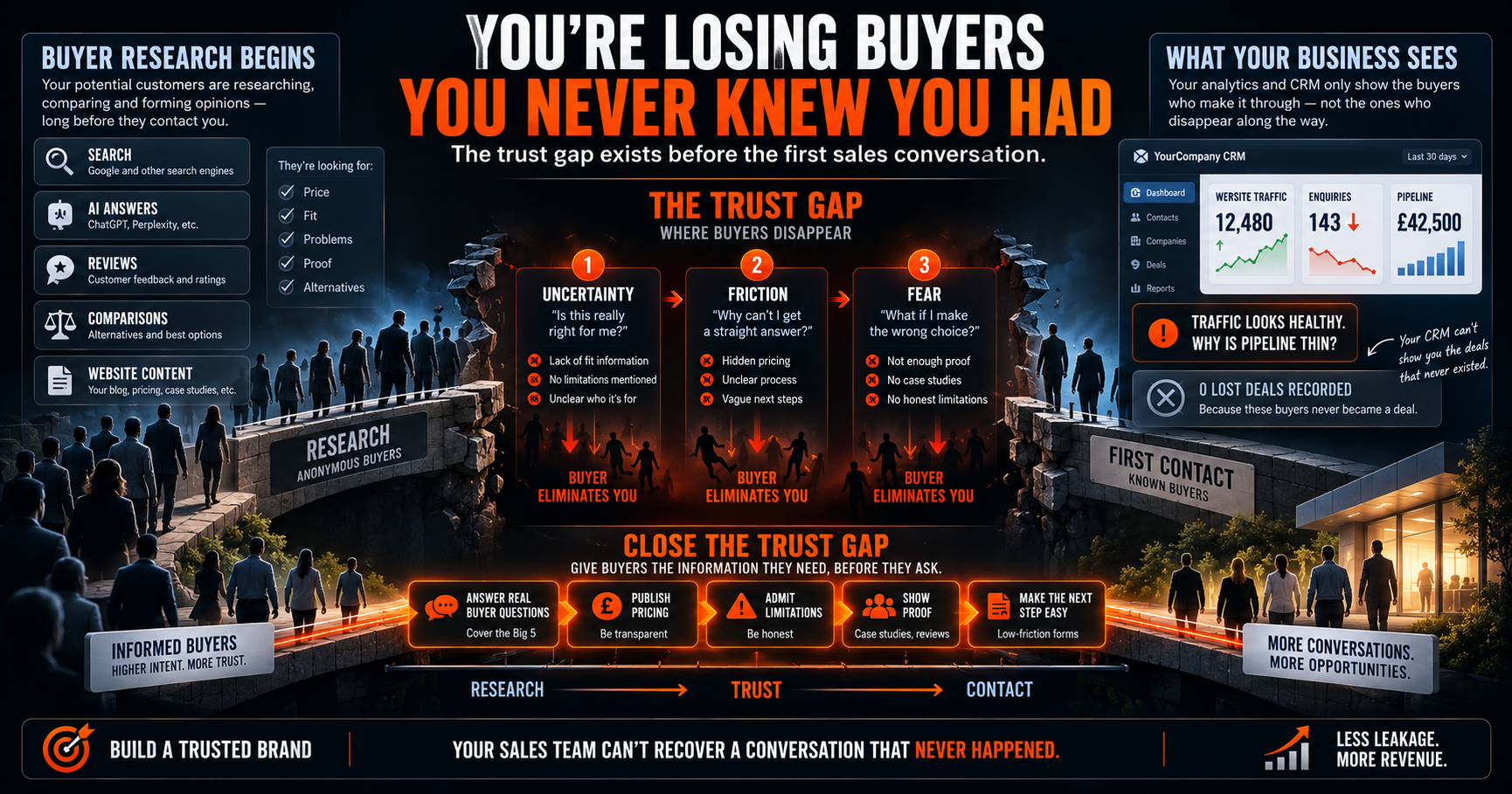
- Google's Zero Moment of Truth research shows 80% of the buying decision is made online before a prospect first reaches out to a business.
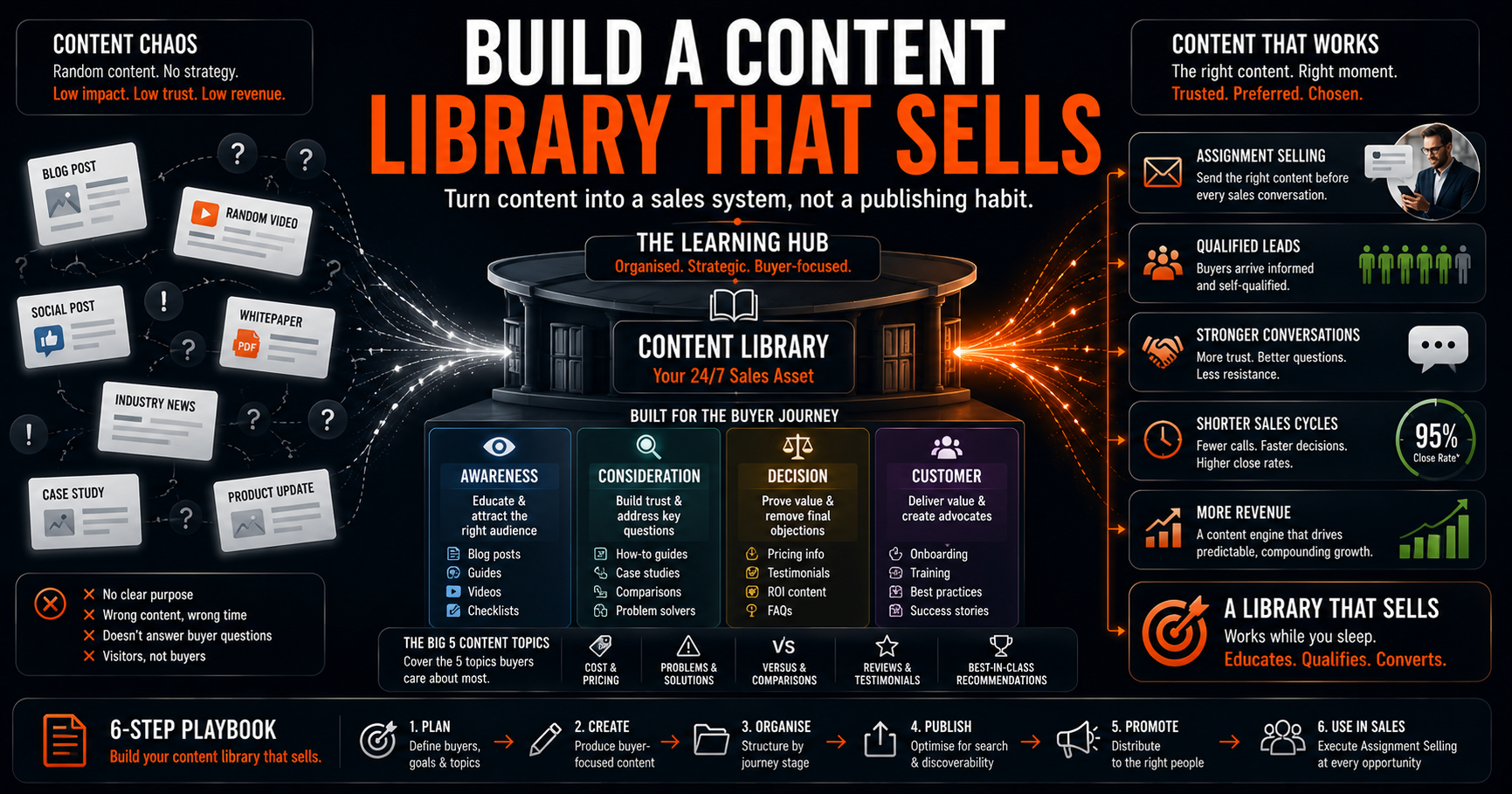
- The Big 5 content topics (Cost, Problems, Comparisons, Reviews, and Best-in-Class) drive purchasing decisions in every industry and every market.
- Unlike paid advertising, education-led content compounds in value over time, continuing to attract and convert buyers long after publication.
- River Pools and Spas grew from 20,000 to 600,000 monthly visitors and dramatically improved sales efficiency after committing to honest, education-first content.
What does it mean to be your industry's #1 educator?
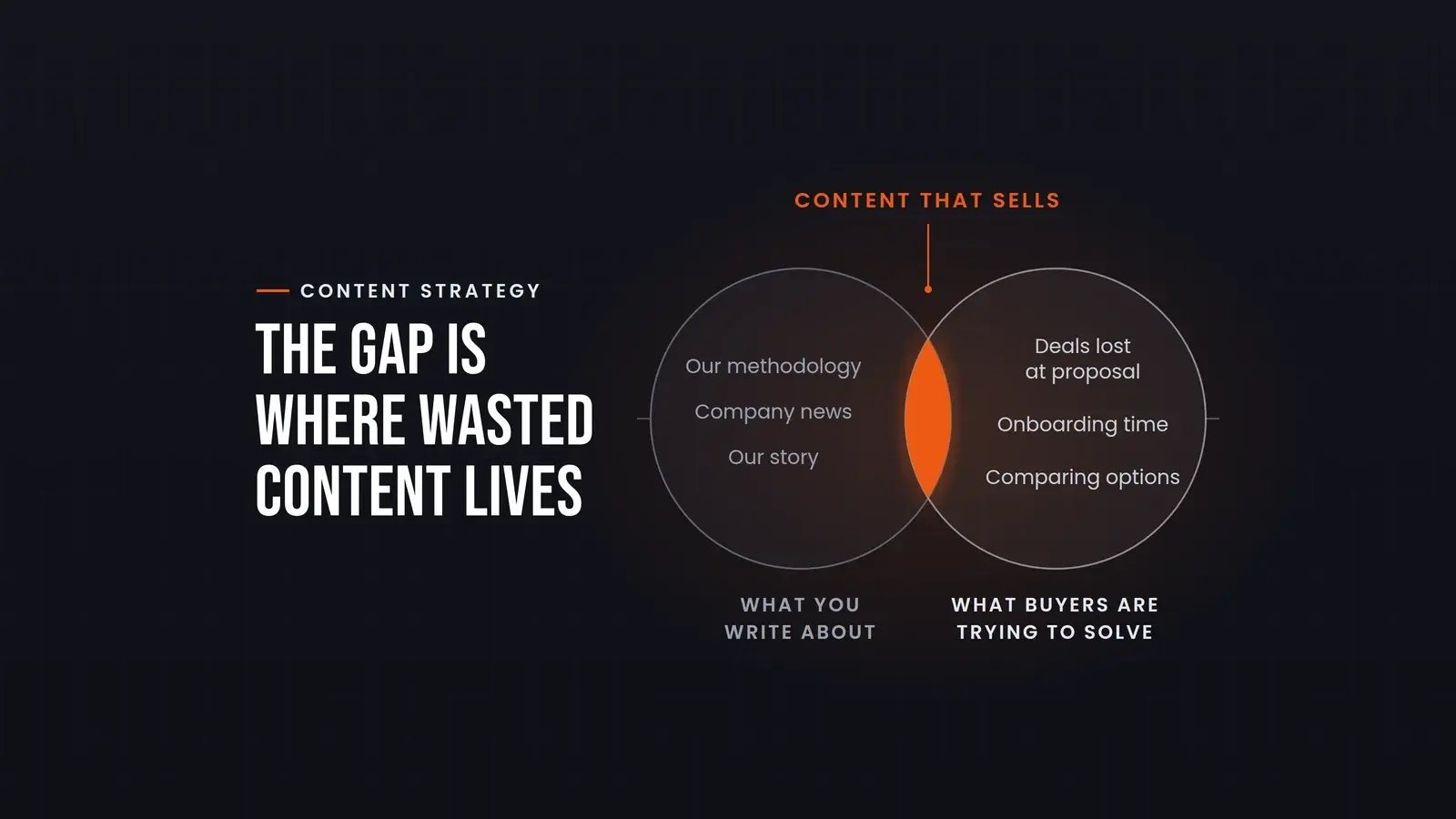
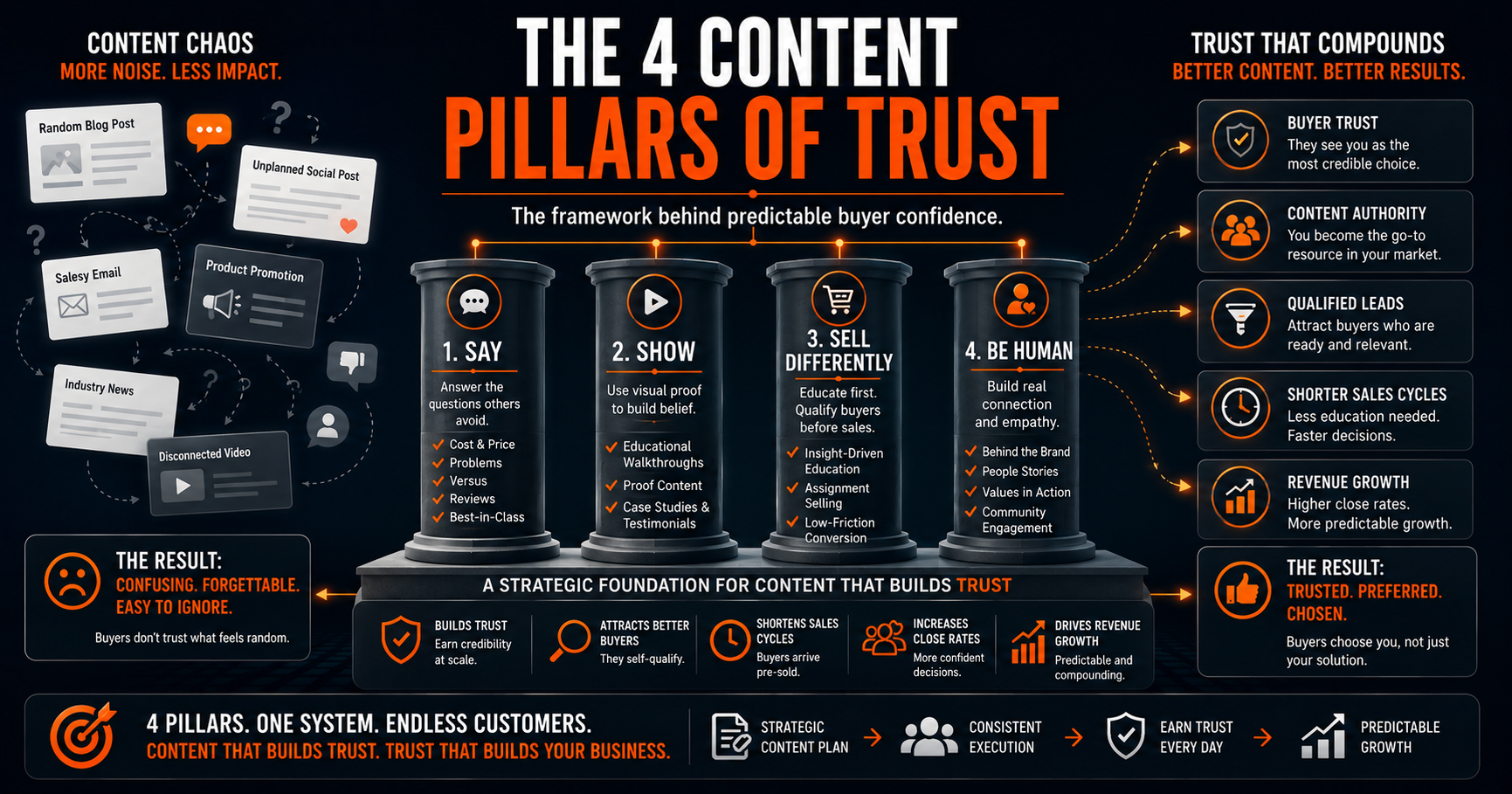
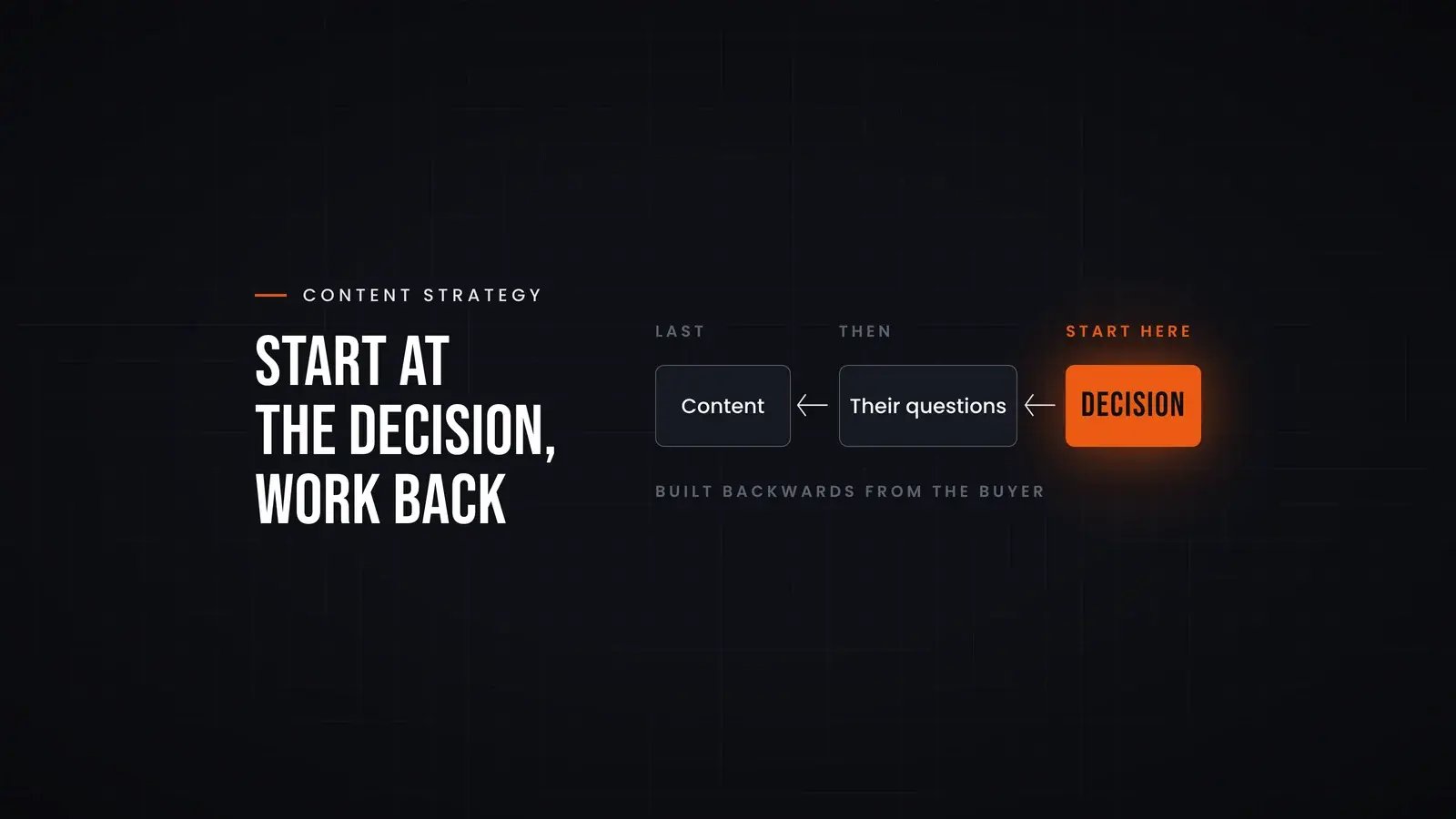
Being your industry's #1 educator means obsessively answering the questions your buyers are already searching, before they ever contact you or a competitor. It is not a content volume strategy. It is a deliberate trust architecture.
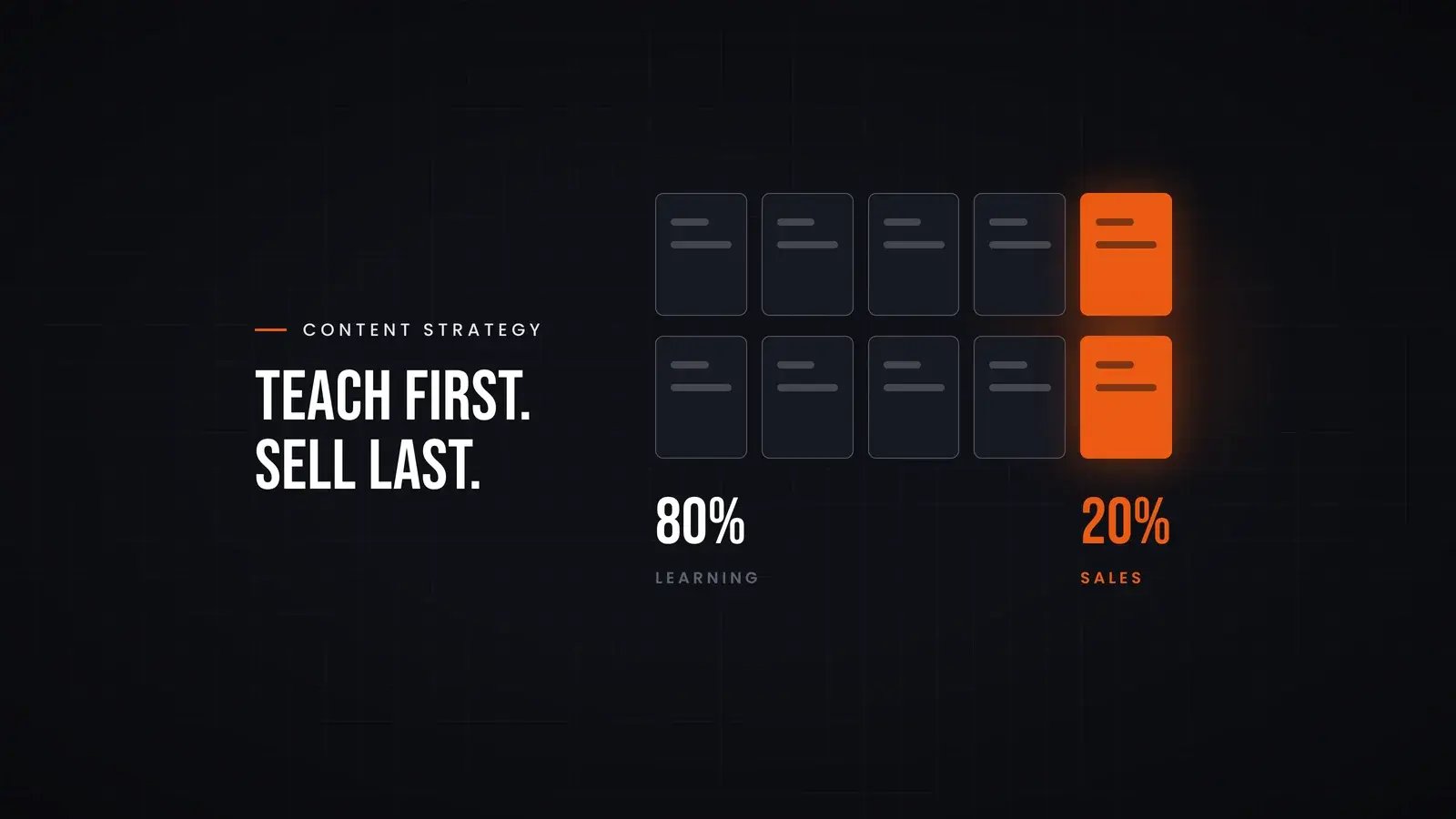
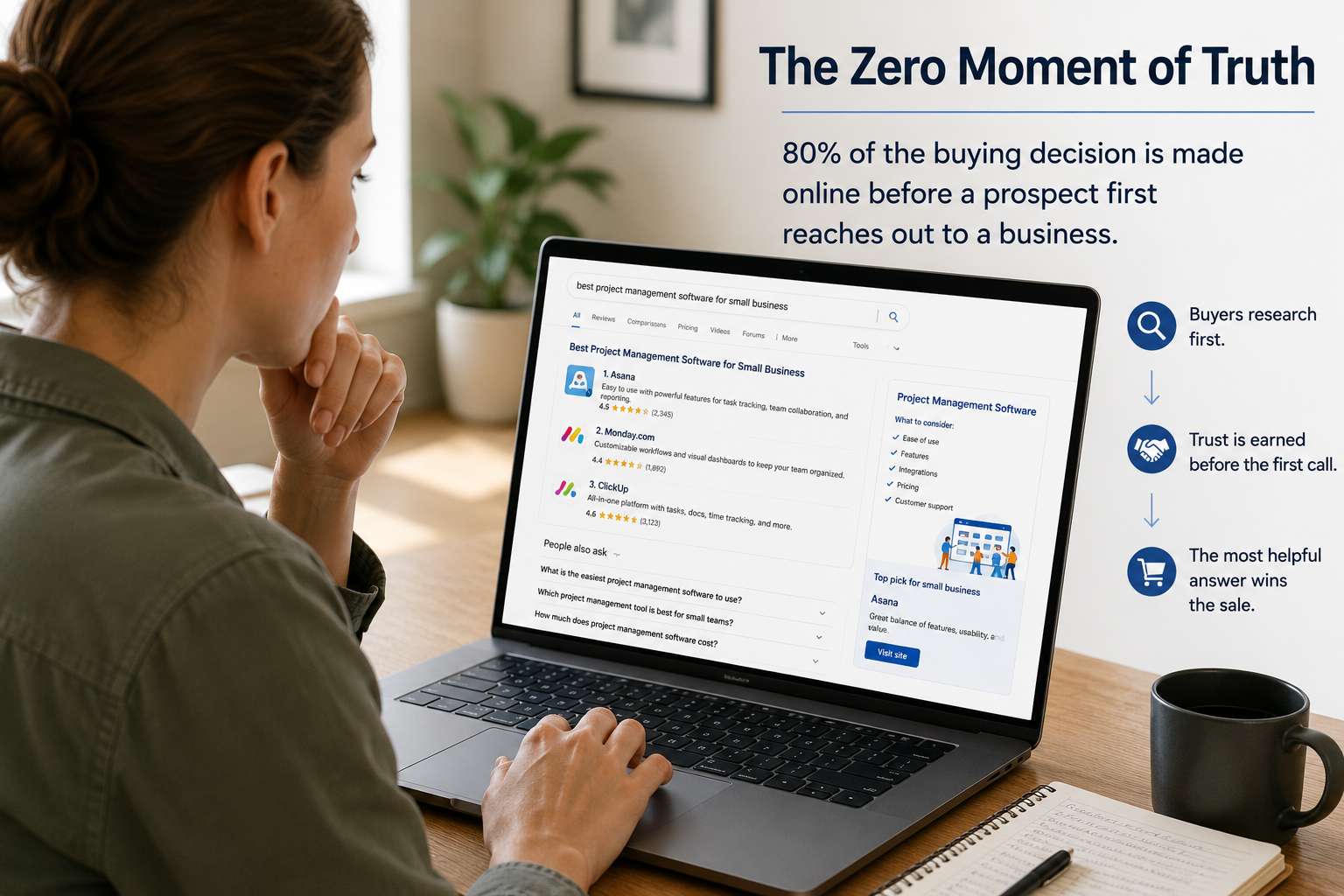
According to Google's Zero Moment of Truth research, 80% of the buying decision is made online before a prospect first reaches out to a business. The company that answers buyer questions most honestly during that research phase earns the relationship, and, in most cases, the sale.
This is not about producing more content. It is about being the most helpful, most transparent voice in your market. The Endless Customers System™, the methodology behind my Endless Customers™ Implementation programme, is built on this exact principle: the businesses that teach best, sell best.
Why education-led marketing outperforms traditional advertising
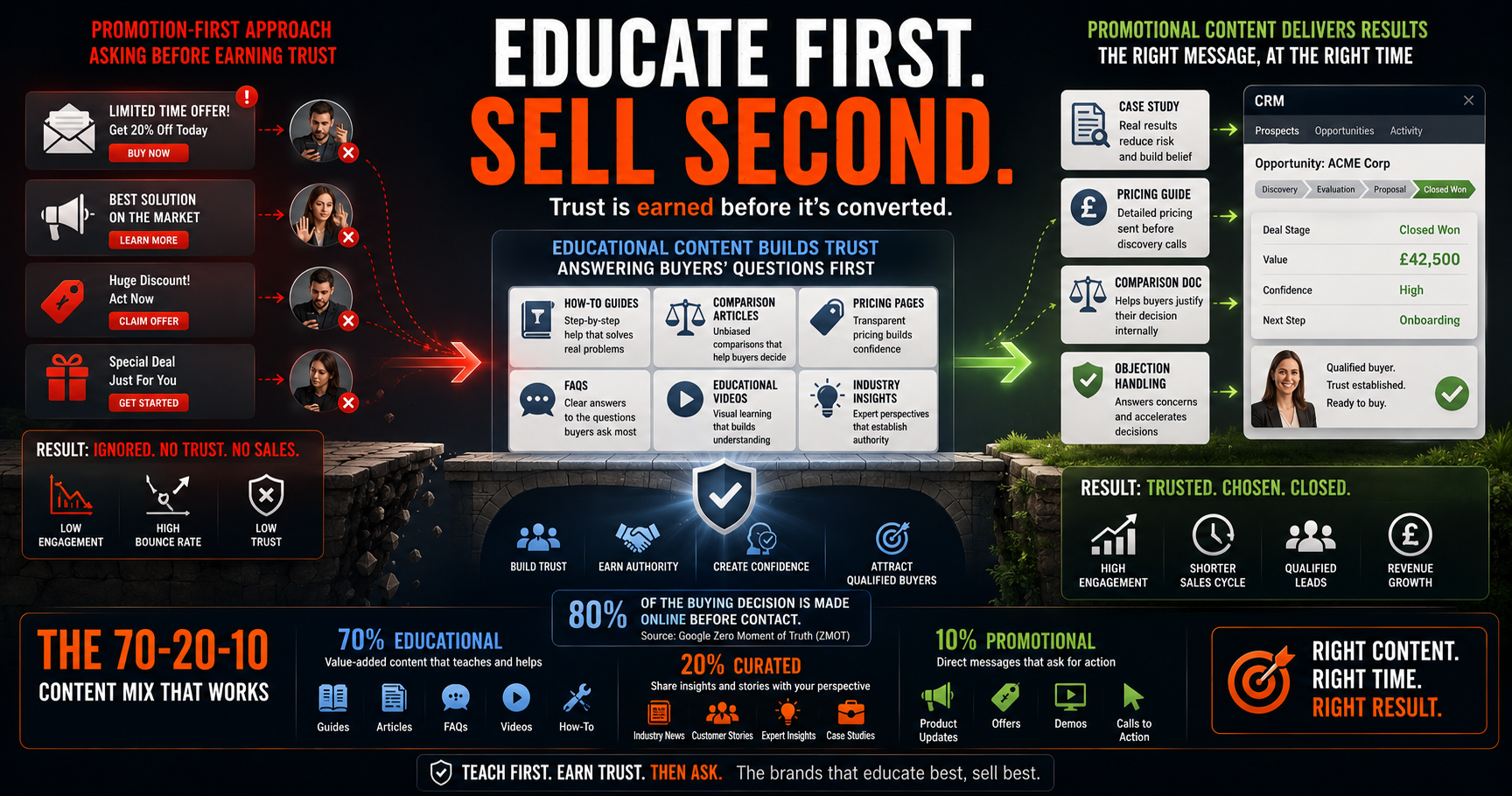
Education-led marketing consistently outperforms traditional advertising because it builds trust before the sales conversation begins, reducing sales cycles and increasing close rates. The River Pools and Spas story makes this concrete.
After committing to answering every buyer question honestly, River Pools grew from 20,000 to over 600,000 monthly website visitors. Their average customer now reads 105 pages before making a purchase.
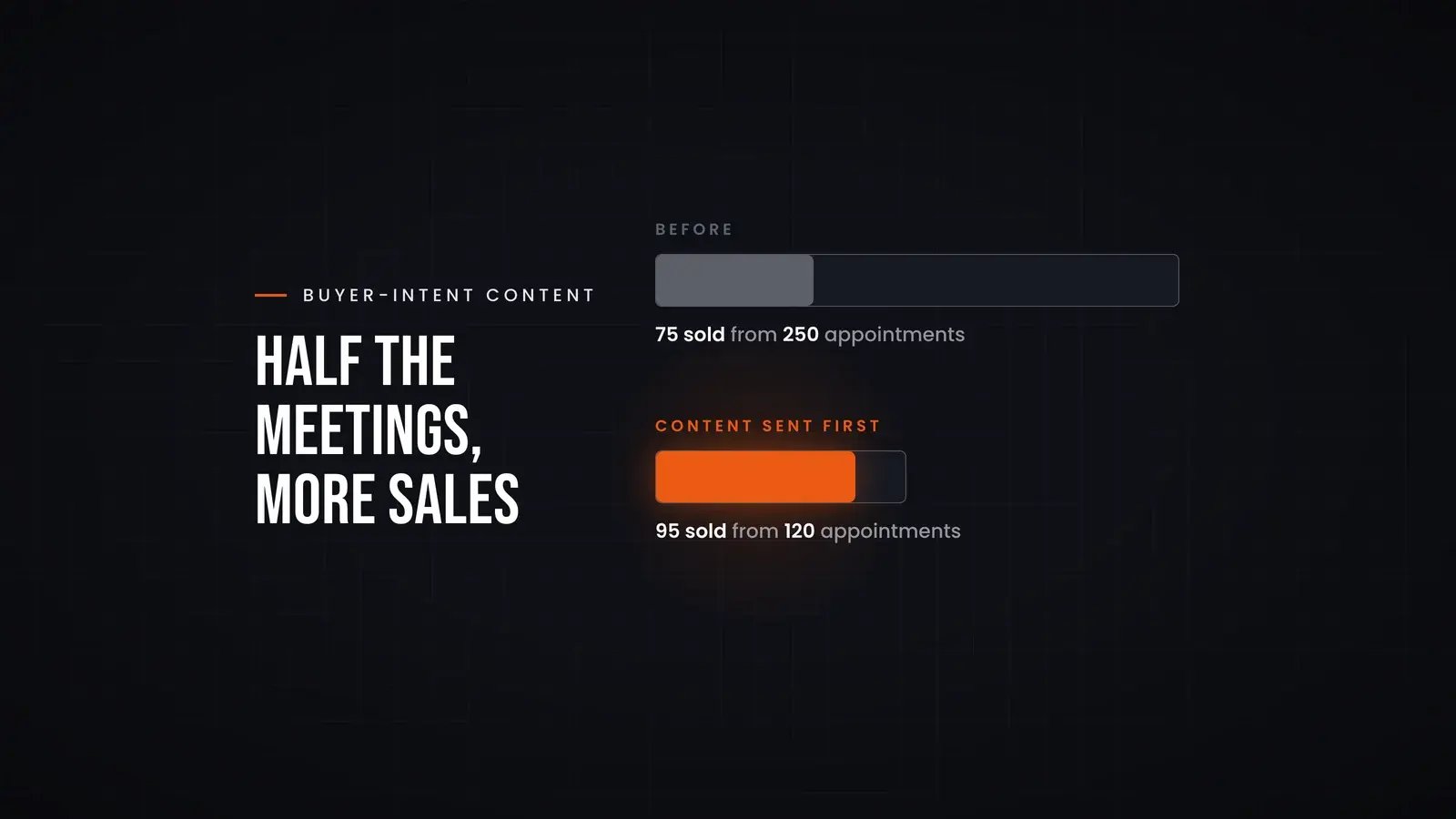
Sales efficiency improved dramatically: they went from needing 250 appointments to sell 75 pools, to 120 appointments to sell 95 pools. Trust was built before buyers arrived.
The mechanism is straightforward: buyers who have already researched your offer, understood your process, and read your honest answers arrive at the sales conversation pre-sold. That shortens the sales cycle, increases close rates, and filters out poor fits before they consume your team's time.
What does it cost to become your industry's best educator?
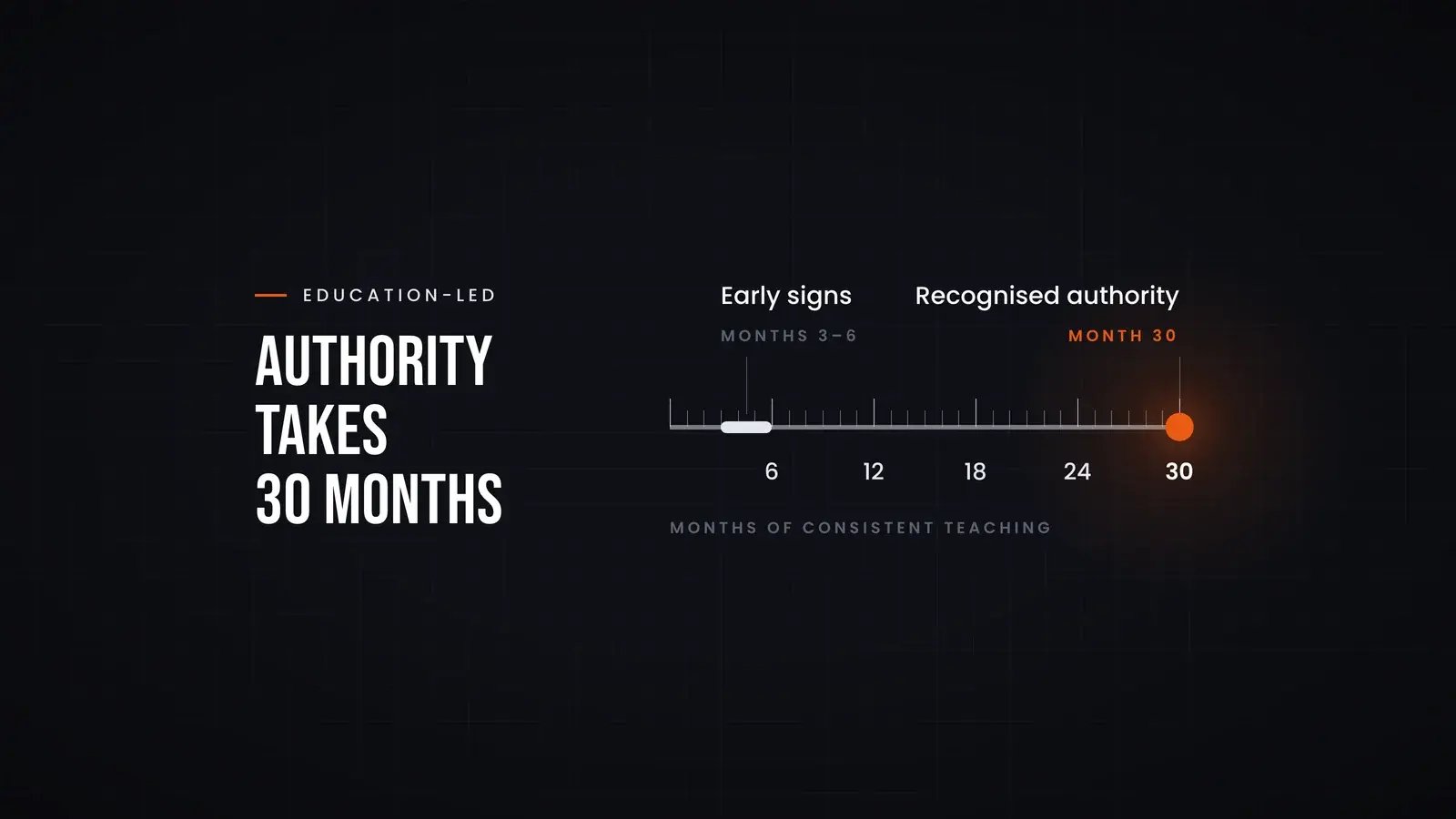
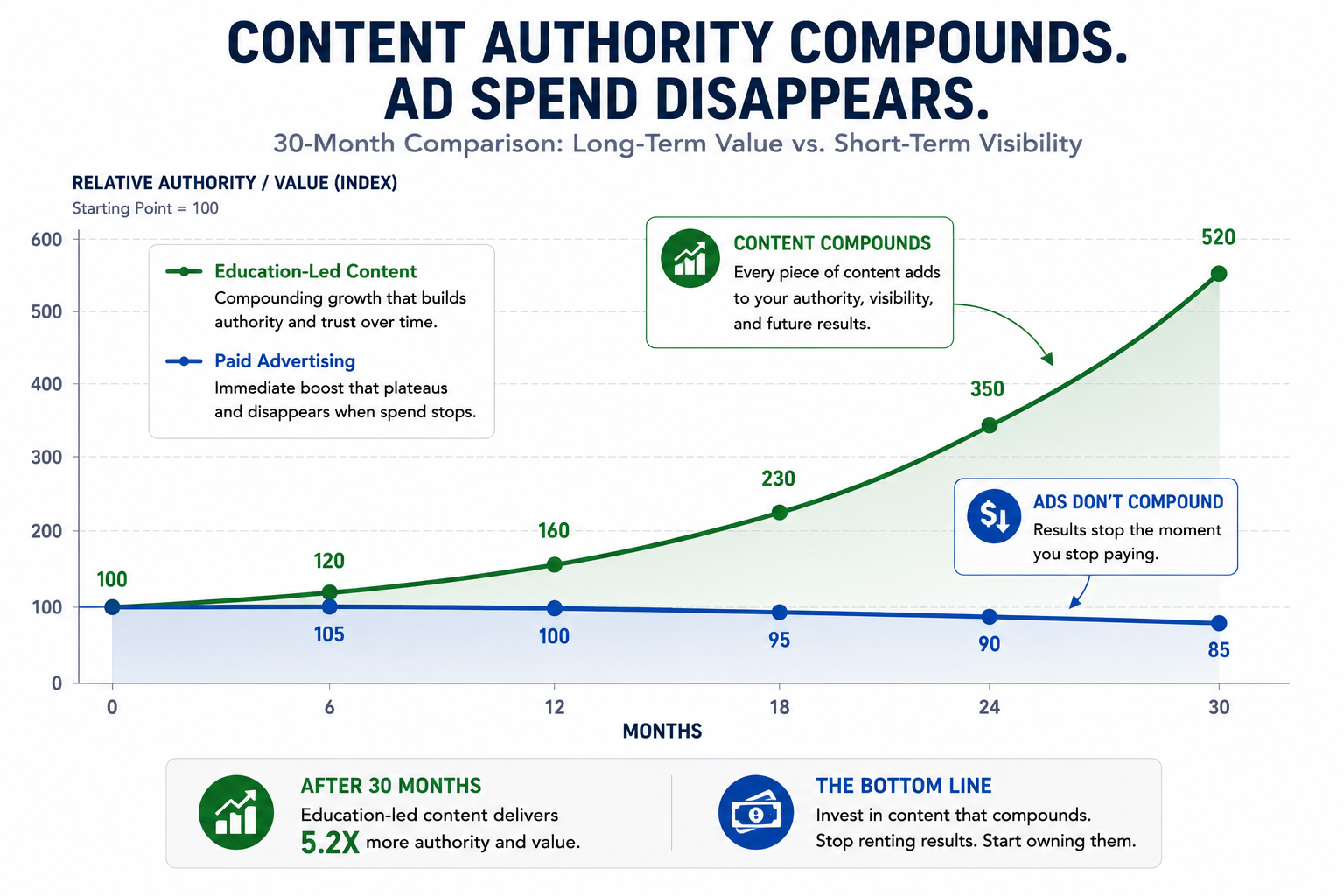
Becoming your industry's best educator is primarily an investment of time and internal expertise rather than large upfront spend, but it requires long-term commitment, with industry recognition typically taking around 30 months to build, according to Mark Schaefer's research.
The main investment areas are:
- A dedicated content owner inside your business, responsible for consistency
- Ongoing production of honest content across the Big 5 topics
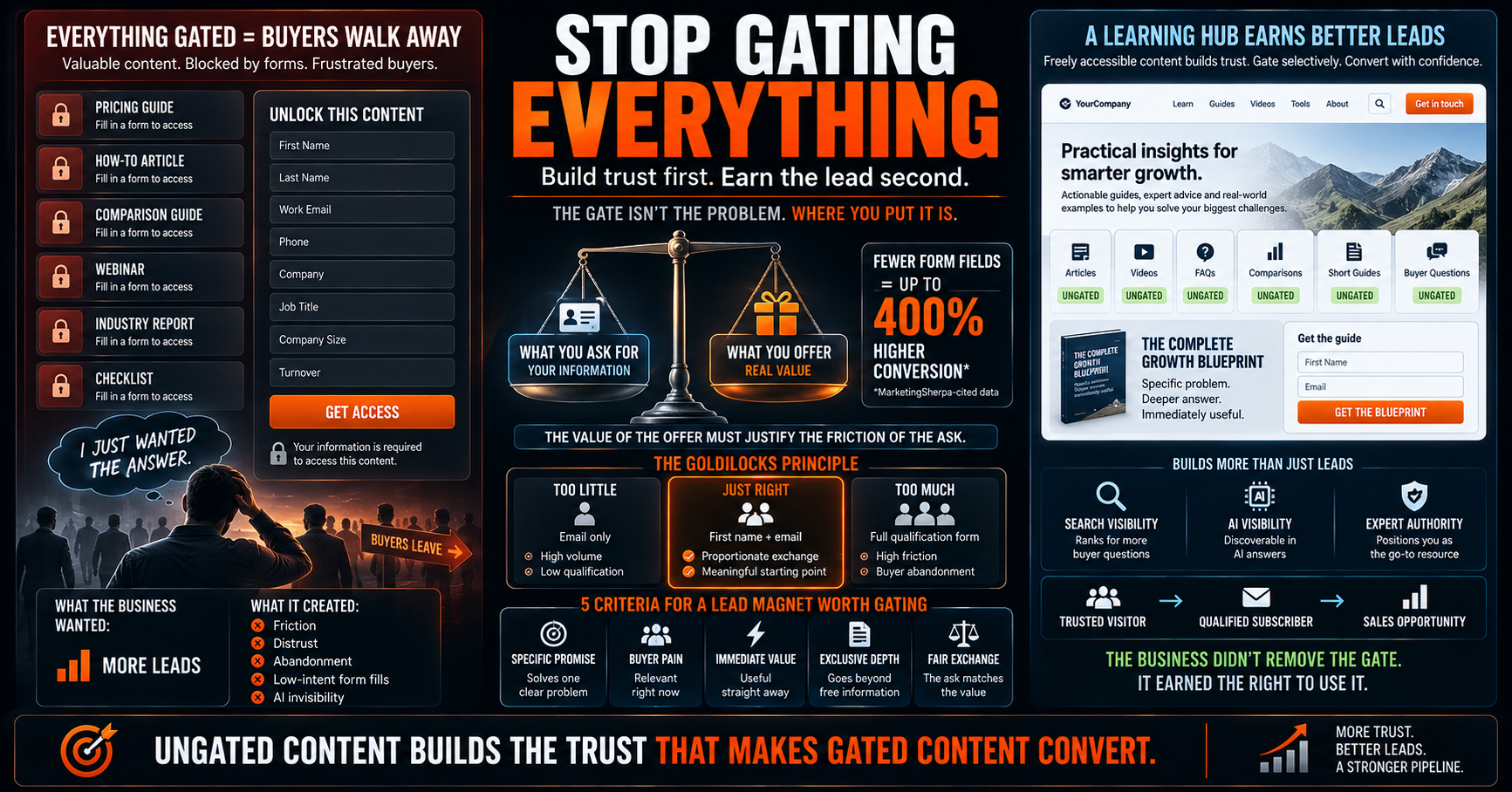
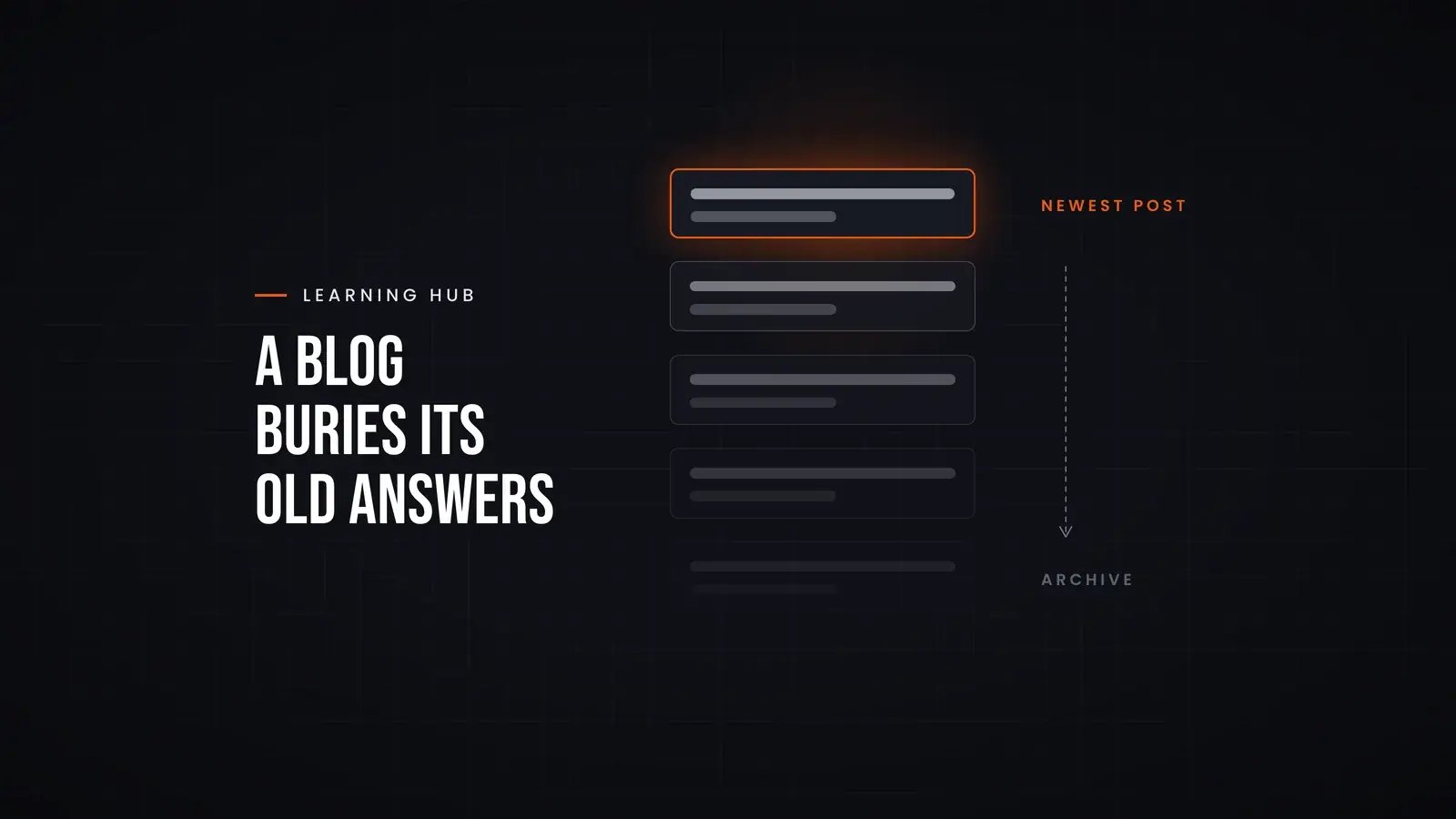
- A centralised Learning Hub where buyers find answers
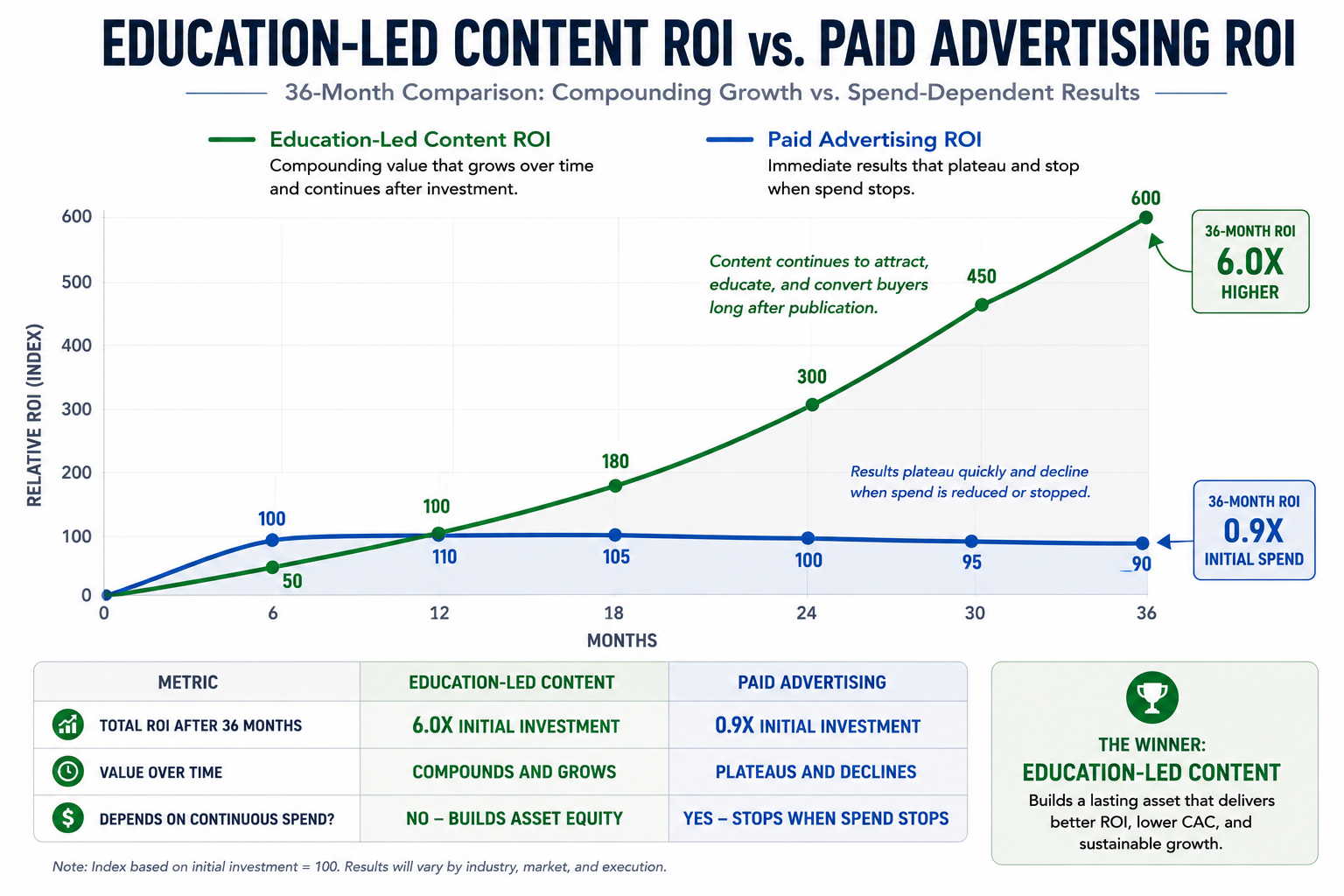
Unlike paid advertising, which stops the moment your budget does, education-led content compounds in value. Every article, video, and comparison guide continues to attract and convert buyers long after publication.
The real cost is inaction. While you are weighing your options, competitors who are already educating your buyers are compounding their authority. That gap widens every month.
The three fears stopping businesses from educating their market
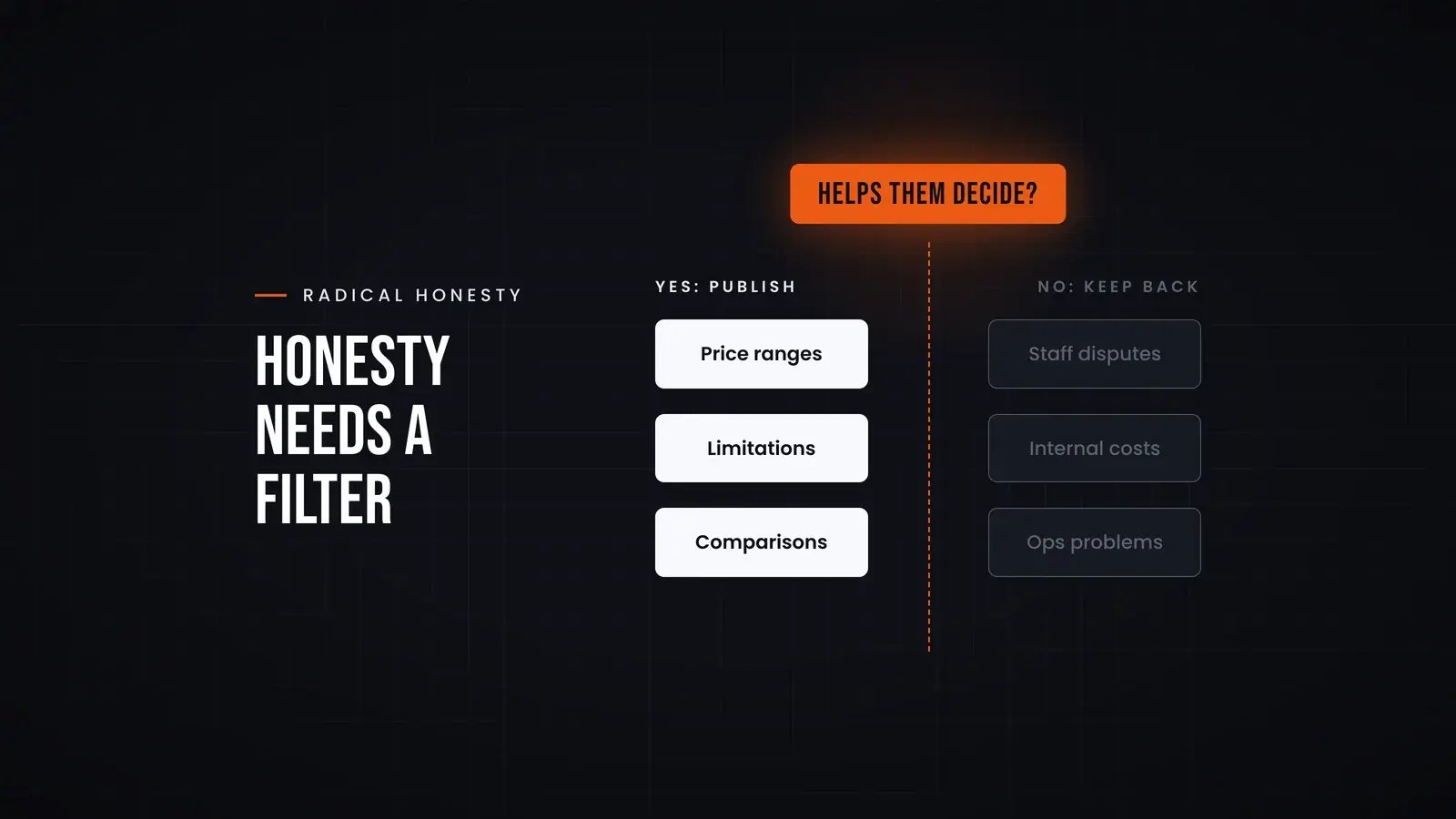
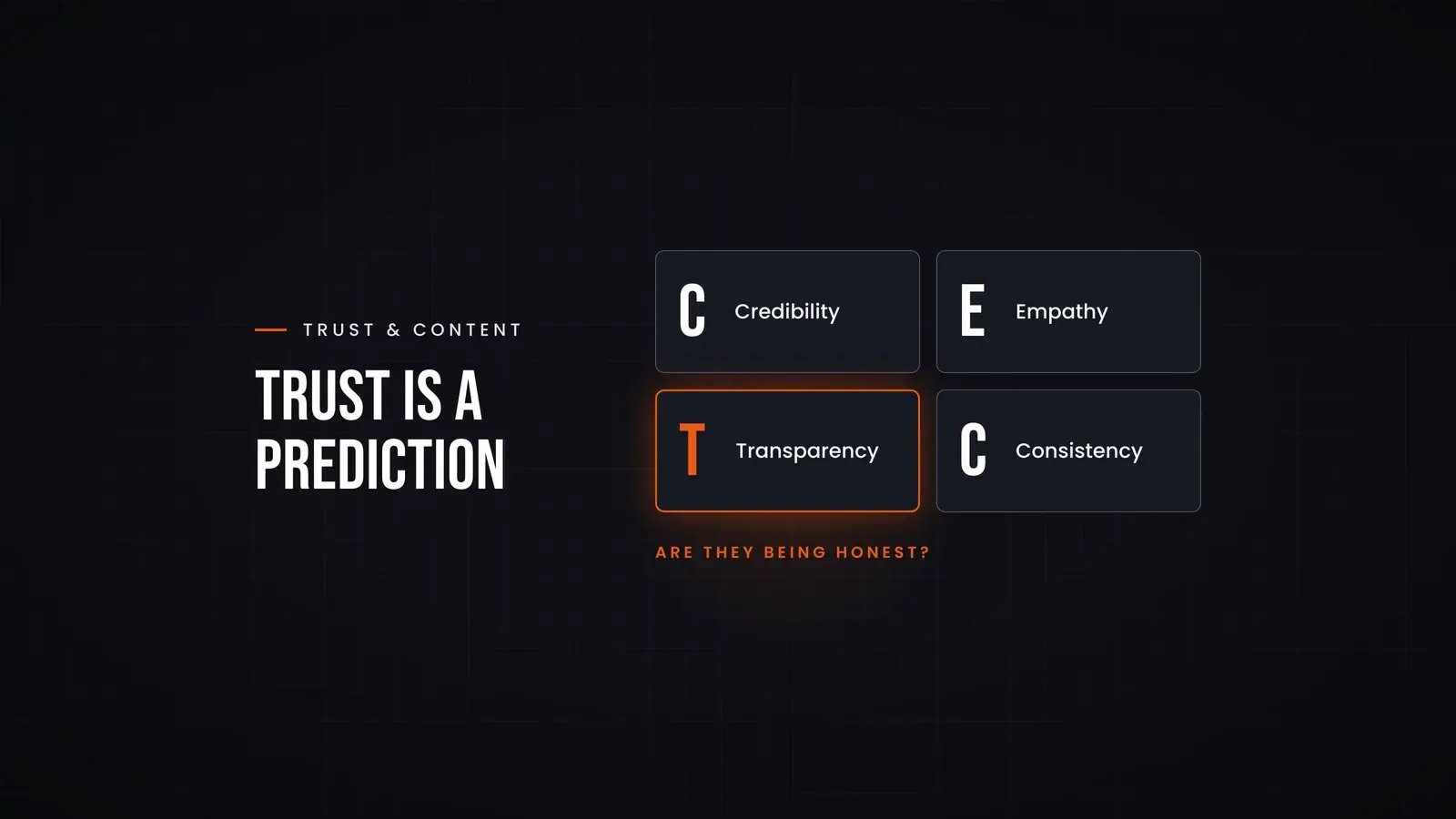
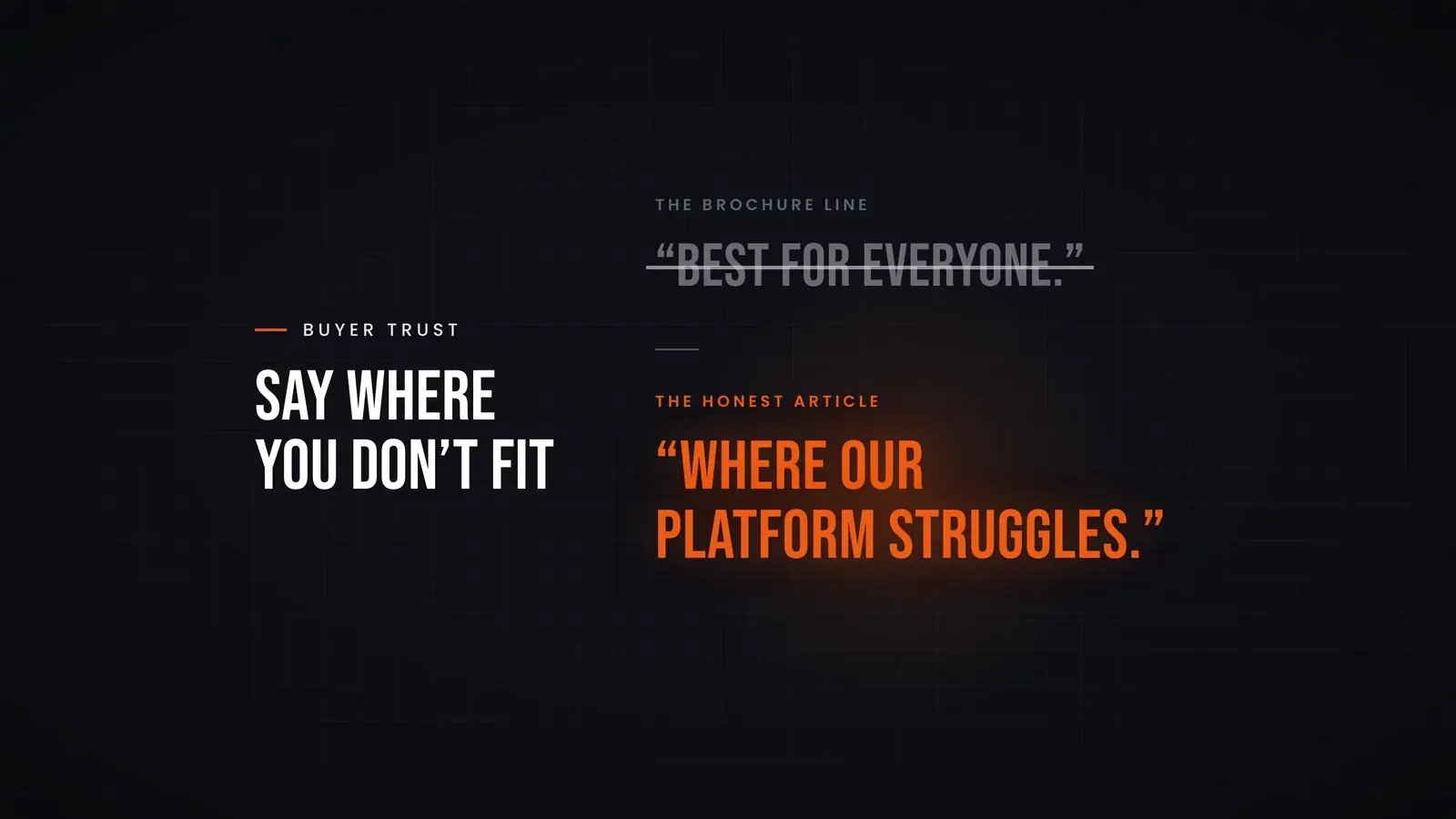
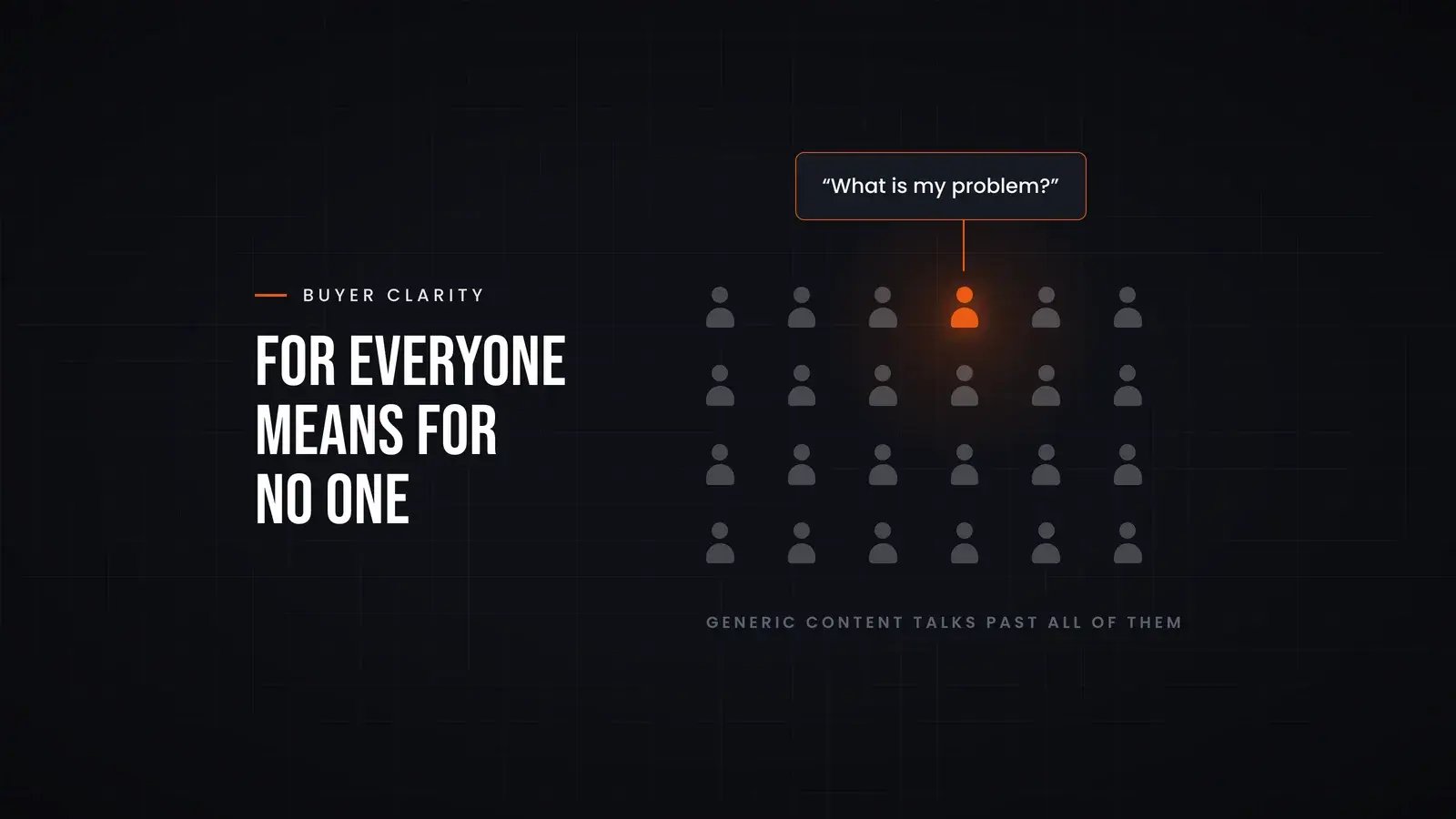
The biggest barrier to education-led marketing is not a lack of knowledge; it is a fear of transparency, specifically the belief that honest answers will help competitors or drive buyers away.
Research from Edelman shows 81% of consumers need to trust a brand before they will buy from it. Yet most businesses still maintain a façade of perfection, not realising that the appearance of perfection is the enemy of trust.
Three fears most commonly stand in the way:
Competition fear: "They'll use it against us."
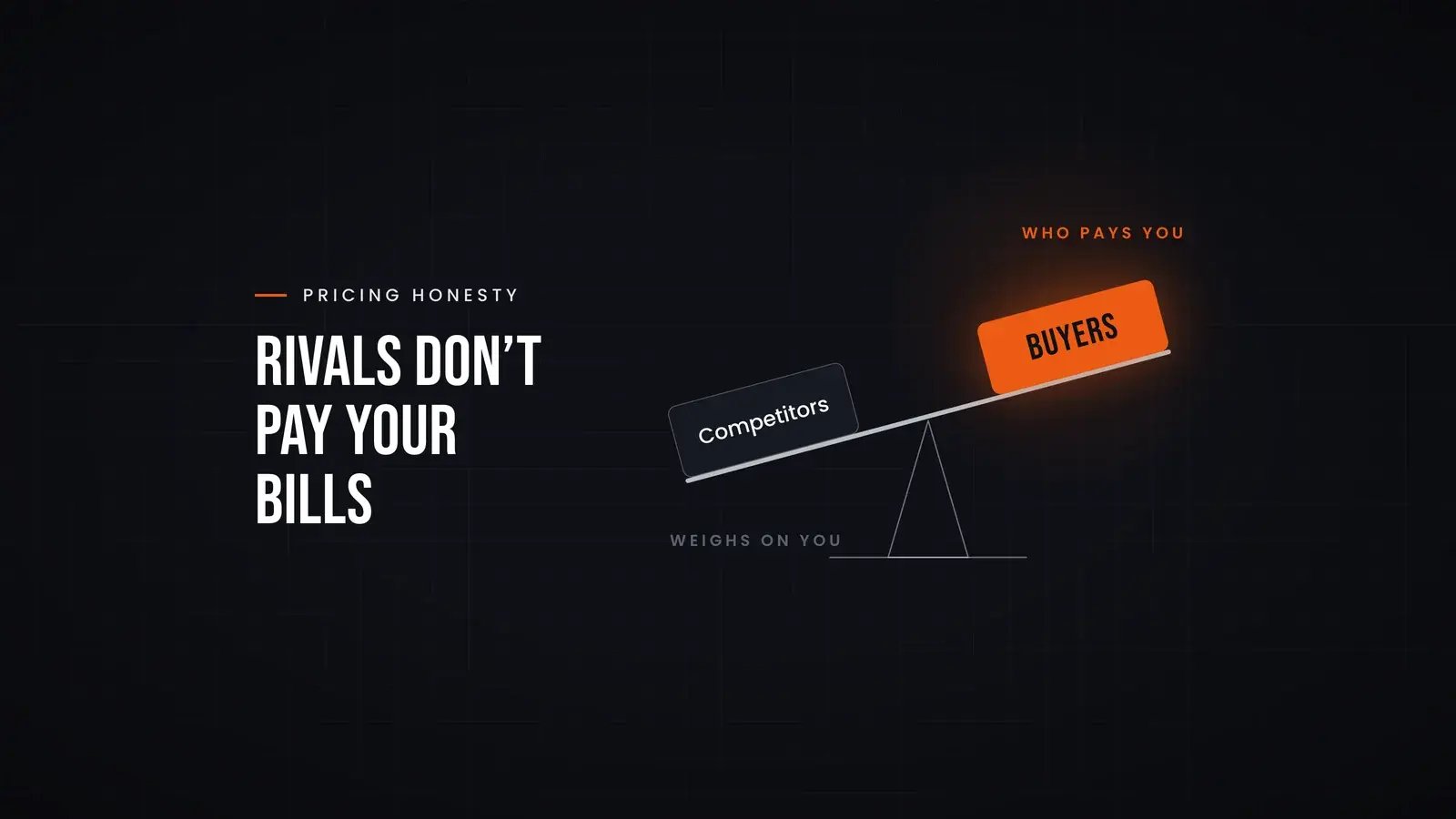
Your buyers will find out about your limitations eventually. The question is whether they hear it from you, or from someone else. If it comes from you, framed honestly, it becomes proof of credibility. If it comes from a competitor or a review site, you have lost the narrative entirely.
Conversion fear: "We'll scare customers away."
Honest transparency does filter some prospects out early. That is the intention. Buyers who are not a good fit for your offer will not become good clients. Filtering them out before a sales conversation saves time, reduces acquisition cost, and leaves your pipeline full of people who already understand what you do, and why it suits them.
Confidence fear: "It undermines our expertise."
Acknowledging limitations demonstrates confidence, not weakness. The businesses buyers trust most are the ones willing to say: "Here is what we are not the right fit for." That honesty makes every other claim more credible.
Giving away your knowledge does not give competitors an advantage. It gives buyers a reason to choose you.
Recommended reading: Stop Being Mysterious: Why Answering the Hard Questions Your Competitors Avoid Is Your Secret Weapon
The Big 5: the content topics every industry educator must cover
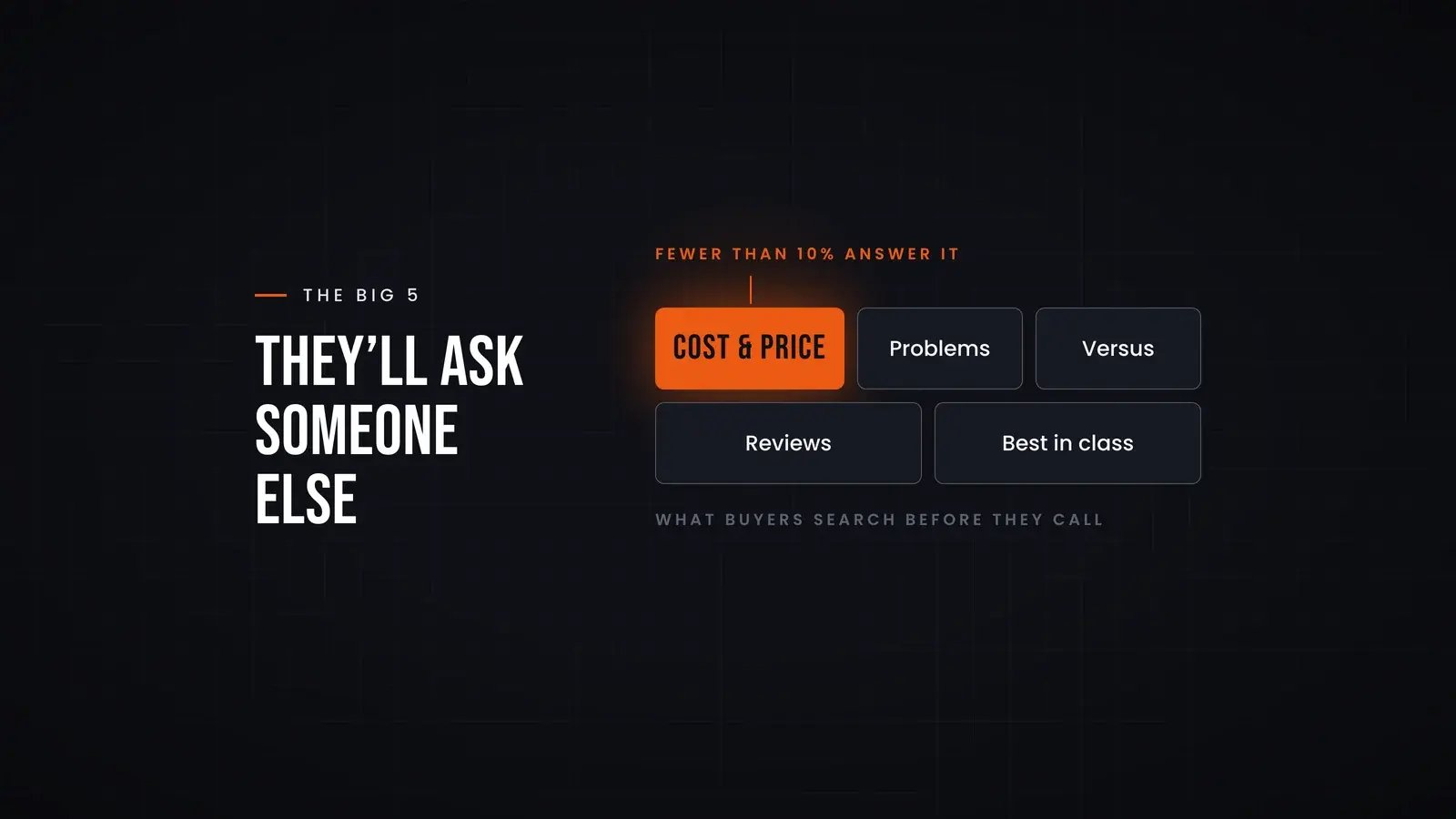
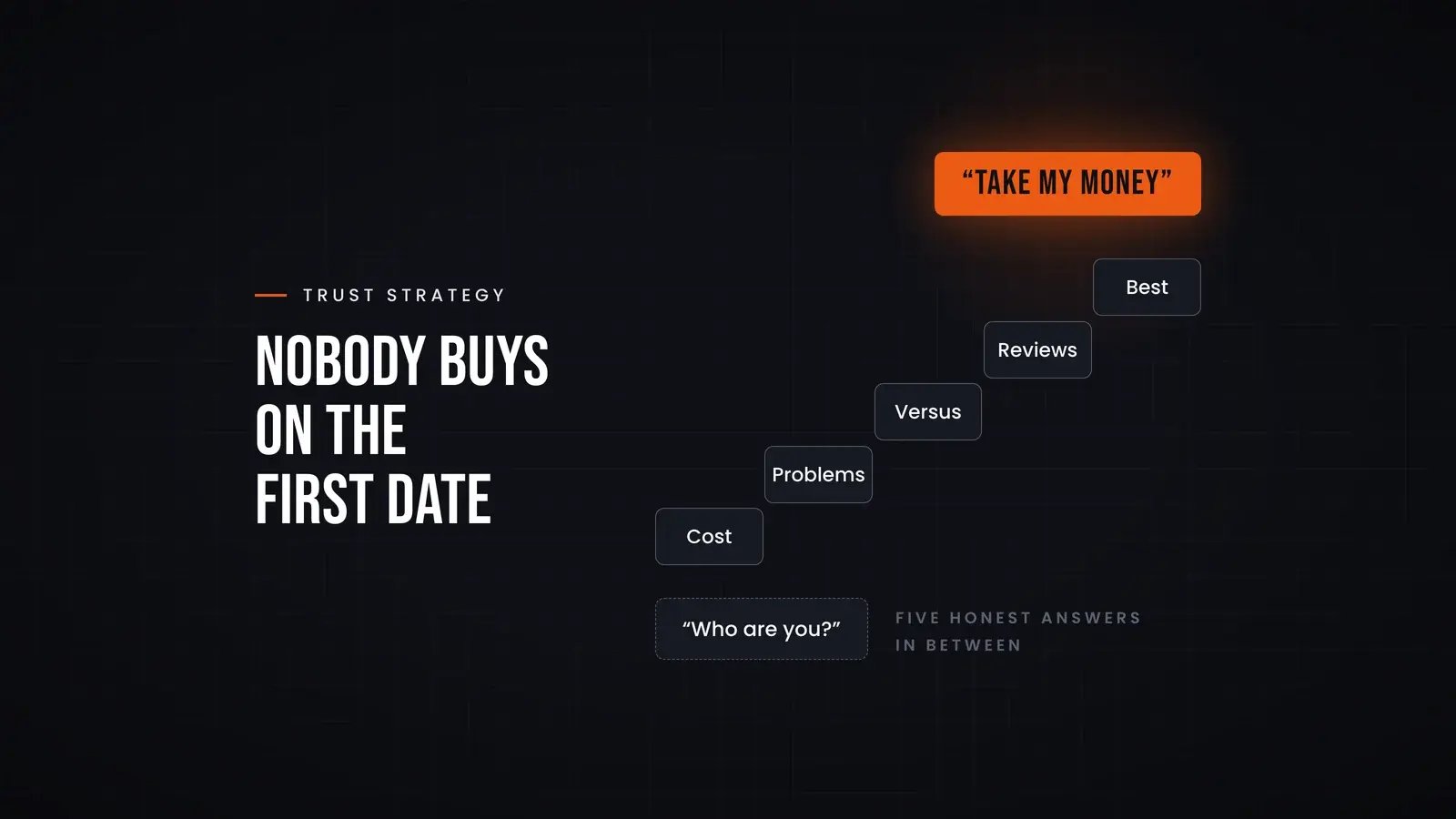
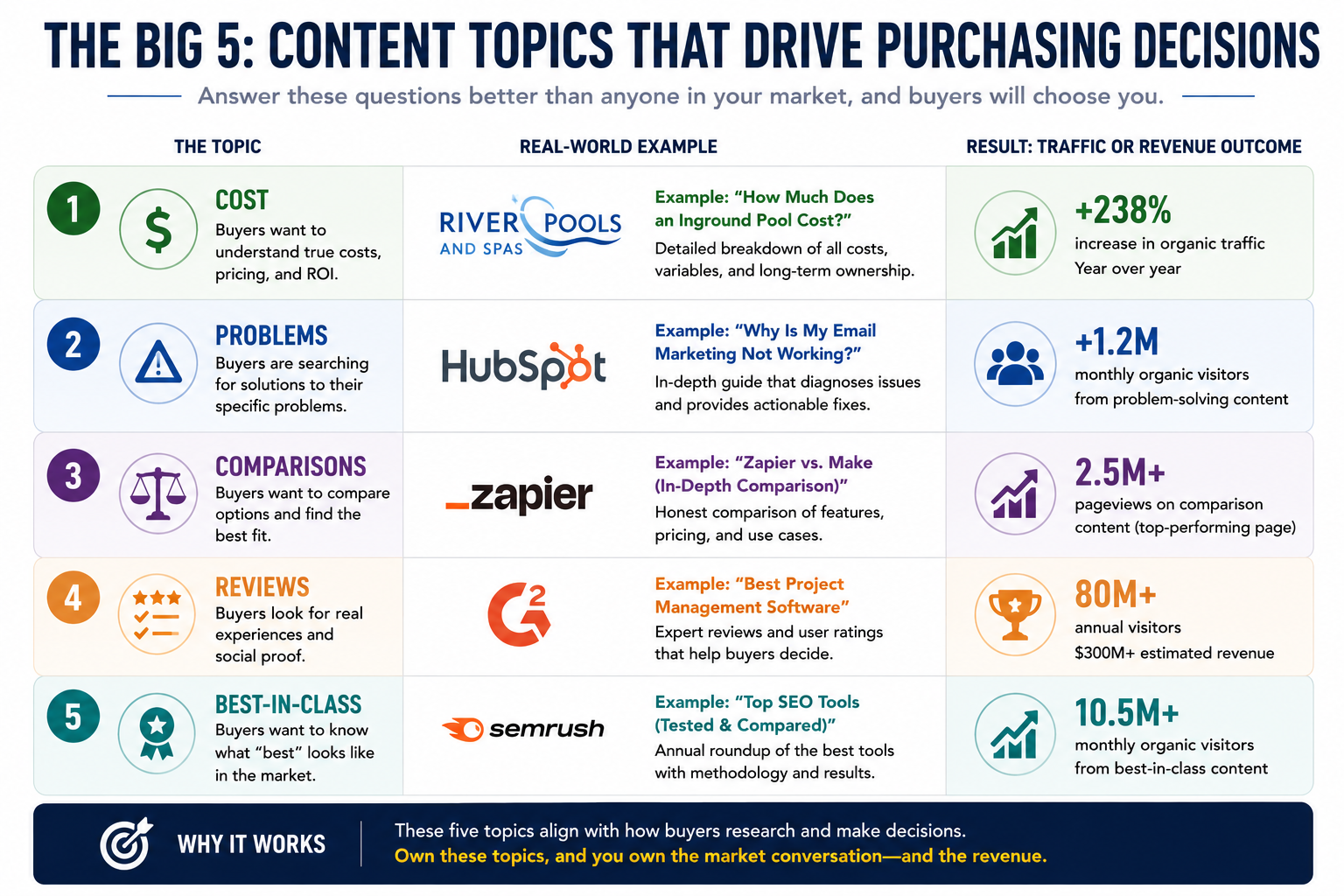
The Big 5 are the five content topics that drive purchasing decisions in every industry, and the businesses that answer these questions most honestly win the most trust.
-
Cost and Price: Buyers will research costs regardless of whether you publish them. Be the one who answers honestly.
-
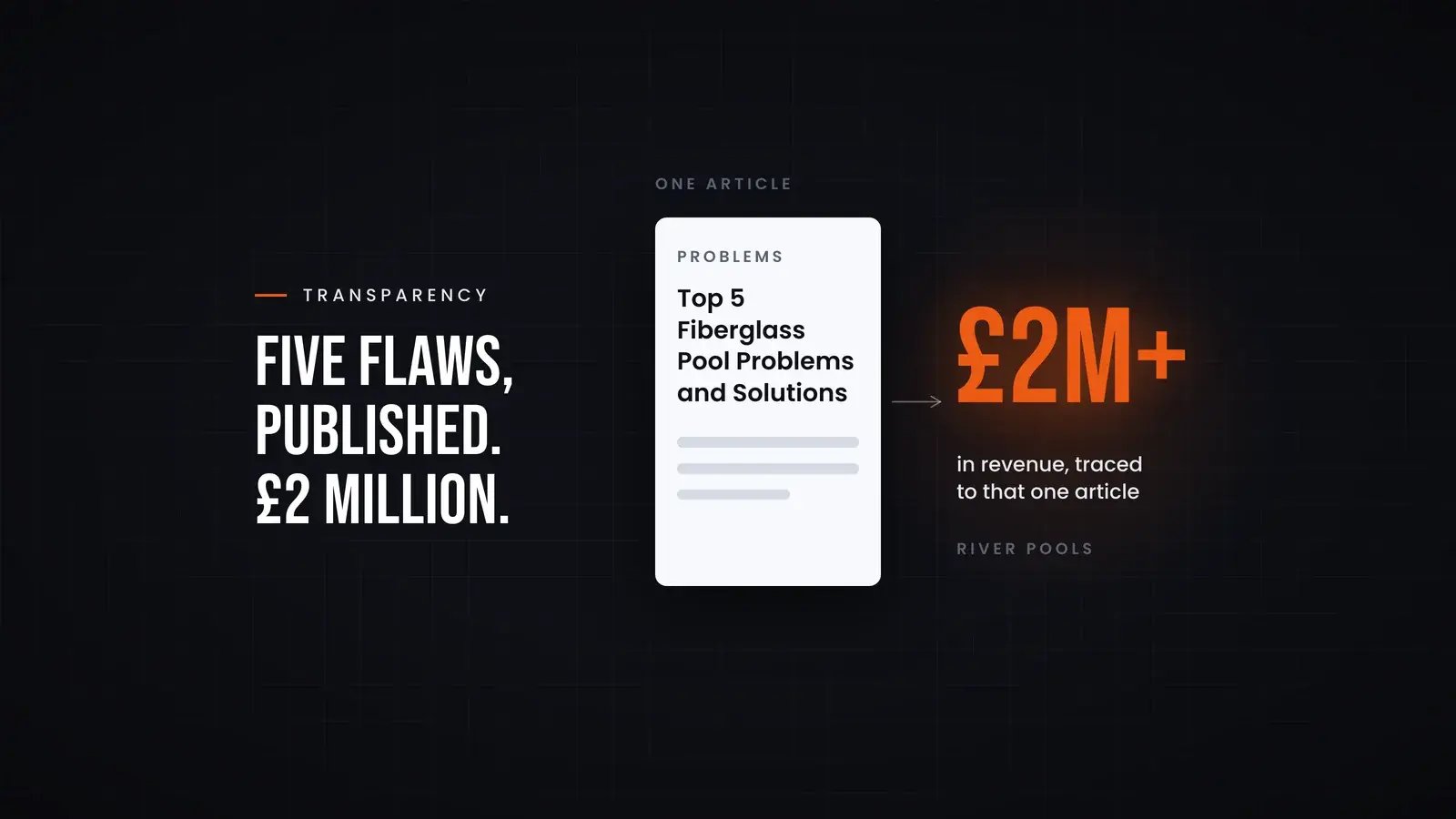
Problems: Marcus Sheridan's article addressing the top problems with fiberglass pools has been attributed to at least $2 million (~£1.6 million) in revenue from a single post.
-
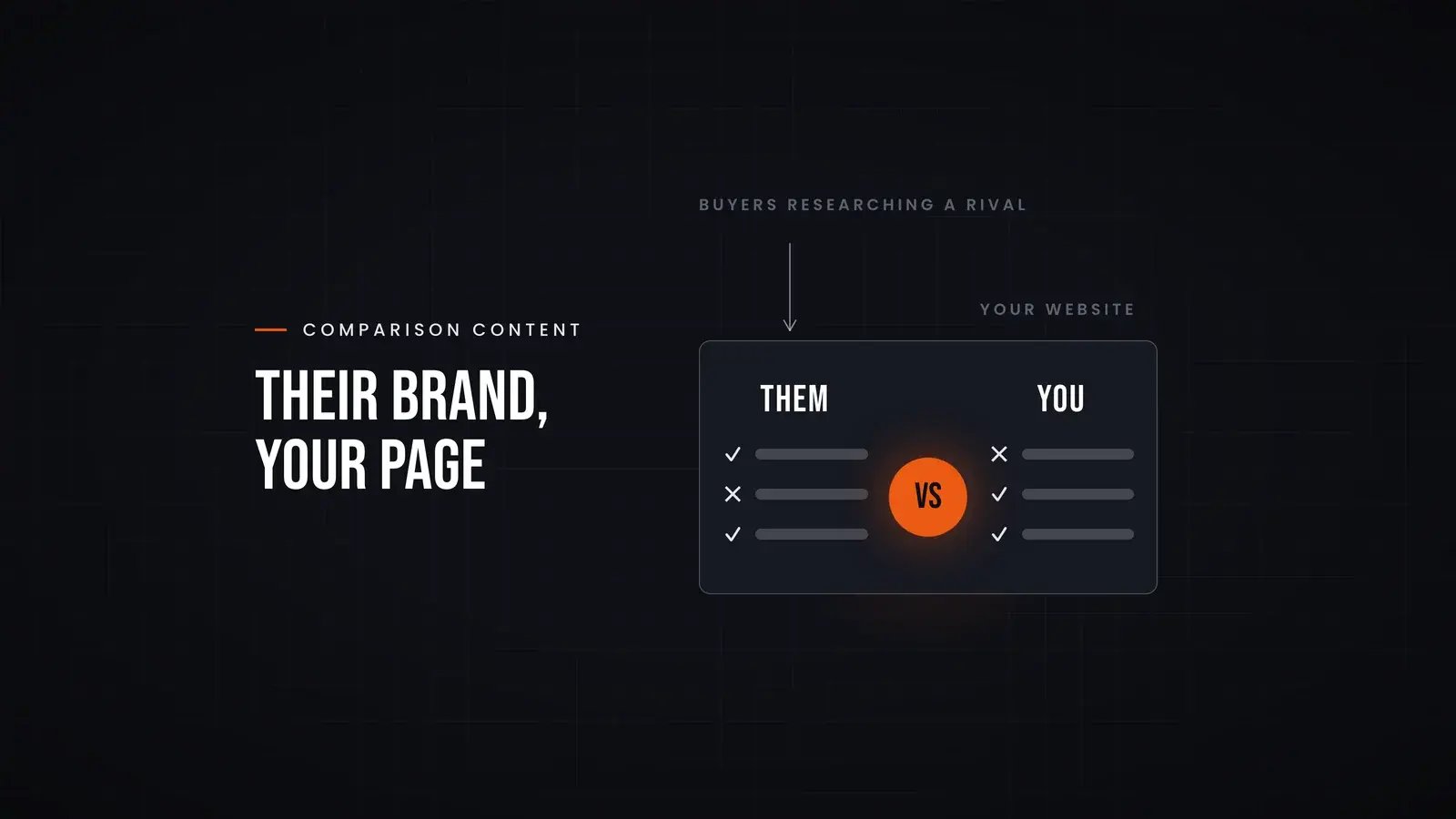
Versus and Comparisons: Buyers compare options before deciding. Guide them through the process before a competitor does. See: The 5 Questions Every Customer Asks Before Buying, and How to Answer Them First
-
Reviews: Honest competitor reviews build credibility and capture search traffic from buyers researching alternatives.
-
Best-in-Class: Criteria-based best-in-class articles are increasingly cited by ChatGPT and Perplexity. Shasta Pools found themselves recommended by ChatGPT for "best pool builders in Arizona" shortly after publishing this format.
The Big 5 work because they reflect the questions buyers are already asking, not the ones businesses feel comfortable answering.
How to become your industry's #1 educator: a 6-step framework
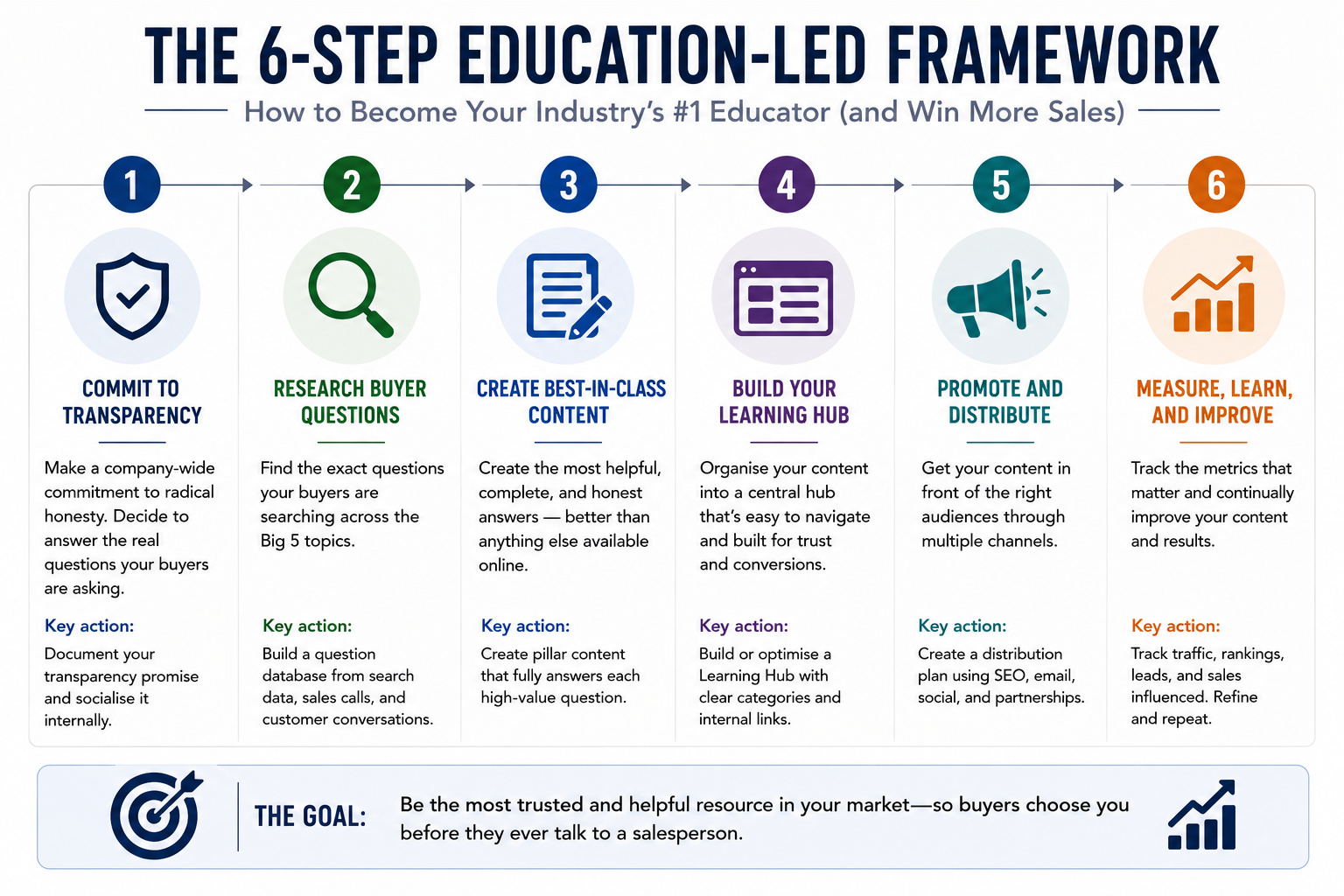
Becoming your industry's #1 educator follows a clear, repeatable framework: commit to honest transparency, answer the Big 5 questions, build a Learning Hub, assign content ownership, integrate content into your sales process, and measure what matters.
-
Commit to genuine transparency: Answer the questions your industry avoids. If you do not, a competitor will.
-
Map your Big 5 content gaps: Start by writing down the 20 most common questions your buyers ask before purchasing. Then identify which Big 5 topics you have not yet answered honestly. See: How to Transform Customer Questions Into Your Endless Content Engine
-
Build a Learning Hub: A centralised resource buyers return to, not a blog that sits idle.
-
Assign a content owner: Consistency requires accountability. Name one person responsible for the programme.
-
Implement Assignment Selling: Send educational content before every sales call. River Pools achieved a 95% close rate using this approach, with sales cycles shortening by 75%.
-
Measure what matters: Track lead quality, sales cycle length, and close rates. Not just traffic.
The companies that implement this framework systematically, not sporadically, are the ones that build lasting competitive advantage, because trust compounds with consistency in a way no ad campaign can replicate.
Allow around 30 months to reach recognised industry authority. Structure before speed.
Frequently asked questions
How long does it take to see results from education-led marketing?
Early improvements, such as higher lead quality, longer time on site, and better-qualified sales conversations, typically appear within 3–6 months. Full industry authority takes around 30 months of consistent effort, per Mark Schaefer's research. Returns accelerate as your content library grows and compounds.
Won't sharing this much information help my competitors?
Your competitors cannot replicate your genuine expertise, your real experiences, or the trust that accumulates when buyers keep returning to your content for answers. Information is widely available. The willingness to share it honestly is not.
Does this approach work in B2B as well as B2C?
Yes. The Big 5 topics drive purchasing decisions in every industry, across B2B and B2C. Format may differ, for example, long-form articles tend to suit B2B buyers, video tends to suit B2C, but the principle is identical: buyers trust the business that educates them best.
Conclusion
You came to this with a marketing approach built on promotion, competing for attention in a crowded market. You now have a framework built on education, earning trust before the conversation begins.
The question is not whether your buyers are researching online before they contact you. They are. The question is whether they are finding you, or a competitor, when they do.
The businesses that win are the ones that answer the questions others avoid, build a content library that compounds over time, and integrate that content directly into their sales process.
How to take action now:
- Write down the 20 most common questions your buyers ask before purchasing
- Map which Big 5 topics you have not yet answered honestly
- Assign one person to own content consistency inside your business
- Send one piece of educational content before your next sales call
Book a call to explore my Endless Customers™ Implementation programme, and find out how to build an education-led marketing system your team owns entirely.
Related reading:

About the author
Tom Wardman is a marketing strategist, author of Build a Trusted Brand, and one of the UK's first five certified Endless Customers™ coaches, trained directly under Marcus Sheridan. He works with founder-led B2B businesses to replace marketing dependency with self-sufficient growth systems their teams own entirely. Learn more at tomwardman.com.
Pricing disclaimer: All GBP–USD price conversions are rounded estimates and correct at the time of publishing. Exchange rates fluctuate and figures should be treated as indicative only.
Topics: