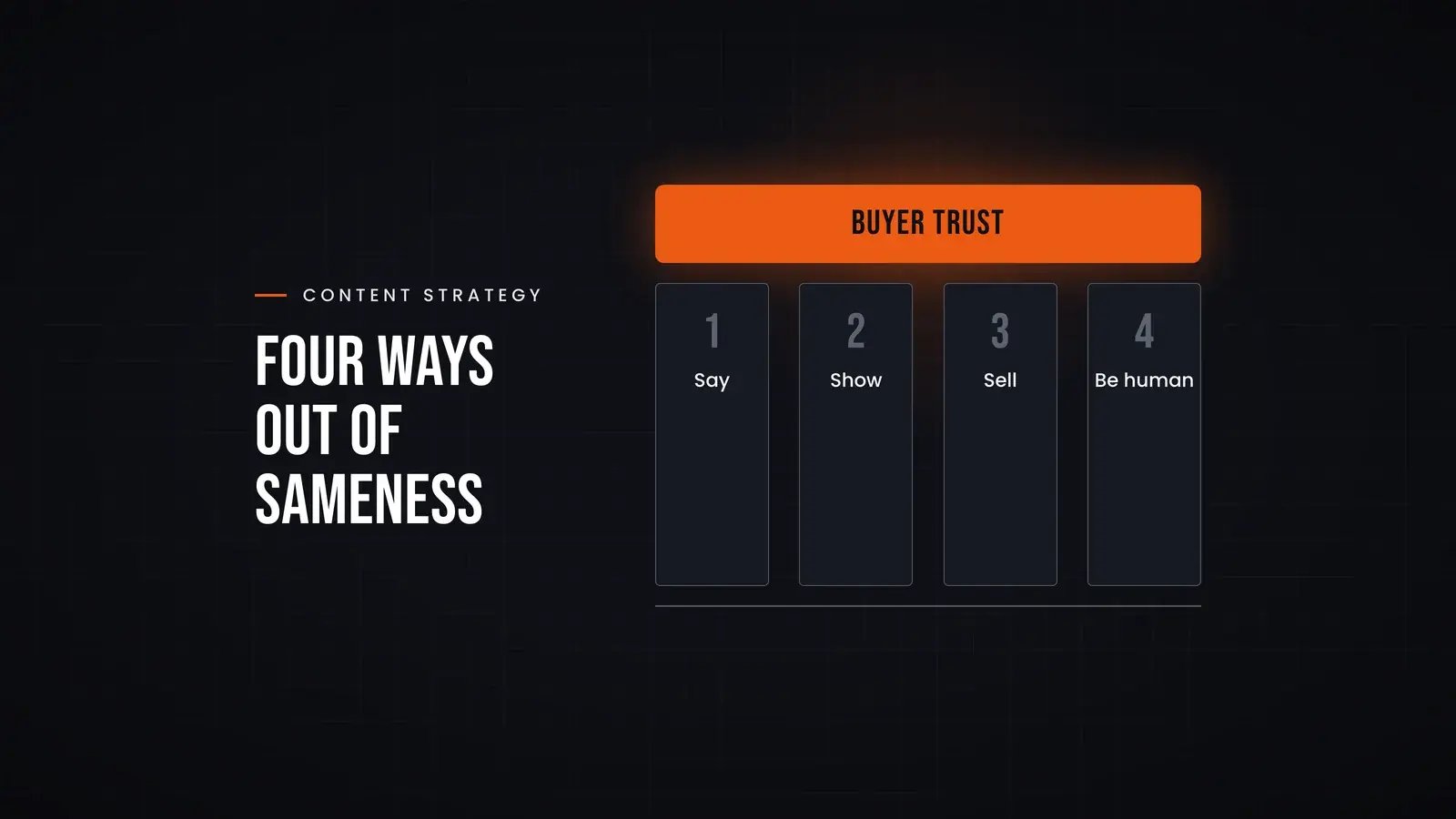
Does your content attract visitors but produce no sales conversations? Are you publishing regularly but struggling to connect what you write to actual revenue?
If so, the problem is rarely content quality. It is the absence of a system behind it.
This is the system I install for founder-led businesses: content libraries built to work as sales tools, not just marketing output.
This article is for business owners and marketing managers who want to stop creating content for its own sake and start building a library that genuinely generates leads and closes sales. You will get a 6-step playbook, a cost breakdown, and a clear framework for making content part of the sales process itself.
Key takeaways
- A content library that sells is a structured, buyer-focused collection of blog posts, guides, videos, and gated resources, each mapped to a specific stage of the buyer's journey.
- Most business content fails because of three traps: the Quantity Trap, the Timing Trap, and the Relevance Trap.
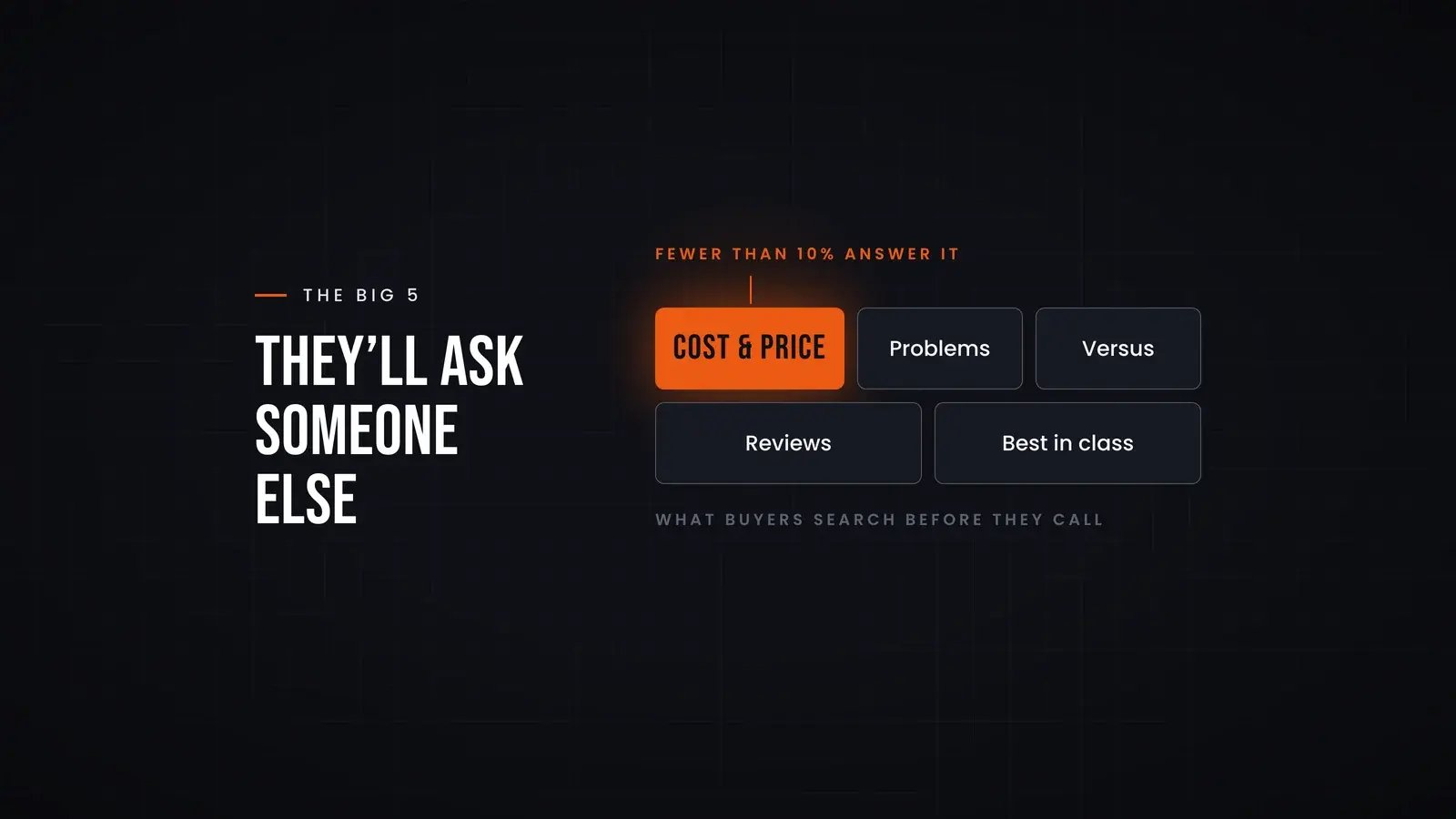
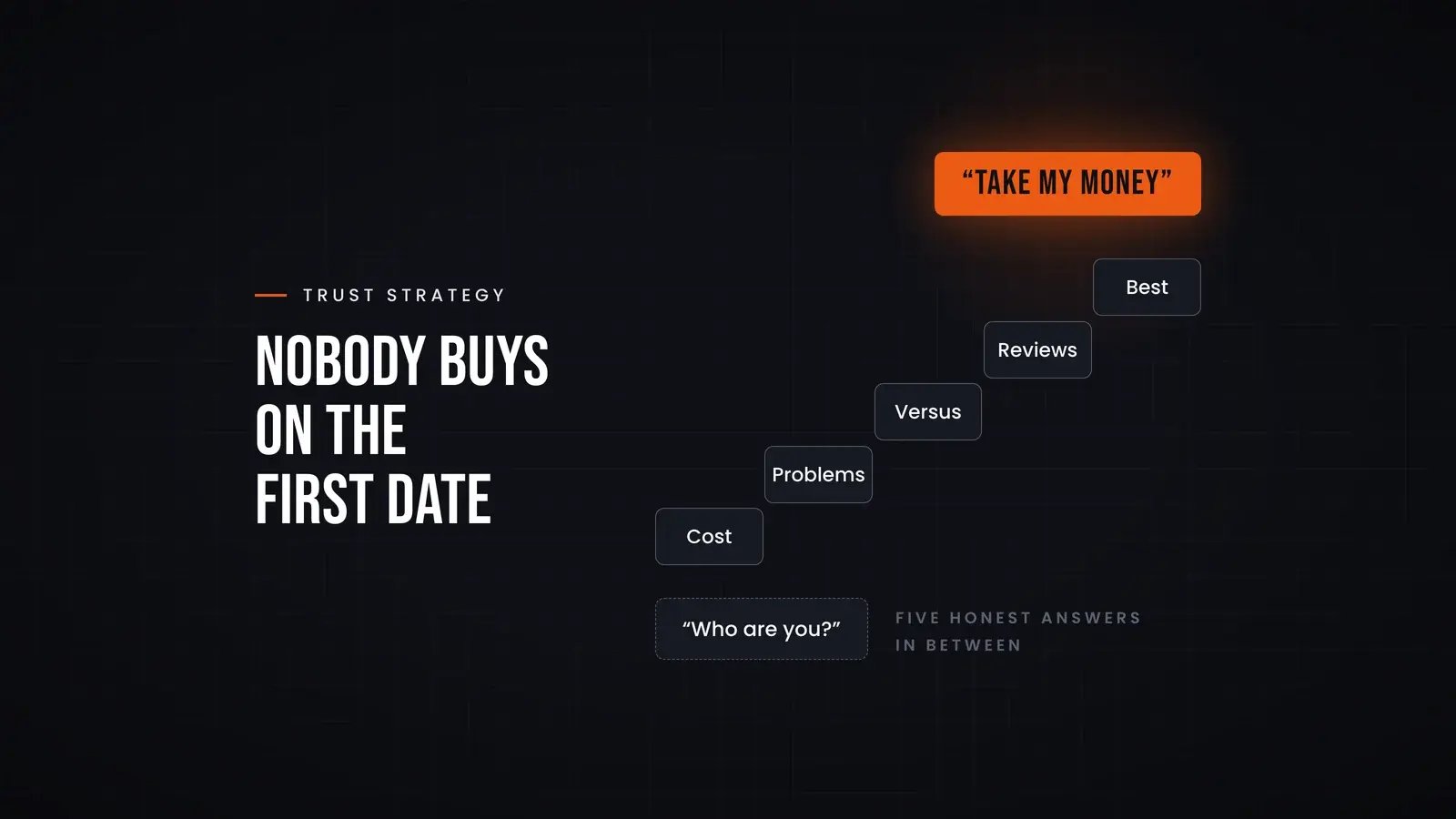
- The Big 5 framework, cost, problems, comparisons, reviews, and best-in-class, covers the five topics that most directly influence buying decisions.
- Building a content library costs anywhere from internal staff time to £3,000–£15,000 ($4,000–$20,000) per month, but in-house capability delivers the best long-term return.
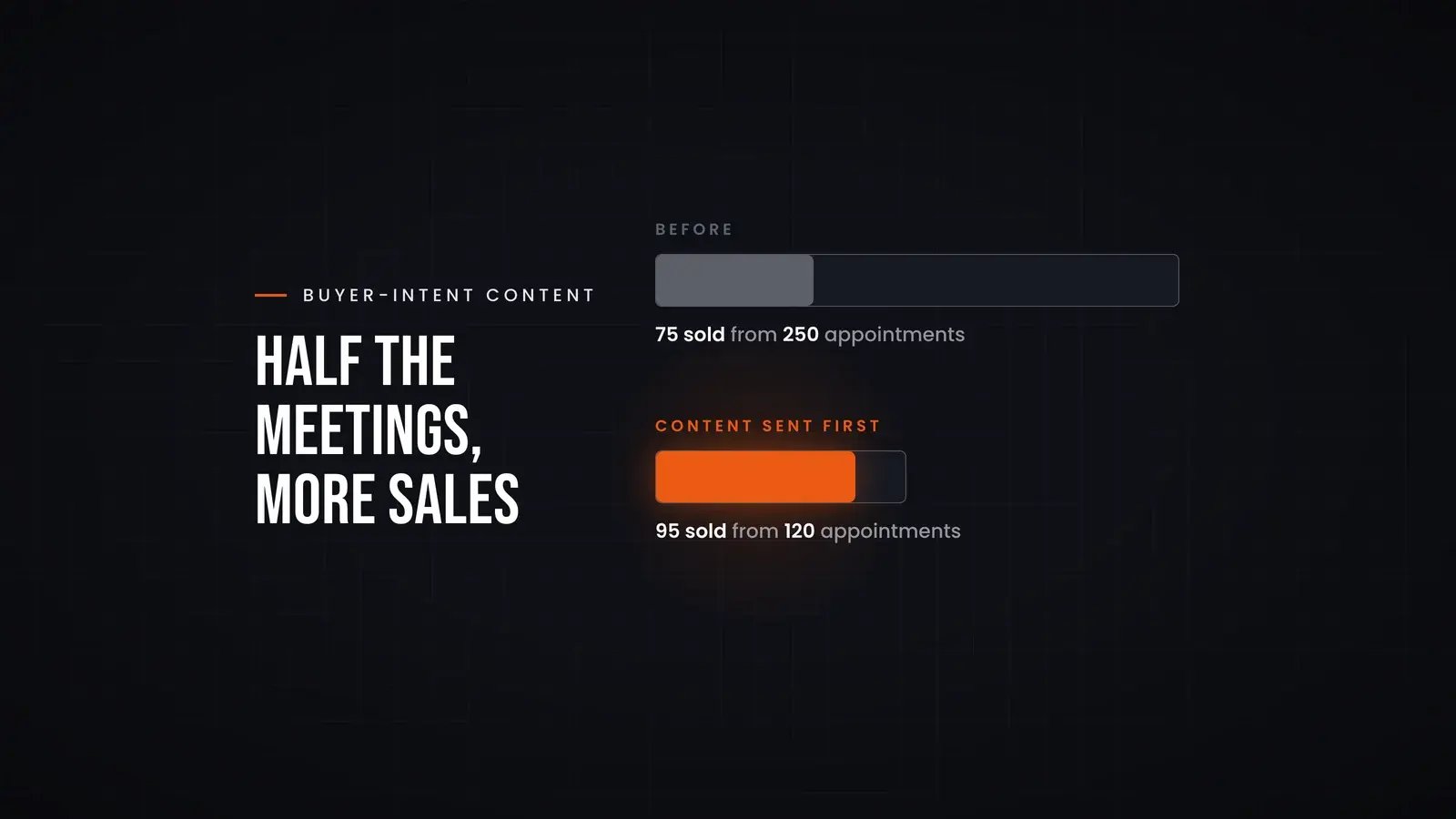
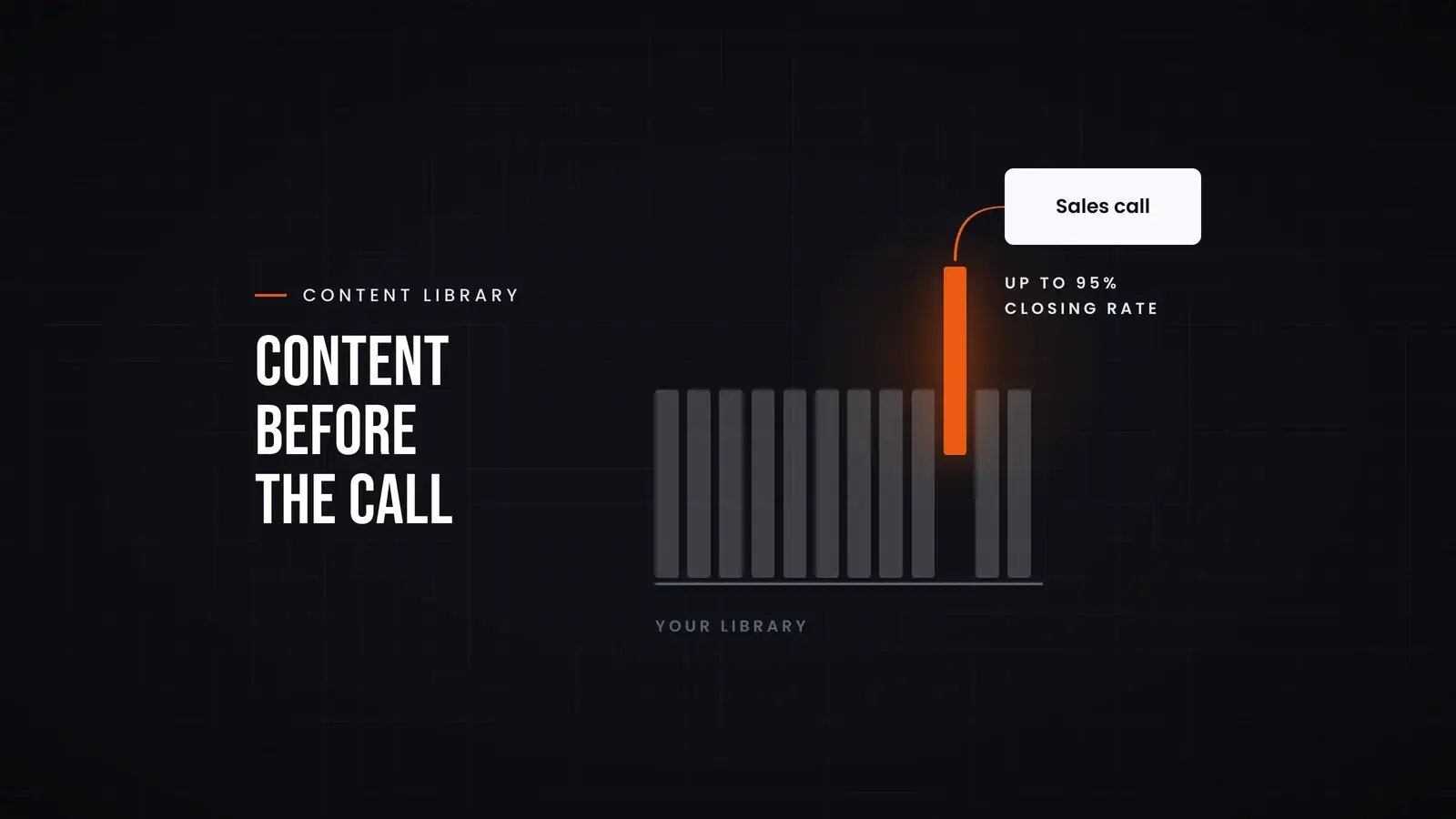
- Assignment Selling, sending prospects content before sales calls, can produce closing rates of up to 95% when applied systematically.
What is a content library that sells?
A content library that sells is a structured, centrally organised collection of buyer-focused content: blog posts, guides, videos, and gated resources, designed to answer the questions buyers ask at every stage of their purchasing journey.
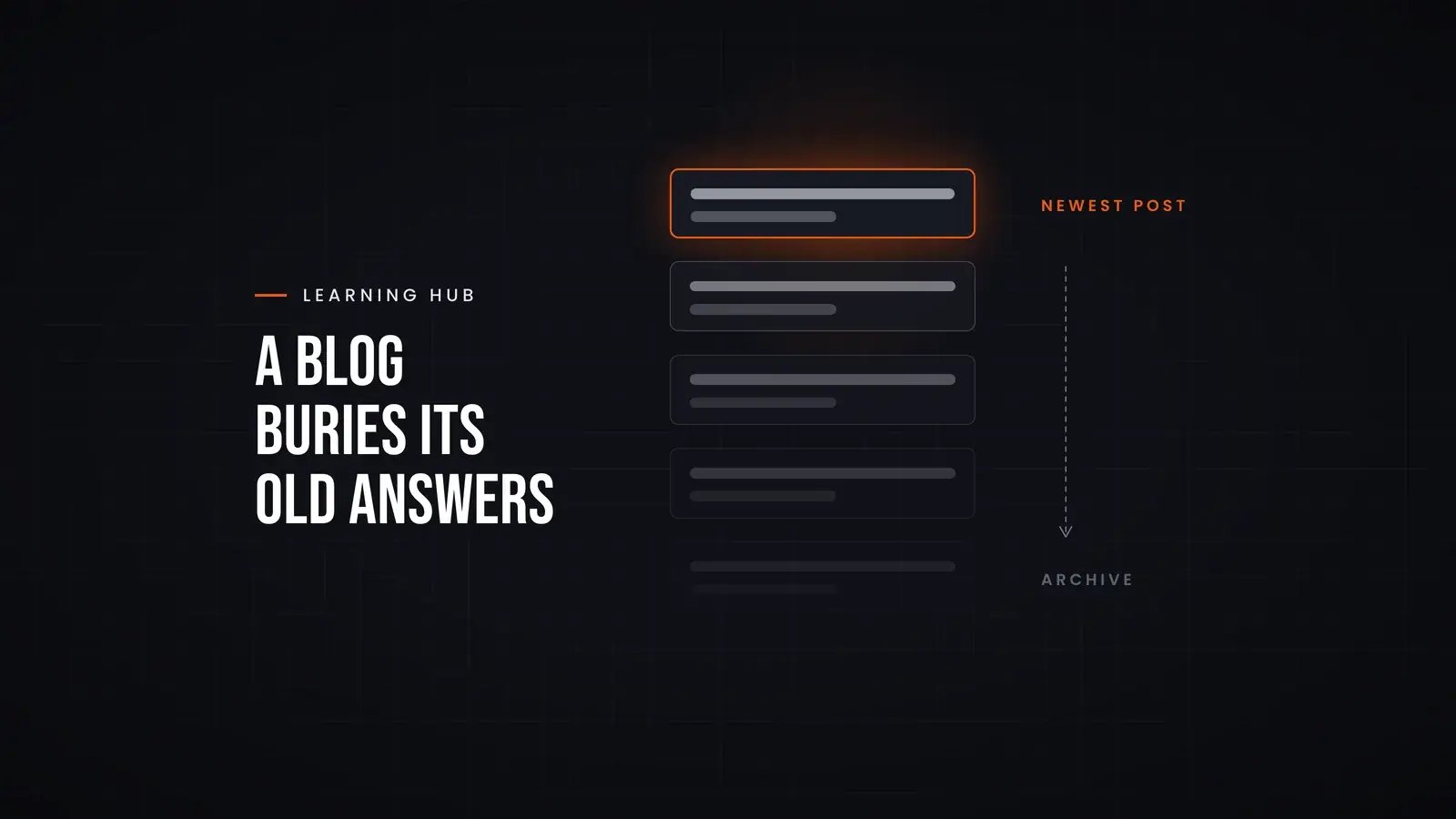
Think of it as a Learning Hub: a deliberately built resource that works as a sales tool even when your team is not in the room.
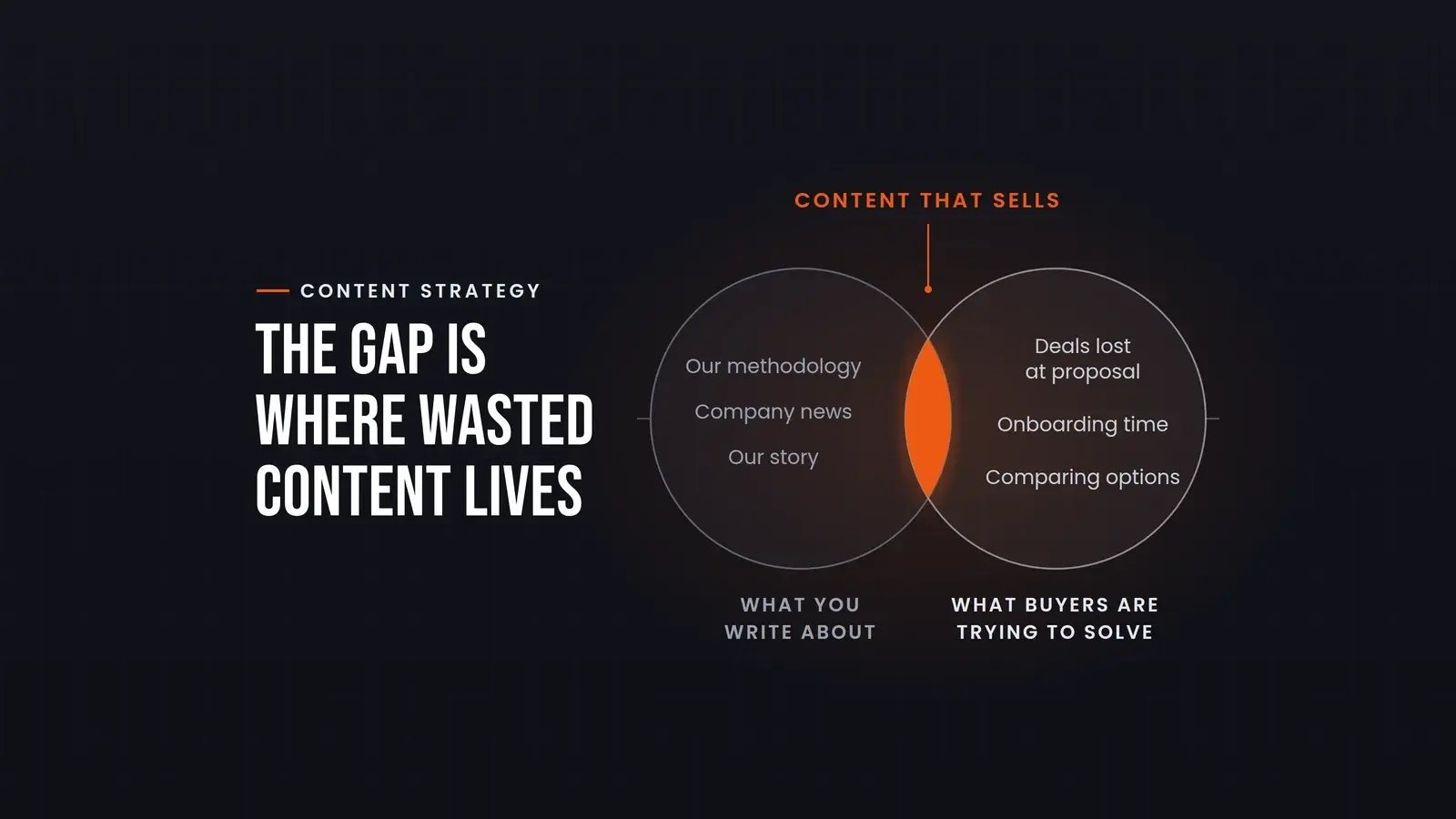
Unlike a passive archive of blog posts, a sales-focused content library is built with clear intent: to attract, educate, and convert the right buyers before they ever speak to your sales team. Every piece serves a defined purpose. Nothing exists just to fill a calendar.
Content library vs. random content creation: what is the real difference?
A content library that sells differs from ad-hoc content creation in one way: every piece serves a defined purpose in the buyer's journey, rather than existing as an isolated fragment.
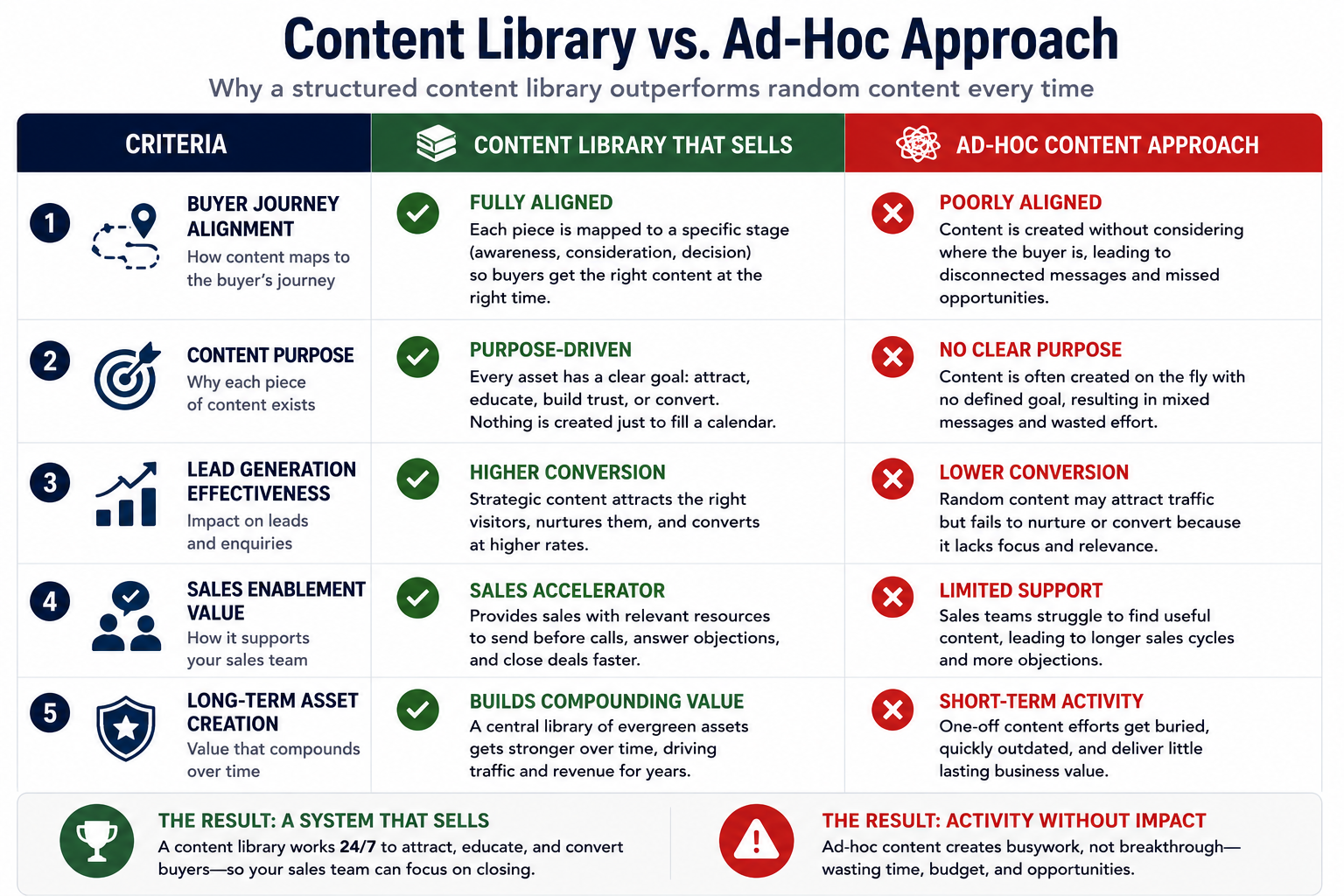
Businesses that align content to the buyer's journey see 73% higher conversion rates than those that do not. The difference is not volume. It is intention.
Why most business content fails to generate leads or sales
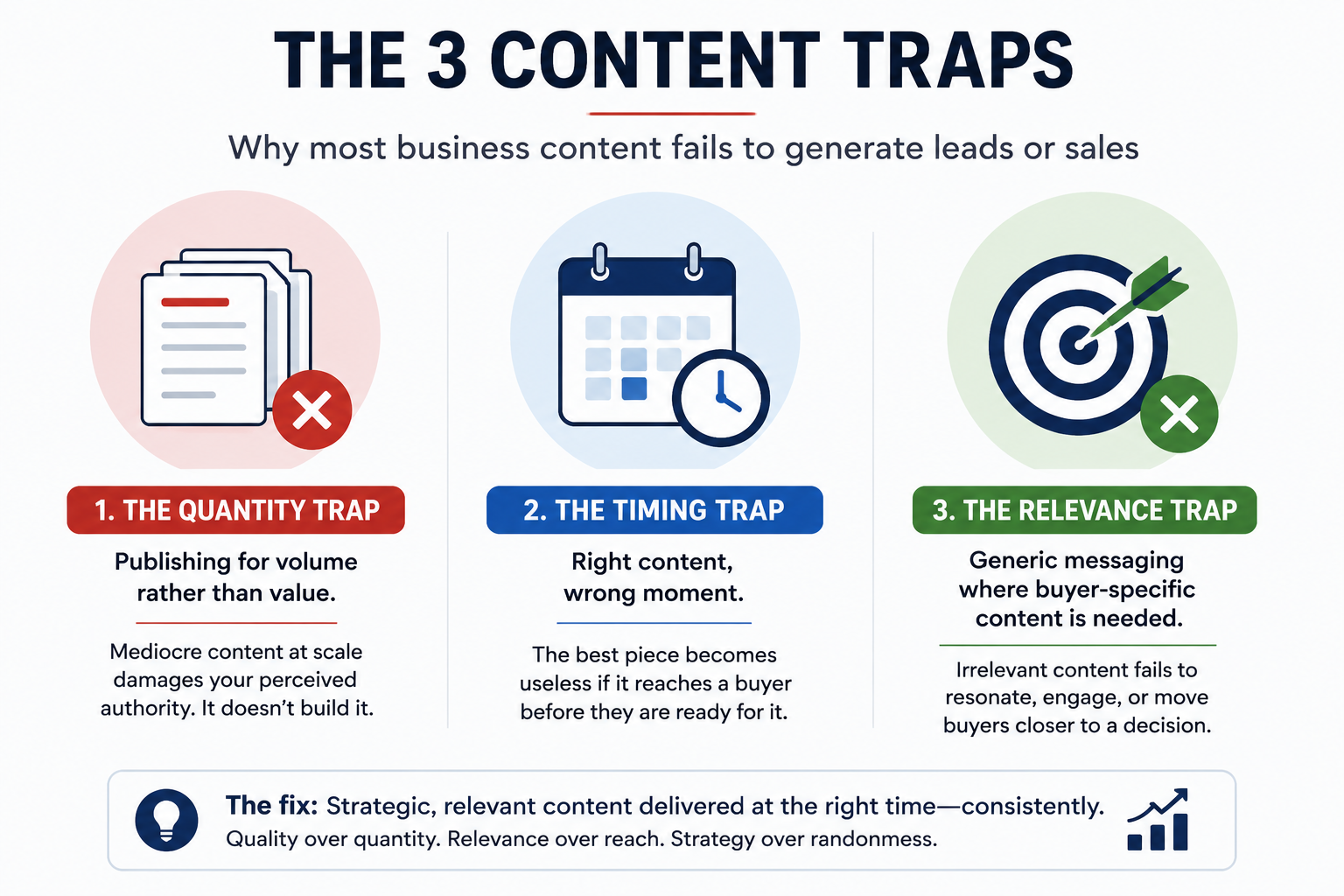
Most business content fails to generate revenue because it falls into one of three traps.
The 3 content traps
- The Quantity Trap: publishing for volume rather than value. Mediocre content at scale damages your perceived authority. It does not build it.
- The Timing Trap: right content, wrong moment. The best piece becomes useless if it reaches a buyer before they are ready for it.
- The Relevance Trap: generic messaging where buyer-specific content is needed.
The biggest misconception in content marketing is that publishing more content automatically builds trust. It does not. Quantity without strategy produces noise.
3 mindsets also derail content programmes from the inside:
- Only marketers should create content: in reality, your sales team holds the most valuable buyer questions.
- Everything must be perfect before publishing.
- Adding more process always means better output.
What does it cost to build a content library?
Building a content library can cost anywhere from a few hours of internal time per week to £3,000–£15,000 ($4,000–$20,000) per month with an agency. The highest long-term return typically comes from building in-house capability.
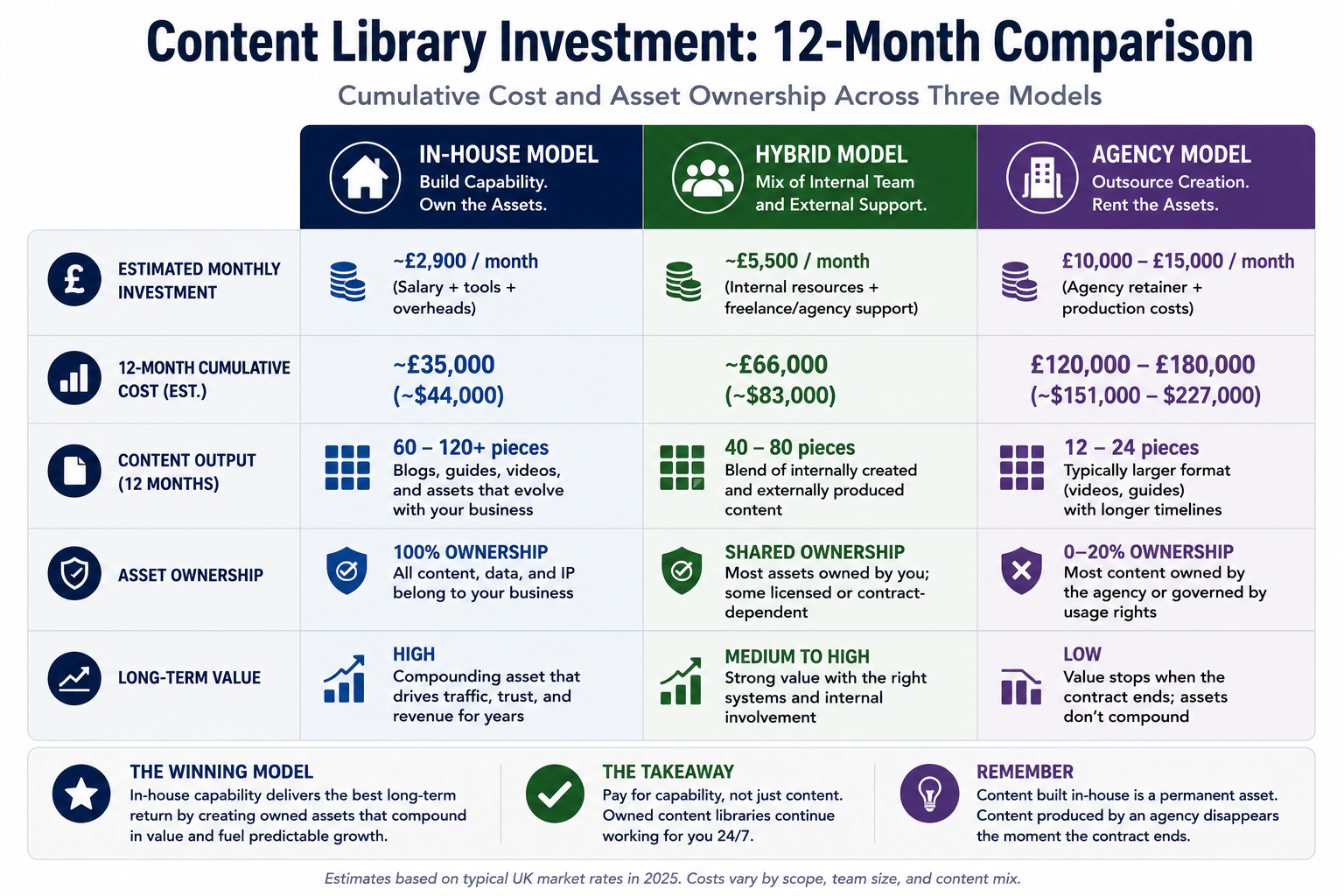
An in-house content resource at around £35,000 ($45,000) per year can produce dozens of pieces every month that evolve with the business, compared with agency fees of £10,000 ($12,000) or more for a small batch of videos that quickly become outdated.
Content built in-house is a permanent asset. Content produced by an agency disappears the moment the contract ends.
These are estimated ranges based on typical UK market rates in 2025. Costs vary by scope and team size.
External link: HubSpot State of Marketing Report for wider benchmarks
The Big 5: five content topics every sales-focused library must cover
The Big 5 are the five content topics proven to influence buying decisions across every industry: cost and pricing, problems, comparisons, reviews, and best-in-class recommendations.
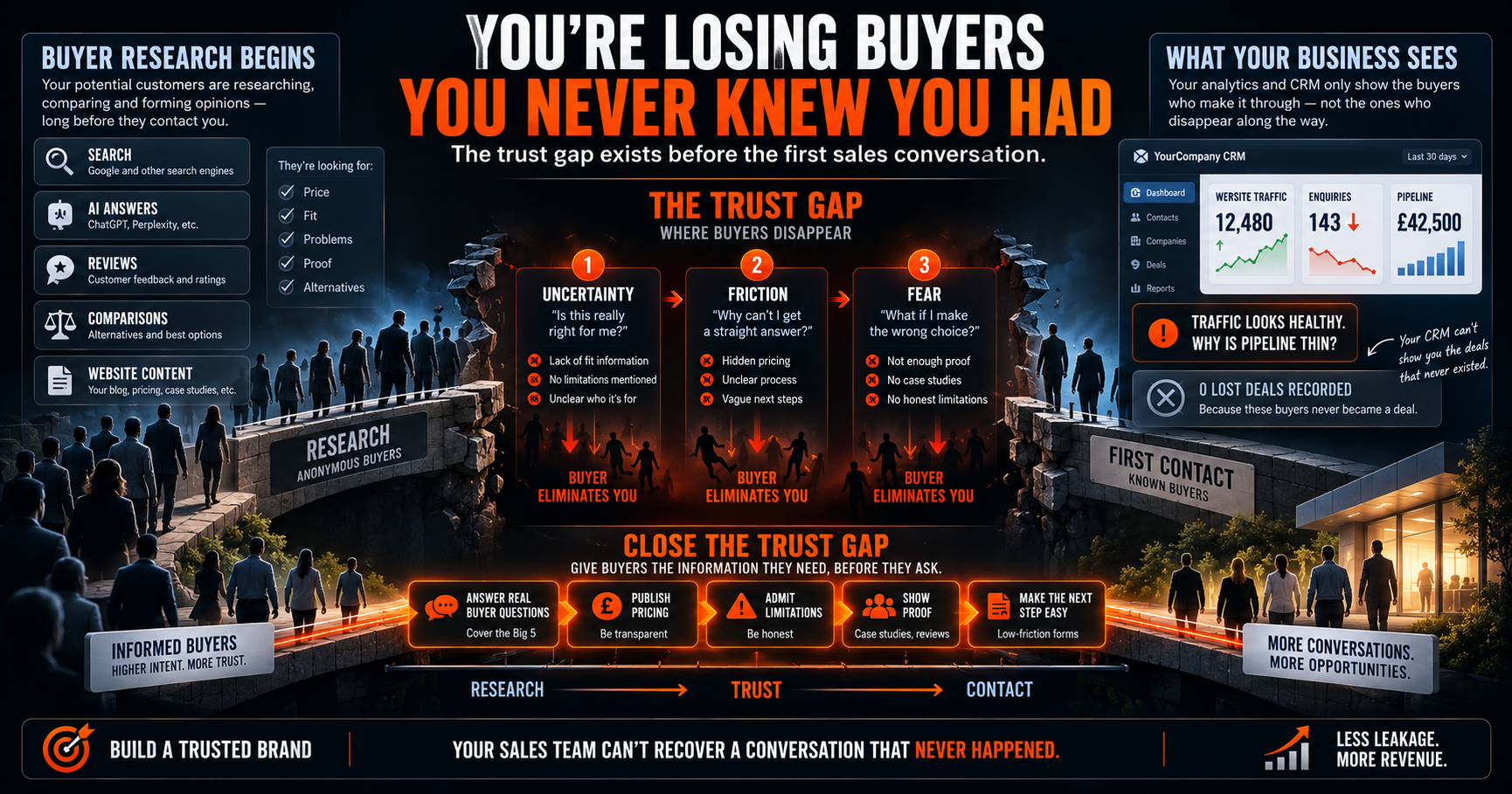
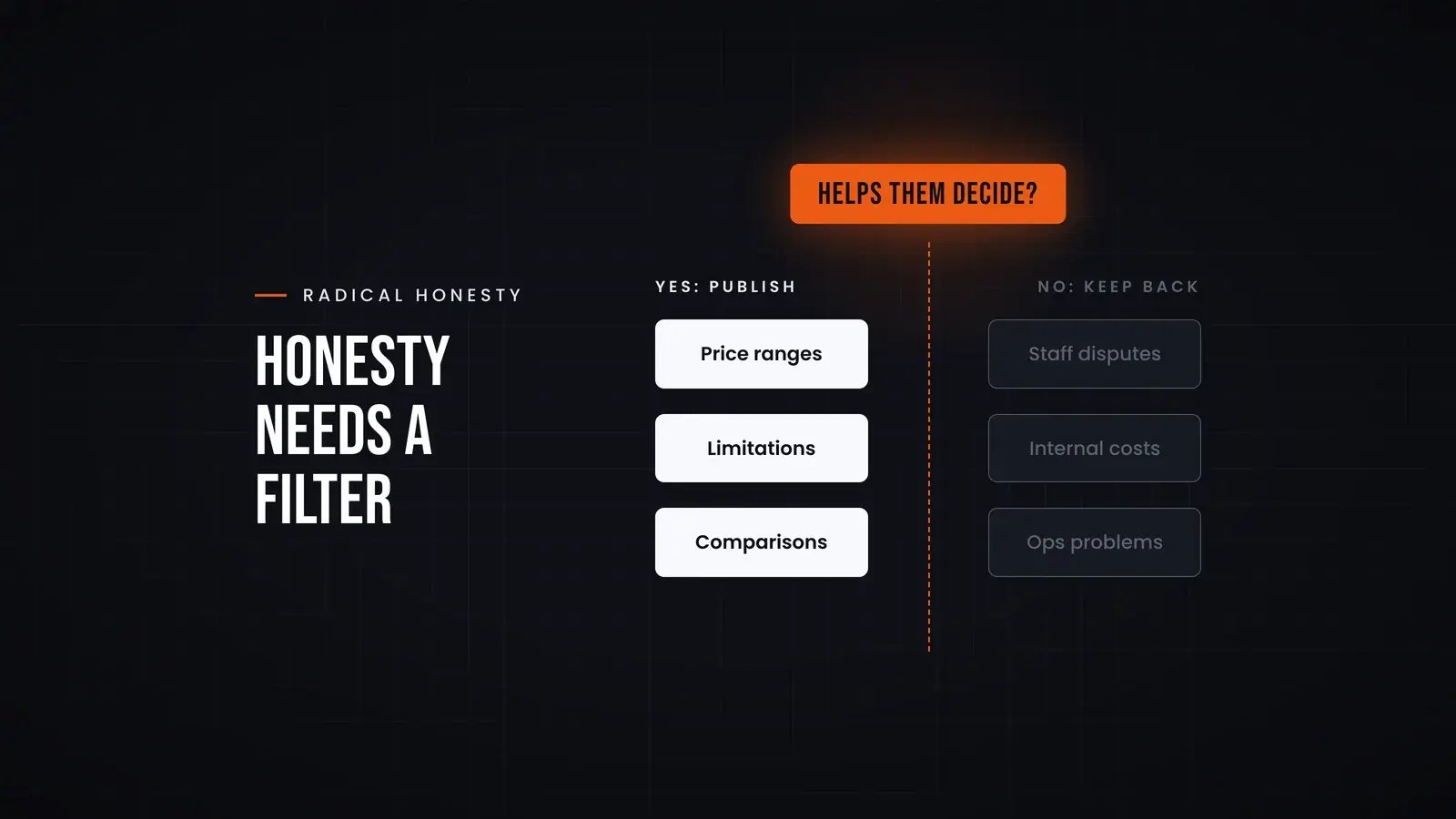
These topics work because they mirror the exact questions buyers search for. Businesses that address them openly and honestly consistently out-rank and out-convert those that avoid them.
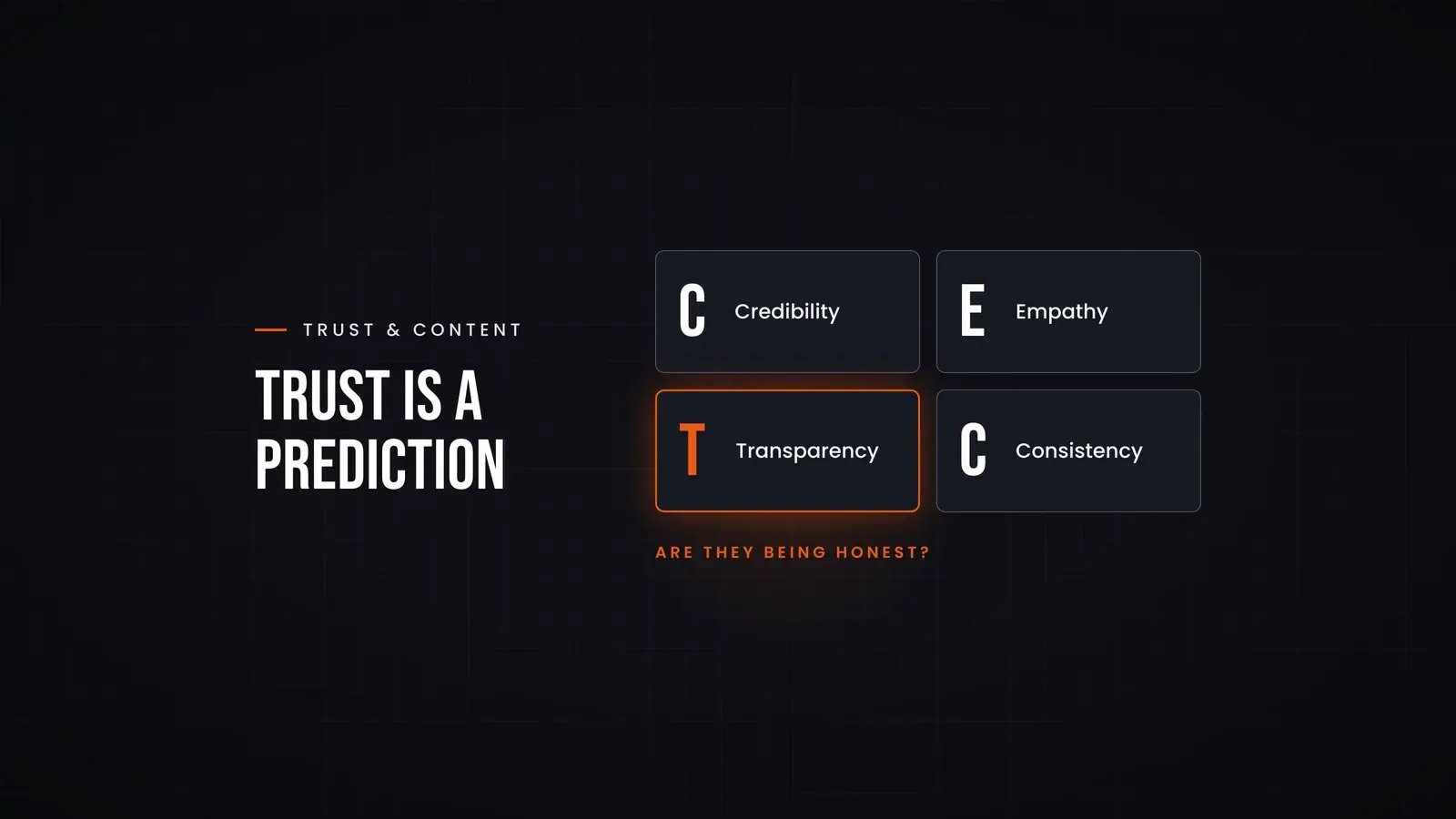
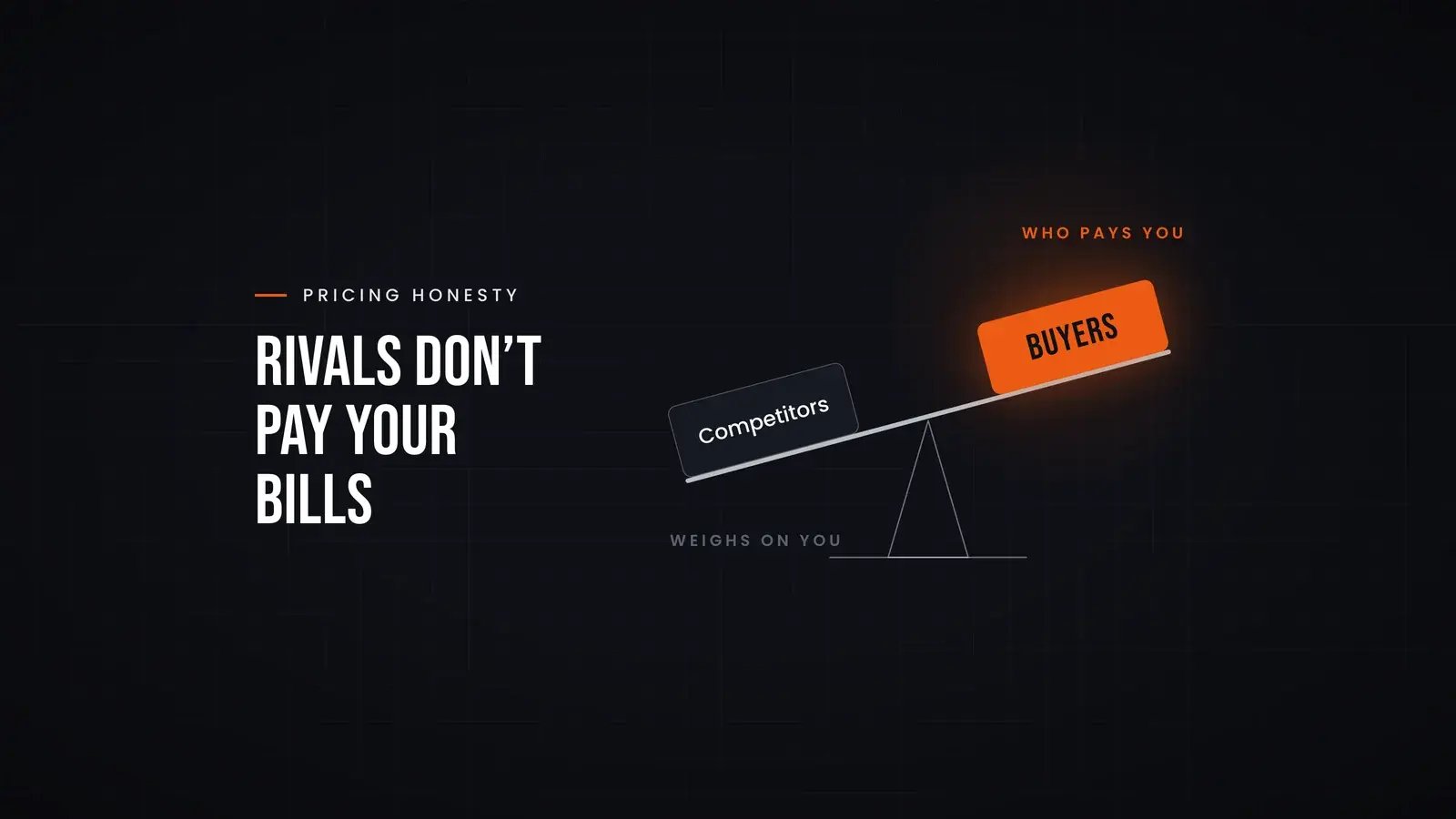
- Cost and pricing: Be transparent about what things cost and why. Buyers will find this information somewhere. Make sure it is from you.
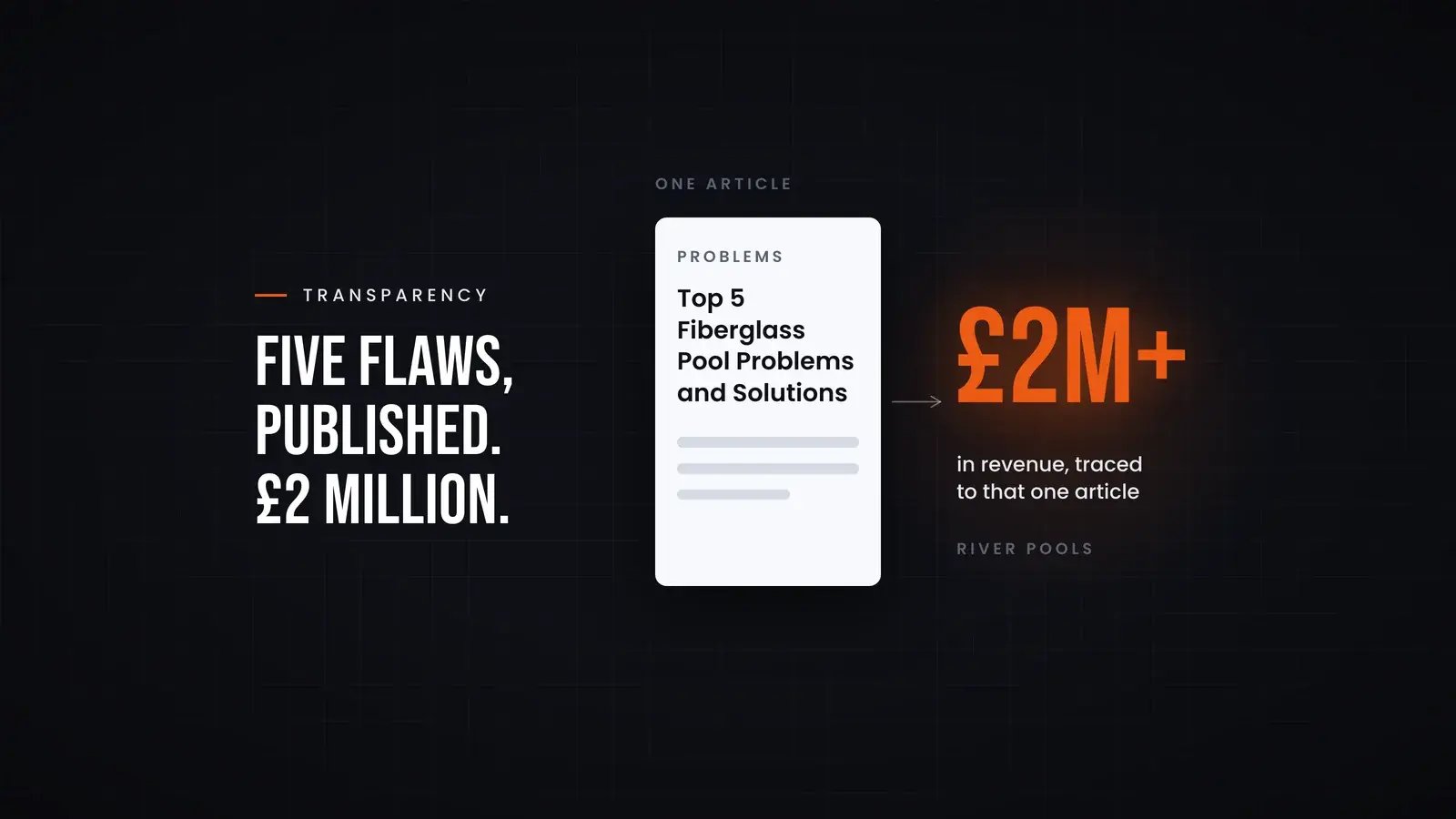
- Problems: Address risks, drawbacks, and common mistakes honestly. Buyers respect this, and it pre-qualifies serious enquiries.
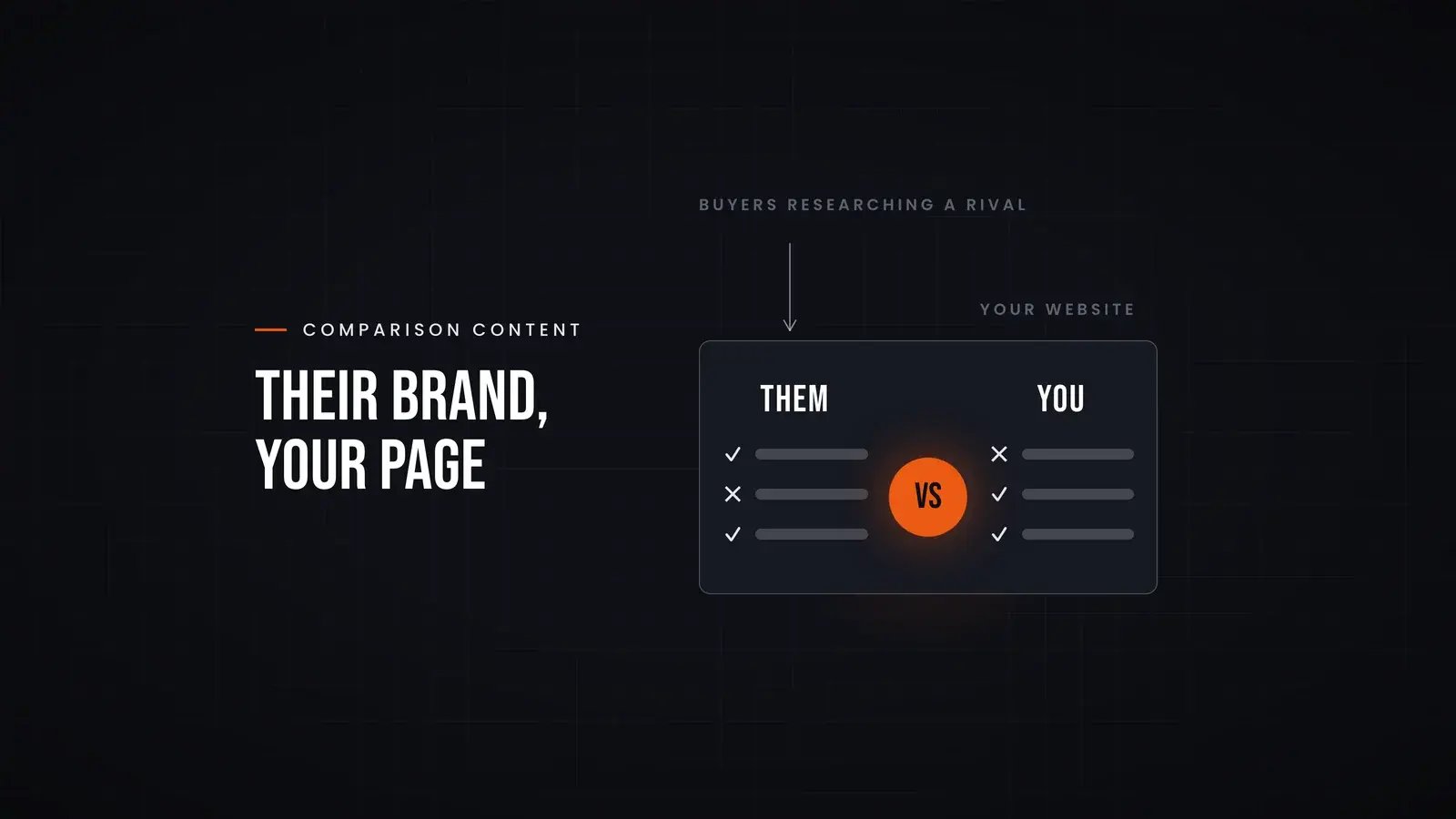
- Versus and comparisons: Compare your offering to alternatives without claiming superiority where it does not exist.
- Reviews: Include honest assessments of your market. Marcus Sheridan's comparison article at River Pools and Spas ranked #1 for over a dozen competitor search phrases.
- Best-in-class: Create criteria-based lists that include competitors alongside you. Shasta Pools was recommended by ChatGPT for "best pool builders in Arizona" after publishing exactly this type of content.
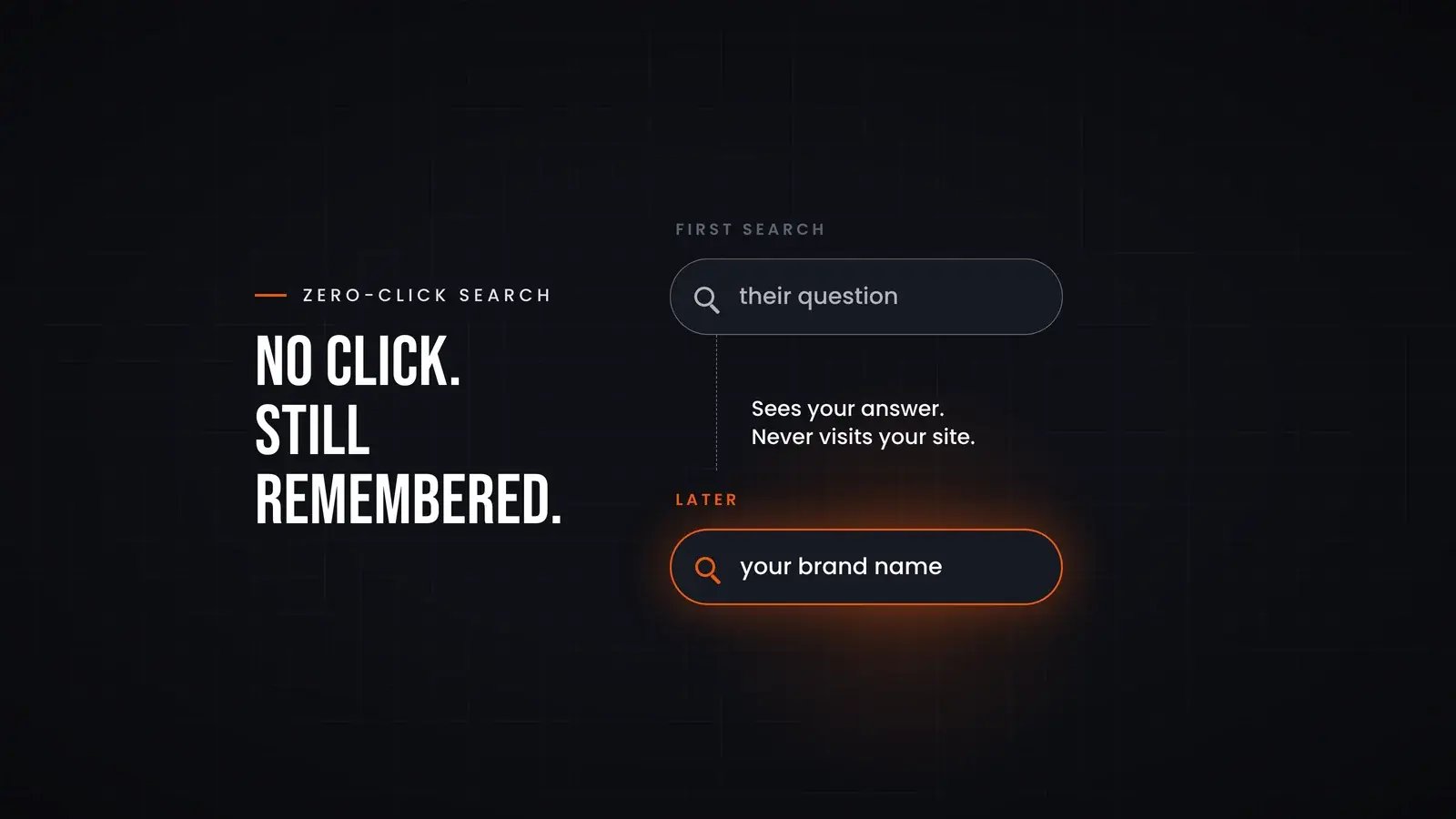
These five topics also power AI search visibility. LLMs prioritise structured, transparent, criteria-based content when generating answers for buyers.
Recommended reading: How to Write Content That Gets Quoted by ChatGPT
How to build a content library that sells: 6 steps
Building a content library that sells requires 6 steps: audit what you have, define your buyer personas, map content to funnel stages, create content using the Big 5, build a Learning Hub, and multiply each core piece into platform-specific formats.
- Content audit: Catalogue everything published. Map each piece to a funnel stage and rate its commercial effectiveness.
- Buyer persona analysis: Identify the real questions buyers ask before, during, and after a purchase.
- Funnel mapping: Match content to 4 stages: Awareness (What is my problem?), Consideration (What are my options?), Decision (Why you?), and Post-purchase (Was this right?).
- Create using the Big 5: Use the five topics above as your editorial brief for every new piece.
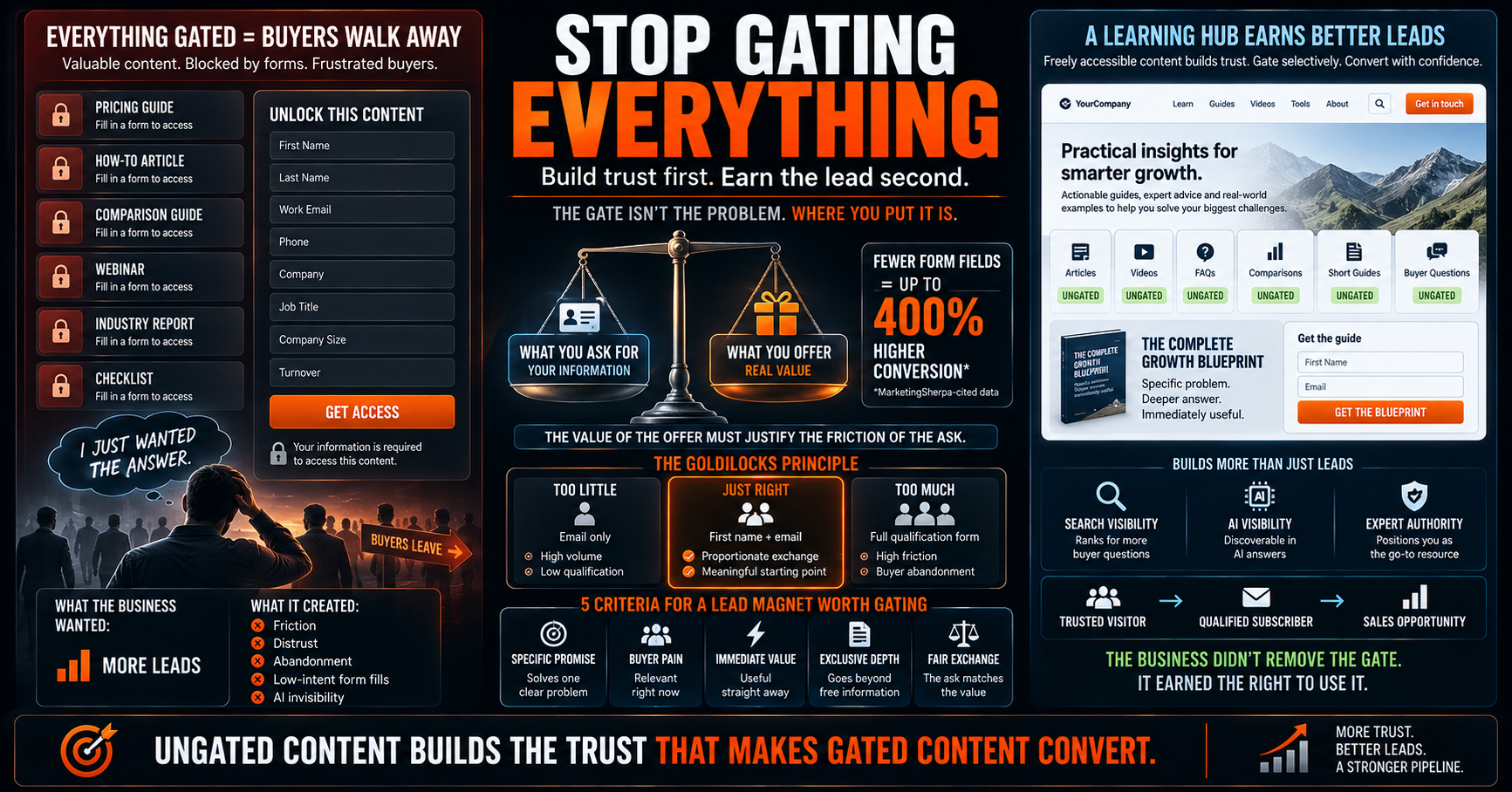
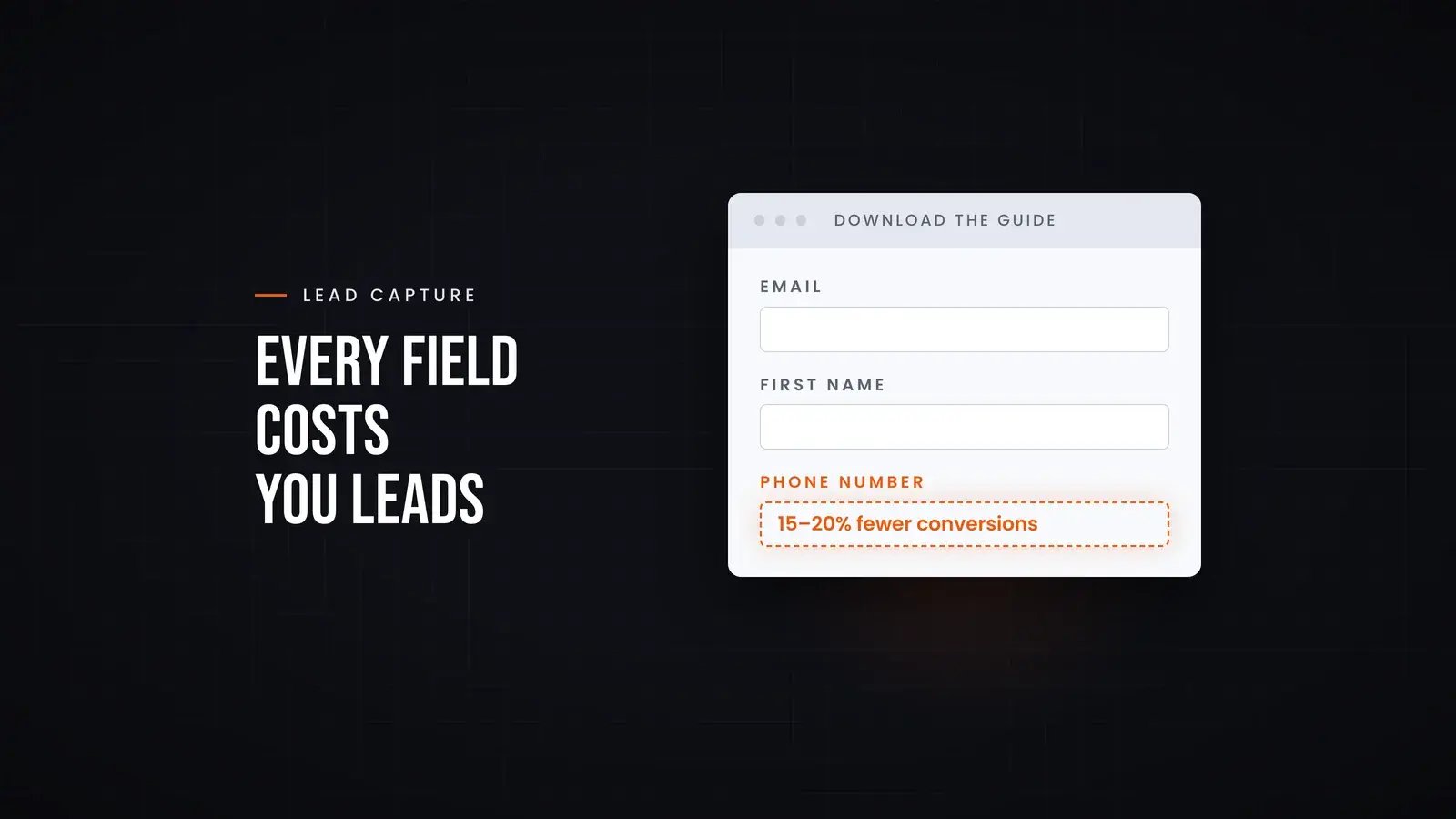
- Build a Learning Hub: House your best content centrally, with gated resources that capture qualified leads in exchange for genuine value.
- Apply the Content Multiplication Framework: Turn each core piece into platform-specific adaptations and micro content.
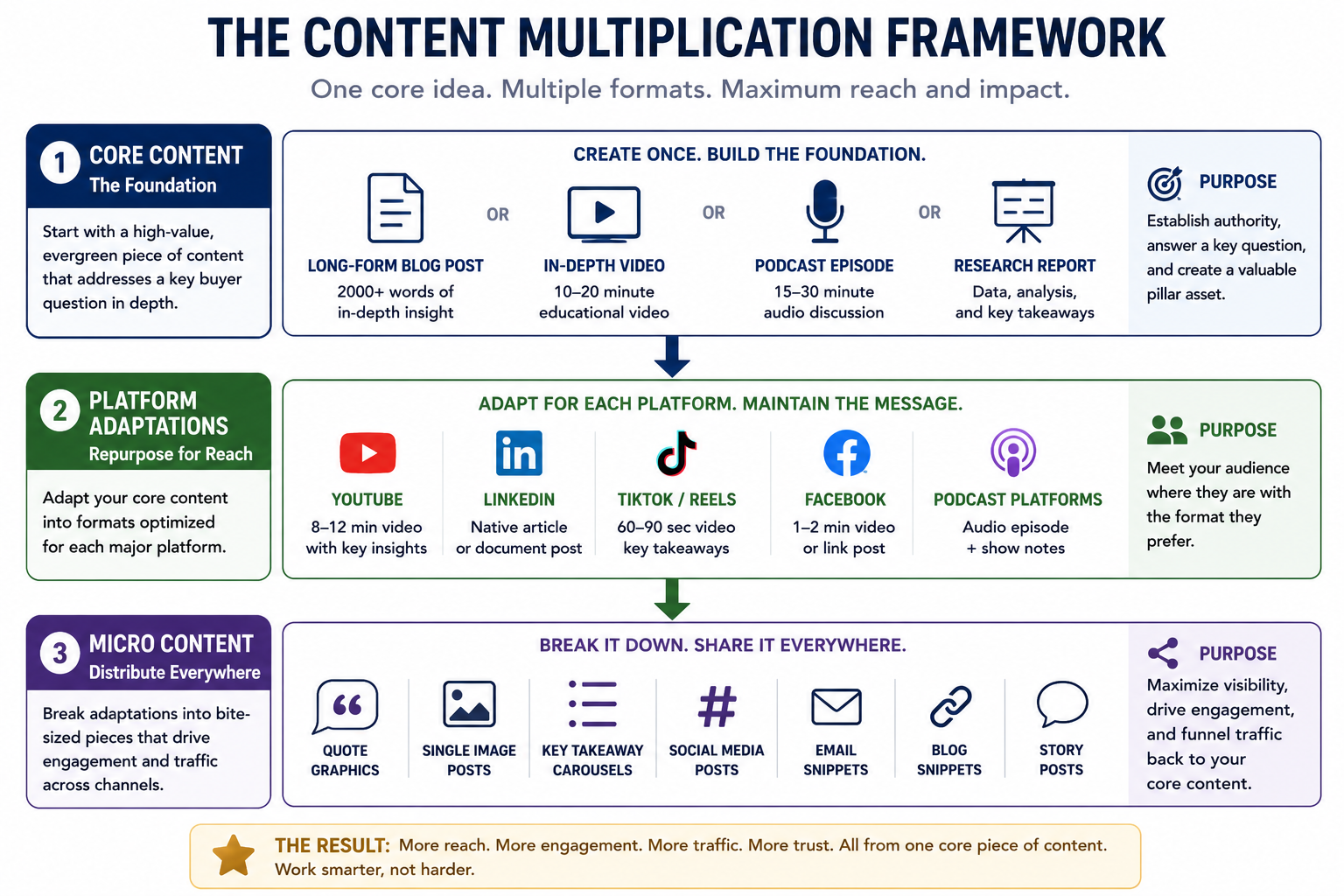
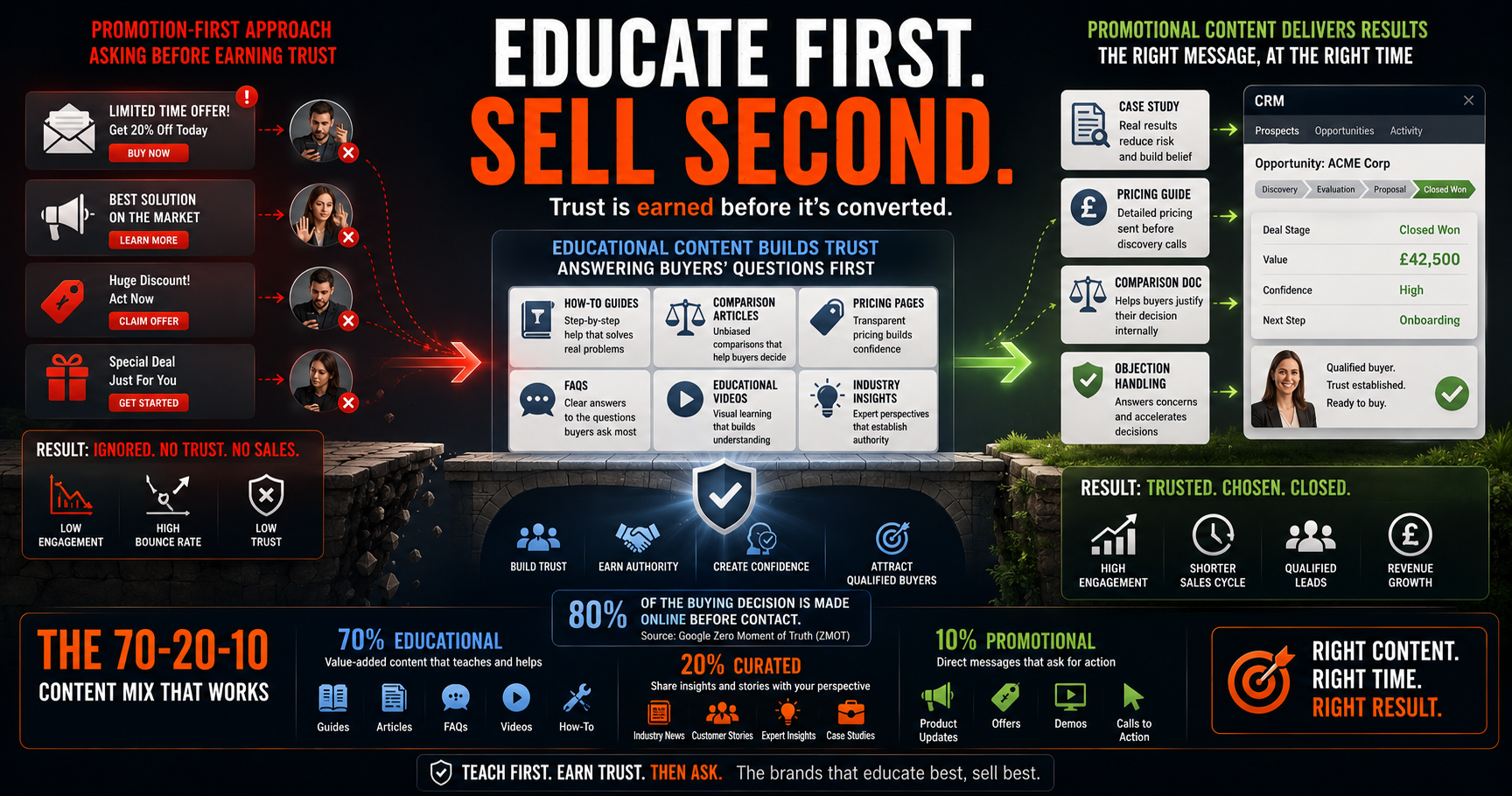
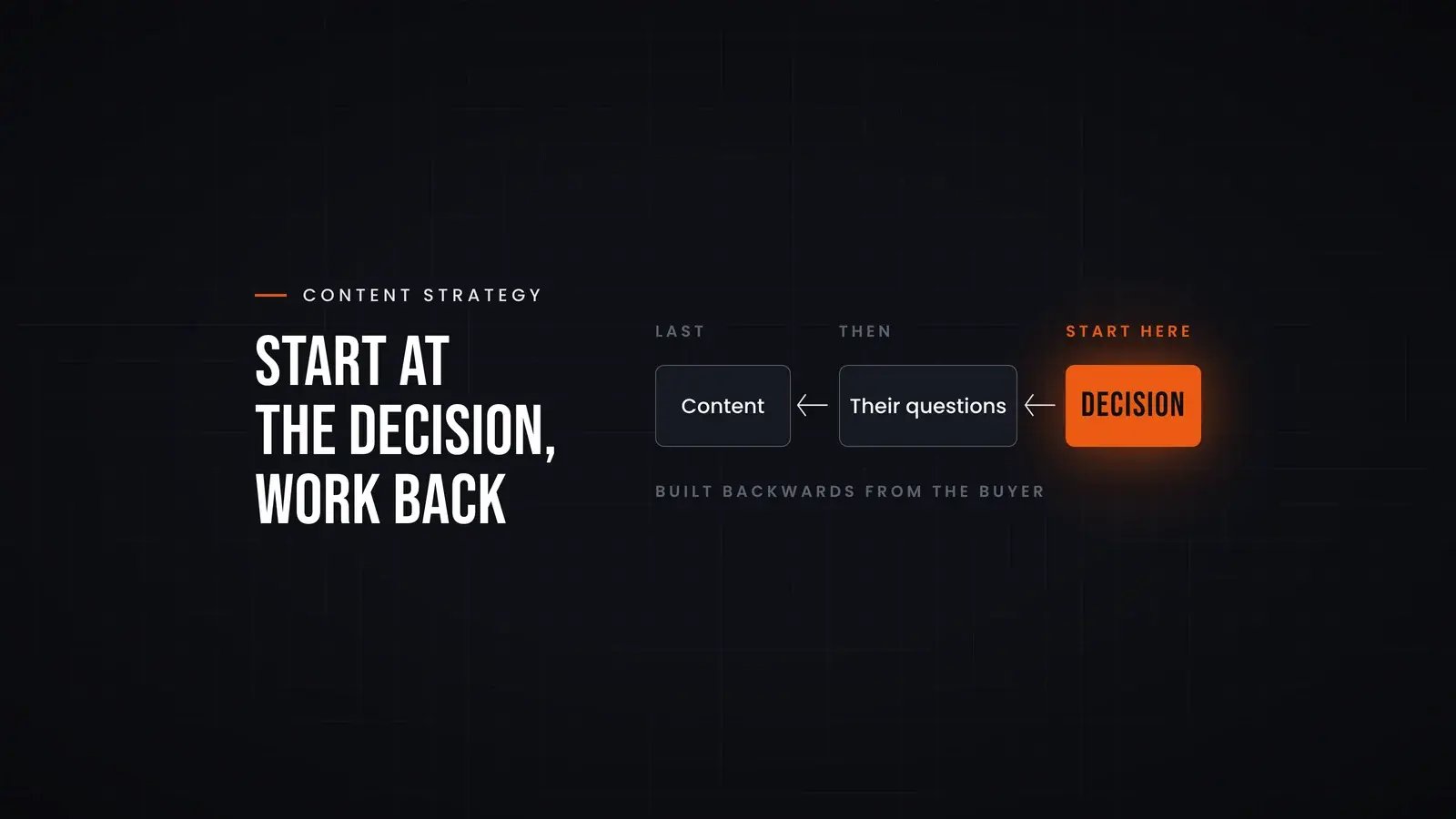
The principle at every step is to begin with your buyers' questions, not your products.
Recommended reading: How to Map Content to the Buyer's Journey: The Complete Marketing Playbook
How to turn your content library into a direct sales tool
Assignment Selling is the practice of giving prospects specific content to review before sales conversations: using your content library to educate buyers in advance, qualify their intent, and shorten the sales cycle.
When Marcus Sheridan implemented this at River Pools and Spas, he achieved a 95% closing rate. Prospects who engaged with the content arrived informed and ready to decide.
The 3-stage content assignment system
- First contact: Send high-level content that answers foundational questions. Set the tone for what it means to work with you.
- Second contact: Assess readiness. Send deeper content to move committed prospects forward. Redirect those who are not a fit.
- Third contact: Send content that makes the purchase decision clear and simple, or closes the relationship gracefully if there is no fit.
Prospects who refuse assigned content are typically price-focused rather than value-focused: a useful signal, not a failure. Review which content pieces drive closed deals regularly, and refine your assignments at each stage.
Recommended reading: Why Every Sales Conversation Should Start With a Blog Post (Assignment Selling Explained)
Frequently asked questions
How long does it take to build a content library that generates results?
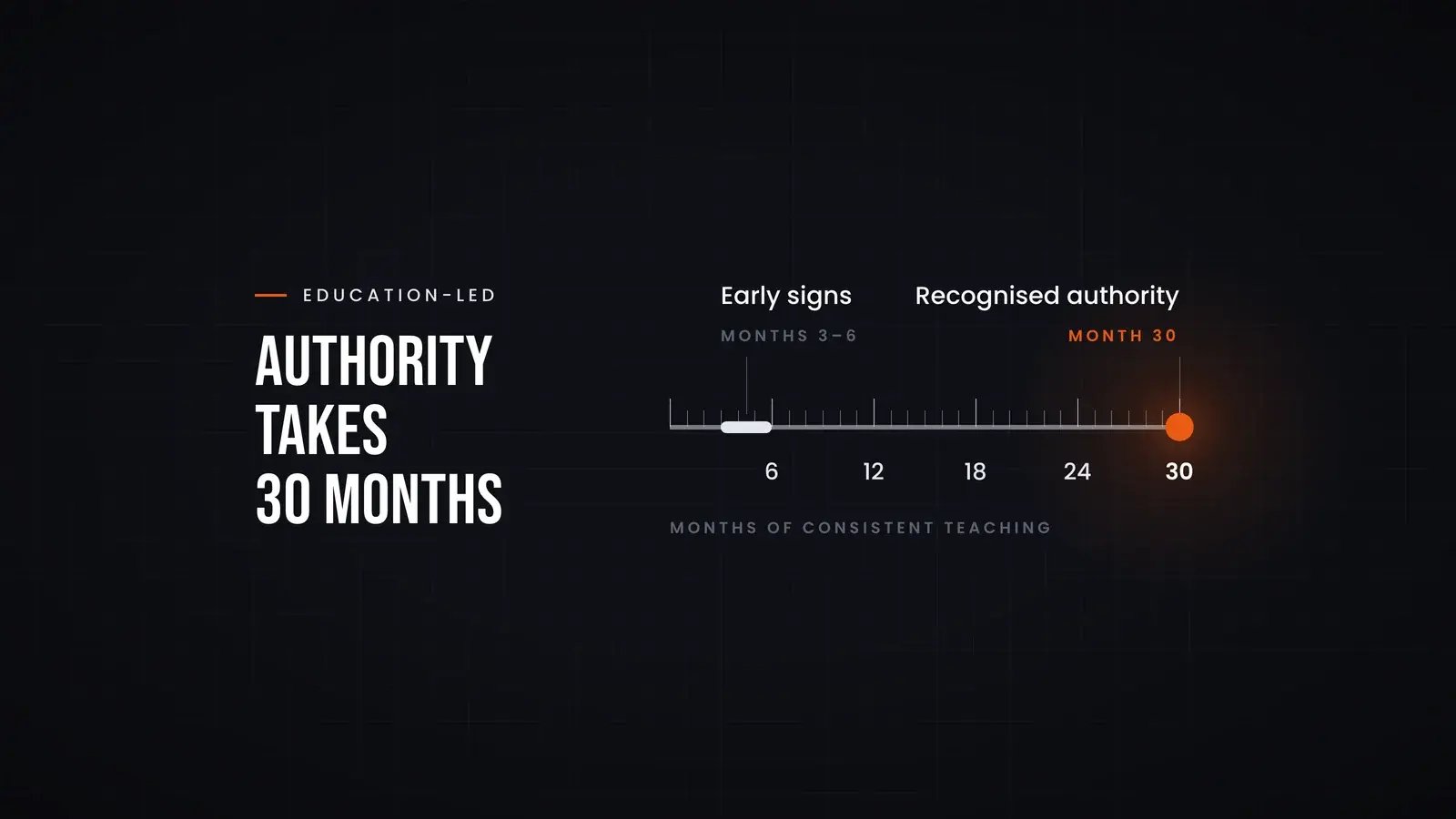
Most businesses see meaningful results within 6 to 12 months, with returns that build over 2 to 3 years. Assignment Selling can produce faster wins: shortening individual sales cycles within weeks of implementation.
How do I know if my content library is actually driving sales?
Track 4 things: qualified leads generated by content, conversion rates from content-touched prospects, sales cycle length for Assignment Selling deals, and revenue influenced by specific pieces. Any piece that cannot be connected to a commercial outcome should be reconsidered. Companies that measure content ROI consistently are 12 times more likely to see year-on-year improvements.
Conclusion
You have been creating content. You know it matters. But without a system behind it, the effort produces activity rather than revenue.
A structured content library changes that. It answers the questions your buyers are already asking, builds trust before the first conversation, and grows in value every month you maintain it.
How to take action now
- Run a content audit this week: map everything you have to a funnel stage
- Identify your top 3 Big 5 content gaps and prioritise them first
- Set up Assignment Selling for your next sales conversation using one existing piece
- Begin building your Learning Hub around your highest-performing content
- Track content-influenced revenue from your next sales cycle onwards
Your next step is to read Building a Learning Hub That Converts: Complete Guide, which shows how to turn the audit above into a working sales tool.
If you want structured support to install this system inside your business, rather than piecing it together alone, I provide Fractional Marketing Director and content strategy engagements designed to build this capability in-house, not create a new dependency on external support.

About the author
Tom Wardman is a fractional marketing director, content strategist, and author of Build a Trusted Brand. He works with founder-led businesses and in-house marketing teams to build content systems that generate qualified leads, shorten sales cycles, and reduce reliance on paid channels. His approach is grounded in the Endless Customers System™ and the Trust BLUEPRINT™ framework: structured, measurable, and fully owned by the businesses he works with.
Pricing disclaimer: All GBP–USD price conversions are rounded estimates and correct at the time of publishing. Exchange rates fluctuate and figures should be treated as indicative only.
Topics: