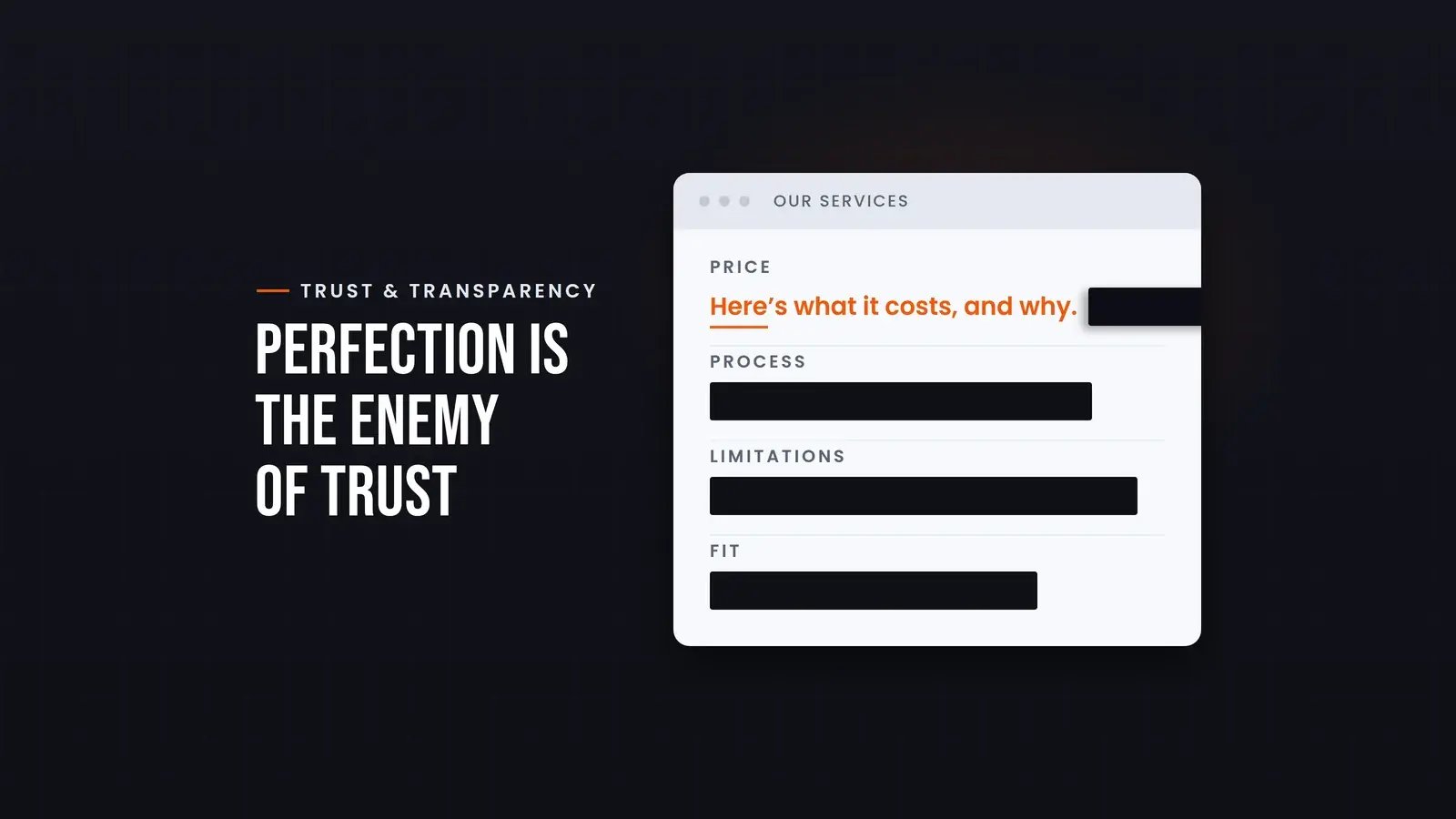
Most founder-led businesses are not vague on purpose. They are vague because vagueness feels safe. No prices on the services page, no honest word about who the offer is wrong for, no explanation of how the work actually gets done. The theory is that mystery protects margin and forces a conversation with sales.
I spent years writing content that way, for my own business and for clients. Every page had to present a perfect picture. No flaws, no limitations, just benefits.
Then someone asked me a question that stopped me: "If you can't be honest about the limitations, how can I trust you with anything else?"
This article is for founders and marketing leaders who suspect their own site is doing the same thing. It sets out exactly what changes commercially when a business stops withholding information, why the fears that keep you quiet cost more than transparency ever would, and where to start if you have been mysterious for years.
Key Takeaways
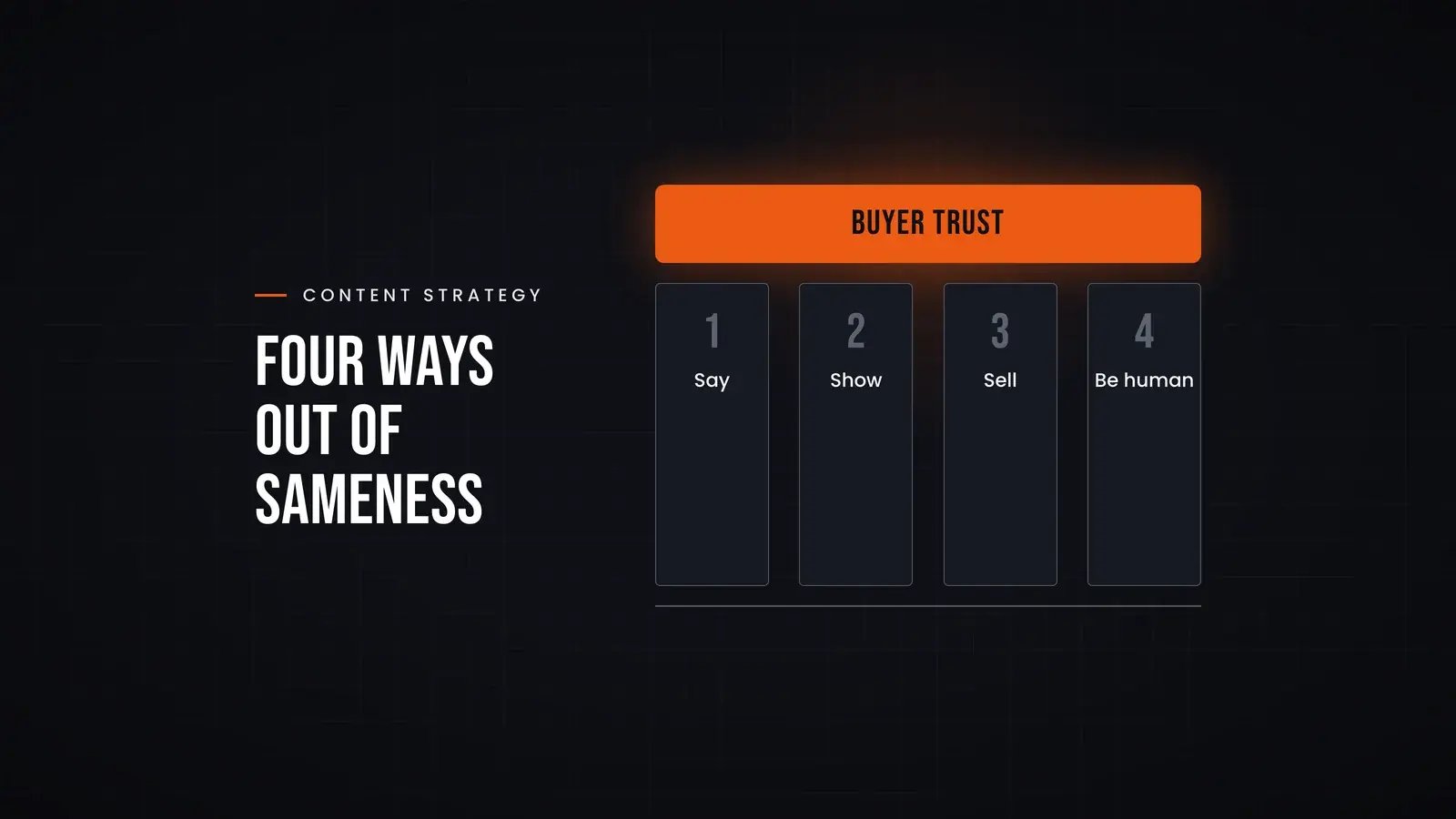
- A mysterious business withholds the four things buyers most want before contact: price, process, limitations, and fit.
- 81% of consumers say they need to trust a brand before they will buy from it (Edelman). That figure comes from consumer research, and the B2B version is harder rather than easier, because a buying committee means several people who each need convincing.
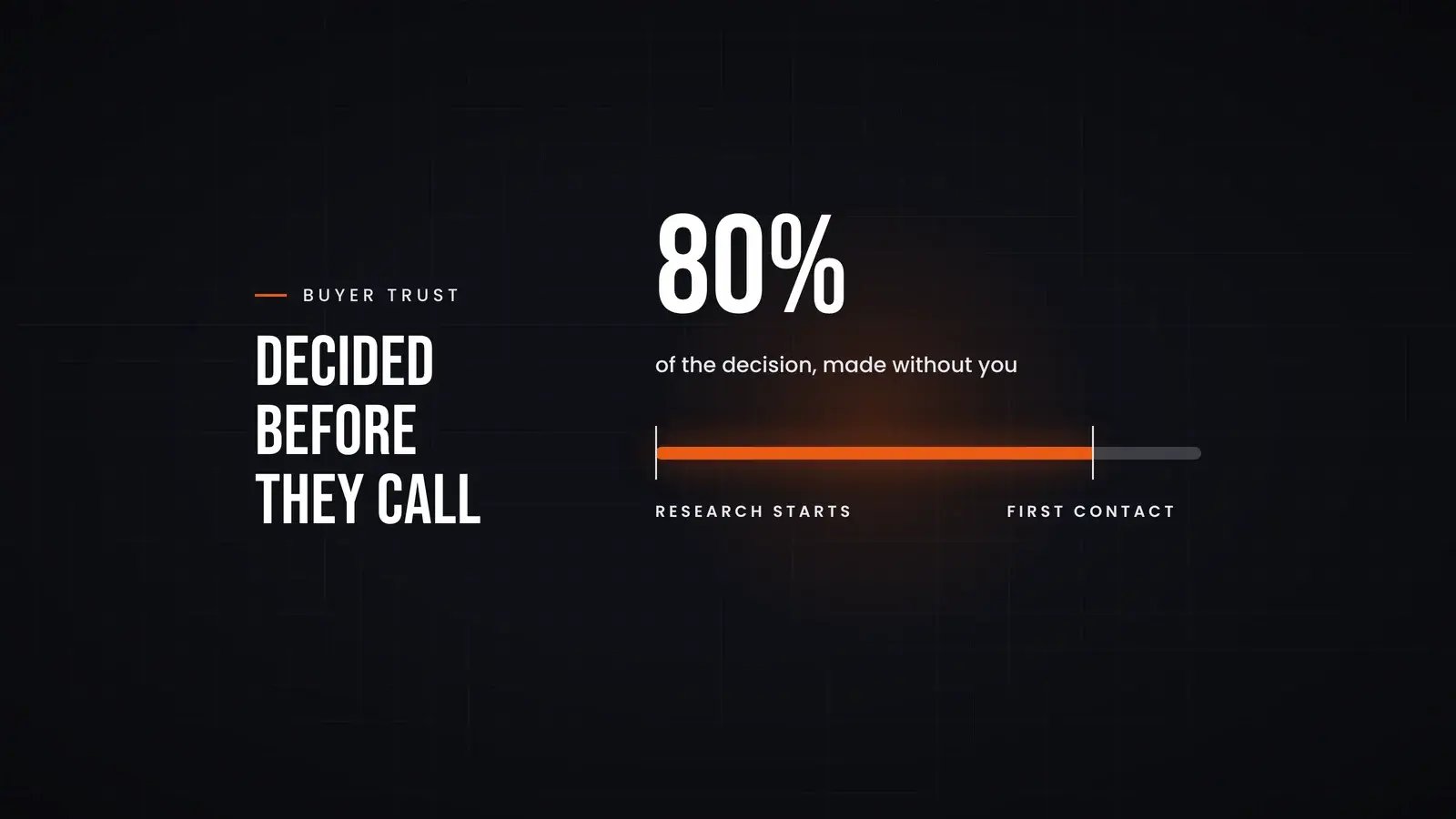
- Build a Trusted Brand puts the scale of the shift at 80% of the purchasing decision completed through online research before first contact.
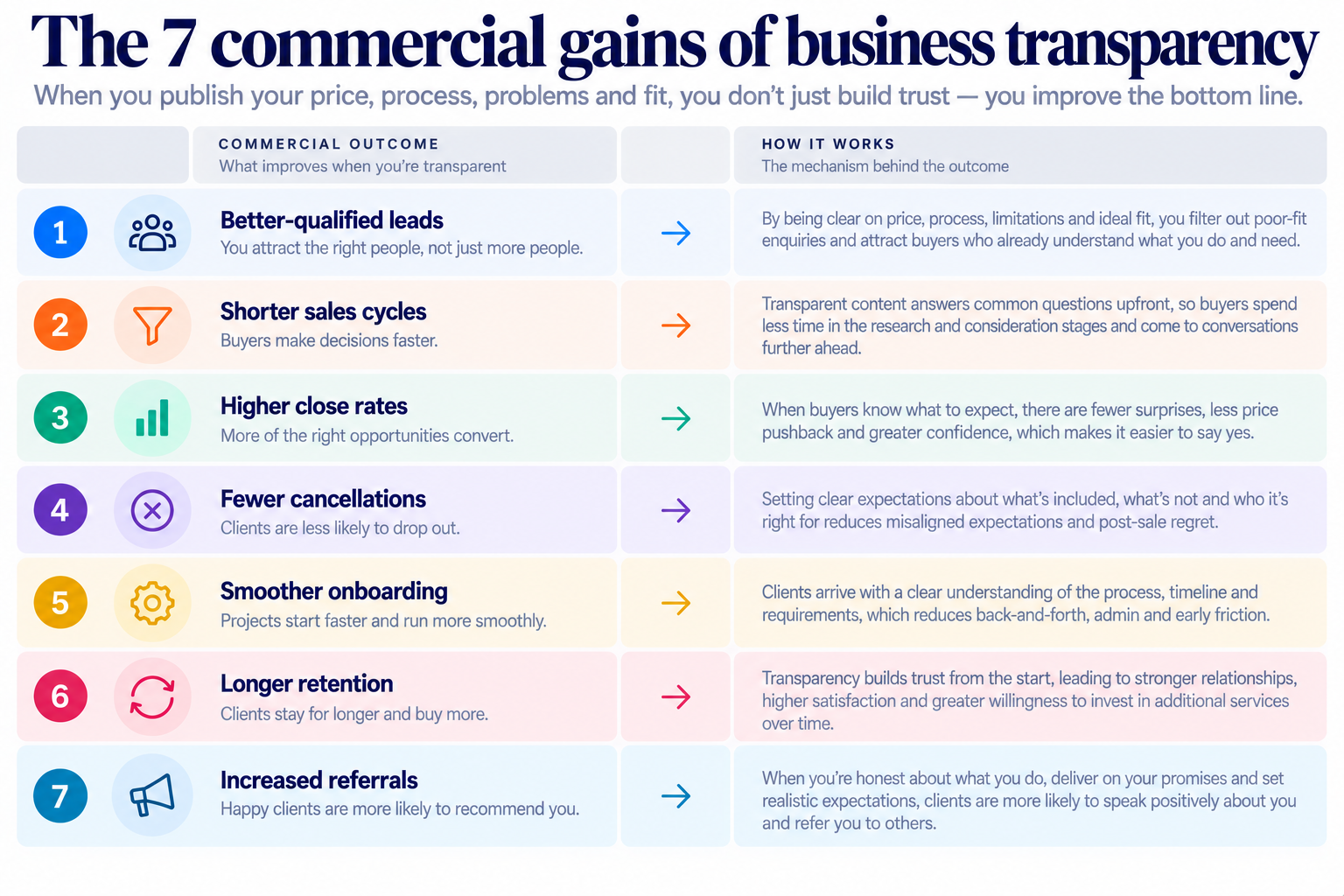
- Businesses that publish price, process and problems report better-qualified leads, shorter sales cycles, higher close rates, fewer cancellations, smoother onboarding, longer retention, and more referrals.
- Three fears keep businesses quiet: competition fear, conversion fear, and confidence fear. Each one sounds commercially sensible and behaves like self-sabotage.
- Transparency is not a content tactic. It is a decision about where your competitive advantage comes from.
What does it mean for a business to be "mysterious"?
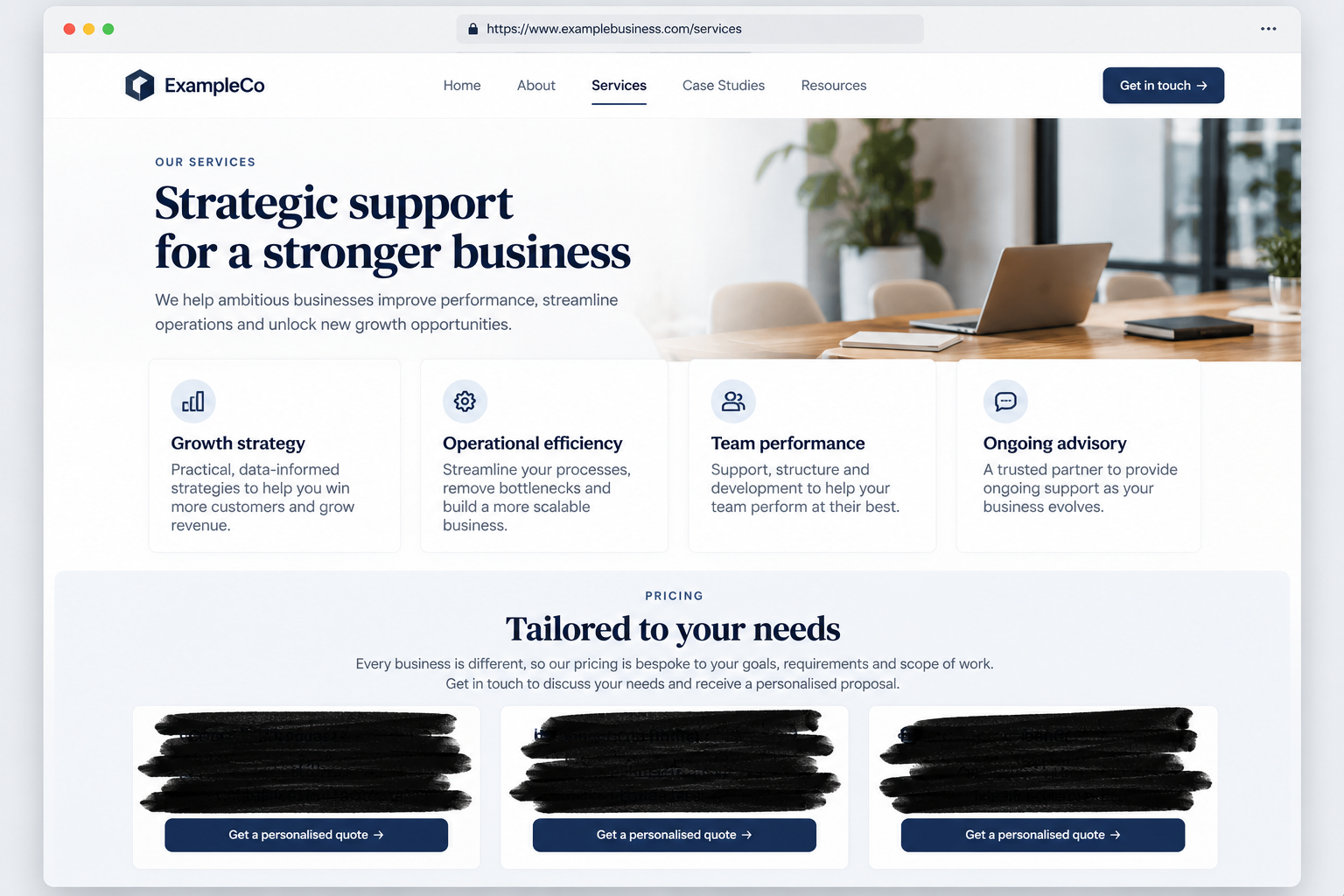
A mysterious business is one that deliberately withholds the information buyers need most: price, process, limitations, and fit. It rarely looks like secrecy from the inside. It looks like a services page that describes capability without cost, a case study with the numbers removed, and a contact form standing where an answer should be.
The intent is usually control. If the buyer has to ask, you get a conversation. If you get a conversation, you get to frame the value.
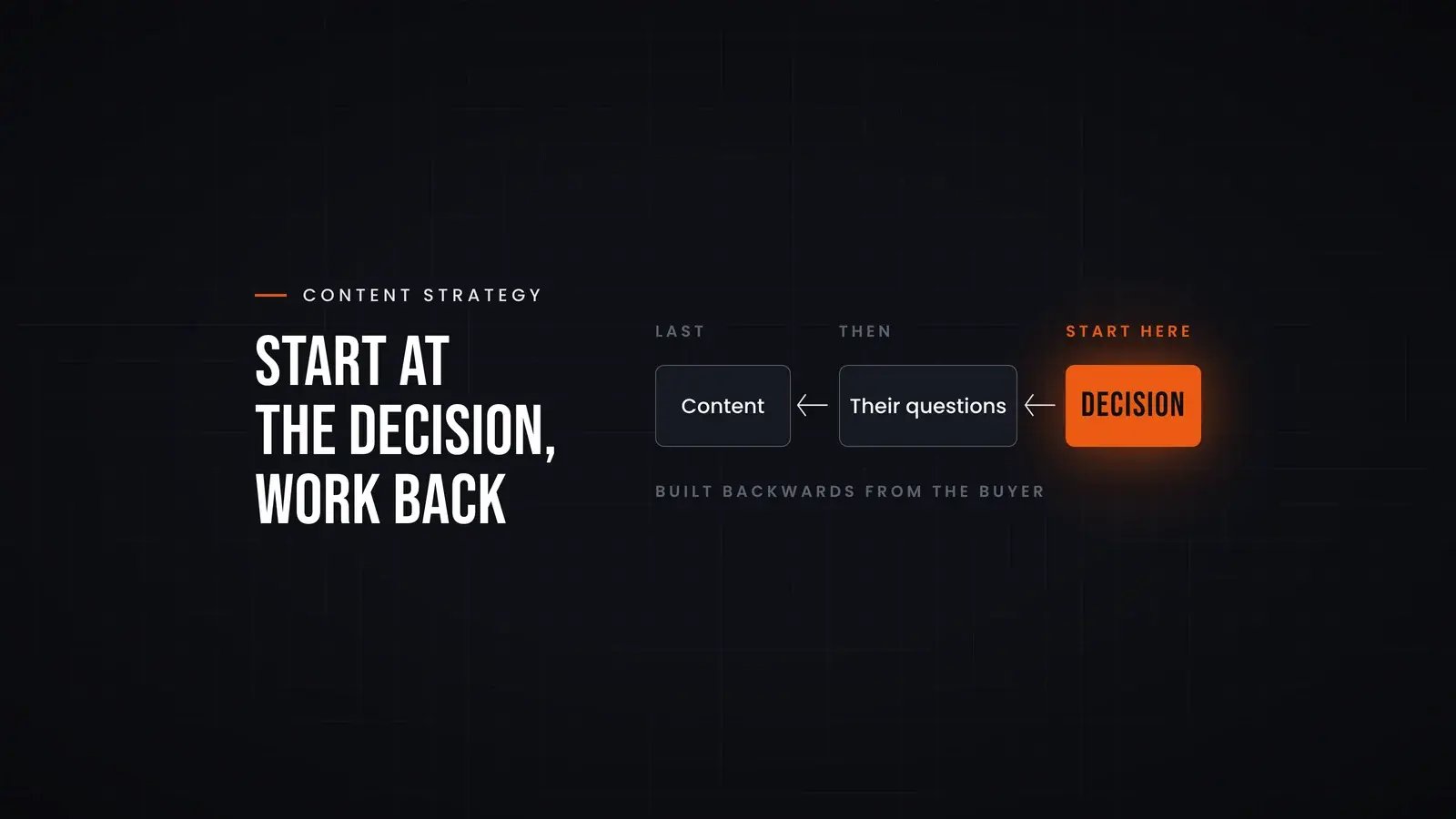
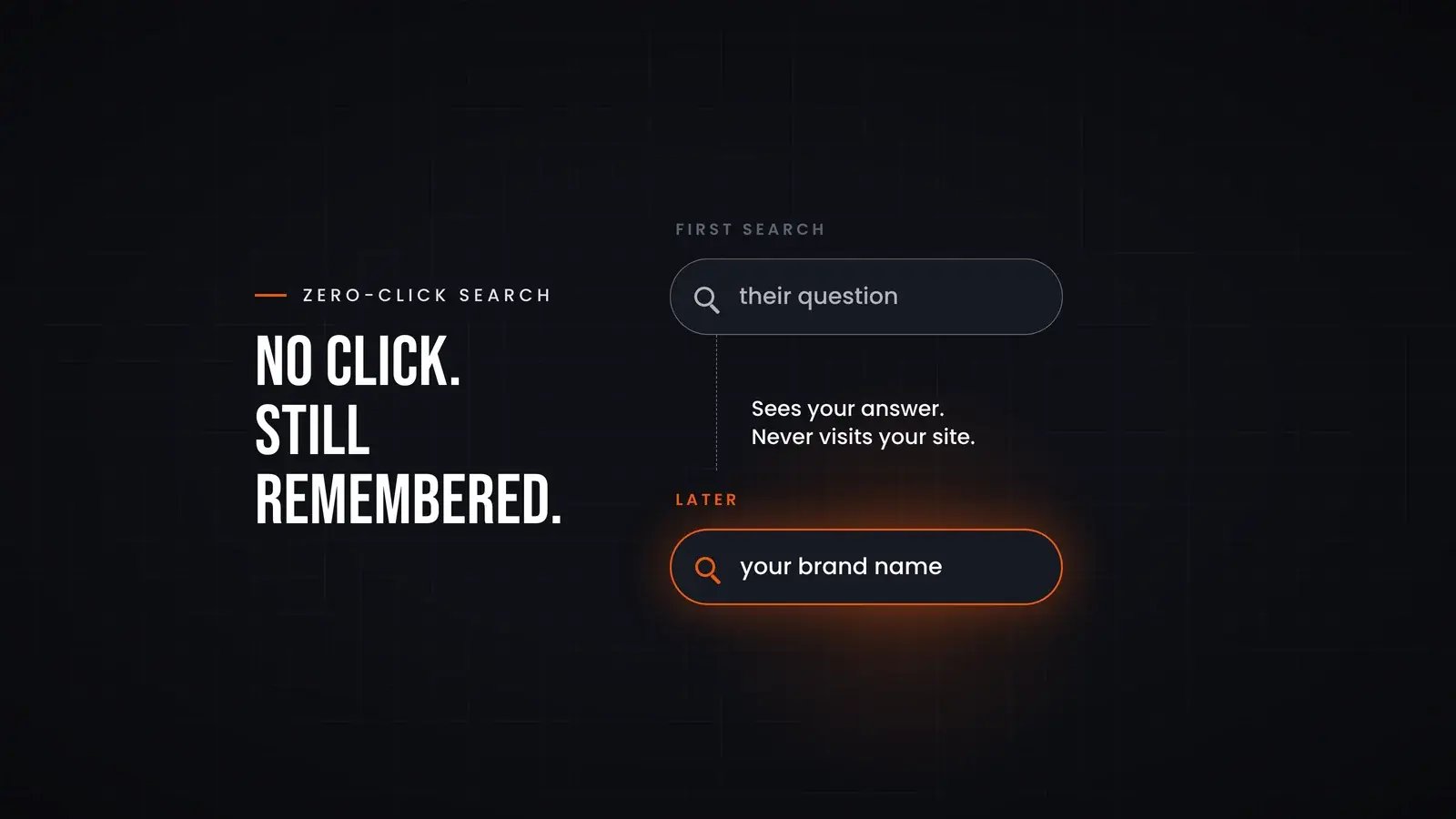
That logic held when buyers had no alternative source of information. It does not hold now. Build a Trusted Brand puts it at 80% of the purchasing decision completed through online research before a seller is contacted. If the information feeding that 80% is not yours, the decision is still made. You are simply absent from it.
Why does being mysterious cost you more than transparency ever would?
Secrecy does not protect a business. It isolates it. The buyer who cannot get an answer from you gets it somewhere else, and the business that answers earns the credibility that precedes the purchase.
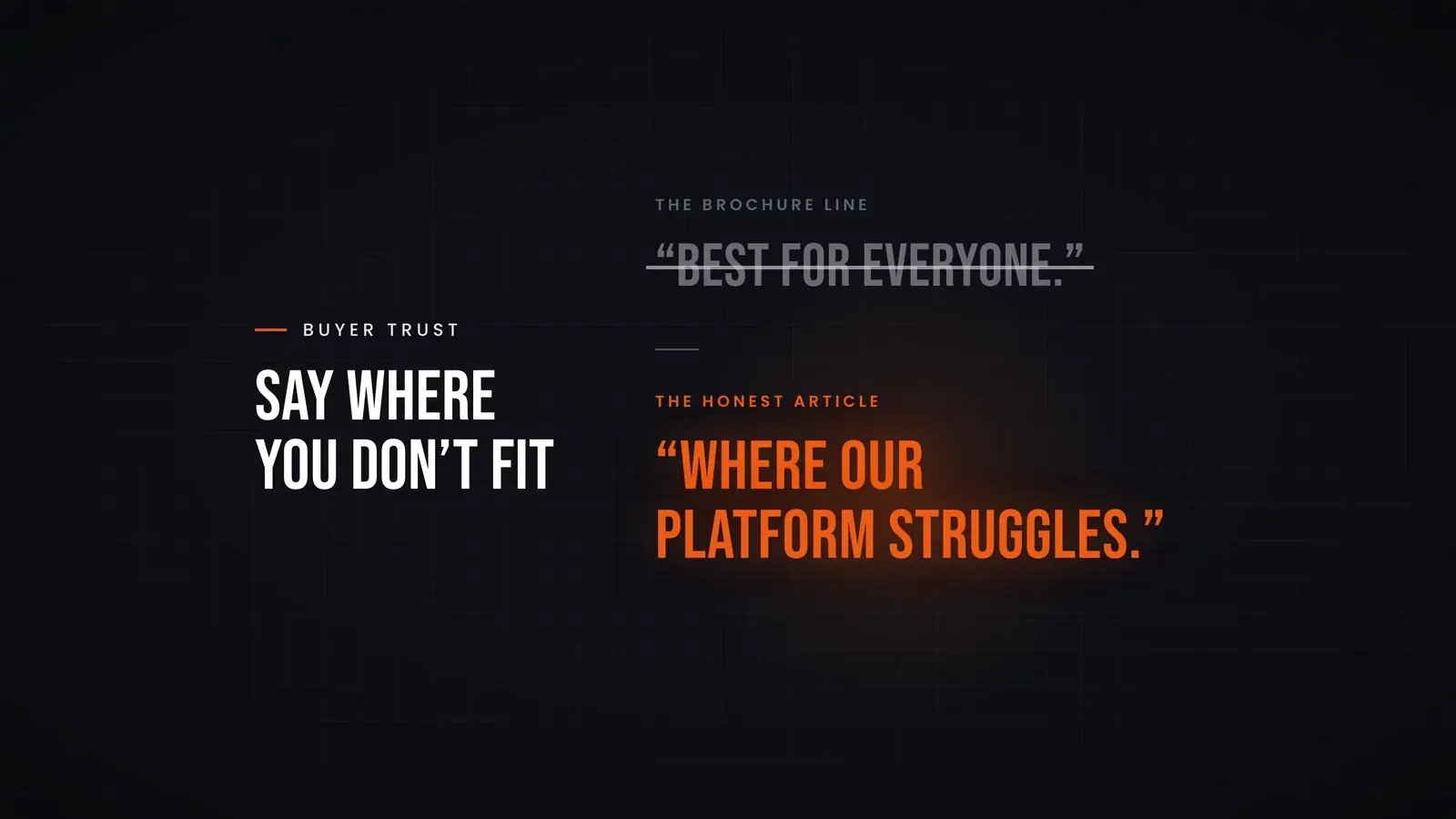
Your buyer is also drowning in perfect solutions. Every competitor claims to be the best, the fastest, the most advanced. Buyers know that cannot all be true, so the claims cancel each other out. What they are actually scanning for is honesty, particularly if they have been burned before by something that was oversold and under-delivered.
This is the part most businesses miss. Transparency is not a softer, friendlier version of marketing. It is the only differentiator left in a market where everyone sounds the same.
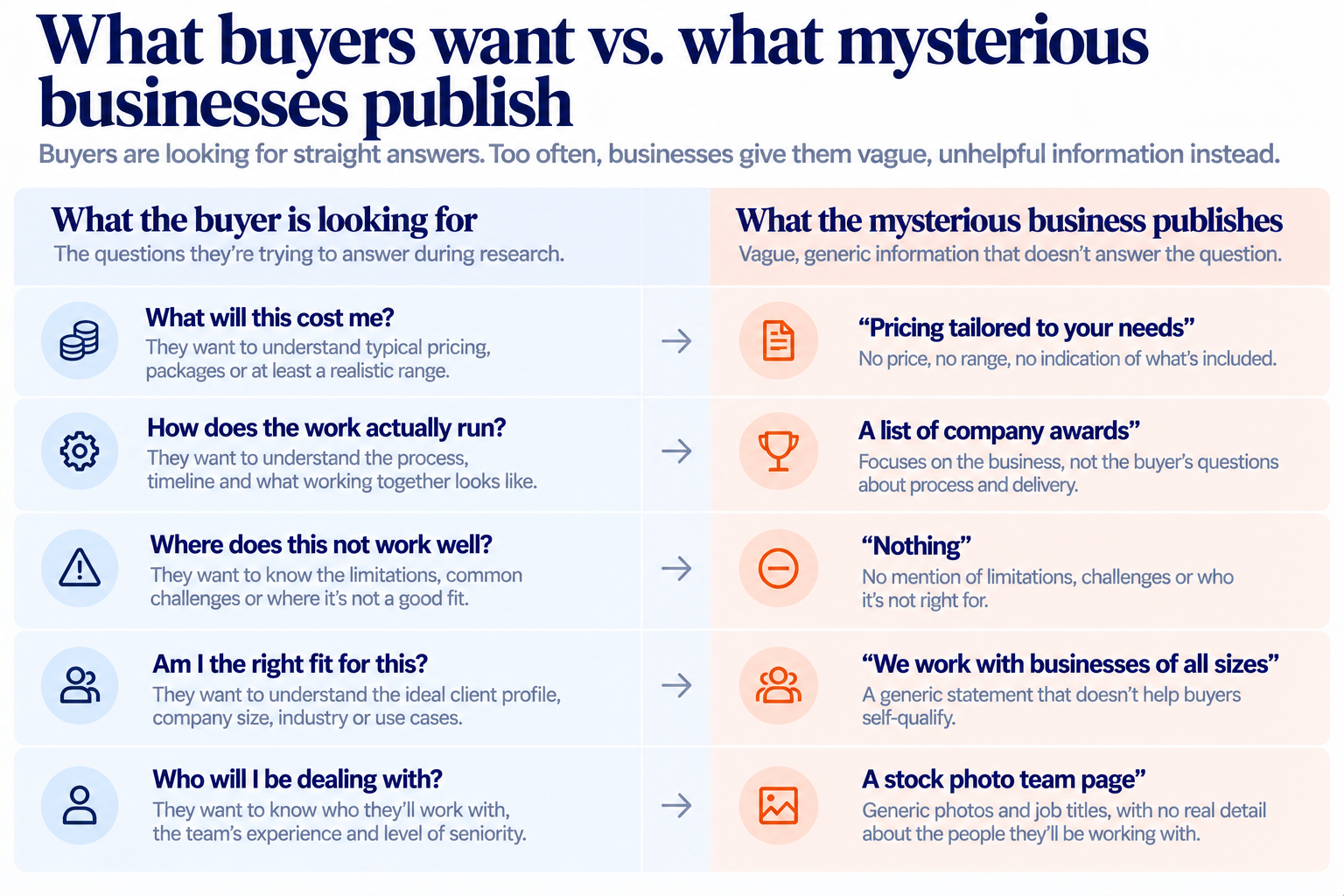
| What the buyer is looking for | What the mysterious business publishes |
|---|---|
| What will this cost me? | "Pricing tailored to your needs" |
| How does the work actually run? | A list of company awards |
| Where does this not work well? | Nothing |
| Am I the right fit for this? | "We work with businesses of all sizes" |
| Who will I be dealing with? | A stock photo team page |
What are the three fears that keep businesses mysterious?
Three fears keep otherwise confident businesses vague: competition fear, conversion fear, and confidence fear. None of them are irrational. All of them are expensive.
Perfection is the enemy of trust. A business that has never published a flaw has given the buyer nothing to verify, so the buyer discounts everything else it says.
Competition fear: "they'll use it against us"
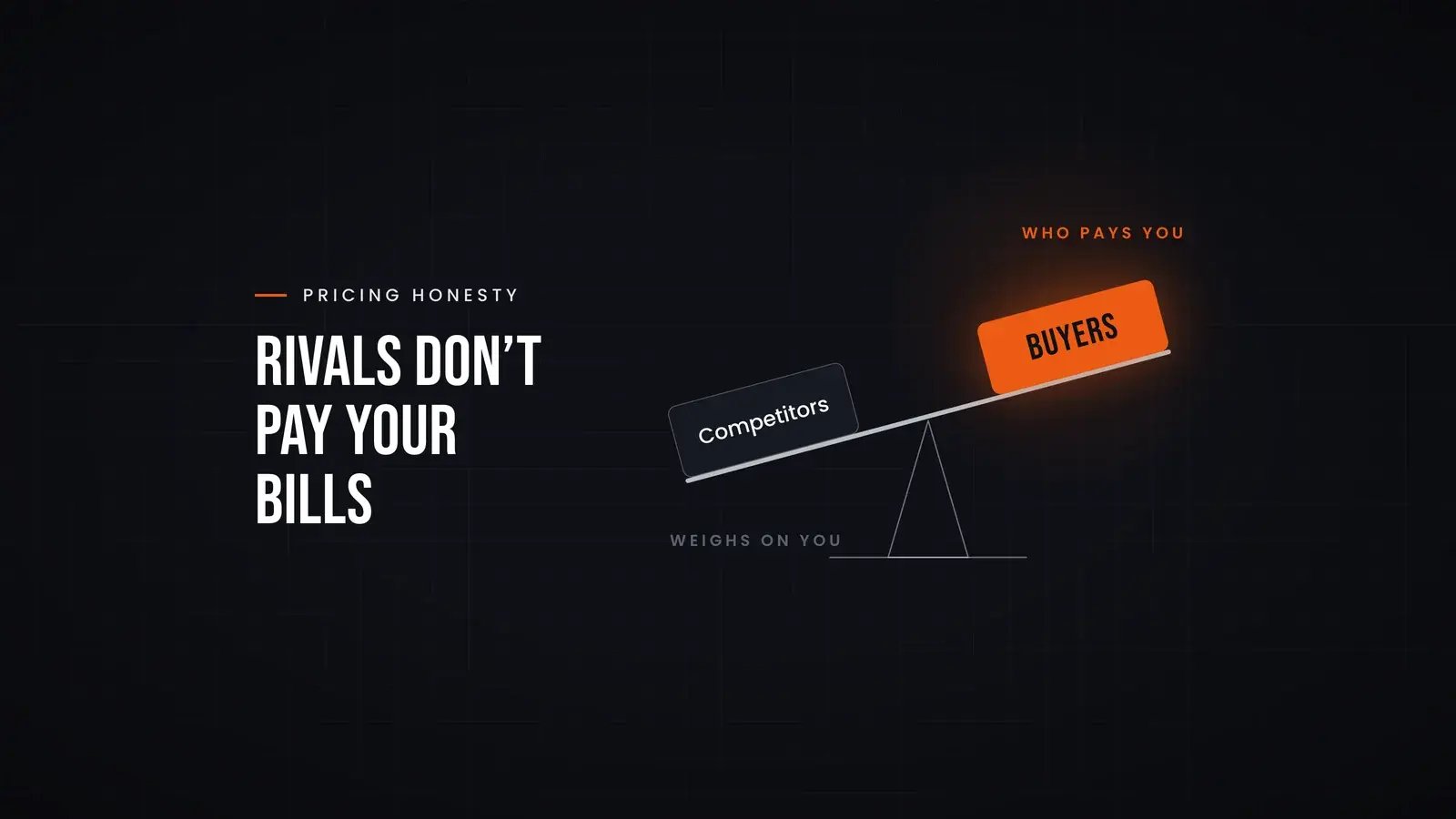
This one sounds like "we'll lose our advantage" or "it shows weakness". The assumption is that competitors will weaponise your honesty.
They rarely do, because doing so requires them to engage with the topic you raised, on the terms you set. And if your advantage genuinely depends on buyers not knowing something, that is not an advantage. It is a delay.
Conversion fear: "we'll scare people away"
This sounds like "it will hurt sales" or "our pipeline will dry up". It is the fear that honesty about limitations tanks the numbers.
What actually happens is that the mix changes. The tyre-kickers remove themselves, and the prospects who remain arrive already briefed.
Confidence fear: "we'll look unprofessional"
This sounds like "it undermines our expertise" or "our reputation will suffer". It is about perception rather than revenue, which is why it is usually the fear held by whoever has to sign off the page.
It also inverts the reality. Admitting a limitation in public is an expertise signal, because only a business that understands its own work can describe the edges of it.
What do businesses gain when they stop being mysterious?
Businesses that drop the mystery gain seven things, and every one of them shows up in the pipeline rather than in brand sentiment.
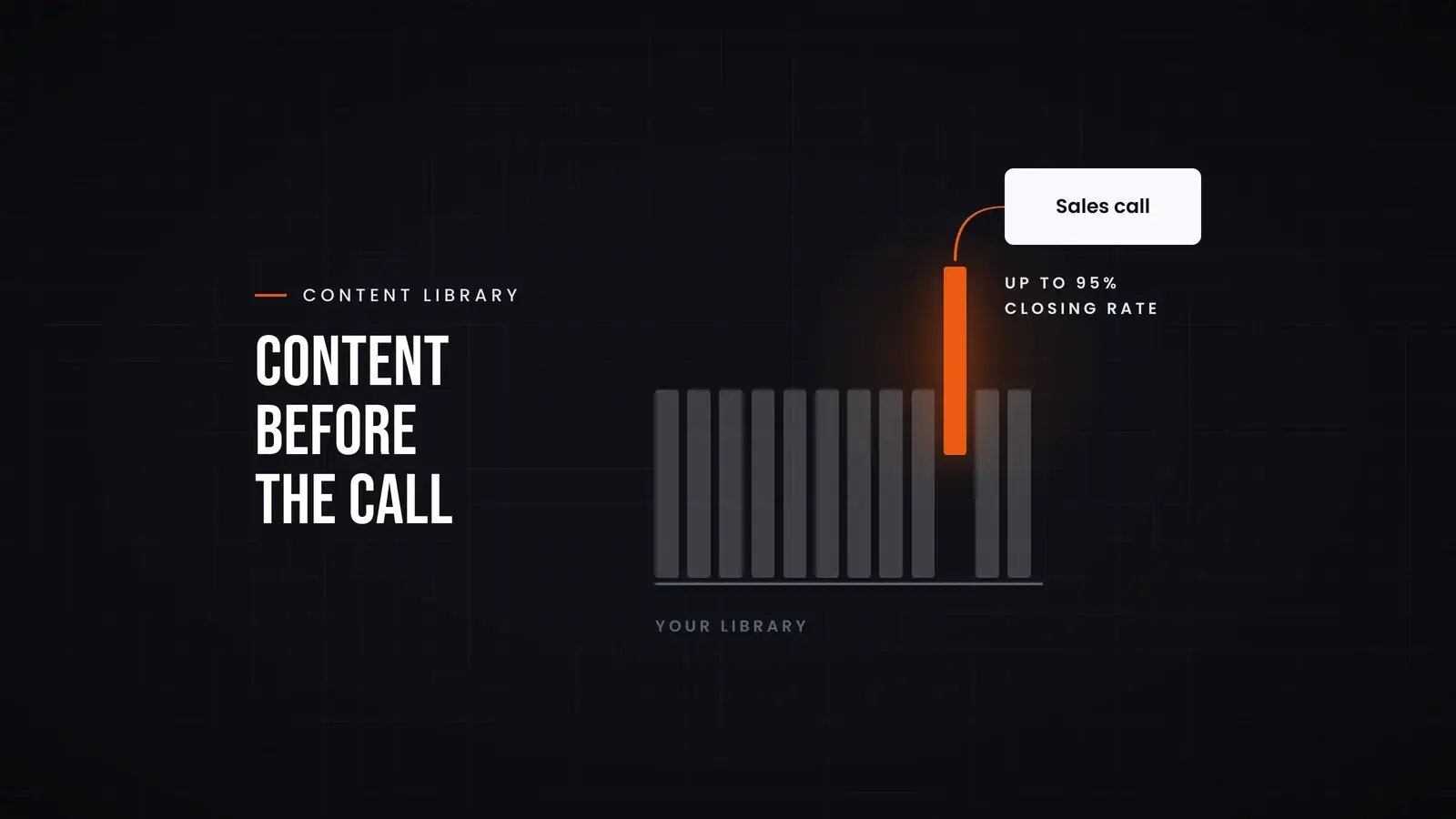
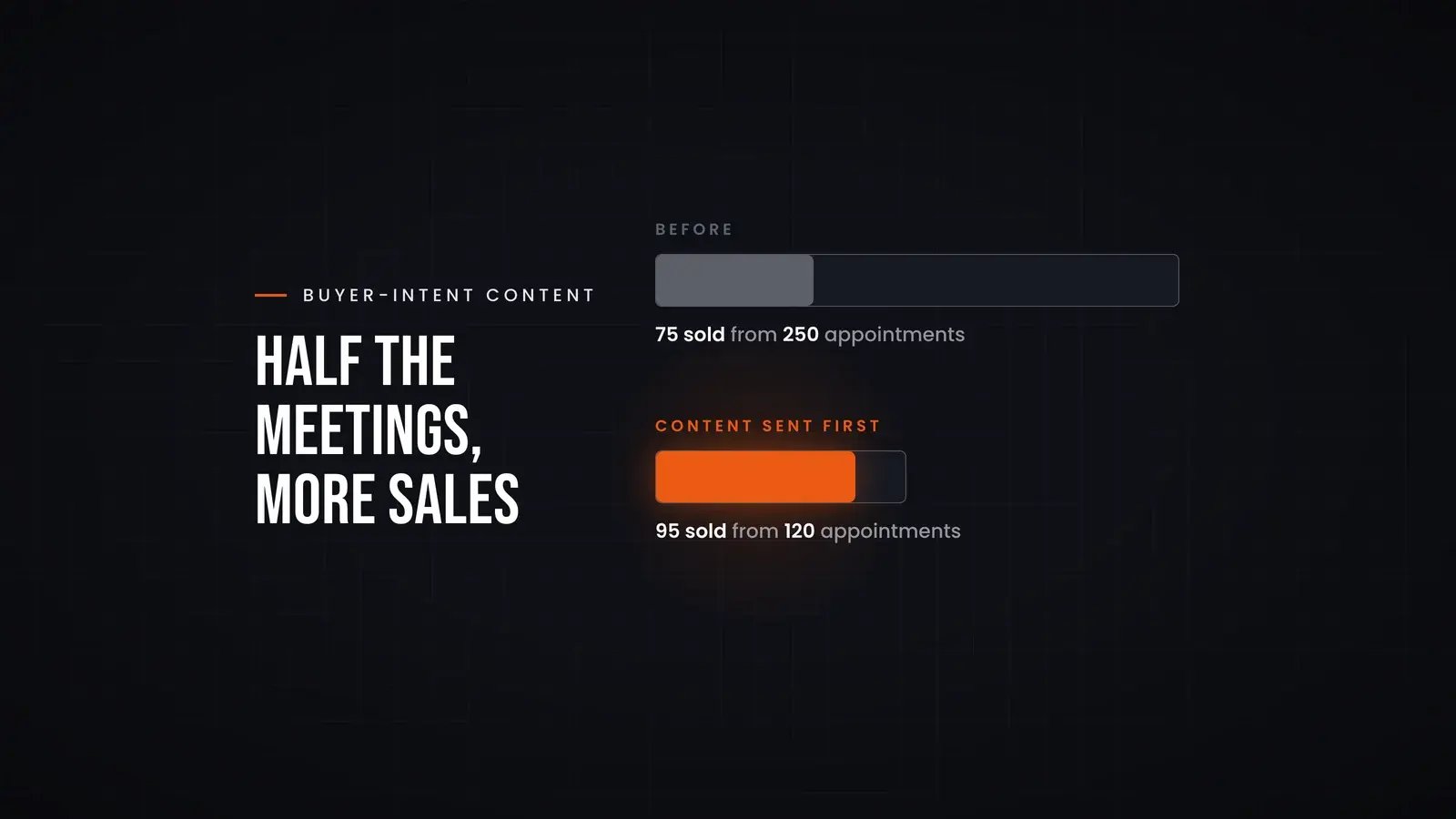
The clearest documented example is Marcus Sheridan's River Pools and Spas, whose transparency programme is set out in detail in Build a Trusted Brand. Monthly website traffic moved from 20,000 to 600,000 visitors. Customers read an average of 105 pages before buying. And the sales maths inverted: 3.3 appointments per pool sold became 1.3.
- Better-qualified prospects: People arrive knowing what you cost and how you work, so the unsuitable ones remove themselves before they reach your calendar.
- Shorter sales cycles: Conversations start at the value stage instead of the education stage.
- Higher close rates: Buyers who have already resolved their own objections make faster, firmer decisions, which is what produced that appointments-per-sale figure.
- Fewer cancellations: Nobody signs on an assumption you never corrected.
- Smoother onboarding: Expectations were aligned in public, before the contract, not renegotiated after it.
- Longer retention: Relationships that begin with accurate information tend to survive the first problem.
- More referrals, and more forgiveness: Credibility in the market grows, and when something goes wrong, and it will, you get the benefit of the doubt.
What does transparency about price actually gain you?
Publishing cost information pre-qualifies leads before they reach your sales team, which raises the quality of every conversation that remains.
Think about walking into a restaurant where the menu has no prices. You are seated, you are ready to enjoy the meal, and there is a quiet anxiety sitting behind everything you read. Your appetite for the steak is already compromised. That is the state most B2B buyers are in on most services pages.
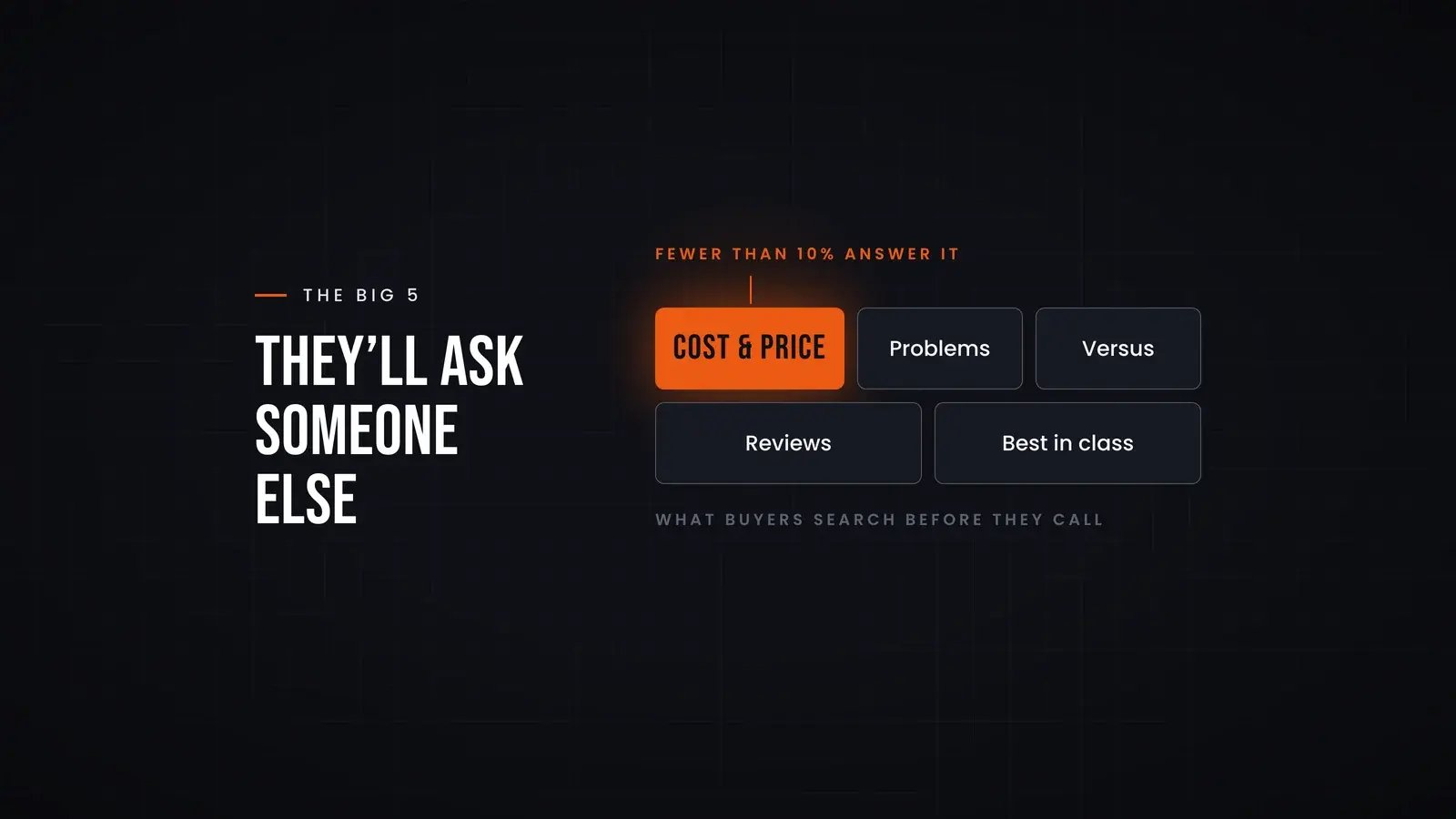
Build a Trusted Brand puts the number of businesses discussing pricing on their websites at fewer than 10%. That makes price transparency one of the cheapest competitive advantages still available. The book credits Sheridan's own pricing article with $45 million (roughly £36 million) in attributed sales.
| Internal objection | The answer |
|---|---|
| "We'll lose our competitive advantage" | Your advantage should come from quality, service and value, not from withholding information. |
| "Sales won't have anything to negotiate with" | Shift the conversation from price negotiation to value demonstration. |
| "We'll scare away potential customers" | You will attract fewer, better leads. |
| "Our prices might change" | Install a review cycle for published pricing and be clear about when and why it changes. |
The third objection is the one that needs saying plainly: volume is not pipeline. A form fill from someone who would never have paid your rate is a cost, not an asset.
You do not have to give one number. You have to address the question. Ranges, the variables that move the price, and a self-selection tool such as a pricing calculator all count. A calculator says something specific to the buyer: our pricing depends on multiple factors, and we trust you enough to show you how those factors work.
What does operational transparency gain you?
Showing customers how you work converts your process from a hidden cost into visible value, which is why transparent businesses defend their pricing less often.
Sit at the counter of an open kitchen and watch a chef select ingredients, explain a technique, and adjust as they taste. The meal arrives and it is both good and interesting. You understand the skill that produced it. The same food arriving from a closed kitchen tastes identical and means less, because you have no connection to the craft behind it.
Operational transparency is the business version of the open kitchen. Here is how we do what we do, warts and all.
The practical form is a "How We Work" page that describes the relationship from the customer's side: what the first 30 days look like, who they will actually deal with, how often you will speak, what you need from them. Values are fine, as long as they are framed as customer benefit rather than internal virtue.
This is also where the "we" problem surfaces. Sites plastered with "we do this, we offer that, we've won these awards" are a veil over the only questions the reader has. Shifting from "we" to "you" is transparency in its most practical form, and it costs nothing to implement.
Related Reading: 5 Silent Website Trust Killers (and How to Audit Yours in an Hour)
Documenting how you work also forces you to examine whether how you work is any good. Most businesses find at least one process they would rather not publish, which is useful information.
How do you talk about your own problems without losing the sale?
Use a four-step framework for every limitation: acknowledge, contextualise, resolve, reframe.
- Acknowledge the issue clearly and directly: Validate the concern rather than minimising it. This is the step most businesses fail, because the instinct is to soften.
- Provide context for why it exists: Industry norms, technical constraints, how your position compares with the alternatives.
- Present the current solution: Workarounds, support, what you are doing about it. The problem exists and you are not ignoring it.
- Reframe with the wider picture: The offsetting benefit, and examples of customers who worked through the same constraint.
Be honest across four types of limitation: product constraints, industry-wide challenges, real cost considerations including hidden and long-term expense, and time commitments. People respect a business that respects their money and their time, and nothing damages trust faster than an implementation timeline nobody mentioned.
This is the practice I avoided for years, and the reason I avoided it was confidence fear. Writing "here is where this does not work" felt like handing the reader a reason to leave. It is the opposite. It is the only sentence on the page they have no reason to doubt.
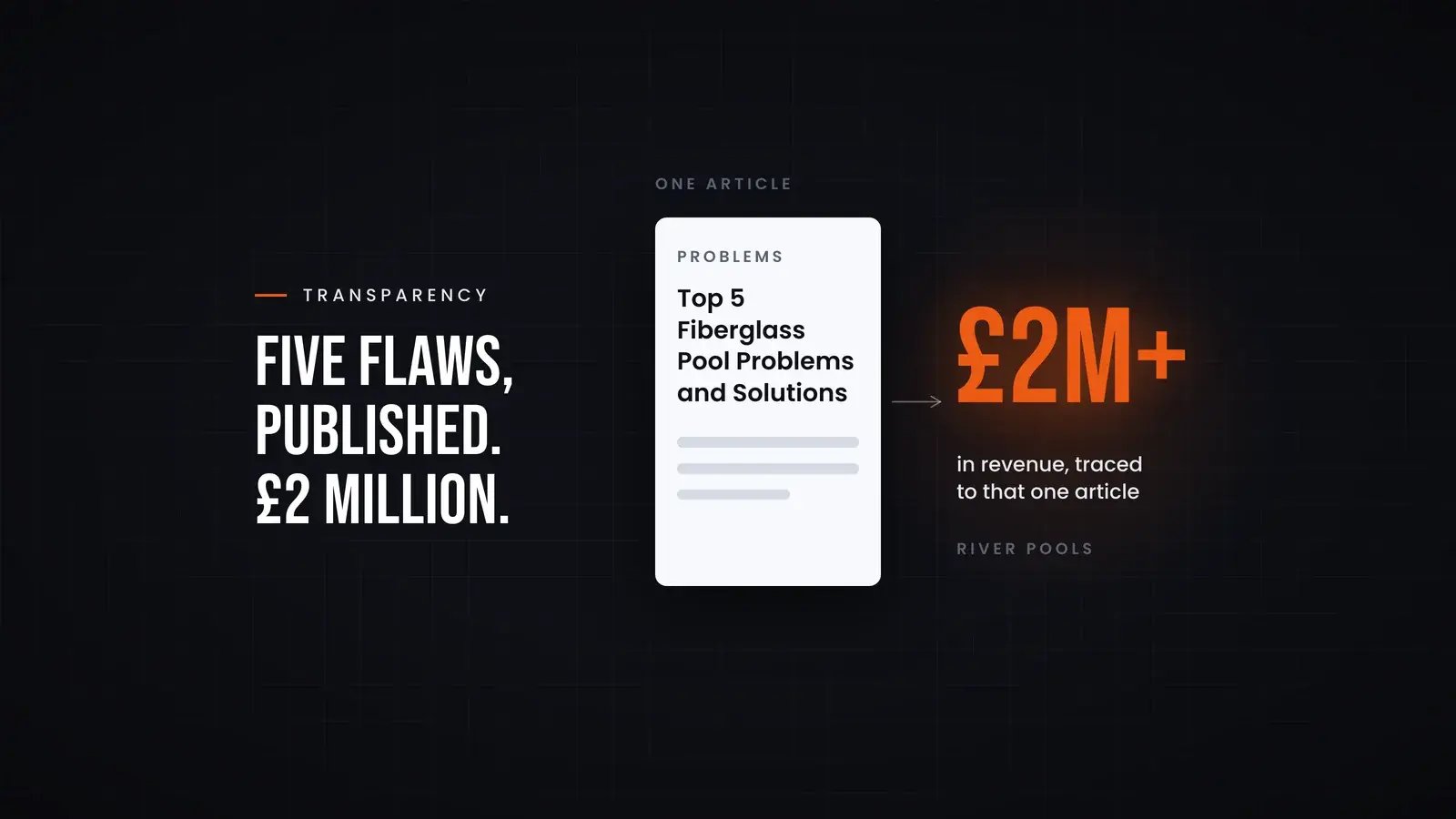
Sheridan's article "Top 5 Fiberglass Pool Problems and Solutions" is credited in Build a Trusted Brand with £2 million (roughly $2.5 million) in sales. He put the elephant in the middle of the room and invited questions about it.
No product is right for everyone. Saying so out loud is what attracts the people you can genuinely help.
Transparent vs mysterious: how the two approaches compare in practice
The mysterious business optimises for lead volume and control of the conversation. The transparent business optimises for lead quality and speed of decision.
| Measure | Mysterious business | Transparent business |
|---|---|---|
| Lead volume | Higher | Lower |
| Lead quality | Mixed, heavy on tyre-kickers | Pre-qualified and pre-educated |
| Sales cycle | Longer, starts with basics | Shorter, starts at value |
| Close rate | Lower | Higher |
| Cancellations and churn | Higher, expectations set late | Lower, expectations set in public |
| Sales time per closed deal | Rises with every wasted meeting | Falls as content answers the basics |
That last row is where the River Pools appointments-per-sale figure lands. It is a change in the cost of winning a customer, not just a change in tone.
Related Reading: Why Gating All Your Content Is Costing You Better Leads
Where should you start if you have been mysterious for years?
Take a baseline before you publish anything, then start with the three questions your sales team dreads most. You do not need a rebrand or a 12-month content calendar. You need one page that says something true your competitors will not say.
- Baseline your numbers first, because this step cannot be done retrospectively. Record qualified opportunities, close rate and cycle length for the current quarter, and agree with your board or leadership team that these are the measures, not form fills.
- List your top three limitations or awkward questions. Be brutally honest, and get the list from sales rather than marketing.
- Write one page for each, using the four-step framework above.
- Publish your pricing structure, or at minimum the variables that move it and a realistic range.
- Add a "How We Work" page describing the relationship from the buyer's side.
- Share all of it with your sales team, then compare the next quarter against the baseline you took in step 1.
The sequencing matters more than the volume. One honest page that answers a real question outperforms 10 pages of positioning.
Related Reading: The Trust Gap: Why Buyers Walk Away Before You Know It
Frequently asked questions
Will publishing prices let competitors undercut us?
Competitors can already estimate your pricing from your proposals, your ex-clients, and your job adverts. Publishing removes their information advantage over your buyers, not yours over them. If price is your only defence, transparency exposes a positioning problem that already existed.
Won't admitting weaknesses cost us deals?
It costs you the deals that would have cancelled or churned. Expect the mix to change before the total does: fewer wasted enquiries, higher close rate on the ones that remain, because expectations are set before the contract rather than renegotiated after it.
Our marketing is measured on lead volume. How do I defend a drop?
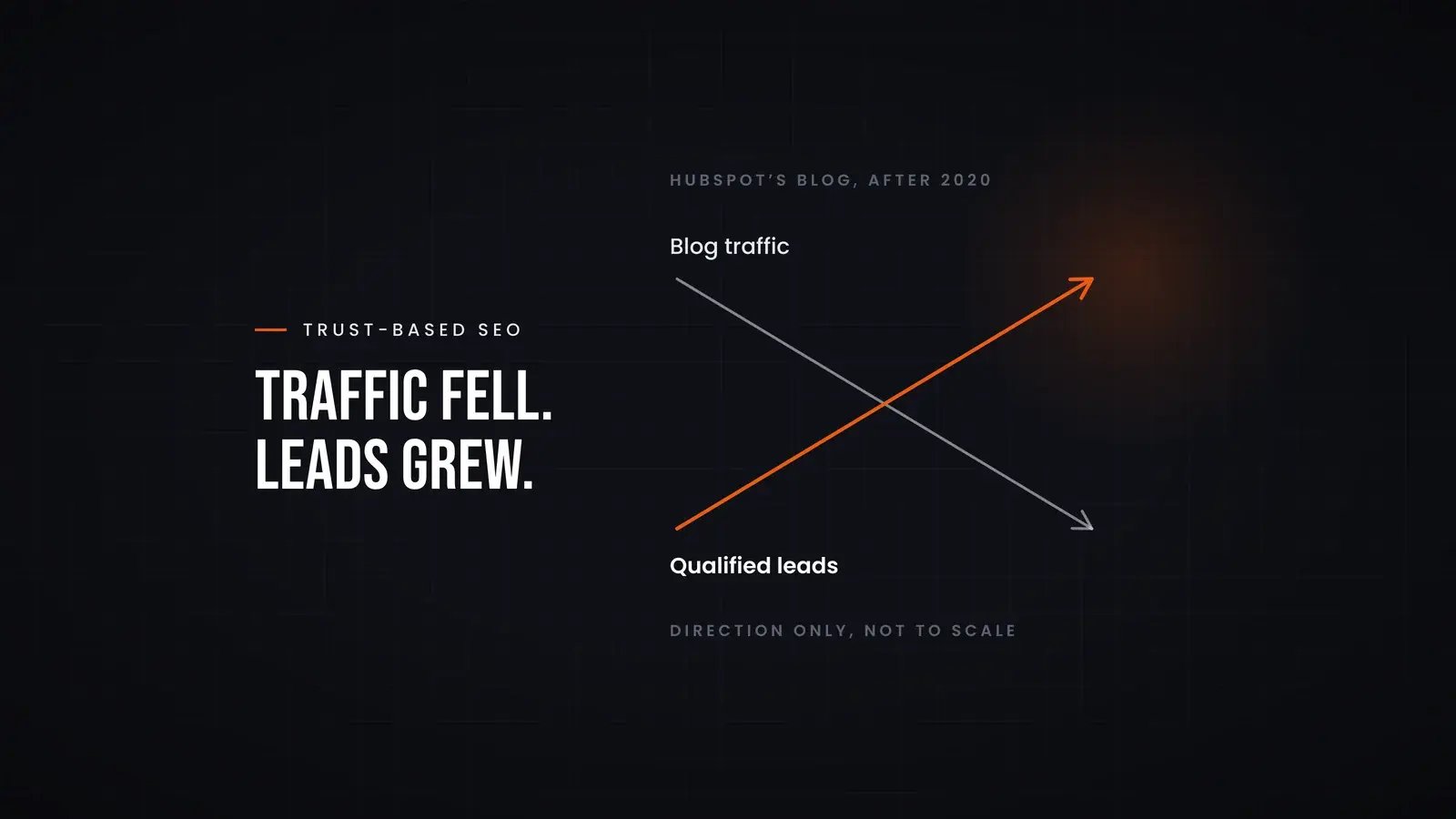
With the baseline from step 1 above. A volume drop alongside a rising close rate and a shortening cycle is a success story. The same drop with no agreed baseline reads as failure regardless of what happens to revenue.
How transparent is too transparent?
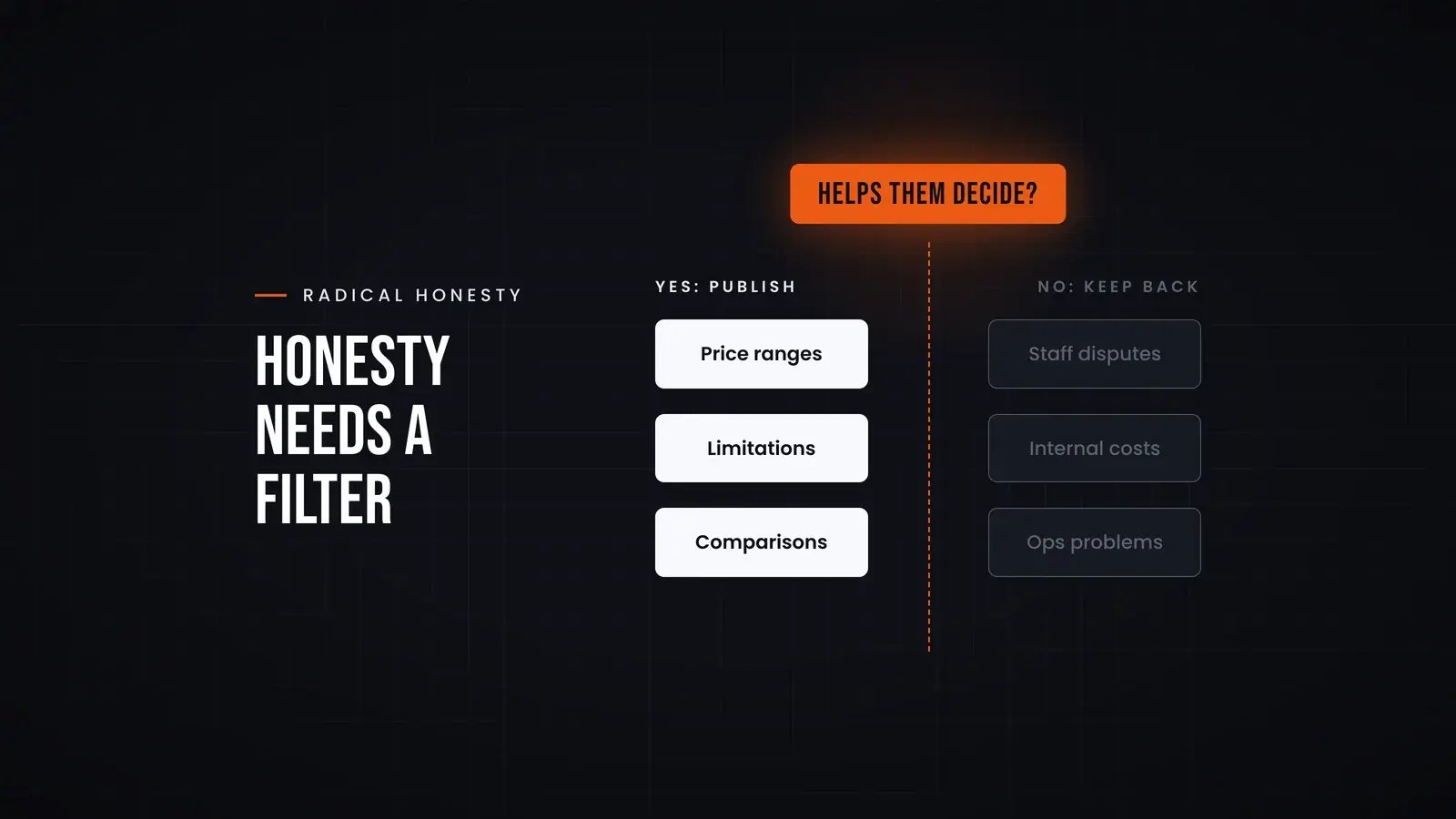
Operational transparency is not full disclosure. You are sharing the information a buyer needs to make an informed decision: cost, process, fit, and limitations. Trade secrets, client confidences and staff details stay private.
How long before transparency shows up in revenue?
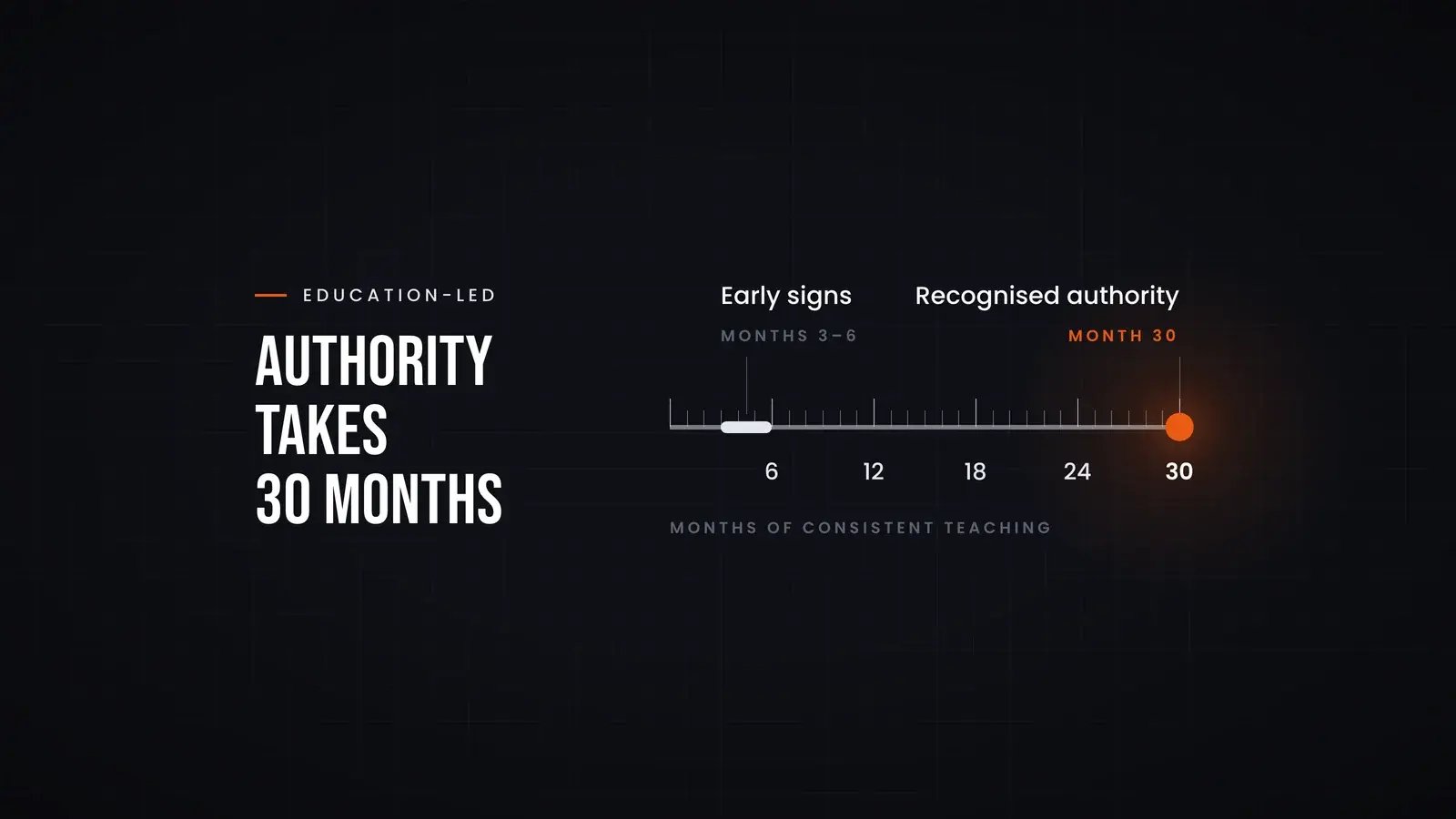
Sales conversations usually change within weeks, because your team can send a page instead of explaining from scratch. Search and referral effects compound over 6 to 12 months. These are typical patterns rather than guaranteed timelines.
Does this work in regulated industries?
Yes, with adjustment. A financial adviser cannot publish a single fee for advice that depends on portfolio size and risk profile, but they can publish the fee model, the percentage bands, and what triggers a move between them. The rule is that you address the question even where you cannot answer it with one number.
What truth about your business have you been afraid to share?
You started with a business that withheld information to protect its position. What you actually had was a business absent from the part of the buying decision that matters, competing on claims that sound identical to everyone else's.
The fix is not more content. It is honest content about the four things buyers already want: what it costs, how it works, where it does not work, and who it is not for.
I avoided that for years and the cost was invisible, which is what made it expensive. Every mysterious business is sitting on one truth it has been afraid to publish. In almost every case, that truth becomes its best-performing page.
How to take action now
- Baseline qualified opportunities, close rate and cycle length this week, before you change anything.
- Ask your sales team for the three questions they least like answering.
- Write and publish one honest answer to the hardest of them this month.
- Add pricing variables and a realistic range to your services page.
- Build a "How We Work" page written entirely in "you" language.
Build a Trusted Brand sets out the full nine-step Trust BLUEPRINT™ behind this article: how to find the truths you have been avoiding, how to publish them without damaging your position, and how to turn honesty into predictable pipeline.

About the author
Tom Wardman is a growth strategist who installs in-house marketing systems for founder-led businesses. He is the author of Build a Trusted Brand and works with companies that want predictable growth they own outright, rather than another retainer. Predictable growth. Fully owned.
Pricing disclaimer: All GBP–USD price conversions are rounded estimates and correct at the time of publishing. Exchange rates fluctuate and figures should be treated as indicative only.
Topics: